
In This Article
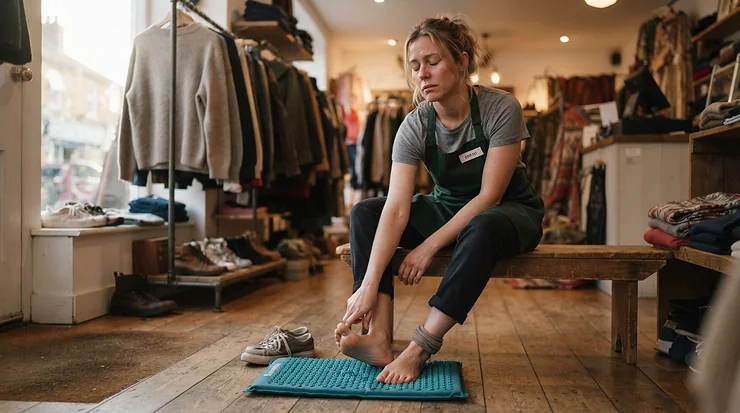
A spike mat for sore feet after standing all day is a padded mat covered in small plastic spikes or silicone nubs that you stand on for a few minutes. The firm, spread-out pressure stirs up the soles, and many people find it leaves tired feet feeling warm, loose and noticeably lighter.
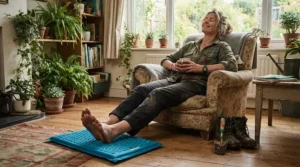
If you work on a hospital ward, behind a counter, in a classroom or on a shop floor, you already know the feeling. Around mid-afternoon the soles start to throb. By the time you reach the front door, your arches feel as though they’ve been sat on by a small, sulky elephant. The usual advice is “rest your feet”, which is hard to follow when you’re on them for eight hours.
So let’s be straight about what this article is and isn’t. I haven’t strapped any of these mats to my own feet and I won’t pretend otherwise. What I’ve done is compare real specifications, read through aggregated buyer feedback and independent roundups, and weigh the claims against actual evidence. A spike mat isn’t a cure for anything. According to the NHS guidance on plantar fasciitis, you should see a GP if heel or arch pain hasn’t improved within two weeks, whatever gadgets you own. For ordinary end-of-shift soreness, though, a foot acupressure mat for tired feet can be a cheap, pleasant part of your wind-down.
Below you’ll find seven real options from budget to premium, plain-English advice on choosing one, and guides for the first 30 days. There’s also a frank look at plantar sensitivity, foot circulation and standing fatigue, and when to skip the spikes altogether.
Quick Comparison: Which Spike Mat Suits Which Feet?
Before the deep dives, here’s the cheat sheet. Price brackets are indicative only, so check current prices on amazon.co.uk, and note that availability varies by seller.
| Product | Spike style | Format | Price bracket | Best For |
|---|---|---|---|---|
| Shakti Original | Sharp ABS spikes | Full-size mat | Roughly £20-£50 (check) | Experienced users wanting deep pressure |
| ProsourceFit Acupressure Mat and Pillow Set | Dense plastic points | Mat plus pillow | Mid-£30s | First-timers wanting a proven set |
| FREATECH Foot Massage Acupressure Mat | Zoned silicone | Foot-sized mat plus two balls | Budget (check listing) | Desk standers and shift workers |
| BYRIVER Acupressure Foot Massage Mat | Hard massage knobs | Foot-specific | Budget (check listing) | Tough soles that crave intensity |
| Vynusio Silicone Acupressure Foot Mat XL | Soft and stiff silicone points | Large foot board | Budget (check listing) | Standing-desk users who want room to shuffle |
| TrelaCo Foot Acupressure Massage Mat with Stones | Rounded cobblestones | Foldable foot mat | Budget (check listing) | Tender or sensitive soles |
| Pranamat ECO | Lotus-shaped HIPS spikes | Premium natural mat | Roughly £150-£200 | Eco-minded buyers with a bigger budget |
Looking at the table, the ProsourceFit Acupressure Mat and Pillow Set is the sensible default if you want a lying-down mat that also works under your feet. If you stand for most of your shift, the foot-specific FREATECH Foot Massage Acupressure Mat and TrelaCo Foot Acupressure Massage Mat with Stones make more practical sense. The Shakti Original and Pranamat ECO are for people who already know they like it spiky.
💬 Just one click — help others make better buying decisions too!😊
Top 7 Spike Mats for Sore Feet After Standing All Day: Expert Analysis
Every pick below is a real product with real specs. Where I couldn’t verify something, such as review volume on a UK listing, I say so rather than guess.
1. Shakti Original — the sharp-spike benchmark
The Shakti Original is the mat most rivals are measured against, and the brand describes its own spikes as sharper than anything else on the market.
It carries 6,000 ABS plastic spikes on an organic cotton cover over foam, and one buyer measured the surface at roughly 42 x 69 cm. Here’s the counterintuitive bit: fewer spikes means more intensity, because your weight is shared between fewer points. The brand’s own range runs from the Shakti Light (8,000 spikes) through the Original to the Shakti Advanced (4,000 spikes).
Based on the spec comparison, the Original suits feet that already tolerate firm pressure. If your soles flinch at a pebbly beach, the Shakti Light is the saner starting point. Because it’s a full-body mat, you’ll need floor space, and standing on foam rather than a rigid base means it compresses a little under bodyweight.
On sentiment, the brand’s own site shows around 4.8 stars across roughly 28,900 reviews. Brand-hosted reviews tend to flatter, but the recurring theme is an initial “hump” of discomfort that settles within minutes.
Pros:
- ✅ Precise, sharp spikes deliver genuinely deep pressure
- ✅ Three intensity tiers to match your pain threshold
- ✅ Breathable organic cotton cover feels pleasant on skin
Cons:
- ❌ Can be too intense for sensitive soles
- ❌ Full-size footprint is bulky under a desk
Price range: roughly £20-£50 depending on seller and bundle (check current price). Verdict: strong value for experienced users, but choose the intensity carefully.
2. ProsourceFit Acupressure Mat and Pillow Set — the 27,000-review crowd favourite
The ProsourceFit Acupressure Mat and Pillow Set has the biggest review pool of any mat in this guide, and that counts for something.
One roundup lists around 8,910 stated acupressure points across the mat and pillow. In practice, a higher point count spreads pressure more evenly, so it feels more forgiving than the Shakti Original. The pillow doubles as a foot pad, which is handy because you can prop a heel on it while seated at your desk.
My read is that this is the best “try it without commitment” option. On the UK listing at the time of research it sat at around 4.2 stars from roughly 27,400 ratings. That’s a solid score at that volume, though it’s a notch lower than the brand-hosted Shakti Original figures. A rating in that range usually means most buyers are happy while a minority find it too sharp or the foam too soft, but check the most recent reviews on the page itself.
Because it’s built for lying on, standing on it works but isn’t its sweet spot. Keep socks on until your soles adapt.
Pros:
- ✅ Huge review base makes quality easier to judge
- ✅ Pillow doubles as a seated foot pad
- ✅ Even pressure suits first-time users
Cons:
- ❌ Designed for lying down, not standing
- ❌ Foam can feel soft under full bodyweight
Price range: mid-£30s at the time of research. Verdict: the safest all-rounder for most people.
3. FREATECH Foot Massage Acupressure Mat — zoned silicone built for standing
The FREATECH Foot Massage Acupressure Mat is one of the few designed around your feet rather than your back.
It’s food-grade silicone at about 22 x 13 inches (roughly 56 x 33 cm), with zoned reflexology areas of differing intensity. Two massage balls come with it, one steel cooling ball and one textured rubber ball, plus a hanging loop for storage. Zoning matters in practice: you can step onto a gentler patch when your arches are angry and shift to a firmer zone when they’re not. One independent roundup rated it its best pick for feet, specifically for people who stand all day or want something at their desk.
Silicone wipes clean in seconds, which beats cotton for a mat that lives near work shoes. The trade-off is that silicone feels more “rubbery” than cotton-over-foam, and I couldn’t verify a meaningful review sample for the UK listing. Read the recent reviews on the page before you buy.
Pros:
- ✅ Zoned areas let you tailor intensity
- ✅ Wipe-clean silicone suits workplace use
- ✅ Included balls work the arch directly
Cons:
- ❌ Limited independent testing I could verify
- ❌ Smaller footprint offers less room to shuffle
Price range: budget bracket (comparable silicone foot mats sit around the teens on amazon.co.uk, so confirm). Verdict: excellent value if you want a foot acupressure mat for tired feet without the bulk.
4. BYRIVER Acupressure Foot Massage Mat — the divisive intensity pick
The BYRIVER Acupressure Foot Massage Mat is the polarising one, and honesty demands I flag that up front.
Its listing describes 39 massage knobs and adjustable straps, and it’s pitched at plantar fasciitis, heel pain and general foot fatigue. The manufacturer suggests building up over one to two weeks as your feet adapt, which is sensible regardless of brand. Hard, fewer, larger knobs mean concentrated pressure, which is exactly what some tired feet crave and exactly what makes others recoil.
The review data reflects that split. One US-focused roundup reported more than 22,000 reviews averaging around 3.8 stars, and described the response as polarised: some find it useful for tired feet, others can’t stand on it for more than a few seconds. Treat that as a warning that this is an acquired taste, not a gentle introduction.
Pros:
- ✅ Purpose-built for standing rather than lying
- ✅ Targeted knobs reach reflex points firmly
- ✅ Portable and easy to stash in a bag
Cons:
- ❌ Mixed ratings suggest many find it too intense
- ❌ Hard knobs offer little forgiveness for tender soles
Price range: budget bracket (check current price). Verdict: worth a punt only if you’ve liked firm foot massage before.
5. Vynusio Silicone Acupressure Foot Mat XL — roomy board for standing desks
The Vynusio Silicone Acupressure Foot Mat XL gives your feet room to roam, which is its main advantage.
At about 30 x 17.7 inches (roughly 76 x 45 cm), it’s big enough to walk on the spot, shift weight side to side and rock between heel and toe. It uses a mix of soft and stiff pressure points, and the listing mentions magnetic spikes. Treat the magnet claim as marketing: I found no robust evidence that magnets add anything, so judge the mat on its pressure design alone.
What the spec sheet won’t tell you is how it feels after a month. Silicone nubs can compress and flatten with daily use, so look at recent reviews for durability complaints before ordering. It’s been flagged as an Amazon’s Choice item on some storefronts, but that label reflects sales and availability, not independent testing.
I’d pitch this at people with a standing desk or a kitchen counter routine, where a larger surface encourages the small movements that keep legs from locking up.
Pros:
- ✅ Generous size allows walking on the spot
- ✅ Soft and stiff points offer variety
- ✅ Wipe-clean silicone suits office use
Cons:
- ❌ Magnetic claims lack convincing evidence
- ❌ Large board is awkward to store
Price range: budget bracket (check current price). Verdict: good value if floor space isn’t an issue.

6. TrelaCo Foot Acupressure Massage Mat with Stones — gentlest on tender soles
The TrelaCo Foot Acupressure Massage Mat with Stones swaps spikes for a cobblestone texture, which changes the whole experience.
It comes in several sizes, including 13.78 x 13.78 inches, 27.56 x 13.78 inches and a long 13.78 x 47.24 inch strip, and it’s foldable. The rounded stones spread pressure across a wider contact patch than a sharp spike does. On paper that points to a milder, more tolerable sensation. That’s my reasoning from the design, not a measured result.
That makes it the sensible pick if your feet are tender, if you’re new to this, or if you just want something that feels like a pebbly beach rather than a pin cushion. The long strip also lets you walk its length, which adds a little gait stimulation.
The catch is that gentler pressure won’t satisfy someone craving deep, penetrating stimulation. And, as with the other silicone options, I couldn’t verify a UK review sample, so read recent feedback before committing.
Pros:
- ✅ Rounded stones feel far kinder than spikes
- ✅ Multiple sizes, including a walk-along strip
- ✅ Foldable for stashing under a desk
Cons:
- ❌ Too mild for pressure-hungry feet
- ❌ UK review volume hard to verify
Price range: budget bracket (check current price). Verdict: the best starting point if plantar sensitivity worries you.
7. Pranamat ECO — the premium natural-materials pick
The Pranamat ECO is the luxury end of the market, and it feels like a design object rather than a gadget.
The mat carries 221 lotus-shaped HIPS plastic elements, each with 25 petals, so roughly 5,500 points, across a 73 x 45 cm surface filled with coconut fibre under linen and cotton. It’s OEKO-TEX certified, which suits anyone wary of synthetic foams and glues. The coconut-fibre filling is firmer than foam, so it holds its shape under standing weight better than squashy alternatives.
Independent reviewers praise the materials and effectiveness but flag the price and the lack of adjustable intensity. One review noted the lotus spikes may feel too intense for sensitive skin or low pain tolerance. So it’s brilliant if you’re committed, and a poor bet for the curious.
The full set has retailed at around £185 direct from the brand, so check whether the amazon.co.uk listing is stocked and priced competitively.
Pros:
- ✅ Natural linen, cotton and coconut fibre build
- ✅ Firm filling holds shape under standing weight
- ✅ Removable covers are easy to clean
Cons:
- ❌ Expensive compared with similar mats
- ❌ No adjustable intensity for sensitive feet
Price range: roughly £150-£200 for a set. Verdict: genuinely well made, but hard to justify unless you value natural materials.
Top 7 Compared Side by Side
Here’s the detail behind the picks. Ratings are shown only where I could verify them.
| Product | Points/spikes | Material | Size | Rating signal | Price range | Best For |
|---|---|---|---|---|---|---|
| Shakti Original | 6,000 spikes | ABS, organic cotton, foam | Approx. 42 x 69 cm | About 4.8 (brand site) | £20-£50 | Deep pressure fans |
| ProsourceFit Acupressure Mat and Pillow Set | About 8,910 (stated) | Plastic, natural fabric, foam | Mat plus pillow | About 4.2 (UK listing) | Mid-£30s | First-timers |
| FREATECH Foot Massage Acupressure Mat | Zoned nubs | Food-grade silicone | 22 x 13 in | Not verified | Budget | Desk and shift workers |
| BYRIVER Acupressure Foot Massage Mat | 39 knobs | Hard plastic, straps | Foot-sized | About 3.8 (US roundup) | Budget | Intensity seekers |
| Vynusio Silicone Acupressure Foot Mat XL | Soft and stiff points | Silicone | 30 x 17.7 in | Not verified | Budget | Standing-desk users |
| TrelaCo Foot Acupressure Massage Mat with Stones | Cobblestones | Silicone/stone texture | Several sizes | Not verified | Budget | Tender soles |
| Pranamat ECO | About 5,500 petals | Linen, cotton, coconut fibre | 73 x 45 cm | Mixed independent views | £150-£200 | Premium buyers |
The value story is clear. The ProsourceFit Acupressure Mat and Pillow Set wins on proven popularity, the budget silicone trio wins on standing-specific design, and the Pranamat ECO only wins if natural materials matter to you. Per use, a £15 mat you use daily for a year costs pennies a session, while a mat that sits in a cupboard costs whatever you paid. Buyers who pick the BYRIVER Acupressure Foot Massage Mat should accept that mixed ratings mean a real chance it ends up unused.
How to Choose a Spike Mat for Sore Feet After Standing All Day
Choosing well comes down to seven checks. Work through them in order.
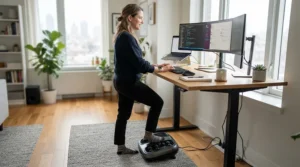
- Decide whether you’ll stand or lie. Full-body mats are built for lying down, so standing on foam compresses it. If you want to stand, favour foot-specific designs such as the FREATECH Foot Massage Acupressure Mat or the Vynusio Silicone Acupressure Foot Mat XL.
- Match intensity to your pain threshold. Fewer, bigger points feel harsher. If you flinch easily, look at the TrelaCo Foot Acupressure Massage Mat with Stones or the lighter Shakti Light tier.
- Check the surface material. Cotton breathes but needs spot-cleaning, while silicone wipes clean but feels more rubbery. Think about where the mat will live.
- Measure your space. A 30-inch board under a standing desk is one thing, and a full mat in a shared flat is another.
- Read the recent reviews, not just the star average. Look for comments on spike durability, flattening and sharpness after a few weeks.
- Ignore magnet and “energy flow” claims. I found no convincing evidence for them, so judge on pressure design.
- Set a realistic budget. A well-reviewed mat in the £15-£40 range does the job for most people.
Standing Fatigue: What’s Actually Happening to Your Legs
Standing fatigue isn’t just “being tired”. When you stand still for hours, your muscles stay in low-level static contraction, blood tends to pool in the lower legs, and the tissue under your heels and arches takes repeated load with no variation. A review of prolonged standing at work published in Rehabilitation Nursing found ample evidence that long periods of standing are associated with lower back and leg pain, cardiovascular problems, fatigue and discomfort. It concluded that interventions and guidelines on standing hours should reduce those risks.
Here’s what that means for you. A spike mat doesn’t fix the cause, which is too much static standing. It gives your feet a different sensory input after the fact, which many people find relaxing. The real fixes are boring but effective: shift your weight regularly, take seated breaks where possible, wear supportive shoes and stretch. A mat can sit alongside those habits as a pleasant ritual.
If your job allows it, an anti-fatigue floor mat at your workstation tackles the cause, while a spike mat tackles the aftermath. They do different jobs, and the combination is more sensible than either alone.
Plantar Sensitivity: Why Some Feet Can’t Handle Spikes
Plantar sensitivity means the soles are unusually tender or reactive to pressure. It can be down to a flare-up of heel pain, thin skin, hard-worked arches or just a low pain threshold. It’s the single biggest reason people abandon spike mats in week one.
The practical rules are simple. Start with socks, because a thin cotton layer takes the edge off without killing the sensation. Stand for one to two minutes, not ten. Keep most of your weight on your other foot at first and build up gradually. If a spot feels sharp rather than intense, step off.
Which products suit which sensitivity? From the specs, the TrelaCo Foot Acupressure Massage Mat with Stones has the kindest surface because its stones are rounded. The ProsourceFit Acupressure Mat and Pillow Set spreads weight across many points, and the Shakti Light variant does the same with a higher count. The Shakti Original, Pranamat ECO and BYRIVER Acupressure Foot Massage Mat are better saved for feet that have adapted.
If standing on a mat actively worsens your heel pain, stop. A spiked foot massage mat for plantar pain should feel like stimulation, not injury, and persistent pain deserves a professional look.
Foot Circulation: What a Spike Mat Can and Can’t Do
Almost every product page promises better foot circulation. Here’s the sober version. Pressing on the soles produces a flush of warmth and a tingling sensation afterwards, which is real. But “feels warm and tingly” isn’t the same as “measurably improves your circulation long-term”.
The most useful independent evidence I found is Edzard Ernst’s systematic review of reflexology trials. He concluded that the best available evidence didn’t convincingly show reflexology to be an effective treatment for any medical condition. He also acknowledged there’s little doubt a foot massage is pleasantly relaxing. A spike mat isn’t the same as reflexology delivered by a trained practitioner, but the lesson holds: enjoy the relaxation, and don’t expect medical miracles.
So treat the mat as a comfort tool. If you genuinely have circulation worries, such as persistently cold feet, swelling, colour changes or numbness, those need a GP’s attention rather than a gadget. The best circulation habit for standing workers is still the humblest: move more, even little ankle circles and calf raises, and elevate your feet in the evening.
Spike Mat vs Other Ways to Ease Tired Feet
A spike mat is one tool among many. Here’s how they stack up for end-of-shift soreness.
| Option | Best at | Weak spot | Best For |
|---|---|---|---|
| Spike or foot acupressure mat | Sensory relief, quick wind-down | Little evidence beyond relaxation | Post-shift ritual |
| Anti-fatigue floor mat | Reducing strain during standing | Doesn’t help afterwards | Fixed workstations |
| Massage ball or roller | Targeted arch and heel work | Needs sitting and effort | Specific tight spots |
| Cushioned, supportive footwear | All-day load reduction | Upfront cost | Everyone on their feet |
| Stretching routine | Strong evidence for plantar pain | Needs daily discipline | Heel and arch pain |
The takeaway is that footwear and stretching carry the most weight, a point NHS patient leaflets on plantar heel pain make repeatedly. Spike mats win on convenience and pleasure rather than treatment. If you only have budget for one thing, buy decent shoes. If you want a second thing, a mat such as the FREATECH Foot Massage Acupressure Mat is a cheap, enjoyable add-on.
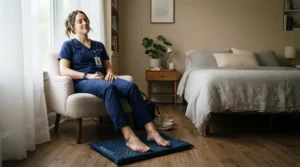
Practical Guide: Your First 30 Days With a Spike Mat
Week 1: gentle introduction. Put the mat on a hard, flat floor, never a bed or sofa, because a soft base absorbs the pressure. Wear thin socks and stand for one to two minutes, holding a worktop for balance. Expect sharp-ish sensations that fade as your skin adapts.
Week 2: build up. Move towards three to five minutes, and shift your weight gently from heel to toe. If you’re using a lying mat like the ProsourceFit Acupressure Mat and Pillow Set, try resting your feet on the pillow while seated.
Weeks 3-4: settle into a routine. Aim for five to ten minutes once a day, ideally straight after work or before bed. Many users report that a regular slot sticks better than “when I remember”.
Common first-month mistakes:
- Standing on it barefoot on day one and quitting in horror
- Using it on a carpet or bed
- Staying on too long when it hurts
- Expecting it to replace stretching or proper footwear
Maintenance: spot-clean cotton covers with a damp cloth and keep them dry. Wipe silicone mats with mild soapy water. Store mats flat or loosely rolled, because crushing them flattens spikes over time.
✨ Ready to build your wind-down routine?
🔍 Pick the mat that matches your intensity tolerance, and click any highlighted product above to check current pricing and availability. A few minutes a day could turn the worst part of your shift into the best part of your evening!
Real-World Scenarios: Matching Mats to Real Lives
These are illustrative profiles to help you decide, not testimonials from real testers.
The nurse on 12-hour shifts. She’s on hard ward floors all day and gets home with throbbing arches. A wipe-clean option suits hygiene-conscious habits. The FREATECH Foot Massage Acupressure Mat is compact, zoned and quick to rinse, and starting with a gentler zone makes sense after a long shift. Budget: low, use: daily.
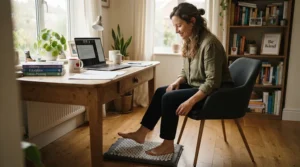
The teacher with a standing desk and tender heels. Her soles are sensitive, so sharp spikes are out. The TrelaCo Foot Acupressure Massage Mat with Stones offers a kinder surface, and the long strip lets her walk along it between lessons. Budget: low, use: daily, for a few minutes.
The warehouse worker who loves deep-tissue massage. He wants firm pressure and doesn’t mind a bit of a bite. The Shakti Original suits him, and he can lie on it for his back too. Budget: moderate, use: most evenings.
The wellbeing-minded home worker with money to spend. She values natural materials and a design that looks good in the living room. The Pranamat ECO fits, provided she accepts there’s no intensity dial. Budget: premium, use: daily.
Problem and Solution: Troubleshooting Your Spike Mat Routine
“It hurts too much.” Add socks, shorten the session and put more weight on the other foot. If it’s still too sharp, switch to a gentler design such as the TrelaCo Foot Acupressure Massage Mat with Stones.
“My heel pain is worse afterwards.” Stop using it on the affected foot and see your GP or a podiatrist if it persists beyond two weeks, in line with the NHS advice. Don’t push through.
“The spikes feel flat after a few weeks.” That’s wear. Check recent reviews for durability, and avoid storing heavy items on the mat. Foam-based mats compress faster than firm coconut-fibre fills like the Pranamat ECO.
“My feet still ache by lunchtime.” The mat isn’t the problem. Check your shoes, add short seated breaks and stretch your calves and arches daily.
“I never actually use it.” Put it where you’ll see it, ideally by the sink or the sofa. Tie it to an existing habit, such as the kettle boiling.
Safety, Evidence and When to Skip the Spikes
Spike mats are generally low-risk for healthy people, but a few cautions matter. Avoid them on broken, bruised or inflamed skin. Be especially careful if you have reduced foot sensation, such as with diabetes or neuropathy, because you might not feel damage happening. Speak to a GP or pharmacist first if you’re pregnant, take blood thinners, have a clotting condition or have had a deep vein thrombosis. Keep spike mats away from small children.
On evidence, be realistic. The research that exists is largely about acupuncture, not acupressure mats. One systematic review of acupuncture for plantar heel pain in Acupuncture in Medicine found supporting evidence comparable to some conventional interventions. Note that this concerns needles applied by practitioners, which isn’t the same as standing on a plastic mat. So I’d treat a spiked foot massage mat for plantar pain as a comfort measure alongside the basics the NHS recommends, such as stretching, supportive footwear and load management, rather than a stand-alone treatment.
Persistent, severe or worsening pain, night pain, numbness or swelling should be checked by a professional, whatever any product listing promises.
Frequently Asked Questions
❓ Can I stand on a full-size acupressure mat instead of buying a foot-specific one?
❓ How long should I stand on a spike mat each day?
❓ Is a spike mat better than a massage ball for plantar pain?
❓ Are silicone foot spike mats worth it compared with cotton ones?
❓ Can I use a spike mat if I have diabetes?
Conclusion: Spikes, Sense and a Better End to Your Shift
Let’s land this plane. A spike mat for sore feet after standing all day is a cheap, low-tech way to give tired soles a pleasant jolt of stimulation, and for most people that’s reason enough to try one. It won’t fix plantar fasciitis, rewrite your circulation or replace good shoes, and anyone who tells you otherwise is selling something.
If you want one safe recommendation, the ProsourceFit Acupressure Mat and Pillow Set is the proven all-rounder. If you stand most of the day, the FREATECH Foot Massage Acupressure Mat and Vynusio Silicone Acupressure Foot Mat XL are built for exactly that. If your soles are touchy, the TrelaCo Foot Acupressure Massage Mat with Stones is the gentle way in. And if you crave intensity, the Shakti Original and BYRIVER Acupressure Foot Massage Mat deliver, while the Pranamat ECO is the beautiful, expensive option for committed fans.
Whichever you choose, ease in slowly, keep up your stretching, and see a GP if pain doesn’t improve within two weeks. Your feet carry you through every shift, so they deserve a small reward at the end of it.
Recommended for You
- Acupressure Mat For Sciatica And Lower Back: 7 Honest Picks (2026)
- Acupressure Mat And Pillow Set For Sleep: 7 Best UK Picks (2026)
- Foldable Massage Mat For Travel: 7 Best Picks For 2026
Disclaimer: This article contains affiliate links. As an Amazon Associate, I earn from qualifying purchases. If you purchase products through these links, we may earn a small commission at no additional cost to you.
✨ Found this helpful? Share it with your friends! 💬🤗
