
In This Article
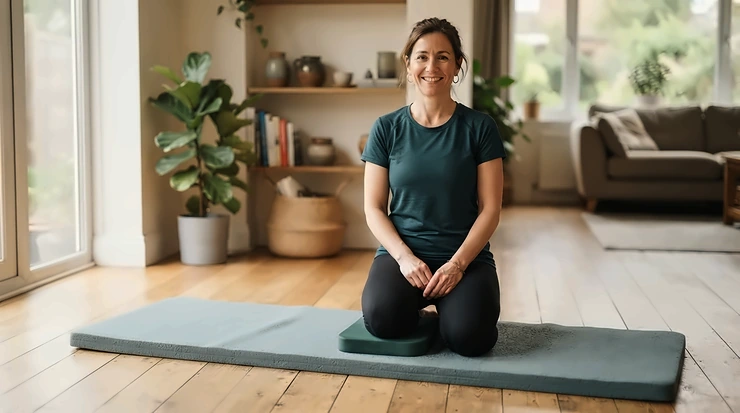
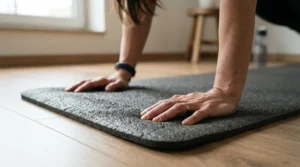
A thick foam stretching mat for yoga at home is a cushioned floor mat, typically 6–15mm deep and made from dense foam such as NBR, PVC or TPE. It is designed to protect knees, hips and spine during stretching, yoga and Pilates. It sits between a standard 3–4mm yoga mat and a bulky gym mat.
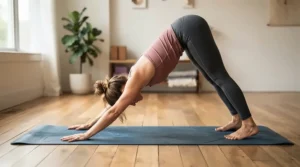
Your joints don’t care how lovely your laminate looks. Sink into child’s pose on bare boards and your kneecaps lodge a formal complaint within seconds. The fix sounds simple (buy something thicker), but “thick” is a slippery word, quite literally on laminate. A mat that is all squish can leave you wobbling like a jelly on a trampoline. The right thick foam stretching mat for yoga at home balances cushioning, density, grip and length. Get that blend right and floor time stops being a chore.
A quick word on method. I haven’t unrolled, sweated on or stretched across any of these mats, so you won’t find invented “when I tested this” stories here. You’ll get a spec-by-spec reading, plain-English reasoning, and the themes published UK testers keep returning to. I couldn’t verify Amazon UK star averages, so I’ve left them out. Skim the latest reviews before you buy. Prices appear as ranges only, because they move constantly.
Why bother at all? The NHS flexibility exercises guide suggests doing gentle stretches at least twice a week. You’re far likelier to keep that promise if the floor isn’t punishing you. Below you’ll find seven real mats, honest trade-offs, and practical guides for hard floors.
Quick Comparison: 7 Thick Foam Mats at a Glance
Short on time? This table gives you the essentials before we dig into the detail. Thicknesses and weights come from published listings and tester guides, so check the current listing before you buy.
| Product | Thickness | Weight | Price range | Best For |
|---|---|---|---|---|
| Xn8 Sports Thick Yoga Mat | 10mm or 15mm | around 1.1kg | £10–£20 range | Tight budgets, maximum squish |
| Amazon Basics Extra Thick Yoga Mat | 1cm (183 × 61cm) | check listing | under £25 | First-time buyers |
| PROIRON Thick Yoga Mat 10mm | 10mm (183 × 66cm) | around 1.1kg | £25–£35 range | Tall people, deep stretching |
| Gaiam Premium Yoga Mat 6mm | 6mm | around 1.6kg | £30–£40 range | Mixed workouts, all-rounders |
| Yogamatters Everyday Wellness Mat | 8mm | around 1.5kg | mid-£30s | Sensitive knees, wood and laminate |
| Adidas 8mm Yoga Mat | 8mm | around 0.5kg | £20–£25 range | Stretching plus light workouts |
| Manduka PRO Yoga Mat | 6mm (180 × 66cm) | around 3.4kg | over £100 | Long-term home practice |
If joint cushioning is your top priority, the Xn8 Sports Thick Yoga Mat and the PROIRON Thick Yoga Mat 10mm deliver the most squish per pound. If the mat also needs to stay put on slippery boards, the Yogamatters Everyday Wellness Mat and the Manduka PRO Yoga Mat justify their higher prices. The Adidas 8mm Yoga Mat is the featherweight compromise for people who’d rather not wrestle a mat up the stairs.
💬 Just one click — help others make better buying decisions too!😊
Top 7 Picks for a Thick Foam Stretching Mat for Yoga at Home: Expert Analysis
1. Xn8 Sports Thick Yoga Mat — plush 10mm or 15mm cushioning on a budget
Softness is the entire sales pitch, and at this price it lands better than you’d expect.
The Xn8 Sports Thick Yoga Mat comes in 10mm or 15mm, weighs roughly 1.1kg on the listing one UK reviewer tested, and uses a soft rubber-type foam rather than dense PVC. Even the thinner option offers about double the padding of a typical mid-range yoga mat, so kneeling lunges and child’s pose stop feeling like penance on laminate. The 15mm version is pure floor-sofa territory.
Based on the spec comparison, this suits gentle stretchers, back-care routines and anyone whose main goal is joint cushioning. It’s a poor choice for flowing sequences, because soft foam compresses and compression erodes stability. Reviewers describe it as supportive for knee and back work and say it stays flat instead of curling. The recurring complaint is bulk once rolled. I couldn’t verify Amazon UK star averages, so check recent reviews for long-term wear.
Pros:
- ✅ Plush 10mm or 15mm cushioning
- ✅ Light for its thickness
- ✅ Stays flat rather than curling
Cons:
- ❌ Spongy for standing and balance poses
- ❌ Bulky to roll and carry
Around £10–£20 range — the lowest-risk way to find out whether thick suits you.
2. Amazon Basics Extra Thick Yoga Mat — the no-drama 1cm starter
No gimmicks, no alignment lines, just a sensible slab of padding.
The Amazon Basics Extra Thick Yoga Mat is listed at 183 × 61 × 1cm and marketed as non slip. The 183cm length covers most adults lying flat, and 61cm is the standard width. A centimetre of depth hits the sweet spot for kneeling comfort without turning every standing pose into a balancing act. I couldn’t confirm the weight or foam type from the listing, so check both before ordering.
Here’s my read: this is the lowest-commitment entry to the category. If you’ve never used anything thicker than a studio-standard mat, it lets you test whether 10mm suits you before you spend more. Roundups of Amazon’s extra thick range, including a recent US one, tend to file it under value and beginner picks. That is editorial opinion, not a verified UK review average, so treat it as a hint rather than proof.
Pros:
- ✅ Full 183cm length suits most adults
- ✅ 1cm depth for comfortable kneeling
- ✅ Low price, low commitment
Cons:
- ❌ Few frills, no alignment guides
- ❌ Foam type not clearly stated
Under £25 — a safe default for first-timers.
3. PROIRON Thick Yoga Mat 10mm — over six feet of stretch room
Length is the headline here, and tall people will understand why.
The PROIRON Thick Yoga Mat 10mm measures 1830 × 660mm, uses high density NBR foam, weighs about 1.1kg and includes a carry strap and body alignment lines. The extra width over the usual 61cm gives elbows and hips breathing room. The 183cm length keeps a six-footer’s head and heels on the mat during lying hamstring stretches, which is exactly where cheaper mats betray tall people.
This is a stretching specialist rather than an all-rounder. One UK tester found 10mm too soft for flows that need firm grounding, yet wonderful for deep, stationary holds. If your plan is floor-based mobility rather than vinyasa, that trade-off works in your favour. The same taller-than-average tester singled out the length as the winning feature. As always, I couldn’t verify Amazon UK star averages.
Pros:
- ✅ Over six feet long
- ✅ Wider 66cm frame for elbow room
- ✅ Alignment lines and strap included
Cons:
- ❌ Wobbly for standing poses
- ❌ Soft foam may compress with heavy use
Around £25–£35 range — good value if you’re tall.
4. Gaiam Premium Yoga Mat 6mm — the grippy middle path
Think of it as firm enough to trust, soft enough to forgive.
The Gaiam Premium Yoga Mat 6mm weighs around 1.59kg and uses a synthetic polymer (PVC) construction with a grippy underside. Six millimetres is roughly double a standard mat. That takes the sting out of kneeling while keeping you close enough to the floor to feel balanced. The extra density also means it rolls up tightly and stays rolled without a strap.
Where does it fit? Mixed routines. If you’ll stretch on Monday, do Pilates on Wednesday and squeeze in a kettlebell session on Friday, this versatility beats a plush 15mm mat. Very sensitive knees may want more cushion, though. One UK health editor reports around two years of regular use with minimal wear. She also flags a strong plastic smell that takes weeks to fade, a typical PVC trait. Wider Amazon UK review data is something I couldn’t verify.
Pros:
- ✅ Grippy underside stays put
- ✅ Rolls tightly without a strap
- ✅ Durable and wipes clean
Cons:
- ❌ Strong plastic smell initially
- ❌ PVC won’t suit eco-minded buyers
Around £30–£40 range — fair for a mat with a solid track record.
5. Yogamatters Everyday Wellness Mat — 8mm that doesn’t skate on boards
Grip on both sides is the party trick.
The Yogamatters Everyday Wellness Mat is 8mm thick, weighs around 1.5kg and is reversible. Eight millimetres sits in the cushioning sweet spot: noticeably kinder than 6mm on knees and wrists, yet firm enough that standing poses still feel trustworthy. Because both faces grip, it doesn’t matter which way up you unroll it. That’s handy when you’re half-awake at 7am.
I’d shortlist this one for sensitive knees on wood or laminate. A UK health editor with tender knees reported that child’s pose and final relaxation felt more comfortable. She also said it didn’t slide across wooden flooring. The trade-off is upkeep: it’s described as harder to clean than wipe-and-go mats, so budget a few extra minutes after sweaty sessions. Stock has been patchy at times, so check availability before you plan around it.
Pros:
- ✅ Reversible, grips on both sides
- ✅ Stays put on wooden floors
- ✅ Sensible weight for 8mm
Cons:
- ❌ Harder to clean than some rivals
- ❌ Stock has been patchy in the past
In the mid-£30s — strong value for one mat that does everything.
6. Adidas 8mm Yoga Mat — featherweight 8mm for stretch-and-sweat days
At a reported 500g, it’s the lightest mat in this line-up.
The Adidas 8mm Yoga Mat is a medium density EVA/TPE foam mat with a rigid underside. Eight millimetres at that weight is rare, because most thick mats are porters’ nightmares. The rigid base is what keeps it firm on wood and carpet rather than shuffling away mid-lunge, and the sweat-resistant foam wipes clean in seconds. It also rolls without springing open again.
Who benefits? Anyone alternating stretching with light home workouts. Medium density means a touch of give underfoot, which is kind to joints but slightly less plush than 10–15mm foam for deep kneeling. A UK tester rated it for dumbbell and kettlebell sessions, while noting the sporty design won’t suit everyone. It was listed at Argos at the time of research, so confirm current stock on amazon.co.uk before relying on it.
Pros:
- ✅ Featherlight at roughly 500g
- ✅ Sweat resistant foam wipes clean
- ✅ Stays firm on wood and carpet
Cons:
- ❌ Less plush for deep kneeling
- ❌ Sporty look won’t suit everyone
Around £20–£25 range — impressive value for the weight.
7. Manduka PRO Yoga Mat — the closed cell lifetime mat
If thick foam were a pension, this would be the long-term plan.
The Manduka PRO Yoga Mat measures 180 × 66cm, is 6mm thick and weighs about 3.4kg. It’s made from PVC with a closed cell surface, a dot pattern underside and OEKO-TEX Standard 100 certification. Six millimetres sounds modest, but density does the work: the mat resists squashing, so your knees get genuine joint cushioning without sinking. The closed cell surface keeps sweat on top, which makes wiping it down quick.
The catch is weight and patience. At 3.4kg it’s a home mat, and the maker says the surface can feel slippery until it breaks in. One UK tester reported feeling secure even on tile. The lifetime guarantee covers wear and tear (one retailer listing defines “lifetime” as roughly ten years of regular use). Cleaning products outside Manduka’s recommended range can void it. I couldn’t verify Amazon UK review averages.
Pros:
- ✅ Closed cell surface wipes clean
- ✅ Dense, stable 6mm cushioning
- ✅ Lifetime guarantee
Cons:
- ❌ Heavy at around 3.4kg
- ❌ Slippery until broken in
Over £100 — pricey, but sensible only if you’ll use it for years.
Spec and Value Summary
| Product | Material (as published) | Grip on hard floors | Price range | Best For |
|---|---|---|---|---|
| Xn8 Sports Thick Yoga Mat | Rubber-type foam | Stays flat, per tester | £10–£20 range | Maximum cushioning on a budget |
| Amazon Basics Extra Thick Yoga Mat | Not stated in listing title | Listed as non slip | under £25 | Beginners |
| PROIRON Thick Yoga Mat 10mm | NBR foam | Listed as non slip | £25–£35 range | Tall stretchers |
| Gaiam Premium Yoga Mat 6mm | PVC / synthetic polymer | Grippy underside, per tester | £30–£40 range | Mixed workouts |
| Yogamatters Everyday Wellness Mat | Not verified here | Stayed put on wood, per tester | mid-£30s | Sensitive knees |
| Adidas 8mm Yoga Mat | EVA/TPE foam | Rigid underside, firm on wood | £20–£25 range | Stretch-plus-workout |
| Manduka PRO Yoga Mat | PVC, closed cell | Dot pattern, secure on tile per tester | over £100 | Long-term home practice |
Read the grip column and a pattern emerges. The Yogamatters Everyday Wellness Mat, the Adidas 8mm Yoga Mat and the Manduka PRO Yoga Mat are the ones testers trust on wood and tile. Budget buyers considering the Xn8 Sports Thick Yoga Mat or the Amazon Basics Extra Thick Yoga Mat should run a quick grip test in week one. I’ve left star ratings out because I couldn’t verify a consistent, current source for each mat.
Setting Up Your Mat: A First-30-Days Guide
Unboxing a new foam mat is a bit like breaking in leather boots. It needs patience before it behaves.
Day 1 — air it out. Unroll the mat somewhere ventilated for a day or two. Fresh PVC mats can carry a strong chemical smell that takes weeks to fade fully, as testers of the Gaiam Premium Yoga Mat 6mm point out. Then wipe it with a lightly damp cloth.
Week 1 — test the grip. Place the mat on a clean, dry floor and press a hand and foot firmly into each corner. If it creeps, see the laminate section below. Expect the Manduka PRO Yoga Mat to feel slick until its surface breaks in. The maker suggests simply using it often, with a towel on top meanwhile.
Weeks 2–4 — build the habit. Wipe after each session and let the mat dry fully before rolling it. Roll with the top surface facing outwards, which Manduka recommends for its own mats and which helps corners stay flat.
Common first-month mistakes:
- Storing a damp mat.
- Using harsh cleaners, which can void the Manduka PRO Yoga Mat guarantee.
- Buying a thickness you’ve never tried.
A simple schedule works: wipe after every use, deep clean monthly, and check the edges for dents or curling.
Which Mat for Which Person? Real-World Scenarios
These are illustrative profiles, not real customer stories, built to show how the specs translate into decisions.
The sore-kneed desk worker. Forty-five, rented flat with laminate, stretching three mornings a week, budget around £35. The Yogamatters Everyday Wellness Mat is the logical match: 8mm for joint cushioning, grip on both faces, and a weight that won’t annoy her back. The Gaiam Premium Yoga Mat 6mm is the firmer alternative.
The tall stretcher. Six foot two, chasing hamstring flexibility, around £30 to spend. The PROIRON Thick Yoga Mat 10mm keeps his head and heels on the mat, which matters more than any spec-sheet fancy.
The student on a shoestring. Shared house, hard floors, about £20. The Xn8 Sports Thick Yoga Mat or the Amazon Basics Extra Thick Yoga Mat gives plenty of padding for the price.
The committed home practiser. Four sessions a week, no plans to stop. The Manduka PRO Yoga Mat costs a lot upfront, but spread over years of use the cost per session drops to pennies.
The stretch-then-lift crowd. The Adidas 8mm Yoga Mat handles cool-down stretches and dumbbell work without feeling like a mattress.
✨ Ready to Make Floor Time Genuinely Comfortable?
🔍 Take your thick foam stretching mat for yoga at home search to the next level with these carefully selected options. Click any highlighted product name to check current pricing and availability on Amazon UK. Your knees, hips and laminate will thank you!
Common Problems and Quick Fixes
Even the best mat throws up the occasional annoyance. Here are the usual suspects and what to do about them.
Problem: the mat skates across laminate. Wipe the floor and the underside to remove dust, since grime kills traction. Still sliding? A thin anti-slip rug underlay can help, but check it’s safe for your floor finish. Alternatively, switch to a grippier design like the Yogamatters Everyday Wellness Mat.
Problem: the plastic smell won’t quit. Air the mat out and wipe it down. A PVC mat like the Gaiam Premium Yoga Mat 6mm can take several weeks to settle.
Problem: standing poses feel wobbly. The mat is probably too soft for that job. Move balance poses off the mat entirely, or choose 6–8mm.
Problem: edges curl. Reverse-roll the mat overnight, or unroll it under a few heavy books.
Problem: knees still complain. Fold a towel under them for kneeling poses, or fold the mat double if it’s flexible foam like the Xn8 Sports Thick Yoga Mat.
A Beginner Floor Stretching Routine for Your New Mat
A mat is only as good as the habit it supports. Here is a ten-minute floor stretching routine to christen yours. It’s a general suggestion, not medical advice, and the NHS is clear that you should stop immediately if anything hurts. Many people hold static stretches for around 30 seconds. The NHS’s gentle beginner stretches use shorter 5-second holds repeated three times, so start there if you’re stiff.
- Cat–cow (8 slow rounds). Hands under shoulders, knees under hips. Cushioning matters most here.
- Child’s pose (30 seconds). Sink hips towards heels, with a folded towel behind tender knees.
- Lying hamstring stretch (30 seconds per leg). Loop a towel round the foot. A long mat like the PROIRON Thick Yoga Mat 10mm keeps your head supported.
- Figure-four glute stretch (30 seconds per side).
- Knees-to-chest rock, then lying spinal twist (20 seconds per side).
- Kneeling hip-flexor lunge (30 seconds per side). Extra thick foam really earns its keep here.
Finish with two minutes of slow breathing. Aim for at least twice a week, building up gradually.
How to Choose a Thick Foam Stretching Mat for Yoga at Home
To choose a thick foam stretching mat for yoga at home, match thickness, density, grip and length to your joints, your floor and your height, in that order.
- Pick thickness by joint sensitivity. A UK health editor’s thick yoga mat testing guide treats 6mm as enough to support major joints, and 8mm or more as specialist. Choose 8–10mm for tender knees and hips, and 15mm only for lying and kneeling work.
- Prioritise density as well as depth. A 15mm mat that squashes flat under your knee is thinner in practice than a dense 8mm one. Press a thumb in and see how fast it rebounds.
- Check the underside against your floor. Textured, dotted or rigid bases generally grip laminate better than smooth ones.
- Measure length and width. If you’re about 5ft 10in or taller, look for 183cm or more.
- Consider cleaning. Mats with a closed cell surface resist sweat and wipe down faster.
- Weigh weight against storage. The Adidas 8mm Yoga Mat at around 0.5kg and the Manduka PRO Yoga Mat at 3.4kg suit very different lifestyles.
- Set a budget and check the guarantee. Only the Manduka PRO Yoga Mat in this list carries a lifetime guarantee that I could verify.
Closed Cell Foam vs Open Cell Foam: Does It Matter for Stretching?
It does matter, though less than marketing suggests. Materials specialists explain that closed cell foam keeps its internal pores sealed and separate. That makes it denser and heavier, and good at keeping out water, vapour and dust. Open cell foam is softer and lighter and springs back easily, but its spring tends to fade over time.
Translate that to your mat and you get a simple trade-off. Closed cell foam means a firmer, cleaner surface that shrugs off sweat, which is why the Manduka PRO Yoga Mat advertises it prominently. Softer, more open structures feel plusher but tend to hold onto moisture and lose their bounce sooner.
Here’s the awkward truth: most budget listings, including the Xn8 Sports Thick Yoga Mat and the PROIRON Thick Yoga Mat 10mm, say “high density foam” without stating cell structure. Treat closed cell foam as a claim to look for rather than a given. If a seller won’t say, wipe-clean performance is your next best clue.

Joint Cushioning: How Thick Is Thick Enough?
Joint cushioning is the reason most people buy a thicker mat, but depth is only half the story. A mat that’s too thin lets your kneecap “bottom out” against the floor. One that’s too soft turns every step into an unstable wobble.
Here’s a practical rule of thumb. For standing-heavy routines, 6mm of dense material offers the best compromise. For floor-heavy routines like hamstring work and kneeling lunges, 8–10mm of dense foam is a sweet spot. Beyond 10mm you’re buying comfort at the cost of stability, which is fine if you stay lying or kneeling.
A yoga teacher quoted by one UK magazine suggests a neat workaround: do balancing poses off the mat so the padding is there only when you need it. Density matters too. A firm 6mm mat like the Manduka PRO Yoga Mat can feel kinder than a flimsy 10mm one, because it doesn’t compress under load. For a plush option, the PROIRON Thick Yoga Mat 10mm is the stretching-friendly choice.
Extra Thick Exercise Mat for Hard Floors: What Actually Changes
An extra thick exercise mat for hard floors does three jobs that a standard mat can’t. It spreads pressure so bony points (knees, elbows, tailbone) stop pressing directly into tile or laminate. It insulates you from the winter chill that rises off UK floors. And it absorbs a little impact if you’re doing anything beyond static stretching.
The practical effect is subtle but real. On a bare floor, a long lying stretch becomes a negotiation about which body part you can afford to ignore. On an extra thick exercise mat for hard floors, you stop thinking about the ground and start thinking about the stretch.
For maximum squish, the Xn8 Sports Thick Yoga Mat in 15mm is the extreme option. For a balance of cushioning and control, the Amazon Basics Extra Thick Yoga Mat at 1cm and the Yogamatters Everyday Wellness Mat at 8mm both work. If you’d rather not feel like you’re stretching on a mattress, start at 8mm and go up only if your joints ask for it.
Non Slip Stretching Mat for Laminate Floors: Grip Without the Skate
Laminate is smooth, hard and unforgiving, so a non slip stretching mat for laminate floors needs more than a nice surface. Look first at the underside. Dotted, textured or rigid bases generally grip better than smooth foam. The Adidas 8mm Yoga Mat uses a rigid underside, the Yogamatters Everyday Wellness Mat grips on both faces, and the Manduka PRO Yoga Mat pairs a dot pattern with sheer weight.
Keep both the floor and the underside clean and dry, since dust and moisture are the main enemies of traction. Test every new mat in week one: press a hand into the centre and push outwards. If it slides, try a thin anti-slip underlay made for rugs, after checking it suits your floor finish.
A non slip stretching mat for laminate floors should also be gentle on the laminate itself. Don’t leave a damp mat rolled out for days. Trapped moisture is rarely good for flooring, so check your floor manufacturer’s care guidance if you plan to leave the mat down.
Thick Foam Mat vs Standard Yoga Mat: Benefits Compared
A standard mat is brilliant for studio classes, but home stretching on hard floors has different demands.
| Factor | Thick foam mat (6–15mm) | Standard 3–4mm yoga mat | Bare floor + folded towel |
|---|---|---|---|
| Joint cushioning | High — spreads pressure on knees and hips | Low to moderate on hard floors | Minimal; towel compresses fast |
| Balance stability | Drops as thickness rises | Excellent | Poor — towels shift |
| Cold-floor insulation | Good | Fair | Poor |
| Portability | Bulkier; Adidas 8mm Yoga Mat is the light exception | Easy to roll and carry | n/a |
| Best For | Home stretching, Pilates, sensitive joints, e.g. Yogamatters Everyday Wellness Mat | Studio classes, standing flows | Emergencies only |
The table shows a clear divide: thick foam wins on comfort, thin wins on stability. If most of your routine is lying down or kneeling, thick foam is the better home choice. If you’re running standing flows, a firmer mat like the Manduka PRO Yoga Mat keeps stability without sacrificing too much cushion. Skip the towel unless you enjoy rearranging it every thirty seconds.
Long-Term Cost and Maintenance
The sticker price tells you very little about what a mat really costs you. Think in cost per session.
Take a premium mat in the over-£100 bracket, such as the Manduka PRO Yoga Mat. A retailer listing says its guarantee assumes roughly ten years of regular use. At around 150 sessions a year, that’s single-digit pence per session. Now take a budget mat in the mid-teens, such as the Xn8 Sports Thick Yoga Mat or the Amazon Basics Extra Thick Yoga Mat, and assume it lasts two years. That works out at a similar pence per session.
So the premium isn’t really buying lower cost. It’s buying stability that doesn’t degrade, a surface that stays cleaner, and a warranty. Soft foam tends to dent and compress over time, which is the usual failure mode for budget mats.
Maintenance costs are trivial: a damp cloth, mild cleaner, and the discipline to dry the mat before rolling. Replace any mat when it no longer springs back under your knee, because that’s when your joint cushioning has quietly disappeared.

FAQ
❓ Is a 15mm yoga mat too thick for stretching?
❓ How do I clean a thick foam yoga mat?
❓ Is it worth paying over £100 for a yoga mat?
❓ Do thick yoga mats help with bad knees?
❓ How often should I stretch on my mat each week?
Conclusion
The best thick foam stretching mat for yoga at home depends on what your joints, floor and routine demand. If you want maximum cushioning for the least money, the Xn8 Sports Thick Yoga Mat and the Amazon Basics Extra Thick Yoga Mat are easy starting points. Tall stretchers will appreciate the PROIRON Thick Yoga Mat 10mm. For the best all-round grip and comfort on wood or laminate, the Yogamatters Everyday Wellness Mat is my shortlist favourite, with the Gaiam Premium Yoga Mat 6mm as the firmer alternative. The Adidas 8mm Yoga Mat wins on weight, and the Manduka PRO Yoga Mat wins on longevity if you can stomach the price.
Whatever you choose, remember that density, grip and length matter as much as thickness. Test the mat on your own floor in the first week, and build a simple floor stretching routine around it so it earns its space. If you live with arthritis or ongoing joint pain, the charity Versus Arthritis has practical exercise guidance worth reading alongside advice from your GP or physio.
Recommended for You
- Spike Mat For Sore Feet After Standing All Day: 7 Honest Picks (2026)
- Acupressure Mat For Sciatica And Lower Back: 7 Honest Picks (2026)
- Acupressure Mat And Pillow Set For Sleep: 7 Best UK Picks (2026)
Disclaimer: This article contains affiliate links. As an Amazon Associate, I earn from qualifying purchases. If you purchase products through these links, we may earn a small commission at no additional cost to you.
✨ Found this helpful? Share it with your friends! 💬🤗
