
In This Article
Replacement self adhesive TENS pads for sensitive skin are reusable, gel-coated electrodes that stick straight to the skin and connect to your TENS machine’s lead wires. They use a gentler, often latex-free hydrogel adhesive designed to reduce redness, itching and rash, and they replace the worn-out pads that came in the box. On most UK home machines, they plug in through standard 2mm pins.
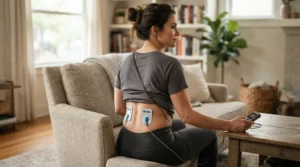
Here is the part the box never mentions: the machine is rarely what fails first. The pads are. After a few dozen sessions the gel dries out, the corners curl like an old sticking plaster, and that smooth tingle turns into something closer to pins and needles. If your skin is reactive, a tired or harsh pad can also leave a neat, red, itchy rectangle that hangs around for days. NHS pain-clinic guidance notes that skin irritation can occasionally occur under the electrode site, and its advice is refreshingly simple: clean skin, firm contact and small changes in position.
So this guide goes one step further. You’ll find seven real products compared on what matters for reactive skin: the gel chemistry, the pad size, the reuse rating, and whether the connector will genuinely fit your leads. Along the way I’ll unpack hypoallergenic TENS electrode pads (and what that label does and doesn’t promise), show how replacement TENS pads with 2mm connectors differ from snap-style pads, and walk through electrode placement so you’re not fighting avoidable skin irritation.
One honest note before we start. I haven’t strapped any of these to my own back, and I won’t pretend otherwise. Everything below comes from manufacturer specifications, retailer listing data and the aggregated sentiment of real buyer reviews, filtered through plain-spoken analysis. Where the evidence is thin, I’ll say so.
Quick Comparison Table: Replacement Self Adhesive TENS Pads for Sensitive Skin
Prices change constantly, so the ranges below are approximate and reflect the time of research. Always check the current price on the listing.
| Product | Size / Pack | Connector | Skin-friendly claim | Approx. price range | Review signal | Best For |
|---|---|---|---|---|---|---|
| TensCare Blue Gel | 50×50mm, per pack | 2mm pin | Extra-thick hypoallergenic gel | Single digits to low teens (£) | Limited independent data | Reactive or allergy-prone skin |
| Med-Fit 1 | 16 pads | Broad “most TENS/EMS” (verify pin) | Hypoallergenic, latex-free hydrogel | Around £8–£14 | Positive themes | Cautious buyers wanting a clinical-style pad |
| Healthcare World Square | 16 × 5×5cm | 2mm pin | Latex-free | Around £6–£12 | Large pool, ~4.7★ | Everyday value |
| AUVON Combo Set | 20 pads, 3 sizes | 2mm pin | Latex-free | Around £9–£15 | Large pool, ~4.7★ | Multi-area use |
| Healthcare World Large | 16 × 5×10cm | 2mm pin | Water-based gel, fabric backing | Around £8–£14 | Mid pool, ~4.5★ | Back and thighs |
| NURSAL 2×2 | 20 × 2in square | 2mm (check version) | Latex-free | Under about £12 | Very small pool | Budget stocking up |
| LotFancy 2mm | 20 pads | 2mm pin | Not clearly stated | Under about £12 | Smaller pool, ~4.5★ | Lowest-cost spares |
Looking at the table, TensCare Blue Gel and Med-Fit 1 are the only two that put sensitive skin front and centre in their pitch, so they’re my starting point if you’ve reacted before. Healthcare World Square and AUVON Combo Set have the deepest review pools, which makes them the safer bets when your skin is only mildly fussy. Budget buyers should note that NURSAL 2×2 and LotFancy 2mm save money but give you less proof of skin-friendliness.
💬 Just one click — help others make better buying decisions too!😊
Top 7 Replacement Self Adhesive TENS Pads for Sensitive Skin: Expert Analysis
Each pick below follows the same logic: what the spec means in practice, who it suits, what reviewers keep saying, and where it falls short.
1. TensCare Blue Gel — extra-thick hypoallergenic gel for reactive skin
This is the pad on the list built around the sensitive-skin problem from its very first line: a deliberately thick, hypoallergenic gel layer.
The TensCare Blue Gel is a 50×50mm square with a 2mm round pin connection, rated by the manufacturer for up to 30 reuses. The square format is the size most home machines ship with, so it slots into existing habits. The 30-use rating is also realistic: NHS patient information for children’s TENS puts pad life at around 30 uses as well. On paper, a thicker gel layer gives you more cushion between the conductive surface and your skin, which matters when every bit of friction counts.
My read of the spec sheet: this suits anyone who has already reacted to a standard pad and wants a purpose-built replacement. I couldn’t verify a deep pool of independent reviews for this exact listing, so treat the sensitive-skin claim as the maker’s word rather than crowd-proven. Check the verified-purchase reviews before you commit.
Pros:
- ✅ Extra-thick hypoallergenic gel aimed at sensitive skin
- ✅ Standard 2mm pin fits most machines
- ✅ Rated for up to 30 reuses
Cons:
- ❌ Mostly manufacturer claims, little independent review data
- ❌ Often costs more per pad than bulk multipacks
Price: typically a single-digit to low-teens £ range per pack (check current price). Verdict: worth paying a little extra if your skin has already complained once.
2. Med-Fit 1 — hypoallergenic hydrogel in a generous 16-pad pack
The headline here is breadth: sixteen hypoallergenic, latex-free hydrogel pads, enough to keep a household going for months.
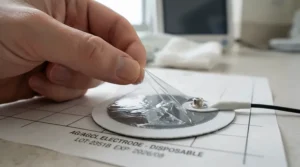
The Med-Fit 1 listing describes a hydrogel that its maker calls patented Japanese technology, CE-certified and classed as a Class I medical device, made by a UK medical company. Those are the seller’s own claims, so read them as marketing until proven otherwise. Still, a CE-marked, latex-free, hypoallergenic pad with a 16-pad count is a sensible combination for cautious buyers. Compatibility is described broadly (“most TENS and EMS devices”), which isn’t the same as “2mm pin”, so look at your lead-wire tips first.
Reviewers consistently mention that the pads stay sticky after repeated applications, fit their machines without fuss and arrive in sealed packets. That’s the sort of dull, reliable feedback you want from a consumable. I couldn’t confirm a large verified review count, so check the listing for the current figure.
Pros:
- ✅ Hypoallergenic, latex-free hydrogel
- ✅ Sixteen pads covers many sessions
- ✅ Reviewers report lasting stickiness
Cons:
- ❌ Patent and “recommended by pain clinics” claims are unverifiable
- ❌ Connector type needs checking before buying
Price: around £8–£14 at the time of research. Verdict: strong value for sensitive skin if the connector matches.
3. Healthcare World Square — the best-proven everyday pad
Sometimes the most useful feature is simply a mountain of satisfied buyers.
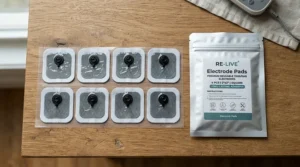
The Healthcare World Square pack gives you sixteen 5×5cm latex-free pads (four packs of four) with 2mm pin connections and a three-layer construction. The 5cm square is the classic format, so it behaves predictably on shoulders, knees and lower backs. The sealed bags carry an expiry date, which is a small but genuinely useful sign that the gel is being kept fresh before it reaches you.
Aggregated review sentiment is strong: a rating around 4.7 from roughly 1,800 ratings in a recent snapshot. Buyers repeatedly say the pads fit their existing machines, including a Lloyds Pharmacy unit, stick well and cost less than branded originals. One caution: a reviewer on a related Healthcare World listing mentioned an itchy rash after leaving pads on too long, a reminder that latex-free isn’t the same as hypoallergenic.
Pros:
- ✅ Huge review base with consistently positive themes
- ✅ Sealed bags with visible expiry dates
- ✅ Latex-free with standard 2mm pins
Cons:
- ❌ Not specifically sold as hypoallergenic
- ❌ Some buyers report skin reactions with long wear
Price: around £6–£12. Verdict: the sensible default for mild sensitivity.
4. AUVON Combo Set — three sizes for awkward body areas
Most pad packs assume you only have one body part. This one assumes you have several.
The AUVON Combo Set contains twenty latex-free pads in three sizes (a listing breakdown shows four small round, twelve 2×2 inch and four 2×4 inch), all with 2mm pins. Small rounds suit wrists and the base of the thumb; the large rectangles cover calves and lower backs. The maker claims up to 100 uses per pad, though other AUVON packs claim roughly 45, so treat 100 as a best case and plan around 30–45.
Review sentiment is positive: around 4.7 from roughly 4,400 ratings. Common themes are better stickiness than the pads supplied with the machine, and a reminder to start with clean, oil-free skin. One reviewer with very sensitive skin reported no rash so far but found the gel slightly thin. A retailer listing for a related AUVON rectangular pack also notes that highly sensitive users may still react despite the latex-free material.
Pros:
- ✅ Three sizes in one pack
- ✅ Very large positive review pool
- ✅ Standard 2mm pins
Cons:
- ❌ Latex-free, but not marketed as hypoallergenic
- ❌ 100-use claim is optimistic
Price: around £9–£15. Verdict: the most flexible pick if you treat more than one area.
5. Healthcare World Large — big-area coverage for back and thighs
Bigger pads make a quiet but useful difference to comfort.
The Healthcare World Large pack has sixteen 5×10cm pads with a non-woven fabric backing, water-based gel and 2mm pins. At 50 square centimetres, each pad has double the area of a 5×5cm square, so the same current spreads over a wider patch of skin. That lowers current density, which is why large pads often feel gentler on broad muscle groups, though you may need a slightly higher setting to feel the same sensation.
The listing sits around 4.5 from roughly 465 ratings. I found little detailed review text for this exact pack, so the rating is the main evidence. Honestly, that’s thinner than the square version’s profile.
Who is it for? Anyone treating lower-back, hamstring or thigh pain. Who should skip it? Anyone treating elbows, wrists or knee joints, where a long rectangle simply won’t sit flat.
Pros:
- ✅ Wide surface spreads current comfortably
- ✅ Fabric backing flexes with muscle
- ✅ 2mm pin compatibility
Cons:
- ❌ Awkward on small joints
- ❌ No hypoallergenic claim
Price: around £8–£14. Verdict: a good add-on rather than a sole pad type.
6. NURSAL 2×2 — budget twenty-pack with a non-irritating pitch
Think of this as the “keep a spare drawer full” option.
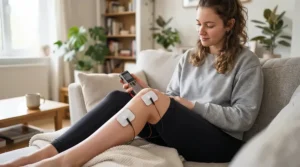
The NURSAL 2×2 pack offers twenty 2-inch square, latex-free pads, with a claim of up to 50 uses each and positioning for devices such as AUVON and TENS 7000 units, both of which use 2mm pin leads. Be careful, though: NURSAL also sells snap-connector (3.5mm) versions, and the two aren’t interchangeable. Confirm the pin type on the exact listing before ordering.
The review pool I found was very small, which means the wording on the listing is doing most of the persuading. The pads are described as self-adhesive and gentle, but a handful of reviews isn’t evidence to build confidence on. If you’re buying on price, that’s fine; if you’re buying for fragile skin, it isn’t.
Pros:
- ✅ Twenty pads at a low cost per pad
- ✅ Latex-free formulation
- ✅ Sized for common 2-inch machines
Cons:
- ❌ Very few reviews to lean on
- ❌ Easy to buy the wrong connector version
Price: under about £12. Verdict: acceptable for non-reactive skin, a gamble for reactive skin.
7. LotFancy 2mm — the cheapest way to stock up
If you simply burn through pads, this is the bulk-buy entry.
The LotFancy 2mm twenty-pack uses standard 2mm pin connectors, and a recent retailer page shows around 4.5 from roughly 221 ratings (that page was a US retailer, so cross-check the amazon.co.uk listing). A forty-pack carbon-based version also appears in roundups. What’s missing is clear detail on gel chemistry or latex-free status, so I can’t call these hypoallergenic with a straight face.
My analysis: these make sense as sacrificial spares for short sessions on tough skin, such as calves. They make less sense on your neck, chest or any area that has reacted before. Rotate them with a gentler primary pad and you get the savings without betting your skin on them.
Pros:
- ✅ Very low cost per pad
- ✅ Standard 2mm pin
- ✅ Decent rating from a few hundred buyers
Cons:
- ❌ Skin-safety details are thin
- ❌ Smaller review base
Price: under about £12. Verdict: bulk value, not the first choice for sensitive skin.
✨ Don’t Miss These Exclusive Deals!
🔍 Take your TENS sessions to the next level with these carefully selected pads. Click on any highlighted item to check current pricing and availability. A fresh set of gentle, well-fitted pads could be all it takes to create calmer, irritation-free relief your skin will thank you for!
Practical Usage Guide: Getting 30 Sessions From Every Pad
Even the best pad fails early if you treat it badly. Here’s the routine that follows the advice in NHS patient leaflets.
Before the first use
- Wash the area with plain water and dry it fully. Skip moisturiser, bath oil and talc; patient leaflets warn the pad probably won’t stick through them.
- Remove the pad from its plastic liner by peeling a corner, never by tugging the lead.
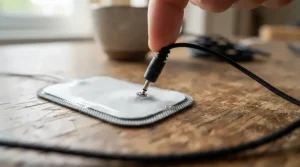
- Connect the 2mm pin to the pad first, then the lead to the machine.
During the session
- Start with the intensity at zero and increase slowly to a strong but comfortable tingle.
- NHS leaflets typically suggest starting with 30–60 minutes, then checking the skin before building up.
- Keep pads at least one pad-width apart. Pads touching can deliver a small shock.
After the session
- Peel from the edge, slowly, and put the pad back on its liner.
- Store it in a resealable bag away from heat.
- To revive a tired pad, one retailer suggests a very light rub of tap water on the gel; a West Suffolk NHS leaflet suggests resting pads on their liner in the fridge for a few hours.
Common first-30-day mistakes
- Leaving pads on for hours “because they’re still sticky”.
- Applying to freshly shaved skin, which is already irritated.
- Using the same spot every day. Shift position slightly daily.
Replace pads when stickiness fades, not when you remember. That’s the single best defence against skin irritation.
Real-World Scenarios: Matching Replacement TENS Pads to Your Life
Three quick profiles show how the choices play out.
Scenario 1: The eczema-prone retiree. Margaret (a composite profile, not a real person) uses a TENS machine daily for knee osteoarthritis and has had rashes from adhesives before. Budget: about £10–£15 for a trial. Environment: home, seated, low sweat. Reasoning: TensCare Blue Gel or Med-Fit 1 first, because both put hypoallergenic gel at the centre of their pitch. She should patch-test a pad on the inner forearm for an hour before using it near the knee.
Scenario 2: The desk worker with lower-back pain. Dev uses his machine three times a week for 45 minutes. Budget: under £20. Reasoning: Healthcare World Large for the broad lumbar muscles, with Healthcare World Square as a backup. The large pads keep current density down; the squares cover the occasional shoulder niggle.
Scenario 3: The household sharing one machine. Two adults and a teenage athlete share a unit, so each person needs their own pads for hygiene. Budget: moderate. Reasoning: AUVON Combo Set gives sizes for every body area, with NURSAL 2×2 or LotFancy 2mm as extra spares. Label each person’s bag with a marker.
Notice that the “best” pad changes with the person, which is exactly why one generic recommendation never works.
Skin Irritation Problem → Solution Guide
Skin irritation is the most common complaint with pads. Here’s how to fix the five that crop up most.
1. Redness that fades quickly. Usually mechanical, from adhesive tension or pressure. Rest the area, vary placement and check the pad isn’t lifting at the edges.
2. Itching or a rash that develops later. This points towards a chemical reaction. Stop using the pad. Great Ormond Street Hospital advises removing pads straight away if skin irritation occurs and discussing alternative pad types with the pain team. Speak to your GP or pharmacist if it persists.
3. Pads that won’t stay stuck. Poor contact means weak stimulation, occasional unpleasant “shocks” and more irritation. Clean the skin, freshen the gel as above or replace the pad.
4. Burning at the pad edge. Often an edge has lifted. Stop, reseat or replace, and reduce the intensity.
5. Pulling on hairy skin. Trim rather than shave right before use, and peel slowly at an angle.
The same GOSH page is also clear that pads must never go over the front of the neck (the carotid sinus) or over broken or infected skin. Skin that’s already angry isn’t a place to experiment.
How to Choose Replacement Self Adhesive TENS Pads for Sensitive Skin
Here is a seven-step process that works whatever brand you end up with.
- Check your connector first. Look at the lead-wire tip. A thin metal pin means 2mm; a round button socket means snap. Mismatch equals wasted money.
- Read the adhesive claim critically. “Hypoallergenic” suggests lower risk, “latex-free” only removes one allergen, and neither guarantees you won’t react.
- Match size to the area. Small rounds for hands and wrists, 5×5cm squares for general use, 5×10cm for backs and thighs.
- Be realistic about reuse ratings. Plan around 30 uses even if the box claims more; you’ll be pleasantly surprised if it lasts.
- Check packaging. Resealable bags and clear liners keep gel from drying between sessions.
- Read reviews for patterns, not scores. Repeated mentions of rash or poor stickiness matter more than a single star rating.
- Patch-test first. Wear one pad on your inner forearm for an hour (without current) and watch for redness over the next day.
Follow these and you’ll avoid the three classic regrets: wrong connector, wrong size and wrong chemistry.
Hydrogel Adhesive Explained: What “Hypoallergenic” Does and Doesn’t Mean
A hydrogel adhesive is a water-rich, sticky polymer gel that conducts current and holds the pad to your skin. It’s the layer your skin actually meets, so it decides whether a session feels pleasant or itchy.
The reality of allergy is less tidy than marketing suggests. Dermatology literature includes documented case reports of contact dermatitis to acrylate in TENS electrode gel, and the same paper notes that reactions to propylene glycol in gel, to rubber components and to nickel in the metal parts are not uncommon either. Put plainly, the adhesive isn’t the only possible culprit.
So what does “hypoallergenic” really tell you? Great Ormond Street Hospital describes its recommended pads as hypoallergenic and therefore less likely to cause a reaction. Notice the wording: less likely, not impossible. Treat the label as a reduction in risk rather than a promise.
A few practical takeaways from the spec sheets:
- Latex-free is useful if you have a latex allergy, but says nothing about acrylates.
- Thicker, softer hydrogel layers tend to be marketed for sensitive skin, though evidence is mostly manufacturer-led.
- Dry, cracked gel concentrates current in small areas, which is a recipe for stinging.
If you’ve had a confirmed reaction, ask your GP or a dermatologist which ingredient is responsible. That information is worth more than any marketing label.
Replacement TENS Pads With 2mm Connectors: Compatibility Checklist
Replacement TENS pads with 2mm connectors are the industry’s workhorse format: a short, flexible lead (a “pigtail”) ends in a thin metal pin that slides into the lead wire’s socket. Many seller listings state that snap, button, clip and proprietary connectors will not work with these pads, and that matches how the pins physically fit.
Use this checklist:
- Inspect the lead wire. Thin pin? Choose pads with 2mm connectors. Button socket? You need snap pads.
- Check proprietary systems. Some brands, such as the Philips TensRelief range, use a magnet connection with their own pads. Those are not 2mm.
- Look at wear. A flaky connection can mimic pad failure. If stimulation cuts out when you move, suspect the lead before the pad.
- Keep spares of the right type. Buying a second pack of the wrong connector is the most common (and avoidable) purchase mistake.
When the listing says “universal”, read it as “fits 2mm pins”, not “fits everything”. The manual is still the final authority.

Electrode Placement Guide: Getting the Pads in the Right Place
Electrode placement matters more than most people realise, because current mostly travels between the pads. The reliable rule is to bracket the pain: put pads on healthy skin either side of, above and below, or around the sore area.
Practical rules drawn from NHS leaflets:
- Keep pads apart. Leave at least the width of a pad between them so current does not take a short route.
- Avoid bony points. Contact is poorest over bone, and poor contact brings irritation.
- Never place pads on the front of the neck, over broken or infected skin, or over areas you cannot feel properly.
- Vary the site. Several NHS trusts advise moving pads slightly each day to reduce skin irritation.
- Use “crossover” for large areas. One Kent NHS page shows how crossing pairs of pads over a large area can cover more ground, and it notes that rubber pads with gel may be less irritant for some people, while over-the-counter hydrocortisone cream can help manage irritation (though not on broken or irritated skin).
Where you stick pads for a particular condition is a clinical decision. If you’re unsure, ask a physiotherapist to mark a body chart for you once, then follow it.
Self Adhesive Gel Pads vs Rubber Carbon Electrodes
Self adhesive pads aren’t the only choice. Reusable rubber (carbon) electrodes with separate gel are the older format, and some NHS information describes them as an option that can be less irritant.
| Feature | Self adhesive gel pads | Rubber carbon + gel |
|---|---|---|
| Convenience | Peel, stick, go | Needs gel plus tape or straps |
| Lifespan | Around 20–30 uses typical | Can last far longer with care |
| Skin reaction risk | Adhesive and gel chemistry | Gel, tape and sometimes rubber allergy |
| Mess | Minimal | Gel residue to clean |
| Best For | Most people; TensCare Blue Gel and Med-Fit 1 for reactive skin | People who react to adhesives and can manage straps; large, flat areas |
Looking at the comparison, self adhesive pads win on convenience, which is why they dominate the market and why Healthcare World Square and AUVON Combo Set have such big review pools. Rubber electrodes can be kinder to adhesive-sensitive skin, but rubber allergy exists and the faff of gel and tape puts many people off. If adhesives repeatedly defeat you, ask a clinician about the rubber route.
Long-Term Cost & Maintenance: Are Cheap Pads Really Cheaper?
Let’s do the sums with ranges rather than exact prices. A pack of sixteen pads at roughly £6–£12, rated for about 30 uses each, is 480 pad-sessions. Spread over two pads per channel per session, that’s around 2p–5p per session in the best case. Real-world life is shorter, so double or triple it and you’re still talking pennies.
| Product | Pack size | Realistic reuse | Cost band | Best For |
|---|---|---|---|---|
| Healthcare World Square | 16 | Around 20–30 | £ | Everyday value |
| AUVON Combo Set | 20 | Around 30–45 | ££ | Variety |
| Med-Fit 1 | 16 | Around 20–30 | ££ | Cautious skin |
| TensCare Blue Gel | Per pack | Up to 30 | ££ | Reactive skin |
| LotFancy 2mm | 20 | Unverified | £ | Spares |
The takeaway: at this scale, saving a few pounds per pack matters far less than avoiding a week off treatment because of a rash. Pay slightly more for gentler gel if your skin is fussy, and spend the savings on a resealable pouch to keep pads fresh.
Maintenance rules that protect your investment: always return pads to their liners, avoid heat, replace when stickiness fades, and never share pads between people.
Replacement TENS Pads for Specific Audiences
Eczema-prone skin. Avoid active patches entirely; choose hypoallergenic gel, patch-test, and rotate sites daily.
Older adults. Thinner skin tears more easily, so peel slowly and avoid very high-tack pads. Reduced sensation is also a risk: if skin is numb you may not feel the intensity creeping too high.
Labour and pregnancy. Follow your midwife’s guidance. Some labour machines use dedicated pads with integrated leads rather than 2mm replacements, so don’t assume a standard pack will fit.
Athletes. Sweat weakens any gel’s grip. Dry skin thoroughly, replace pads more often and avoid pads on freshly shaved legs.
Anyone with a pacemaker, epilepsy or an undiagnosed new pain should speak to a clinician before using TENS at all, as is commonly advised.
Frequently Asked Questions
❓ Can I use any replacement self adhesive TENS pads for sensitive skin with my machine?
❓ How many times can hypoallergenic TENS electrode pads be reused?
❓ Are cheap multipacks of replacement TENS pads with 2mm connectors safe for sensitive skin?
❓ Do unopened hydrogel adhesive pads have a shelf life?
❓ Where can I buy replacement self adhesive TENS pads for sensitive skin in the UK?
Conclusion
Choosing replacement self adhesive TENS pads for sensitive skin isn’t glamorous, but it’s one of the few decisions that decides whether TENS feels like relief or a chore. The evidence points to a clear order of play.
If your skin has reacted before, start with TensCare Blue Gel or Med-Fit 1, both of which build their appeal around hypoallergenic gel (and remember those are largely manufacturer claims). If your skin is only mildly picky, Healthcare World Square and AUVON Combo Set have the strongest review support. Healthcare World Large is the sensible add-on for backs and thighs, while NURSAL 2×2 and LotFancy 2mm are budget spares to use on sturdier skin.
Whatever you choose, three habits will do more for your skin than any label: confirm the 2mm connector before buying, bracket the pain with sensible electrode placement, and retire pads the moment they stop sticking. And if a rash persists, stop and speak to a healthcare professional.
Recommended for You
- Vibrating Massage Mat For Office Chair: 7 Best Picks (2026)
- Full Body Massage Mat With Heat For Cold Flats: 7 Best Picks (2026)
- Thick Foam Stretching Mat For Yoga At Home: 7 Best UK Picks (2026)
Disclaimer: This article contains affiliate links. As an Amazon Associate, I earn from qualifying purchases. If you purchase products through these links, we may earn a small commission at no additional cost to you.
✨ Found this helpful? Share it with your friends! 💬🤗
