In This Article
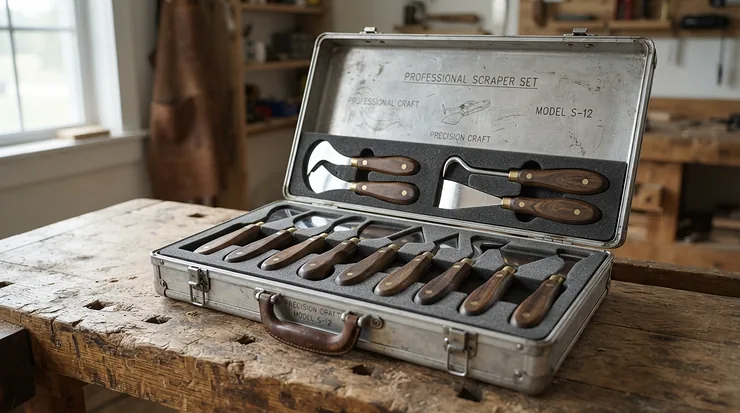
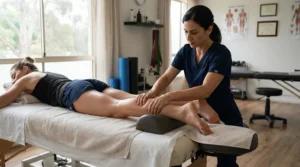
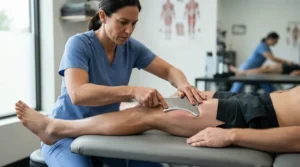
An IASTM tool set for physiotherapy is a group of hand-held, usually stainless steel instruments with bevelled edges and contoured curves. Therapists glide them over lubricated skin to detect and treat restricted soft tissue, including scar tissue and fascial adhesions. IASTM stands for instrument-assisted soft tissue mobilisation.
Here is the odd thing about this category. A single stainless steel scraper can cost less than a takeaway, and a branded clinical kit can cost more than a second-hand hatchback. The steel is not the main difference. What separates a tool you will use for a decade from one that ends up in a drawer is edge geometry, grip, finish, and whether the set suits the person holding it.
The technique has deep roots. Physiopedia describes IASTM as built on the principles of James Cyriax’s cross-friction massage, using instruments that can reach and “listen” to tissue more precisely than a thumb. That is the appeal, and it is also why the hype needs filtering.
This guide compares seven real options, from budget sets on amazon.co.uk to premium clinical instruments. It also weighs the evidence and gives practical advice for physiotherapy clinics and for sensible home use. One honest note on method: I have not tested these tools. Everything below comes from published specifications, manufacturer documentation, and independent write-ups, and where real customer reviews could not be verified I say so.
Quick Comparison Table: Seven Sets at a Glance
| Tool set | Material | Best For | Price tier (check current price) |
|---|---|---|---|
| FASCIQ IASTM Tools Set | AISI 304 surgical stainless steel | Therapists wanting a light-handed, multi-edge kit | Mid-range to upper mid-range |
| IAM Tools Dolphin | 316-grade stainless steel (UK-made) | Clinicians who want a single premium, hand-finished tool | Premium (listings vary widely) |
| HawkGrips HGPro Multi-Tool | Surgical-grade stainless steel | Anyone who wants seven edges in one instrument | Premium |
| Graston Technique 6-Piece Set | Stainless steel | Trained clinicians in the Graston pathway | Top-end, four-figure sum |
| Mobilization Magic Tool | Nylon 6 | Self-treatment at home | Budget to mid-range |
| 5-Piece Stainless Steel IASTM Set with Case | Stainless steel | Students and cautious first-time buyers | Budget |
| BYYDDIY 4-in-1 Gua Sha Tool Set | 304 stainless, mirror polish | Home users who want varied edges cheaply | Budget |
Reading across the table, the spread is wide. The Graston Technique 6-Piece Set is a pathway purchase, tied to training. The BYYDDIY 4-in-1 Gua Sha Tool Set and the 5-Piece Stainless Steel IASTM Set with Case are low-risk entry points. If you are a clinician, the real contest is between FASCIQ, HawkGrips and IAM Tools, where you are paying for ergonomics and finish rather than basic function. The Mobilization Magic Tool sits slightly outside the group because it is a self-use tool, not a scraper.
💬 Just one click: help others make better buying decisions too!😊
Top 7 IASTM Tool Set for Physiotherapy Options: Expert Analysis
A quick word on method. Prices below are tiers and ranges, not quotes, because they change constantly. Review comments come from published independent write-ups and manufacturer claims. I flag where verified customer reviews were unavailable.
1. FASCIQ IASTM Tools Set — light-handed kit with Schleip pedigree
The standout here is the design lineage. FASCIQ developed its Wave tool with fascia researcher Dr Robert Schleip, aiming for a “light-handed” instrument with bevelled, flat and rounded edges.
On paper, the Wave is made of AISI 304 surgical stainless steel, weighs 142 grams, and measures about 16.6 cm long. That weight is a quiet advantage. A tool that is not heavy lets your wrist do less work across a full clinic day. The double bevels let you work in both directions without switching hands, which matters when you are treating a hamstring and your patient will not stop wriggling.
Based on the spec comparison, this set suits therapists who want sensitivity over brute force. The finger grips on the Wave also help with the main complaint about stainless steel, which is slipperiness once oil is involved. FASCIQ advertises a lifetime guarantee, which supports a “buy once” argument, though you should check the terms at purchase.
On customer sentiment, I could not verify a statistically meaningful pool of reviews for the UK listing, so I will not characterise it. Treat the manufacturer claims as claims.
Pros:
- ✅ Developed with a recognised fascia researcher
- ✅ Light 142 g Wave suits long clinic days
- ✅ Lifetime guarantee advertised by the manufacturer
Cons:
- ❌ Verified review pool is hard to confirm
- ❌ Kit pricing sits above generic sets
Price tier: mid-range to upper mid-range; check current price. The value is strong if you will use it daily.
2. IAM Tools Dolphin — UK-made, hand-finished premium choice
The IAM Tools Dolphin is the patriotic option. It is made in the UK from 316-grade stainless steel, which is chosen for corrosion resistance under heavy use. One UK stockist lists it at about 1.8 by 8.3 inches.
Why does that matter? A tool of that size fits the palm and gives you control over short strokes. Independent reviewer Mike Reinold singled out a polycarbonate “training” version of the Dolphin as the clear winner in its class. One UK physiotherapy blogger described the stainless version as a valuable adjunct to traditional modalities after months of use, while preferring light pressure with it.
The analytical take is simple. This is a precision tool for a clinician with a trained eye, not a bargain bin buy. Be careful with pricing, too. Listings from different UK stockists vary enormously, from the £50s up to the £200s, so confirm exactly which version and finish you are getting before you buy.
Reviews: the practitioner commentary above is genuine but anecdotal. I could not verify an aggregated Amazon customer rating.
Pros:
- ✅ Made in the UK from 316-grade steel
- ✅ Respected by practising physiotherapists
- ✅ Compact size gives excellent control
Cons:
- ❌ Stockist pricing varies wildly
- ❌ Single tool, not a full kit
Price tier: premium for the hand-finished version. Worth it if you need one reliable instrument.
3. HawkGrips HGPro Multi-Tool — seven treatment edges in one instrument
The talking point is versatility. HawkGrips describes the HGPro Multi-Tool as combining four of its specialised instruments into one, with seven treatment edges, supplied with a drawstring pouch and a jar of emollient.
In practice, that is helpful for a mobile therapist or a small clinic. Fewer tools mean less to sterilise and carry. The surgical-grade stainless steel is non-porous, so it can be sterilised repeatedly, and the company markets a cross-hatch grip to counter the slippery-steel problem.
What the spec sheet will not tell you is the learning curve. More edges means more decisions, and a beginner may be tempted to use the wrong one. On the commercial side, HawkGrips states there are no licensing or annual re-licensing fees, which contrasts with the Graston route. UK availability varies by seller, so verify stock and delivery before relying on it.
I could not verify aggregated UK reviews. The strongest endorsements I found are on the manufacturer’s own page, so treat them as marketing.
Pros:
- ✅ Seven edges reduce the number of tools needed
- ✅ No licensing fees stated by the manufacturer
- ✅ Cross-hatch grip helps with oily hands
Cons:
- ❌ UK availability and pricing vary by seller
- ❌ Many edges can confuse beginners
Price tier: premium; US retail listings suggest a few hundred pounds equivalent, before shipping and VAT. Check current price.
4. Graston Technique 6-Piece Set — the original brand, with strings attached
This is the name that popularised the whole category. The distinguishing feature is that it is not simply bought off the shelf. Graston Technique states that only clinicians who have completed its Essential Training are eligible to purchase the instruments and use the technique for patient care.
That gate is both its weakness and its strength. You are buying into a training and provider ecosystem. The company’s bundle lists a 6-piece set valued at $2,395, with the Essential Training itself listed at $650. In sterling terms that is a four-figure outlay before you treat a single patient.
For a physiotherapist who values structured protocols and a recognised brand name, the commentary is positive. For a clinic that wants flexibility, it is overkill. The evidence base is also interesting: a systematic review of IASTM for pain noted that the Graston technique was the specific method used in all six included studies, so much of the pain research comes from this brand’s instruments.
Customer reviews are not the right measure here, since purchases go through the company’s own channels. Judge it on training value and clinical fit.
Pros:
- ✅ Large body of research uses these instruments
- ✅ Structured training and certification pathway
- ✅ Recognised by many patients
Cons:
- ❌ Purchase restricted to trained clinicians
- ❌ Very high total cost
Price tier: top-end. Strong value only if you will commit to the whole pathway.
5. Mobilization Magic Tool — the home-friendly outsider
Here is the unusual one. The Mobilization Magic Tool is a nylon self-treatment device rather than a scraper. The manufacturer says it is made from Nylon 6 and survived hydraulic press testing of more than 2,000 kg, and that it applies sustained, sideways-stretching pressure to tissue.
That distinction matters because IASTM edges are hard to use on yourself. Manufacturer material is explicit that conventional IASTM instruments are not easy to use on your own body, and that this tool is meant for self-use, extending the benefit of therapy sessions between appointments.
The honest framing: this is a self-myofascial release device, closer to a pressure-based roller alternative than to a clinical scraper. The company’s own guidance advises caution with the calf and recommends a cushion if a new position increases pain. I could not verify independent aggregated reviews; the testimonials I found are from the manufacturer’s own site.
Pros:
- ✅ Designed for self-use at home
- ✅ Tough Nylon 6 construction
- ✅ Gentle entry for cautious users
Cons:
- ❌ Not a clinical IASTM instrument
- ❌ Evidence mostly manufacturer-sourced
Price tier: budget to mid-range; I could not verify a current UK price, so check current price.

6. 5-Piece Stainless Steel IASTM Set with Case — the cautious starter
This is a generic set sold on amazon.co.uk, listing five stainless steel tools in a case. The listing describes mirror-polished medical-grade stainless steel that tolerates topical solutions.
What does that mean in practice? A mirror polish reduces friction drag with oil and wipes clean easily. Five shapes also give a student a feel for what different edges do before committing to a premium instrument. The caution is that generic listings rarely specify steel grade or edge finishing in detail, so inspect on arrival for burrs or sharp corners.
My analytical take: this suits physiotherapy students practising technique on classmates, or someone curious about the category. It is a poor choice for a busy clinic that needs documented material specifications.
Review status: I could not verify a rating or review count, so I will not quote one.
Pros:
- ✅ Five shapes help you learn edge differences
- ✅ Case keeps the set organised and clean
- ✅ Low financial risk
Cons:
- ❌ Limited material documentation
- ❌ Edge finish may vary between batches
Price tier: budget; check current price. Good value as a learning set.
7. BYYDDIY 4-in-1 Gua Sha Tool Set — varied edges on a budget
The BYYDDIY 4-in-1 Gua Sha Tool Set offers B, S, C and D shapes in 304 stainless steel with a mirror polish. One independent roundup puts the whole set at about 1.61 pounds, which gives each piece real heft in the hand.
That heft is a mixed blessing. It helps with pressure on large muscle groups such as quads and hamstrings, but small hands may tire sooner. The same roundup notes that the smaller 3-in-1 variant is lighter at around 1.15 pounds and lacks the extra edge used for small joints or facial work.
My view: this is a sensible home-use buy for someone who has been shown technique by a physiotherapist. A professional edge it is not. The 304 grade is standard and perfectly adequate for skin contact.
For reviews, only one independent roundup was found, which is not enough to speak for the wider buyer base.
Pros:
- ✅ Four edge shapes cover many body zones
- ✅ Mirror-polished 304 stainless steel
- ✅ Substantial feel for large muscle groups
Cons:
- ❌ Heavy for small hands over long sessions
- ❌ Sparse independent review coverage
Price tier: budget; check current price. Solid value for home use.
Features That Actually Matter When Choosing an IASTM Tool Set for Physiotherapy
Here is the five-step logic I would use before spending any money.
- Decide who is holding it. A clinician treating twenty patients a week needs ergonomics. A home user needs gentle edges.
- Check the material. Medical-grade stainless steel is widely preferred for durability and for tolerating oils and creams, and Physiopedia notes it is the most common choice.
- Match the edge to the job. Smaller tools reach small areas and superficial structures. Larger handlebar-style tools suit big muscle groups.
- Test the grip. Stainless steel gets slippery. Reviewers repeatedly flag this, so look for finger grips or cross-hatching.
- Plan for training. A tool is only as good as the technique behind it, so budget for a course if you are not already trained.
- Check hygiene. Non-porous steel can be disinfected with standard clinical solutions, which is a real advantage over porous natural materials.
If you ignore everything else, ignore the marketing adjectives and focus on grip and weight. They determine whether you reach for the tool a second time.

What Does the Evidence Say About IASTM?
Let us be grown-ups about this. The research is encouraging but not unanimous.
A recent systematic review and meta-analysis in BMC Musculoskeletal Disorders found moderate-certainty evidence that IASTM reduces patient-reported pain and low-certainty evidence that it improves function. That is a real finding, but note the wording: moderate and low, not strong.
Older work was more sceptical. A 2016 systematic review on PubMed appraised seven randomised trials and found insignificant results in most comparisons, with short-term range-of-motion gains of up to 24 hours in two studies. The authors attributed part of the problem to variation in methods across trials.
What does that mean for a buyer? Based on the research as a whole, IASTM looks most promising as an add-on to a broader rehabilitation plan, not a miracle on its own. A separate meta-analysis on neck pain found that IASTM beat non-IASTM treatments but showed no significant difference against other standard physiotherapy interventions. Treat any set that promises to “break up” tissue as a marketing statement, not a mechanism proven in the literature.
Soft Tissue Mobilisation Tools Review: How Materials Compare
For this soft tissue mobilisation tools review, let us treat material choice as the first filter.
Stainless steel dominates for good reasons. Mike Reinold calls it by far the best material for IASTM, with the caveats that it can be slippery and that it makes it easier to be heavy-handed. His practical suggestion for gentler work is to start with a different tool.
Polycarbonate and nylon are lighter and cheaper. They suit self-treatment and training, and the Mobilization Magic Tool uses Nylon 6 for durability. They tend to be gentler, which can be a feature rather than a flaw.
Natural materials such as jade or horn appear in Physiopedia’s list of materials, but they are porous or fragile compared with steel, which makes hygiene harder in a clinic setting.
There are also two steel grades worth knowing. The IAM Tools Dolphin uses 316 grade, while FASCIQ and BYYDDIY use 304. Both are suitable for skin contact. 316 offers extra corrosion resistance, which matters more for tools that are sterilised constantly than for a set used a few times a week at home.
IASTM Tools for Physiotherapy Clinics: Buying, Hygiene and Compliance
For physiotherapy clinics, the purchasing question is more than price. It is about instruments that survive daily cleaning, protect therapists’ hands, and fit the training your team already holds.
Start with hygiene. Non-porous stainless steel can be disinfected with standard medical cleaning solutions, a point both FASCIQ and HawkGrips make in their documentation. That is a practical reason to prefer steel in shared clinical settings.
Next, think about ownership models. The Graston Technique 6-Piece Set is gated behind training, while HawkGrips states there are no licensing or re-licensing fees. A clinic with several therapists should price the total cost of ownership over five years, not just the sticker price.
Finally, think about coverage. Before introducing any new modality, check with your professional indemnity insurer and your professional body about whether the technique and the specific instrument are covered. Rules differ by employer and by tool, so I would not assume.
A sensible approach for a growing clinic is one premium multi-edge tool for the therapist plus a small set of inexpensive instruments for training new staff.
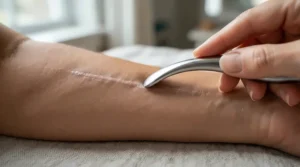
Scar Tissue Treatment with IASTM: What Is Realistic?
Scar tissue treatment is where the marketing gets loudest, so let us calm it down.
NHS patient leaflets explain that a scar is fibrous tissue replacing normal skin after injury, and that it can stick to underlying tissue and limit movement when it crosses a joint. A Hull University Teaching Hospitals NHS leaflet on scar care recommends beginning with light pressure and progressing to firmer pressure as tolerated, and notes that silicone works well alongside pressure and massage.
Another NHS hand-therapy leaflet says scars typically take between three months and two years to mature, and recommends massage once the wound has fully healed. Key point: nothing there says an instrument is required.
So where do IASTM tools fit? Several manufacturers market their tools for scar work, and some clinicians use them as an adjunct under supervision. The responsible position is that tools may add precision, but you should never use them on a wound that has not fully healed, and you should seek clinical guidance for keloid or hypertrophic scars. NHS trusts typically manage those with steroid injections and silicone.
Myofascial Adhesions: What They Are and What Tools Can Do
Myofascial adhesions are areas where fascia and neighbouring tissue seem to stick, restrict or feel dense under the fingers. People feel them as “knots”, stiffness, or a catch during movement.
The honest science is subtler than the sales copy. Physiopedia’s description frames IASTM as a skilled intervention using compressive strokes on skin, fascia, muscle and tendon, with a side benefit of improved vibratory feedback for the therapist. Fascia-focused manufacturers say their tools help therapists detect individual adhesions, though that claim is theirs rather than an independently proven one.
What you can reasonably expect is a mix of short-term comfort, improved movement, and useful feedback for the clinician. The 2025 BMC meta-analysis supports pain reduction, but it does not prove that adhesions are physically “broken down”.
For practical purposes, the tool matters less than the plan. Warm the tissue, treat for short periods, then move the area through its range straight away. If a set claims to remove adhesions permanently, close the tab.
Practical Usage Guide: Your First 30 Days
This is the bit Amazon listings leave out. Think of it as a gentle ramp, not a sprint.
Week 1: learn the feel. Warm the area with light movement. Apply a thin layer of lubricant, as a chiropractic clinic’s guidance recommends, so the tool glides and skin irritation is reduced. Use light strokes for short bursts. The Physiopedia entry cites angles of around 30 to 60 degrees for 40 to 120 seconds, which is a useful starting range for supervised use.
Week 2: build consistency. Treat two or three times a week, not daily. Mild redness is normal. One UK clinic says redness should fade within about 10 minutes. Stop if you notice sharp pain or bruising.
Week 3: add movement. Follow every session with gentle stretching or active range work.
Week 4: review. Ask whether stiffness, pain or movement has improved. If not, change the plan rather than the pressure.
Common first-month mistakes: pressing too hard because steel makes it easy, treating the same spot every day, and skipping lubricant. Clean the tool after every use, dry it, and store it in its case.
Real-World Scenarios: Matching Sets to Real Buyers
Scenario 1: the new clinic owner. A physiotherapist opening a small practice with a modest budget wants clinical credibility. A single IAM Tools Dolphin or HawkGrips HGPro Multi-Tool, bought alongside a recognised training course, gives a professional tool without a four-figure kit. Add a few inexpensive instruments from a 5-Piece Stainless Steel IASTM Set with Case for staff training.
Scenario 2: the commuter runner. Someone running four times a week with recurring calf and hamstring tightness wants a home option. The BYYDDIY 4-in-1 Gua Sha Tool Set gives varied edges cheaply, but only after a physiotherapist demonstrates technique. A gentler alternative is the Mobilization Magic Tool, which is designed for self-use.
Scenario 3: the post-surgery patient. Someone with a healed abdominal scar and tightness should start with the NHS-style approach of gentle massage with fingertips, and ask their clinician before using any instrument. Tools should not be applied to unhealed skin.
Scenario 4: the established multi-therapist clinic. A clinic with several staff and a Graston-trained lead might invest in the Graston Technique 6-Piece Set, while using FASCIQ kits for a more light-handed approach with other clinicians.
Common Mistakes When Buying an IASTM Tool Set
- Buying on adjectives. “Medical grade” has no consistent meaning on a listing. Look for named steel grades such as 304 or 316.
- Ignoring grip. A beautiful tool that slides out of an oily hand is a bad tool.
- Over-buying. Reinold’s advice for the unsure is to start with a cheap tool. You can upgrade once you know what you like.
- Skipping training. The Graston organisation itself warns that improper pressure, technique or instrument choice can cause bruising, inflammation or discomfort. That is a vendor with a commercial interest, but the warning is sensible.
- Believing a tool replaces rehabilitation. The research above supports adjunct use.
- Forgetting that the listing is not the product. Inspect new generic tools for burrs and rough edges.
Long-Term Cost and Maintenance
Total cost of ownership is where cheap sets sometimes win and sometimes lose.
A budget set such as the BYYDDIY 4-in-1 Gua Sha Tool Set costs little and, with basic care, can last years because stainless steel does not wear out in normal use. Premium options such as FASCIQ advertise lifetime guarantees, which can matter if you drop a tool or find a manufacturing fault, subject to the terms.
Hidden costs include lubricant, training courses and replacement of single tools if you lose one from a set. The Graston Technique 6-Piece Set carries the heaviest hidden commitment, with training listed separately from instruments.
Maintenance is simple. Wipe after each use, disinfect with an appropriate cleaning solution, dry fully and store in a case. If you share tools between patients, follow your clinic’s infection-control policy.
Cost per use is a helpful lens. A premium tool used ten times a week for five years is used more than 2,500 times, which makes even a hefty price look sensible. A budget tool used twice and abandoned is expensive at any price.
Safety, Contraindications and Realistic Expectations
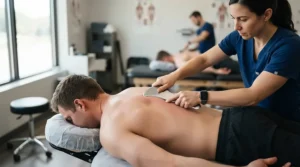
Treat any IASTM tool as a skilled intervention, not a toy. Mild redness is common, but bruising, sharp pain or lasting soreness are signals to stop.
Do not use instruments on broken skin, unhealed wounds or areas of unexplained swelling. Be cautious over fresh injuries and if you bruise easily or take blood-thinning medication; ask your GP or clinician first. If pain is severe, unexplained, or accompanied by numbness, fever or loss of function, see a clinician rather than reaching for a scraper.
On regulation, I did not verify UK-specific medical device classification for these products, and listings differ in how they describe intended use. Many are sold as “gua sha” or wellness items. Clinics should check manufacturer documentation and consult their insurer or professional body.
Finally, keep expectations modest. The best-supported benefit is pain reduction as part of a wider plan, not tissue transformation.
FAQ
❓ Which IASTM tool set for physiotherapy suits beginners best?
❓ Are soft tissue mobilisation tools worth it for home use?
❓ Do physiotherapy clinics need training before buying instruments?
❓ Can scar tissue treatment be done with a scraper?
❓ How do I clean a stainless steel IASTM tool?
Conclusion
Strip away the glossy adjectives and the choice is fairly clear. If you are a clinician who wants a refined, light-handed kit, FASCIQ is a thoughtful choice. If you want one outstanding British-made instrument, look hard at the IAM Tools Dolphin. If you like variety in a single tool, the HawkGrips HGPro Multi-Tool earns a place on your shortlist, while the Graston Technique 6-Piece Set only makes sense if you are committing to the training pathway.
For home users, the Mobilization Magic Tool suits gentle self-treatment, and the BYYDDIY 4-in-1 Gua Sha Tool Set or the 5-Piece Stainless Steel IASTM Set with Case keep the financial risk low while you learn.
Whatever you choose, remember what the evidence supports: modest pain reduction as part of a broader plan. Choose grip over glamour, learn the technique, and keep the pressure gentler than you think you need.
✨ Ready to choose your IASTM tool set for physiotherapy?
🔍 Click on any highlighted product above to check current pricing and availability on amazon.co.uk, and build a kit you will actually use!
Recommended for You
- Soft Foam Roller For Beginners: 7 Best Gentle Picks (2026)
- Travel Foam Roller: 7 Brilliant Picks For Hand Luggage (2026)
- Textured Foam Roller For Deep Tissue Massage: 7 Best Picks (2026)
Disclaimer: This article contains affiliate links. As an Amazon Associate, I earn from qualifying purchases. If you purchase products through these links, we may earn a small commission at no additional cost to you.
✨ Found this helpful? Share it with your friends! 💬🤗
