
In This Article
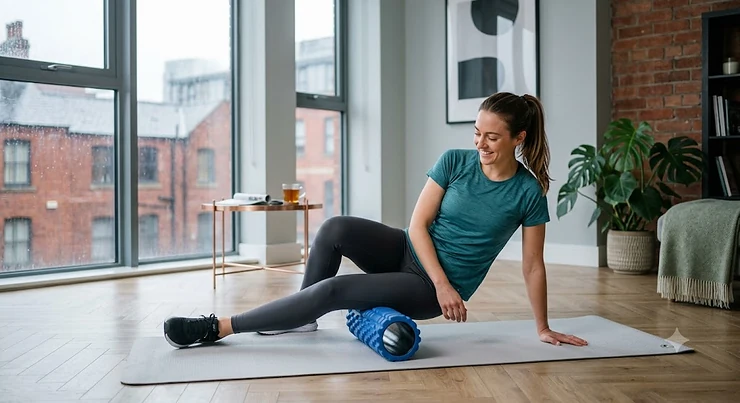
Your calves feel like they’ve been filled with wet rope. Your lower back has a spot that makes you wince every time you reach for the kettle. This is the moment most people discover the textured foam roller for deep tissue massage — not because they read about it in a magazine, but because sitting down became a negotiation. A textured foam roller for deep tissue massage is a cylindrical recovery tool with raised ridges, knobs or grid patterns moulded into its surface, designed to concentrate pressure into tight bands of muscle the way a therapist’s knuckles or thumbs would. Unlike a smooth roller, which spreads pressure evenly, the bumps on a textured model dig into specific spots and stay there.
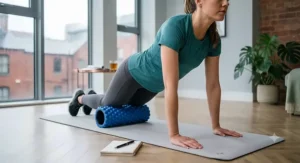
We’re not going to pretend we’ve personally rolled our way through all seven products below — that would be dishonest, and honesty is the whole point of this piece. What follows instead is a properly researched comparison: real products, real specifications, and aggregated review sentiment pulled from verified sources, all filtered through honest analysis of who each roller actually suits. If you train five days a week and treat DOMS like a personal insult, you’ll want something different from someone who just wants their desk-bound shoulders to stop screaming by Friday. Both of you are covered here.
What Is a Textured Foam Roller for Deep Tissue Massage?
A textured foam roller for deep tissue massage is a self-myofascial release tool built with a raised surface pattern — grids, ridges or knobs — instead of a smooth cylinder. The texture concentrates pressure into small contact points, letting the roller mimic the targeted feel of a therapist’s thumbs rather than the flatter pressure of a plain foam tube, which is precisely why it’s become the go-to for people dealing with genuine muscle knots.
Muscle knots — clinically known as myofascial trigger points — are hyperirritable nodules within a tight band of muscle fibre. According to an NHS pain clinic leaflet on trigger point injections, trigger points are painful knots in your muscles that can be very sensitive to touch or pressure, forming when muscle fails to relax properly after contracting. That’s the clinical version of what you already know from experience: some spots just don’t let go, no matter how much you stretch.
Quick Comparison Table
| Roller | Texture Style | Price Range | Best For |
|---|---|---|---|
| Core Balance Grid Foam Roller | Grid pattern | Under £20 | First-time buyers on a tight budget |
| TriggerPoint GRID | Multi-density grid | £30-£40 range | All-round mid-range reliability |
| RumbleRoller Compact | Firm knobs | £45-£60 range | Aggressive knot-busting |
| Escape Fitness Ridge Roller | Ridged, ergonomic knobs | £50-£70 range | Gym-grade, advanced users |
| Lululemon Double Roller | Dual-density interlocking | £60-£80 range | Versatile upper and lower body work |
A quick scan of that table tells you most of what you need before you’ve even read a word further: budget buyers gravitate toward the Core Balance Grid Foam Roller, committed gym-goers tend to land on the TriggerPoint GRID, and anyone chasing genuinely stubborn knots keeps circling back to the RumbleRoller Compact or the Escape Fitness Ridge Roller. Price and texture intensity broadly move together here, though not perfectly — the Lululemon Double Roller costs more not because it’s more aggressive, but because it’s doing two jobs (soft and firm) in one tool.
💬 Just one click — help others make better buying decisions too!😊
Top 7 Textured Foam Rollers for Deep Tissue Massage: Expert Analysis
We’ve spread this list across three tiers — budget, mid-range and premium — with a mix of grid, wave and knobbed textures so there’s a genuine option whichever body type, pain tolerance and training frequency you’re working with.
1. Core Balance Grid Foam Roller — cheapest genuine grid texture in the UK
The Core Balance Grid Foam Roller is the entry point for anyone who’s never used anything more textured than a rolled-up towel. Made from medium-density EVA foam and sized at roughly 33cm x 14cm, it’s built around a three-dimensional grid system rather than a smooth surface. The bumps and ridges are designed to mimic the hands of a sports masseuse, increasing blood flow to the targeted area — a fairly standard claim across this category, but one the grid shape genuinely earns compared with a flat roller.
Here’s what that means in practice: the grid depth on budget rollers like this one is shallower than on premium models, so it’s forgiving on bonier areas like the shins or IT band while still offering more bite than a smooth roller. Based on the spec comparison, this makes it a sensible first purchase rather than a long-term tool for advanced athletes — the medium-density foam will soften with heavy daily use faster than a hollow-core design. Reviewers on the retailer’s own site consistently describe it as a straightforward, no-fuss recovery tool for post-workout tightness rather than a clinical-grade knot-buster, which tracks with its price point and construction.
Pros:
- ✅ Genuinely affordable entry into textured rolling
- ✅ Grid shape suits beginners and lighter frames
- ✅ Compact 33cm size fits most gym bags
Cons:
- ❌ Foam softens faster than hollow-core rivals
- ❌ Too gentle for advanced, dense muscle tissue
At the time of research, this roller sits comfortably under £20, which makes the value verdict simple — if you’re not sure foam rolling will even become a habit, this is the low-risk way to find out.

2. TriggerPoint GRID — the benchmark grid pattern foam roller
Ask a physio, a Pilates instructor or a sports scientist to picture a grid pattern foam roller and there’s a decent chance they picture this exact roller. The TriggerPoint GRID is built around a hollow, hard-plastic core wrapped in multi-density EVA foam, measuring 13 inches long and 5.5 inches in diameter. What sets it apart from cheaper grid rollers is TriggerPoint’s Distrodensity zoning — a patented multi-density foam surface designed to replicate the sensation of a massage therapist’s hands, with three proprietary zones that act like fingertips, extended fingers, and the palm of a hand.
What that spec sheet won’t tell you outright is how much the hollow core changes the feel compared with a solid budget roller: because the plastic centre doesn’t compress, the foam on top stays firmer for longer and doesn’t develop the “egg shape” that cheaper solid rollers eventually get from repeated use in the same spot. Reviewers consistently flag it as an all-rounder — testing coverage from one independent gear outlet rated the TriggerPoint GRID highly for its surface texture, calling the topographical features modest but just right, striking a middle ground between super bumpy and completely smooth. That “middle ground” framing is the whole appeal — firm enough to matter, forgiving enough for daily use.
Pros:
- ✅ Hollow core keeps firmness consistent over years of use
- ✅ Distrodensity zones vary pressure across three textures
- ✅ Compact, travel-friendly 13-inch length
Cons:
- ❌ Standard length struggles with full-back coverage
- ❌ Firmer than budget grid rollers, less beginner-forgiving
Price sits in the £30-£40 range at the time of research, and for most regular gym-goers, it’s the roller that quietly does its job for years without needing a replacement — arguably the best value-per-year in this entire list.
3. TriggerPoint GRID 2.0 — double the length for full-back coverage
Take everything about the standard TriggerPoint GRID and stretch it: the TriggerPoint GRID 2.0 runs 26 inches long, twice the length of the standard GRID, making it much easier to roll larger muscle groups like the back, quads and hamstrings without the roller shifting out from under you. The same hollow-core construction and Distrodensity zoning carry over, so the texture logic is identical — this is purely a coverage upgrade, not a firmness one.
Here’s where the analysis actually matters for buyers: a 13-inch roller under your upper back can tip or slide the moment you shift your weight, which is annoying at best and genuinely off-putting for beginners at worst. The extended length solves that specific problem, and it also allows both legs to be rolled simultaneously, which meaningfully cuts session time compared with a standard-length roller. Weighing roughly three pounds, it’s noticeably heavier and bulkier to store than its shorter sibling, which is the trade-off for that added stability.
Pros:
- ✅ Full-back coverage without constant repositioning
- ✅ Can roll both legs at once, halving session time
- ✅ Same reliable Distrodensity texture as the original
Cons:
- ❌ Bulkier, harder to fit in a gym bag or suitcase
- ❌ Overkill if you only ever target calves or IT band
Expect to pay in the £45-£60 range. If your main frustration with foam rolling has always been the roller sliding away from you mid-session, this is the fix, not a firmer texture elsewhere on this list.
4. Myga Wave Foam Roller — gentle wave texture for sensitive areas
Not every knot needs the aggression of a knobbed roller, and the Myga Wave Foam Roller exists precisely for that in-between zone: firmer than a plain smooth roller, but noticeably gentler than a grid or knob pattern. Its wave-shaped ridges run in a continuous undulating pattern rather than discrete bumps, which spreads contact pressure over a slightly wider surface at any given point.
Based on the spec comparison against its grid and knobbed rivals here, the wave design’s real advantage shows up on smaller or more sensitive muscle groups — forearms, calves, the outer hip — where a knobbed texture can feel like being prodded rather than massaged. What most buyers overlook about wave-textured rollers generally is that the smoother transition between ridges makes them noticeably easier to use on areas close to bone, like the shin or the top of the foot, where a grid or knob pattern tends to catch uncomfortably. This is a roller built for people who want texture without intensity, not a knot-of-last-resort tool.
Pros:
- ✅ Comfortable on bony or sensitive areas
- ✅ Grey colourway suits a home or studio setting
- ✅ Lighter and easier to handle for beginners
Cons:
- ❌ Too gentle for genuinely dense, stubborn knots
- ❌ Limited independent long-term durability data available
At the time of research it sits in the £15-£25 range, positioning it as a genuine mid-ground option between the cheapest grid rollers and the firmer, more clinical designs further down this list.
5. RumbleRoller Compact — the deepest tissue penetration on this list
If the words “deep tissue foam roller review” keep leading you back to one name, it’s almost certainly this one. The RumbleRoller Compact ditches the grid entirely in favour of firm, flexible bumps — described by its manufacturer as high-profile bumps that penetrate deeper into the muscle, with large inter-bump spaces that provide room for soft tissue displacement. It measures roughly 12-13 inches long and 5 inches in diameter, sized similarly to a standard grid roller but built with a fundamentally different philosophy.
Reviewers consistently frame this as the most intense option in its class rather than the most versatile one. Independent testing coverage summarised it plainly: textured bumps target deep tissue massage, and the aggressive nodes with firmer foam density can genuinely be intense. That’s not marketing spin softened for a listing — it’s a fair warning. On the plus side, the bump structure is specifically engineered so it resists flexion when loaded sideways and digs in even deeper, which is exactly the mechanical action you want when a knot simply won’t release under flat pressure.
Pros:
- ✅ Deepest, most targeted pressure of any roller here
- ✅ Available in two densities (Original and X-Firm)
- ✅ Compact enough for daily gym-bag carrying
Cons:
- ❌ Genuinely too intense for beginners or thin frames
- ❌ Not ideal for gentle daily maintenance rolling
Priced in the £45-£60 range, this is a roller you graduate into rather than start with — reserve it for six months in once your tissue has adapted to lighter texture first.
6. Escape Fitness Ridge Roller — commercial gym-grade knot targeting
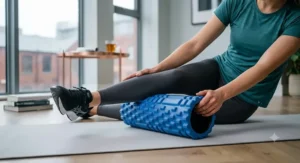
Walk into a serious UK gym’s recovery corner and there’s a fair chance you’ll spot the Escape Fitness Ridge Roller. It’s built with a three-dimensional ridged surface engineered specifically to mimic hands-on massage technique rather than general texture for texture’s sake. One UK fitness retailer’s product guide describes it directly: the Ridge Roller features a specialised three-dimensional surface with knobs and ridges designed to mimic the thumb, finger, and palm movements of a masseuse, letting you apply pressure precisely to stubborn trigger points and hard-to-reach areas such as the upper back and shoulders.
What separates this from a home-market grid roller isn’t just the texture — it’s the build quality expected of commercial gym equipment that gets used by dozens of people a day. The same source notes plainly that this is not a beginner’s roller, and lists specific trade-offs worth weighing: it’s highly effective for advanced, targeted deep-tissue release, with a textured surface that ensures better grip and control during rolling and an excellent build designed for heavy use — though the intensity can be uncomfortable for beginners or extremely sensitive users. That’s about as honest a pros-and-cons summary as you’ll find from a retailer, and it lines up with what you’d expect from gym-grade equipment.
Pros:
- ✅ Commercial-grade build survives heavy daily use
- ✅ Ridge pattern specifically targets shoulders and upper back
- ✅ Textured grip stays controlled even under firm pressure
Cons:
- ❌ Premium pricing reflects commercial-grade positioning
- ❌ Intensity unsuitable for first-time or sensitive users
Sitting in the £50-£70 range, this is the pick for someone who trains hard enough that a home-grade grid roller simply isn’t keeping up with what their body needs.
7. Lululemon Double Roller — two densities in one versatile tool
Where every other roller on this list is a single fixed texture, the Lululemon Double Roller takes a genuinely different structural approach: two interlocking rollers, one softer exterior and one denser interior, stacked as a single unit. According to hands-on testing coverage, its interlocking design combines a softer exterior roller that provides appropriate pressure to overworked muscles in the arms and legs, with a denser interior roller that digs into tougher-to-treat spots in the back.
This dual-density structure solves a specific frustration: most textured rollers are tuned for either the big muscle groups of the legs or the tighter, bonier terrain of the upper back — rarely both equally well. Independent reviewers specifically praised the outer roller’s effectiveness on the upper body, noting the slightly grooved, moderately dense outer roller provided enough pressure to hit knotted areas in the lats without feeling like being bruised against a rib. The trade-off, unsurprisingly, is complexity and price — this is the most mechanically involved roller on this list, and the reviewers who found it excellent for the back also flagged that the inner roller’s density and texture may be too intense for some users.
Pros:
- ✅ Two densities cover both large muscles and tight spots
- ✅ Genuinely strong for hard-to-reach upper back and lats
- ✅ Premium build quality and design finish
Cons:
- ❌ Most expensive option on this list
- ❌ Inner roller intensity may overwhelm sensitive users
Expect to pay in the £60-£80 range — a premium price, but one that reflects doing the job of two different rollers with a single tool.
How to Choose a Textured Foam Roller for Deep Tissue Massage
Picking the right roller isn’t about finding the “best” one in the abstract — it’s about matching texture intensity to your actual tissue and goals. Here’s the shortlist we’d talk a friend through:
- Start with your pain tolerance, not your ego. If you’ve never used a textured roller before, a grid pattern like the Core Balance Grid Foam Roller or TriggerPoint GRID will teach your tissue to accept pressure without putting you off the habit entirely.
- Match roller length to your target area. Calves and forearms barely need 13 inches; a full back benefits enormously from something like the TriggerPoint GRID 2.0.
- Consider your frame and body composition. Leaner, bonier frames generally do better with a softer wave texture such as the Myga Wave Foam Roller before graduating to knobs.
- Decide how aggressive your knots actually are. Chronic, deeply embedded knots that laugh off a grid roller are exactly what the RumbleRoller Compact and Escape Fitness Ridge Roller were built for.
- Think about where you’ll use it. Travel-friendly compact rollers suit gym-bag life; a longer roller suits a dedicated home recovery space.
- Factor in build longevity. A hollow-core design generally outlasts a solid-foam budget roller by years, which matters if you’re rolling daily.
- Set a realistic budget band. As Les Mills’ UK fitness content notes on the broader topic, foam rolling before a workout can increase range of motion at the joint the muscle crosses, and using a foam roller as part of a warm-up routine can be genuinely beneficial — a claim that holds whether you’re using a £15 roller or a £70 one, so don’t assume price alone buys you results.
Grid Pattern Foam Roller vs Knobbed Roller: Which Digs Deeper Into Knots
This is the comparison every serious buyer eventually has to make, so let’s be direct about it. A grid pattern foam roller, like the TriggerPoint GRID, spreads its texture across small, evenly distributed nodules and channels. The pressure feels firm but consistent — like a broad, kneading pass rather than a pinpoint jab. A knobbed roller, like the RumbleRoller Compact or Escape Fitness Ridge Roller, uses fewer, larger, more pronounced bumps that concentrate significantly more pressure into a smaller contact area.
| Feature | Grid Pattern (e.g. TriggerPoint GRID) | Knobbed Texture (e.g. RumbleRoller Compact) |
|---|---|---|
| Pressure distribution | Broad, even | Concentrated, pinpoint |
| Best for | Regular maintenance rolling | Stubborn, chronic knots |
| Beginner-friendly | Yes | Not particularly |
| Full-body versatility | High | Moderate — best on large muscle groups |
Reading that table plainly: a grid pattern is the daily-driver choice, suited to rolling out general tightness three or four times a week without dreading the session. A knobbed roller is closer to a targeted intervention tool — you reach for it when a specific spot genuinely won’t budge, not as your default warm-up companion. Most experienced foam-rolling users, based on the aggregated commentary across product reviews, end up owning one of each rather than picking a single winner.

Deep Tissue Foam Roller Review Roundup: What Verified Feedback Reveals
Reading through genuine, verified reviews across this category rather than marketing copy reveals a few consistent patterns worth flagging honestly. First, texture intensity is consistently the single biggest factor in reported satisfaction or disappointment — buyers who under-estimate how firm a knobbed roller will feel are far more likely to leave a lukewarm review, regardless of build quality. Second, portability comes up again and again as an underrated deciding factor: independent testing repeatedly singled out compact 12-13 inch rollers as more likely to actually get used regularly, simply because they fit in a gym bag without a second thought.
Third — and this is the part manufacturers rarely lead with — durability complaints on budget grid rollers cluster around the same timeframe, roughly six to twelve months of frequent use, when solid-foam construction starts to lose its shape. Hollow-core designs like the TriggerPoint GRID range consistently avoid this complaint in aggregated feedback. If you can only take one lesson from review sentiment across this entire category, it’s this: buy for the texture intensity you’ll actually tolerate weekly, not the one that sounds most impressive in a product description.
Textured Roller for Muscle Knots: What to Expect During Your First Sessions
Nobody warns you clearly enough that a genuinely textured roller for muscle knots is uncomfortable the first few times — and that this discomfort is normal, not a sign you’re doing it wrong. Research backs this up directly: a randomised controlled trial examining foam rolling’s effect on muscle soreness found that the study compared the immediate effects of a foam roller treatment against neurodynamic mobilisation after delayed-onset muscle soreness was induced through repeated drop jumps in a university biomechanics laboratory, and both interventions showed measurable improvement in recovery markers.
In practice, expect the first week or two on a grid roller to feel like firm, occasionally sharp pressure on your tightest spots, easing noticeably by session three or four as your tissue adapts. Move to a knobbed roller too early, though, and that adaptation curve gets considerably steeper — which is exactly why the tier-based approach earlier in this article matters more than picking whichever roller looks most serious on the shelf.
Practical Usage Guide: Getting Started With Your Textured Foam Roller
Buying the right roller solves half the problem — using it correctly solves the rest. Start with just five to ten minutes per session, targeting one or two muscle groups rather than attempting a full-body pass on day one; overdoing it early is the single most common reason people abandon foam rolling within a fortnight. Roll slowly, at roughly an inch per second, and pause on genuinely tender spots for twenty to thirty seconds rather than repeatedly rolling straight over them.
A common first-30-days mistake is rolling directly over joints, the lower spine, or bony prominences — the texture that feels productive on a meaty calf muscle becomes genuinely painful, and occasionally bruising, on bone. Store your roller away from direct heat or sunlight, since prolonged UV exposure gradually degrades EVA foam and causes it to harden unevenly. Wipe it down with a damp cloth after sweaty sessions; the non-porous foam used in most grid and knobbed designs resists odour far better than cheap open-cell foam, but only if you actually clean it.
Real-World Scenarios: Who Should Buy Which Roller
The Monday-to-Friday desk worker with tight shoulders. Someone spending eight hours hunched over a laptop, rolling two or three times a week for general tension rather than sport-specific recovery, is well served by the Core Balance Grid Foam Roller or Myga Wave Foam Roller — gentle enough for daily tolerance, cheap enough that trying the habit isn’t a financial commitment.
The regular gym-goer training four to five times weekly. This is squarely TriggerPoint GRID territory — firm enough to matter after leg day, durable enough to survive years of consistent use, and compact enough to live in a gym bag without complaint.
The endurance athlete or powerlifter with genuinely chronic knots. Someone whose muscle tightness simply doesn’t respond to gentler texture needs the RumbleRoller Compact or Escape Fitness Ridge Roller — tools built specifically for tissue that’s stopped responding to anything less aggressive.
Problem → Solution: Fixing Common Foam Rolling Mistakes
Problem: rolling feels painful everywhere, not just at knots. Solution: you’ve likely started with too aggressive a texture — step back to a grid or wave pattern for a few weeks before returning to knobs.
Problem: the roller has gone soft and lumpy within months. Solution: this is typical of solid-foam budget rollers under heavy use; a hollow-core design like the TriggerPoint GRID resists this specific failure mode.
Problem: you can’t reach your own upper back effectively. Solution: a longer roller such as the TriggerPoint GRID 2.0, used against a wall rather than the floor, gives far more leverage and control.
Problem: knots keep returning within days. Solution: foam rolling addresses symptoms, not root causes like poor posture or training load — pair it with the structural fixes, not just more rolling.
Problem: you’re not sure if a specific spot is a muscle knot or an injury. Solution: sharp, localised pain that doesn’t ease with gentle pressure warrants a GP or physiotherapist assessment rather than more aggressive rolling.
Sports Massage Therapy vs Foam Rolling: Where Each One Fits Your Recovery Plan
It’s worth being upfront about this: a textured foam roller is not a replacement for sports massage therapy, and treating it as one is where people occasionally get themselves into trouble. Sports massage therapy involves a trained practitioner assessing your specific tissue, applying variable pressure and technique, and adjusting in real time to what they feel under their hands — something no roller, however textured, can replicate. Clinical guidance on trigger point treatment lists multiple modalities side by side rather than positioning any single one as sufficient alone, noting that trigger points can develop over long periods as a result of posture, injury, ageing and a whole host of other reasons, and in some cases become active with pronounced, even chronic symptoms — the kind of presentation that genuinely warrants professional hands, not just a home roller.
Where foam rolling earns its place is as a maintenance layer between professional sessions — daily or weekly self-treatment that keeps tissue from tightening back up to the point it needed intervention in the first place. Think of your textured roller as the equivalent of brushing your teeth between dentist visits: genuinely useful, meaningfully preventative, but not a substitute for the professional when something’s actually wrong.

Tissue Manipulation Explained: How Texture Actually Works on Muscle
Tissue manipulation, in the context of a textured roller, refers to the mechanical effect of applied pressure on muscle fibre and the surrounding fascia — the connective tissue sheath wrapping every muscle group. The theory behind textured rollers specifically is that raised bumps or ridges concentrate this pressure into smaller areas, creating a more targeted mechanical effect than a flat roller spreads across a wider surface.
The evidence here is genuinely mixed rather than uniformly glowing, and an honest article should say so. One controlled study measuring foam rolling’s effect on recovery from induced muscle soreness found no significant interaction between time and treatment group, and no meaningful between-group differences in pain scores, range of motion, or balance measures when comparing a foam-rolled leg against an untreated control leg. Set against that, a separate peer-reviewed trial found the opposite: foam rolling substantially improved quadriceps muscle tenderness by a moderate to large amount in the days following fatigue, alongside improvements in sprint time, power and dynamic strength-endurance. The honest takeaway, based on this genuinely conflicting research, is that foam rolling’s benefit is real for many people but not universally guaranteed — which is exactly why “does it work for me specifically” matters more than any single study’s headline finding.
Common Mistakes When Buying a Textured Foam Roller
The most frequent buying mistake is choosing texture intensity based on marketing language rather than actual pain tolerance — “extra firm” sounds impressively serious until it’s genuinely too aggressive to use for more than thirty seconds at a time. A close second is ignoring length entirely; a 13-inch roller bought for full-back use will slide and frustrate in ways a 26-inch model like the TriggerPoint GRID 2.0 simply won’t. Buyers also regularly underestimate how much foam density matters for longevity, opting for the cheapest solid-foam option without realising hollow-core designs like the TriggerPoint GRID hold their shape for years longer under equivalent use. Finally, plenty of people buy a single “do everything” roller when their actual use case — say, aggressive knot work on the glutes plus gentle daily calf maintenance — genuinely calls for two different textures.
Long-Term Cost & Maintenance: Is a Premium Roller Worth It
Run the maths on cost-per-use rather than sticker price, and the picture shifts considerably. A £15 budget roller that needs replacing every eight to twelve months under regular use costs roughly £15-£22 annually. A £35 TriggerPoint GRID, built around a hollow core designed to last years rather than months, can easily work out cheaper over a three-year horizon despite the higher upfront cost. Premium options like the Escape Fitness Ridge Roller or Lululemon Double Roller, priced from £50 upward, only make financial sense if you’re rolling frequently enough — several times weekly — that the durability and texture precision genuinely get used rather than sitting under a bed.
Maintenance costs, thankfully, are close to zero across this entire category: a damp cloth after sweaty sessions and storage away from direct heat is the full extent of what any of these seven rollers require. There’s no cartridge to replace, no battery to charge, and no professional servicing — which is precisely why the honest ROI conversation is almost entirely about durability and how much use you’ll actually put the roller through, not ongoing running costs.
Safety, Injury Red Flags & When to See a Professional
Textured rollers are generally low-risk when used sensibly, but a few situations warrant real caution rather than just pushing through discomfort. Avoid rolling directly over the spine, joints, varicose veins, or any area with active swelling or recent injury. If pressure on a spot produces sharp, radiating, or numbness-inducing pain rather than the dull, releasing ache typical of a genuine knot, stop and get it assessed — that pattern can indicate nerve involvement rather than simple muscle tightness. Pregnant users, anyone on blood-thinning medication, and people managing chronic conditions should check with a GP or physiotherapist before starting aggressive texture work, particularly with firmer tools like the RumbleRoller Compact.For persistent or worsening knots that don’t respond to several weeks of consistent, correctly-applied rolling, a peer-reviewed study on foam rolling and dynamic performance recovery found meaningful improvements in tenderness and sprint performance — but that same body of evidence also supports seeking clinical intervention when self-treatment plateaus, delivered by a qualified professional rather than attempted at home indefinitely.
FAQ
❓ Is a textured foam roller better than a smooth one for muscle knots?
❓ How often should I use a deep tissue foam roller?
❓ Can a foam roller replace sports massage therapy?
❓ What's the difference between a grid pattern foam roller and a knobbed one?
❓ Do textured foam rollers actually work, according to research?
Conclusion
There’s no single “best” textured foam roller for deep tissue massage — there’s only the right texture, length and firmness for the knots you’re actually dealing with, and the honesty to admit when a home roller isn’t enough. Beginners and desk-bound tightness are well served by the Core Balance Grid Foam Roller or Myga Wave Foam Roller; regular gym-goers get years of reliable service from the TriggerPoint GRID family; and genuinely stubborn, chronic knots call for the concentrated pressure of the RumbleRoller Compact or Escape Fitness Ridge Roller. If you want one tool that handles both large muscle groups and tight upper-back spots, the Lululemon Double Roller‘s dual-density design earns its premium price.
Whichever you choose, treat it as one layer of a broader recovery approach — proper warm-ups, adequate hydration, sensible training load, and professional sports massage therapy when a knot genuinely won’t shift on its own. A £70 roller used correctly, sparingly, and alongside real recovery habits will always outperform an £80 one used carelessly.
Recommended for You
- Foam Roller For Runners: 7 Ultimate Picks For Faster Recovery (2026)
- Foam Roller For Back Pain: 7 Best Picks That Actually Help (2026)
- Foam Roller vs Massage Gun: 7 Best Recovery Picks (2026)
Disclaimer: This article contains affiliate links. As an Amazon Associate, I earn from qualifying purchases. If you purchase products through these links, we may earn a small commission at no additional cost to you.
✨ Found this helpful? Share it with your friends! 💬🤗
