In This Article
Your calves feel like they’ve been filled with wet cement. Your hamstrings creak like an old gate every time you go down the stairs. If that sounds familiar, you already know why so many runners, gym-goers and weekend footballers end up searching for the best muscle roller stick at 11pm, phone propped against a pillow, desperate for something that’ll make tomorrow hurt less.
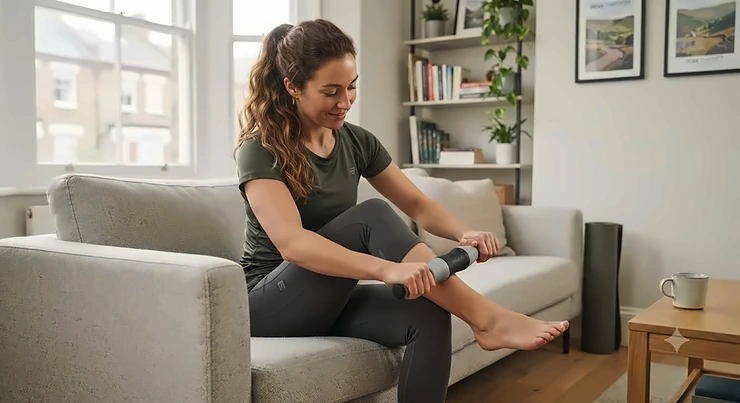
A muscle roller stick is a handheld, cylindrical massage tool, usually studded with independently spinning wheels or ridges, that you roll along a sore muscle to apply targeted pressure. Unlike a full-length foam roller, it doesn’t need you to get down on the floor, which is precisely why it’s become the recovery tool of choice for busy people who just want relief between meetings or before bed. This guide pulls together real, verifiable product specs and genuine aggregated customer sentiment on seven sticks worth your money, spanning budget, mid-range and premium options, so you can actually make a decision rather than doom-scrolling another “top 10” list that never explains why anything beats anything else.
We’ve dug into a systematic review of self-myofascial release research, which points to real potential benefits for joint range of motion and pre- and post-exercise muscle performance, so the theory behind these sticks isn’t just marketing fluff. What follows is commentary and comparison you won’t find pasted straight from an Amazon listing page.
Quick Comparison Table
| Product | Best For | Firmness | Length | Price Range |
|---|---|---|---|---|
| Senshi Japan Muscle Massage Rolling Stick | Tightest budget | Medium | ~45cm | Under £15 |
| SKLZ Muscle Roller | Calves & shins | Firm | 18in | £15-£20 range |
| Tiger Tail The Stick (Bendy 18″) | Runners on the move | Flexible | 18in | £25-£30 range |
| THERABAND Roller Massager+ Portable | Packing light | Medium-firm | 12-19in retractable | £20-£25 range |
| SKLZ Massage Bar | Smooth ball-bearing glide | Medium | 15in/38cm | £20-£25 range |
| TriggerPoint STK Grip | Deep myofascial release | Firm | 18in | £30-£35 range |
| Tiger Tail Original 18in | All-round athlete recovery | Firm, non-flexible | 18in | £25-£30 range |
Looking across the table, there’s a clear split between flexible sticks like the Tiger Tail The Stick, which contour around awkward joints, and rigid options like the Tiger Tail Original 18in and TriggerPoint STK Grip, which deliver more consistent, concentrated pressure on flat muscle bellies. If your priority is calves and shins specifically, the wheel-based SKLZ Muscle Roller earns its spot through sheer surface contact, while anyone chasing portability above all else should look straight at the retractable THERABAND option.
💬 Just one click — help others make better buying decisions too!😊
Top 7 Muscle Roller Sticks: Expert Analysis
1. Senshi Japan Muscle Massage Rolling Stick — best budget buy for casual training
The Senshi Japan Muscle Massage Rolling Stick proves you don’t need to spend big to get a genuinely usable recovery tool. Built around a lightweight plastic core with textured, trigger-point-targeting bumps along its length, it’s designed to fit the natural curve of the leg rather than fight against it.
Specs-wise, this is a compact stick with a simple fixed-roller design rather than independently spinning wheels, and that’s the trade-off for the price. What that means in practice: you get pressure and texture, but not the smooth glide of pricier bearing-driven sticks, so expect a slightly more “scraping” sensation on tender spots rather than a rolling one. Based on the spec comparison with the rest of this list, it sits firmly at the entry level, which is exactly who it’s built for.
This is the stick for someone dipping a toe into self-myofascial release for the first time, students on a budget, or anyone who wants a spare to leave in a gym bag without worrying about losing an expensive tool. Reviewers consistently note that it works well for general aches and everyday tightness, though a few mention the bumps can feel a touch aggressive on already-inflamed areas, so easing in gently is sensible advice regardless of which stick you choose.
Pros:
- ✅ Genuinely low entry price for newcomers
- ✅ Compact size fits in a small gym bag
- ✅ Ergonomic bump design targets specific spots
Cons:
- ❌ Simpler build than bearing-wheel sticks
- ❌ Smaller review pool than bigger brands
At under £15, the Senshi Japan Muscle Massage Rolling Stick represents solid value if you’re testing whether a roller stick suits your recovery routine before committing to a premium pick.
2. SKLZ Muscle Roller — best for calves and shins
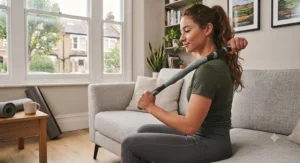
Calves are notoriously stubborn to roll, dense, curved, and often the last muscle group people bother stretching properly. The SKLZ Muscle Roller was built with exactly this problem in mind, using nine independently spinning wheels across an 18-inch frame with over nine inches of active massage surface.
That wheel count matters more than it sounds. What most buyers overlook about multi-wheel sticks is that independent rotation means each wheel adjusts to the contour of your leg individually, rather than one rigid barrel skating over the surface. On a calf muscle, which narrows and thickens unevenly along its length, that adaptability translates to more consistent contact and less “bouncing” over tight spots. The ergonomic handles at each end are shaped for full-range motion, letting you apply real leverage without straining your wrists mid-roll.
This is the pick for runners nursing tight calves after intervals, cyclists dealing with shin tension, or anyone whose desk job leaves their lower legs stiff by 5pm. Aggregated customer sentiment for SKLZ’s roller range is generally positive on durability and grip comfort, with the brand’s wider reputation in sports recovery tools (they also make resistance bands and mobility aids used by professional trainers) lending it credibility beyond a single product listing.
Pros:
- ✅ Nine independent wheels adapt to leg shape
- ✅ Long massage surface covers calves fully
- ✅ Comfortable ergonomic handle grip
Cons:
- ❌ Firm feel may surprise total beginners
- ❌ Bulkier than slimline travel sticks
In the £15-£20 range, the SKLZ Muscle Roller punches well above its price point for anyone whose main complaint is tight lower legs rather than a full-body ache.
3. Tiger Tail The Stick (Bendy 18″) — best lightweight companion for runners
Runners have a specific problem: they need a stick that survives being crammed into a race-day kit bag alongside gels, a spare pair of socks and a half-eaten banana, then still performs when their IT band is screaming after a long run. The Tiger Tail The Stick – Bendy 18″ answers that brief with a flexible core wrapped around eight spinning “marshmallow” beads, giving it a 9.25-inch active massage zone that bends to match the shape of whatever you’re rolling.
Here’s what to weigh: the flexible core is the headline feature, and it earns its keep on curved or bony areas like shins and the outside of the thigh, where a rigid stick tends to rock rather than sit flush. Reviewers consistently note the bendable design feels less punishing on sensitive areas compared to fully rigid sticks, which suits runners managing niggling injuries rather than simply chasing deep tissue intensity. It’s also latex-free and built with non-slip grips, a small but genuinely useful detail when your hands are sweaty post-run.
This is the stick for marathon and half-marathon runners doing their cool-down stretches trackside, triathletes packing light for a weekend away, or anyone managing IT band tightness who finds rigid rollers uncomfortable on bony landmarks.
Pros:
- ✅ Flexible core adapts to curved muscle groups
- ✅ Lightweight and genuinely travel-friendly
- ✅ Non-slip grips stay secure mid-workout
Cons:
- ❌ Less intense pressure than rigid sticks
- ❌ Beads can feel busy on flat muscle bellies
Sitting in the £25-£30 range, the Tiger Tail The Stick (Bendy 18″) is worth the premium over generic sticks if your training calendar revolves around running rather than heavy lifting.
4. THERABAND Roller Massager+ Portable — best for minimalist packing
If your gym bag already looks like a game of Tetris gone wrong, the retractable THERABAND Roller Massager+ Portable solves a real problem: it extends to 19 inches for full-length rolling, then collapses down to just 12 inches for storage. That’s not a gimmick, it’s the difference between a roller stick that lives permanently in your bag and one you leave at home because it’s too bulky.
The textured roller surface is designed to grip muscle tissue rather than slide across it, which in practice means less “chasing” a knot around and more staying put once you’ve found it. On paper this means slower, more deliberate strokes work better than fast back-and-forth rolling, since the grip texture is doing more of the work than raw speed. THERABAND has decades of history in physical therapy equipment, most physios will recognise the brand from resistance bands alone, which adds a layer of trustworthiness beyond a typical consumer massage gadget brand.
This tool suits commuting athletes who train before or after work and need something that fits a laptop bag, physio patients following a home exercise plan, and anyone who’s previously abandoned a roller stick simply because it never made it into the bag on busy mornings.
Pros:
- ✅ Retracts from 19in to 12in for storage
- ✅ Textured surface grips rather than slides
- ✅ Trusted physical therapy brand heritage
Cons:
- ❌ Slightly less rigid than fixed-length sticks
- ❌ Retracting mechanism adds a moving part to maintain
At around £20-£25, the THERABAND Roller Massager+ Portable earns its keep for anyone whose recovery routine has to survive real-world logistics, not just an ideal home gym setup.
5. SKLZ Massage Bar — best smooth-glide feel
Where wheel-based sticks can feel a little “clicky” as each roller catches and releases, the SKLZ Massage Bar takes a different mechanical approach: a mountain-bike-inspired grip paired with a rod-and-ball-bearing rolling system designed specifically to reduce pinching and pulling on the skin. At 15 inches and roughly 38cm, it’s a genuinely compact option that still delivers full-length pressure control.
What most buyers overlook about ball-bearing systems versus independent wheels is that bearings roll as one continuous unit rather than several small segments, so the sensation is smoother but slightly less precise for isolating tiny trigger points. Reviewers consistently describe the grip as comfortable regardless of hand size, a detail that matters more than it sounds when you’re applying real pressure through a stick for several minutes at a time. The grooved roller surface is built specifically for deeper tissue contact rather than a light surface massage.
This bar suits anyone who’s tried a wheeled roller stick and found the sensation too “bumpy,” older athletes managing arthritis-adjacent stiffness who want firm but smooth pressure, and gym-goers who want one tool that works equally well on quads, calves and the upper back.
Pros:
- ✅ Smooth ball-bearing rolling action
- ✅ Compact 15in size fits most bags easily
- ✅ Comfortable grip for extended sessions
Cons:
- ❌ Rigid steel core, no flex for curved areas
- ❌ Less surface texture than grooved rivals
Priced in the £20-£25 range, the SKLZ Massage Bar is the pick for buyers who’ve found other sticks uncomfortably textured and want consistent, smooth pressure instead.
6. TriggerPoint STK Grip — best for genuine myofascial release
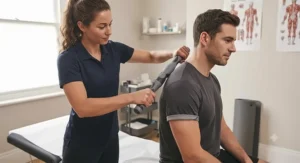
TriggerPoint didn’t just enter the recovery market, they helped define the modern language of “myofascial release” through their original GRID foam rollers, and the TriggerPoint STK Grip brings that same patterned surface philosophy into a handheld format. Measuring 18 inches by 2 inches and weighing roughly 450 grams, it’s built around a medium-density rolling surface paired with the brand’s AcuGRIP handles.
The AcuGRIP detail is the standout feature worth expanding on: the handles are shaped to mimic the angle and pressure of a therapist’s thumb, which sounds like marketing copy until you actually try targeting a specific knot near the shoulder blade, an area most sticks handle clumsily. What that means in practice is more precise control over pressure at awkward angles, not just a longer handle for leverage. The rolling surface itself uses TriggerPoint’s signature textured pattern rather than smooth or gear-wheel construction, aiming to channel blood flow to the muscle while you work rather than simply compressing it.
This is the stick for anyone specifically chasing “trigger point” or “myofascial release” results rather than general soreness relief, physiotherapy patients following a structured home programme, and gym-goers who already rate TriggerPoint’s larger foam rollers and want a portable companion piece.
Pros:
- ✅ AcuGRIP handles allow precise pressure control
- ✅ Signature textured surface aids circulation
- ✅ One-year manufacturer’s limited warranty
Cons:
- ❌ Premium price versus generic alternatives
- ❌ Medium density may feel light for very tight muscles
At around £30-£35, the TriggerPoint STK Grip costs more than most sticks on this list, but the brand pedigree and AcuGRIP handle design genuinely justify it for anyone serious about targeted release work.
7. Tiger Tail Original 18in — best all-round athlete recovery tool
Tiger Tail literally created the handheld foam roller category back in 2006, and the Tiger Tail Original 18in is the stick that started it all, still sold in its patented, non-flexible design for what the brand calls “superior deep tissue targeting.” Made from medical-grade, latex-free material in the USA, it’s built to survive years of gym bag abuse rather than a single season.
Where the flexible Bendy version prioritises comfort on bony areas, the Original trades that flex for consistency: what the spec sheet won’t tell you, but reviewers note, is that the rigid barrel tends to deliver more even pressure across large flat muscles like the quads and hamstrings precisely because it doesn’t flex or absorb any of the force you’re applying. That firmness is exactly what makes it a training-room staple, it’s the roller you’ll spot on the sidelines of professional sports teams for a reason. Standing or sitting use covers roughly 95% of reachable muscle groups solo, and closer to 100% with a training partner’s help.
This tool is built for serious athletes managing a genuine training load, anyone who’s outgrown a budget stick and wants something that will still be working in five years, and post-workout warm-down routines where consistency matters more than gentleness.
Pros:
- ✅ Patented rigid design for even, deep pressure
- ✅ Medical-grade, latex-free, made in the USA
- ✅ Trusted by physical therapists and trainers
Cons:
- ❌ No flex, less forgiving on sensitive spots
- ❌ Firmer feel may not suit total beginners
In the £25-£30 range, the Tiger Tail Original 18in remains the benchmark firm roller stick, and the one most likely to still be in your kit bag long after cheaper alternatives have cracked.
Practical Usage Guide: Getting the Most From Your First 30 Days
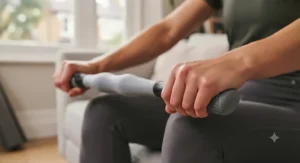
Buying the right stick is only half the job, using it properly is what actually determines whether you see results. In week one, keep sessions short: two to three minutes per muscle group, moving slowly rather than aggressively, since your tissue needs time to adapt to a new stimulus. Rolling too hard, too soon is the single most common mistake new users make, and it can leave you more sore rather than less.
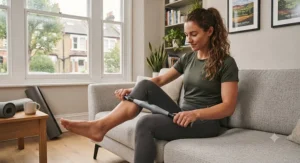
By week two, you can start applying more sustained pressure on genuinely tight spots, holding for 20-30 seconds rather than constantly moving, a technique that mirrors the trigger-point release approach physiotherapists use. Always roll toward the heart, working calves upward toward the knee, for example, rather than downward, which supports circulation rather than working against it. For maintenance beyond the first month, most people find two to three sessions a week sufficient unless training volume is unusually high; daily use isn’t necessary and can occasionally aggravate already-inflamed tissue.
Clean your stick after each use with a damp cloth or antibacterial wipe, particularly the bearing-wheel designs where sweat and skin oils can build up in the grooves over time. A stick left uncleaned in a hot car boot for weeks isn’t just unpleasant, it can degrade cheaper plastics faster than expected.
Real-World Scenarios: Which Stick Actually Fits Your Life
Consider Sarah, a 34-year-old marathon trainer who runs five days a week and travels for work every other fortnight. Her IT band flares up predictably around week 8 of any training block, and she needs something light enough for airport security bins. The flexible Tiger Tail The Stick (Bendy 18″) or the retractable THERABAND Roller Massager+ Portable both suit her far better than a rigid full-size stick that won’t fold into hand luggage.
Then there’s James, a 45-year-old five-a-side regular who trains twice a week and mainly complains about tight calves and stiff hamstrings after Tuesday matches. Budget matters more than ultimate performance here, and he doesn’t need travel portability since the stick lives in his car boot. The SKLZ Muscle Roller, built specifically around calf and shin coverage, or the budget-friendly Senshi Japan Muscle Massage Rolling Stick both make sense at his usage level.
Finally, picture Priya, a 28-year-old strength athlete following a structured physiotherapy programme after a hamstring strain, who needs precise, therapist-recommended trigger point work rather than general rolling. For her, the TriggerPoint STK Grip‘s AcuGRIP handles and clinically-informed design make it worth the premium price, since the accuracy of pressure placement matters more than cost savings.
How to Choose a Muscle Roller Stick
- Match firmness to your tolerance. Beginners and anyone with very tight or inflamed tissue should start with medium-density sticks like the SKLZ Massage Bar rather than jumping straight to rigid options.
- Consider your dominant muscle groups. Calf-focused pain points suit multi-wheel designs like the SKLZ Muscle Roller; broad flat muscles like quads respond well to rigid barrels like the Tiger Tail Original.
- Factor in portability honestly. A stick that never leaves your bedroom because it’s too bulky for your gym bag isn’t doing its job, however good the spec sheet looks.
- Check the handle design. Ergonomic, non-slip grips like AcuGRIP or mountain-bike-style handles reduce hand fatigue during longer sessions.
- Weigh flexible versus rigid cores. Flexible sticks like the Tiger Tail Bendy suit curved or bony areas; rigid sticks deliver more consistent pressure on flat muscle.
- Read the warranty terms. A one-year warranty, as offered on the TriggerPoint STK Grip, signals genuine confidence in build quality.
- Set a realistic budget band. Decide whether you need a £10-£15 entry tool to test the habit, or a £25-£35 tool built to last years of regular use.
Common Mistakes When Buying a Muscle Roller Stick
The most frequent error is buying based on length alone, assuming an 18-inch stick is automatically better than a 15-inch one regardless of what muscle groups you’re actually targeting. A shorter, more manoeuvrable stick like the SKLZ Massage Bar can outperform a longer one for isolated calf or forearm work simply because it’s easier to control at close range.
Another common pitfall is ignoring firmness entirely and choosing based on price or brand recognition alone. Reviewers consistently note that buyers who skip past firmness descriptions often end up either under-whelmed by a stick that feels too gentle, or genuinely bruised by one that’s too aggressive for their current tolerance. Finally, many first-time buyers overlook portability requirements until after purchase, only realising a fixed-length 18-inch rigid stick doesn’t fit their gym locker or hand luggage once it’s already sat in a drawer at home unused.
Muscle Roller Sticks vs Traditional Foam Rollers
| Factor | Roller Stick | Full-Length Foam Roller |
|---|---|---|
| Best For | Targeted, seated or standing use | Large muscle groups, floor-based use |
| Portability | High, fits most bags | Low, bulky even when compact |
| Precision | High, pinpoint pressure control | Lower, broader contact area |
| Learning curve | Low | Moderate, technique-dependent |
| Typical Price | £10-£35 | £15-£40 |
The technique both tools rely on is broadly known as myofascial release, a self-massage approach aimed at easing tight connective tissue around the muscle. A roller stick and a full-length foam roller aren’t really competing products, they solve different problems. Foam rollers excel at broad-coverage work on the back, glutes and outer thighs where you can use bodyweight for pressure, while a stick like the Tiger Tail Original 18in or TriggerPoint STK Grip wins for precision, portability, and situations where getting down on a gym floor isn’t practical, such as an office, hotel room or the sideline of a five-a-side match. Many serious athletes end up owning both rather than choosing one over the other.
What to Expect: Real-World Performance
Specs on a page rarely capture how a stick actually feels three minutes into a session on a genuinely tight calf. In practice, most users report an initial sharpness on the first pass over a knot, followed by a noticeable easing as blood flow increases, a pattern broadly consistent with published research comparing roller textures and hardness against post-exertional recovery and perceived soreness. Firmer sticks like the Tiger Tail Original tend to produce a more intense initial sensation but settle faster, while flexible or ball-bearing designs like the Tiger Tail Bendy or SKLZ Massage Bar feel gentler throughout but may need longer per session to achieve the same depth of release.
Expect a genuine difference in day-to-day mobility rather than an overnight transformation. Consistent use across a training block, rather than a single desperate session the night before a race, is what most reviewers and the available research point to as the realistic path to noticeably looser, more responsive muscles.
Muscle Roller Sticks for Runners
Runners have specific needs that differ meaningfully from general gym-goers: repetitive strain on calves, IT bands and shins rather than broad muscular fatigue. A stick that flexes around bony landmarks, like the Tiger Tail The Stick (Bendy 18″), tends to suit the IT band and shin area better than fully rigid alternatives, since it distributes pressure more evenly across an uneven surface. For calf-specific tightness after intervals or hill sessions, the wheel-based coverage of the SKLZ Muscle Roller provides more consistent contact across the muscle’s curve than a single rigid barrel.
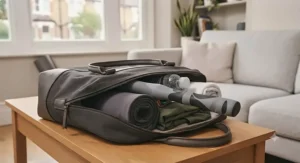
Portability also matters disproportionately for runners who travel to races or train before work. The retractable THERABAND Roller Massager+ Portable, collapsing to just 12 inches, solves the packing problem that a fixed 18-21 inch stick simply can’t.
Long-Term Cost and Maintenance
A £10-£15 budget stick like the Senshi Japan Muscle Massage Rolling Stick might need replacing within a year or two of regular use, particularly if the plastic core isn’t as durable as pricier alternatives, effectively costing you £7-£15 per year of use if you replace it annually. By contrast, a £25-£35 stick built from medical-grade materials, such as the Tiger Tail Original 18in or TriggerPoint STK Grip, is designed to last considerably longer, sometimes five years or more with basic care, which works out cheaper per year of ownership despite the higher upfront cost.
Maintenance costs are minimal either way, no batteries, no subscriptions, no consumable parts beyond the occasional wipe-down. The real long-term “cost” comparison worth weighing is the price of skipping recovery altogether: persistent, unaddressed muscle tightness can contribute to reduced training consistency and a higher risk of compensatory injuries, an outcome considerably more expensive in missed training time than any roller stick on this list.
Buyer’s Decision Framework
If you’re a runner chasing IT band and shin relief, choose a flexible stick like the Tiger Tail Bendy 18″, because rigid designs struggle to sit flush against curved or bony areas. If your main complaint is tight calves after five-a-side or gym sessions, choose a multi-wheel design like the SKLZ Muscle Roller, because independent wheels adapt better to the calf’s curve than a single barrel. If you’re following a physiotherapy programme with specific trigger point instructions, choose the TriggerPoint STK Grip, because its AcuGRIP handles are purpose-built for precise pressure placement.
If portability is your dealbreaker, whether for travel, a small locker, or a cramped flat, choose the retractable THERABAND Roller Massager+ Portable over any fixed-length option. And if you simply want the most durable, broadly capable stick without overthinking niche use cases, the Tiger Tail Original 18in remains the safest all-round recommendation on this list.
Safety and Usage Considerations
Roller sticks are generally low-risk tools, but a few sensible precautions apply. Avoid rolling directly over joints, the spine, or areas of broken skin, bruising or acute injury, and ease off pressure noticeably around bony landmarks like the shin or ankle. NHS guidance on pain and injuries after exercise notes that daily stretching can help manage delayed onset muscle soreness, though it may initially feel more painful before easing after a few minutes, and the same gradual approach applies to roller stick use, more pressure isn’t automatically better. Anyone managing a diagnosed injury, circulatory condition or recent surgery should check with a physiotherapist or GP before starting a new self-massage routine, since individual circumstances vary considerably.
Frequently Asked Questions
❓ Do muscle roller sticks actually work?
❓ How long should I roll each muscle group?
❓ Are flexible or rigid roller sticks better?
❓ Can I use a muscle roller stick every day?
❓ What's the difference between a roller stick and a foam roller?
Conclusion
Choosing the best muscle roller stick really comes down to matching the tool to your actual training pattern rather than chasing whichever option has the flashiest packaging. Runners managing IT band or shin tightness will get more genuine benefit from a flexible option like the Tiger Tail The Stick (Bendy 18″), while anyone targeting stubborn calves specifically should look hard at the SKLZ Muscle Roller‘s multi-wheel design. Those following a structured physiotherapy plan will likely find the precision handles on the TriggerPoint STK Grip worth the extra spend, and anyone wanting one dependable, all-purpose stick that’ll last years should default to the Tiger Tail Original 18in.
Budget shouldn’t be the only deciding factor, but it’s a legitimate one: the Senshi Japan Muscle Massage Rolling Stick remains a sensible way to test whether this kind of recovery tool suits your routine before committing to a pricier option. Whichever you choose, remember that consistency matters more than intensity, a few short, regular sessions a week will do more for your muscles than one brutal session the night before a big event.
Recommended for You
- Wooden Massage Roller: 7 Brilliant Picks Compared (2026)
- Handheld Massage Roller: 7 Best Picks for Muscle Relief in 2026
- Best Body Roller 2026: 7 Tested Picks for Muscle Tension UK
Disclaimer: This article contains affiliate links. As an Amazon Associate, I earn from qualifying purchases. If you purchase products through these links, we may earn a small commission at no additional cost to you.
✨ Found this helpful? Share it with your friends! 💬🤗
