

In This Article
If your neck feels like it’s been run through a mangle after a week of staring at a laptop, you are not alone. Neck pain is quietly epidemic in Britain. According to the NHS, it affects roughly one in three people at some point, and with remote working having turned the nation’s dining tables into permanent office spaces, that number isn’t shrinking anytime soon.
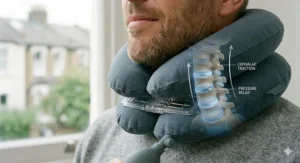
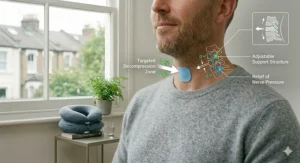
A neck traction device offers a non-invasive, drug-free way to gently decompress the cervical spine — essentially creating a small amount of space between the vertebrae, easing pressure on pinched nerves and compressed discs. Think of it as giving your neck a brief holiday from the relentless pull of gravity and the slow ruin of a forward head posture. Used consistently for 10–15 minutes a day, these devices can genuinely shift the dial on chronic pain, tension headaches, and that persistent stiffness that greets you every morning like an unwelcome flatmate.
This guide covers the 7 best neck traction devices currently available on Amazon.co.uk, spanning budget foam stretchers to precision mechanical units. Whether you’re a desk-bound professional in Leeds, a retiree in Cornwall dealing with degenerative disc disease, or a Manchester student whose posture has been quietly destroyed by years of scrolling, there’s an option here that will suit your situation — and your budget.
What is a neck traction device? A neck traction device is a therapeutic tool designed to gently stretch and decompress the cervical spine. By applying controlled longitudinal force to the neck, it reduces pressure on intervertebral discs, relieves pinched nerves, and helps restore natural cervical curvature. Most home devices fall into three types: foam stretchers, inflatable collars, and mechanical over-door systems.
Quick Comparison Table: Top 7 Neck Traction Devices UK 2026
| Product | Type | Best For | Approx. Price (GBP) | Amazon.co.uk |
|---|---|---|---|---|
| RESTCLOUD Neck & Shoulder Relaxer (Chiropractic Pillow) | Foam stretcher | Beginners, posture correction | Under £25 | ✅ In Stock |
| BLABOK Neck & Shoulder Relaxer | Foam chiropractic pillow | Budget buyers, TMJ relief | Under £20 | ✅ In Stock |
| Fanlecy Neck Relaxer with Massage Point | Foam + massage nodes | Upper back + neck combined | Under £25 | ✅ In Stock |
| Anzorhal Neck Cloud Cervical Traction Device | Curved foam stretcher | Daily maintenance, travel | Under £20 | ✅ In Stock |
| Adjustable Inflatable Cervical Neck Traction Device | Inflatable collar | Customisable pressure, travel | Under £30 | ✅ In Stock |
| iSTIM WeTrac Cervical Neck Traction | Mechanical knob-turn | Chronic pain, clinical-level relief | £55–£75 range | ✅ In Stock |
| ComforTrac Wave Cervical Traction Occipital Support | Rigid foam occipital | Post-traction relaxation, rehab support | £35–£50 range | ✅ In Stock |
The comparison above makes one thing immediately clear: the majority of the market sits in the budget foam-stretcher category, making cervical traction genuinely accessible for most UK buyers without a GP referral or a hefty physiotherapy bill. That said, budget and quality are not synonymous — the iSTIM WeTrac justifies its higher price with a precision you simply cannot replicate with a foam wedge. If you’re dealing with a diagnosed condition such as a herniated disc at C5–C6, spending a bit more on the iSTIM is considerably wiser than attempting clinical-grade relief with a £15 foam block.
✨ Don’t Miss These Exclusive Deals!
🔍 Take your cervical health to the next level with these carefully selected products. Click on any highlighted item to check current pricing and availability on Amazon.co.uk. These picks will help you find exactly what you need!
💬 Just one click — help others make better buying decisions too! 😊
Top 7 Neck Traction Devices UK 2026: Expert Analysis
1. RESTCLOUD Neck and Shoulder Relaxer — Cervical Traction Device, Chiropractic Pillow
The RESTCLOUD Chiropractic Pillow is the device that first got thousands of British desk workers interested in cervical traction — and it’s still one of the most sensible entry points into home neck care.
The design is elegantly simple: a medium-firm polyurethane foam wedge engineered to cradle your head at a carefully calculated angle, using nothing more than gravity and the weight of your head (roughly 4.5–5.5 kg — considerably heavier than most people realise) to generate gentle decompression. The curved surface is designed to match the natural cervical lordosis, which means it’s not just stretching but actively encouraging the neck to return to its proper shape over time.
Here’s what the spec sheet won’t tell you: this works best on a firm, flat floor — a yoga mat is ideal. British homes, with their tendency towards thick carpet and soft mattresses, can actually reduce effectiveness if you try to use it in bed. Keep it in the living room on a hard floor and you’ll get far better results. The lightweight, compact design also means it fits neatly into a kitchen drawer or laptop bag — rather useful when you’re commuting between your flat in London and a family home up north, as many British workers now do on a hybrid schedule.
UK reviewers consistently praise the RESTCLOUD for genuine tension relief within the first week, particularly for tension headaches and morning stiffness. A small cohort does report initial discomfort during the adaptation period — this is entirely normal and usually resolves within the first few days of use.
✅ No batteries, pumps, or complex setup
✅ Compact enough for a small flat
✅ Consistent results for posture correction and mild-to-moderate tension
❌ Not adjustable — fixed traction angle suits most but not all neck sizes
❌ Limited effectiveness for severe or acute disc conditions
In the under £25 range — arguably one of the most cost-effective health investments you can make. Solid choice for beginners and remote workers.
2. BLABOK Neck and Shoulder Relaxer — Portable Cervical Traction Pillow
The BLABOK Neck and Shoulder Relaxer occupies very similar territory to the RESTCLOUD but brings a slightly different geometry and a pleasant chiropractic pillow profile that several UK users have found more comfortable for sustained daily use.
Where BLABOK distinguishes itself is in its slightly lower profile design, which some people with shorter neck lengths find more immediately comfortable than the RESTCLOUD’s more pronounced arch. The foam density is firm without being punishing — it won’t feel like lying on a doorstep, even on the first use. The portable form factor is genuinely pocket-sized; it slips into a work bag without drama, which matters if you’re the sort of person who wants to use it during a lunch break at an office in Birmingham or Manchester.
The BLABOK is squarely aimed at people dealing with the postural consequences of modern British working life: the forward head posture that develops after years of hunching over a laptop on the kitchen table, the shoulder tension that creeps in during long Teams meetings, and the TMJ discomfort that seems to afflict an increasing number of people who spend their days clenching their jaw through video calls.
UK reviews highlight its accessible price point and ease of use, with many buyers noting that it delivered genuine relief for tension headaches within the first fortnight. It’s worth noting that like all foam stretchers, it’s a maintenance and correction tool rather than a treatment for acute conditions. If you’re in genuine acute pain following an injury, consult your GP before using any traction device at home.
✅ Comfortable first-use experience
✅ Compact, travel-friendly
✅ Effective for postural TMJ and daily neck tension
❌ Fixed arch — no intensity adjustment
❌ Less durable foam reported by some longer-term users
Under £20 — the budget pick for anyone wanting to try cervical traction without much financial commitment.
3. Fanlecy Neck and Shoulder Relaxer with Upper Back Massage Point — Cervical Traction Pillow
The Fanlecy Neck and Shoulder Relaxer adds an intelligent wrinkle to the standard foam stretcher concept: integrated upper back massage nodes positioned to simultaneously address the thoracic spine and shoulder tension that almost always accompanies chronic neck problems.
This matters more than you might think. Neck pain rarely exists in isolation. The trapezius, rhomboids, and levator scapulae — the muscular cast that supports the cervical spine — run deep into the upper back, and ignoring them while focusing purely on neck traction is a bit like treating only one side of a problem. The Fanlecy’s massage nodes target the area just below and between the shoulder blades, providing acupressure-style stimulation during the traction session. For people who spend their days carrying the weight of the world on their shoulders — commuters, teachers, healthcare workers on long shifts — this dual approach can be noticeably more satisfying than a pure neck stretcher.
Practically, the Fanlecy is slightly bulkier than the RESTCLOUD or BLABOK owing to the additional massage structure. This is still well within the bounds of compact storage in a British terrace or flat, but worth noting if storage space is genuinely at a premium. The firm Beige colourway also gives it a slightly less clinical appearance, which appeals to those who prefer their health tools to look like something from a spa rather than a medical catalogue.
UK buyers frequently highlight the combined relief — many noting that the upper back and neck feel simultaneously addressed in a single 10-minute session.
✅ Neck traction combined with upper back acupressure relief
✅ Attractive design, less clinical look
✅ Good value for the dual functionality
❌ Slightly bulkier than single-function foam stretchers
❌ Fixed intensity — not ideal for severe conditions
Under £25 — best value for anyone with both neck and upper back tension.
4. Anzorhal Neck Cloud Cervical Traction Device
The Anzorhal Neck Cloud has earned something of a cult following among the British chronic neck pain community, appearing repeatedly on UK lifestyle forums and appearing in Amazon.co.uk’s most wished-for lists. The contoured, cloud-like shape is engineered specifically to address the flattened cervical curve — sometimes called “tech neck” or “forward head posture” — that results from years of looking down at screens.
The design sits somewhere between a cervical traction pillow and a posture correction wedge. Its gentle undulating profile supports the natural S-curve of the spine from the occiput down to the mid-thoracic region, and the firm yet yielding foam provides the resistance needed to generate genuine traction without feeling aggressive. At roughly 22 cm long, it stores effortlessly in the sort of compact spaces that British homes specialise in.
The Anzorhal is particularly well-suited to daily maintenance use — the 10-minute routine that prevents problems from compounding rather than attempting to reverse advanced degeneration. Think of it as the equivalent of daily flossing: modest in cost and effort, significant in cumulative effect. Several UK reviewers note that they pair it with a morning mindfulness session, which is rather a civilised way to start the day.
One note for taller individuals: some users with longer necks report that the curvature doesn’t quite sit at the right cervical level. Starting with the widest part of the arch positioned at the base of the skull tends to resolve this.
✅ Contoured design targets forward head posture specifically
✅ Excellent for daily maintenance routine
✅ Compact and portable — suits British flat living
❌ May not perfectly suit longer or very short necks
❌ No adjustability — one fixed traction position
Under £20 — quietly excellent for daily use and preventive care.
5. Adjustable Inflatable Cervical Neck Traction Device — Portable Neck Stretcher with Manual Air Pump
Moving up in sophistication: the Adjustable Inflatable Cervical Neck Traction Device brings something the foam category fundamentally cannot offer — the ability to dial in exactly how much traction you want, on any given day.
The basic principle involves a multi-chamber inflatable collar worn around the neck that, when pumped via a small hand bulb, gradually expands and gently lifts the head away from the shoulders, creating spinal decompression without any external anchor point or door frame required. This is a meaningful practical advantage in the UK context: many British homes, particularly older Victorian terraces and converted flats, have doors with frames that are not ideally suited to over-door traction equipment. The inflatable collar side-steps that issue entirely.
The adjustability is genuinely useful. On a stiff Monday morning after a long drive up the motorway, you might want a firmer inflation; on a maintenance Wednesday, gentle inflation is more appropriate. The control this gives you over the session is something foam stretchers simply cannot match. The multi-layer chamber design also provides a measure of safety — the pressure builds gradually rather than suddenly.
Worth noting: inflatable devices require a bit more discipline about pressure management. The temptation to over-inflate is real, and the NHS guidance on cervical traction recommends starting conservatively. Begin with light inflation and increase incrementally over several sessions.
✅ Adjustable pressure for different pain levels
✅ No door frame required — works anywhere in the home
✅ Travels well — fits in hand luggage
❌ Requires some learning curve with pressure management
❌ Air seals can degrade over time with very heavy use
Under £30 — best for those who want adaptable, on-demand traction.

6. iSTIM WeTrac Cervical Neck Traction, Relaxer and Stretcher
The iSTIM WeTrac is where home cervical traction starts to get serious. This is a mechanical device from Taiwan with a patented knob-turning cable technology that delivers controlled, precise traction force — up to 50 lbs (approximately 22.7 kg) — without the unpredictability of air pumps or the passivity of foam wedges.
The mechanics are elegantly straightforward: you lie the device flat, position the neck wedges to match your cervical anatomy, and gradually turn the calibrated knob to increase traction along a cable that gently draws the back of the head away from the shoulders. The angle is adjustable by repositioning the neck wedges, which is a crucial feature — a forward head posture requires a subtly different traction angle than a laterally deviated cervical spine, and the WeTrac accommodates both. This level of precision is what separates it from everything else on this list.
Made in Taiwan with quality control that shows in every component, the WeTrac feels like a professional physiotherapy tool that somehow ended up priced accessibly enough for home use. It comes with a travel bag, making it viable for hotel stays — a consideration that matters for the significant number of British professionals who spend Monday-to-Thursday in a hotel near a client site and Friday working from the spare bedroom.
UK reviewers in the verified purchaser sections frequently describe the WeTrac as transformative for chronic conditions including herniated discs, spondylosis, and persistent cervical radiculopathy.
✅ Precision traction up to 50 lbs — clinical-grade at home
✅ Adjustable angle and intensity
✅ Durable, professional build quality — comes with travel bag
❌ Higher price point than foam alternatives
❌ Requires careful reading of instructions before first use
In the £55–£75 range — worth every penny for anyone with a diagnosed cervical condition.
7. ComforTrac Wave Cervical Traction Occipital Support
The ComforTrac Wave Cervical Traction Occipital Support was designed by clinicians — doctors and physiotherapists who understand that traction is only half the story. The other half is what happens to the neck immediately after traction, when the cervical muscles are at their most relaxed and the opportunity to set the spine in a healthy resting position is at its greatest.
The ComforTrac Wave is a rigid foam occipital support tool with a distinctive wave profile that cradles the base of the skull with engineering precision. It can be used in one orientation for post-traction cervical support (stabilising the neck while the decompressed discs re-seat themselves), and in another for active occipital traction in a resting position. It also doubles as a yoga prop for cervical positioning exercises, providing a more biomechanically correct alternative to a standard yoga block.
For UK buyers who already own a home traction unit — particularly those who use an over-door device or a mechanical unit like the WeTrac — the ComforTrac Wave is the missing second step that most people skip. It’s in the mid-£35–£50 range, which is reasonable for a clinician-designed product with genuine rehabilitative intention behind it.
UK availability is confirmed on Amazon.co.uk, and the build quality is substantially more robust than the price might suggest. Sold from Amazon Fulfilment.
✅ Clinician-designed for post-traction support and recovery
✅ Dual-function: traction support and yoga/exercise use
✅ Ideal companion to a mechanical or over-door traction device
❌ Most effective as a supplement to another device, not a standalone
❌ Less intuitive for complete beginners without physiotherapy context
In the £35–£50 range — best for committed home rehabilitation users wanting proper post-traction care.
How to Use a Neck Traction Device Safely at Home: A UK Practical Guide
There’s a temptation, when a shiny new health gadget arrives in the post, to crack it straight open and use it at maximum intensity. Resist this entirely. Cervical traction is effective precisely because it applies force to a delicate structure, and beginning conservatively is not merely a suggestion — it’s the difference between genuine relief and making things considerably worse.
First 7 days: the introduction phase. Use your device for no more than 5 minutes per session, once daily. Keep traction pressure on the low end — for foam devices, simply lying on them without forcing your neck into the arch; for inflatable models, two or three gentle pumps only. The goal is acclimatisation.
Days 8–21: progressive loading. Gradually extend sessions to 10 minutes. Most UK physiotherapists recommend a ceiling of 15 minutes per session. Increase intensity incrementally, paying close attention to how your neck feels in the 30 minutes following each session. Mild post-session relaxation is normal. Increased pain, tingling, or numbness is a signal to reduce intensity and, if it persists, to consult your GP.
Storage and maintenance in the British climate. Unlike the US, where dry indoor air is the norm, British homes can be quite humid — particularly in older terraced houses and converted flats without adequate ventilation. Foam devices should be stored away from direct contact with damp walls or condensation-prone windowsills, as sustained moisture exposure can begin to degrade the foam density over time. Store in a dry drawer or on a shelf, not tucked behind a radiator.
On firm floors, please. A yoga mat on a hard floor is ideal. The plush fitted carpets found in most British sitting rooms and bedrooms will absorb traction force and reduce effectiveness. If you only have carpeted floors, a firm exercise mat laid flat will create a sufficient base.
Who should not use these devices at home: Anyone with acute cervical injury, osteoporosis, rheumatoid arthritis affecting the cervical spine, spinal cord compression, or vascular issues in the neck region should consult an NHS GP or physiotherapist before attempting home traction. These devices are wellness tools, not medical treatments, and are not substitutes for clinical care.
Real-World Scenarios: Which Device Suits Your Situation?
The London Hybrid Worker
Sarah works three days a week in a Canary Wharf office and two days from a flat in Hackney. Her desk setup at home is a kitchen table with a laptop — ergonomically suboptimal in the way that every kitchen-table-turned-office is. She’s 34, experiences daily tension headaches by 4pm, and her neck has developed the forward head posture that her physio described as “textbook tech neck.” She has approximately 25 cm of spare drawer space in the flat.
Best fit: The RESTCLOUD Chiropractic Pillow. Compact, under £25, zero setup, and genuinely effective for the postural correction and tension relief she needs. Ten minutes on a yoga mat before breakfast and she’s significantly better positioned for the working day.
The Retired Teacher in the Cotswolds
David is 63, was diagnosed two years ago with mild cervical spondylosis at C5–C6, and gets occasional bouts of radicular pain running down his right arm. His GP has referred him for physiotherapy, but the NHS waiting list in his area is six months long. He wants a home tool to manage symptoms in the meantime.
Best fit: The iSTIM WeTrac, used with guidance from his GP. The precision traction force and adjustable angle allow him to target the specific spinal level causing his symptoms, with enough intensity control to use safely alongside professional medical oversight.
The Newcastle University Student
Kieran is 21, has spent three years destroying his posture over library desks and lecture hall seats, and has a budget of around £20. He wants something he can use in his student accommodation — a room about the size of a generous wardrobe, shared with a desk and a single bed on a carpeted floor.
Best fit: The BLABOK Neck and Shoulder Relaxer or the Anzorhal Neck Cloud. Either fits under a bed, costs under £20, works on a firm floor (he can use the corridor or a communal area), and will genuinely address the postural havoc that higher education wreaks on the cervical spine.

How to Choose a Neck Traction Device in the UK: 5 Key Criteria
Choosing the right neck traction device doesn’t have to feel like deciphering a GP referral letter. Here’s how to think about it clearly.
1. Identify your pain type first. Mild postural tension and tension headaches respond well to foam stretchers — they’re gentle, consistent, and require no management. Acute disc-related pain, radiculopathy, or diagnosed cervical conditions benefit from the adjustable intensity of inflatable or mechanical devices like the iSTIM WeTrac.
2. Consider how you’ll actually use it, not how you intend to. A device that requires a dedicated door frame or a lengthy setup is a device you’ll use twice and then leave on top of a wardrobe. If your lifestyle is busy, a foam pillow you can deploy in 10 seconds flat will deliver more cumulative benefit than an elaborate system you set up once a fortnight.
3. Account for your living space. British homes are not spacious by global standards. A device that requires a 2-metre clear floor area or a sturdy door with a specific frame type needs to be assessed against your actual geography. Foam devices and inflatable collars work anywhere; over-door systems need the right infrastructure.
4. Think about your neck’s specific anatomy. People with longer necks, very short necks, or wider shoulders will find that some foam stretcher geometries don’t sit quite right. Inflatable and mechanical devices tend to accommodate a wider range of anatomies.
5. Set a realistic budget in GBP — and stick to it. The diminishing returns in this category are real. For the vast majority of people with postural neck tension, spending over £30 offers limited additional benefit. Save the premium budget for clinical-level conditions that genuinely warrant the precision of the iSTIM WeTrac or similar.
Neck Traction vs Traditional Alternatives: What Actually Works?
| Method | Cost (GBP) | Daily Convenience | Effectiveness for Mild Tension | Effectiveness for Disc Issues | Notes |
|---|---|---|---|---|---|
| Neck Traction Device (foam) | Under £25 | ⭐⭐⭐⭐⭐ | ⭐⭐⭐⭐ | ⭐⭐ | Best daily maintenance |
| Neck Traction Device (mechanical) | £55–£75 | ⭐⭐⭐⭐ | ⭐⭐⭐⭐ | ⭐⭐⭐⭐⭐ | Best for clinical conditions |
| NHS Physiotherapy | Free–£50/session | ⭐⭐ (waiting lists) | ⭐⭐⭐⭐⭐ | ⭐⭐⭐⭐⭐ | Gold standard but hard to access |
| Massage (private UK) | £40–£80/session | ⭐⭐ | ⭐⭐⭐⭐ | ⭐⭐ | Excellent but ongoing cost |
| Heat pad/TENS | £20–£50 | ⭐⭐⭐⭐⭐ | ⭐⭐⭐ | ⭐⭐ | Complements traction well |
| Anti-inflammatory medication | Variable | ⭐⭐⭐⭐ | ⭐⭐⭐ | ⭐⭐⭐ | Addresses symptoms, not causes |
The comparison table makes a compelling case for home traction as a cost-effective bridge between waiting for NHS physiotherapy and managing daily symptoms. A one-off investment of under £25 for a quality foam device delivers daily relief that, priced against a single private massage session, pays for itself in three to four uses. The mechanical devices like the iSTIM WeTrac sit in the same cost bracket as roughly one or two private physiotherapy sessions — and they work 365 days a year without an appointment.
Common Mistakes When Buying a Neck Traction Device in the UK
Even sensible people make avoidable errors in this category. Here are the ones worth watching for.
Buying based on price alone. The cheapest foam stretchers — particularly the unbranded options that appear at the bottom of Amazon.co.uk search results for a few pounds — are often made from foam that degrades within weeks of regular use. The BLABOK and RESTCLOUD sit at the budget end of this guide because they’ve demonstrated consistent quality at that price point. Sub-£10 unbranded options very often haven’t.
Expecting overnight results. Cervical traction works cumulatively. The research — including a systematic review published by the NHS Evidence library — consistently shows that consistent daily use over a minimum of 2–4 weeks produces meaningful results. Using it for three days, feeling no miraculous transformation, and returning it is one of the most common buyer mistakes in this category.
Ignoring the distinction between maintenance and treatment. Foam stretchers are maintenance tools. They will help maintain a healthy cervical curve, relieve daily tension, and prevent postural deterioration. They are not treatment devices for herniated discs or acute radiculopathy. If you’re buying a neck traction device hoping to avoid a conversation with your GP about genuine cervical pathology, that’s the wrong approach. See your GP first; use a home device as an adjunct to professional guidance.
Over-inflating inflatable models. The temptation to “go harder for faster results” is particularly acute with inflatable collar devices. The opposite is true — excessive traction force can cause muscle guarding, increased pain, and in rare cases, vascular complications. The Chartered Society of Physiotherapy consistently recommends that home cervical traction begins at minimal force and increases gradually over several weeks.
Buying a US-voltage device from a third-party seller. Not relevant for non-electrical devices, but for electronic neck massagers or heated traction units, always verify 230V/50Hz compatibility or a universal voltage adaptor before purchasing. UK plug Type G is standard; anything arriving with a two-pin plug will need an adaptor.
Long-Term Cost and Maintenance in the UK
Let’s talk about the economics, because they’re actually rather good for home cervical traction compared to the alternatives.
A quality foam neck traction device in the under-£25 bracket should last 12–18 months of daily use before the foam begins to noticeably compress and lose its therapeutic geometry. At £20 for 365 days of daily use, that’s roughly 5p per session — a figure that makes even budget-conscious buyers look twice.
The mechanical iSTIM WeTrac, while costing £55–£75, has no consumable components. The cable, frame, and knob mechanism are built for longevity. Used daily, it amortises to under 20p per session over a two-year lifespan — and many users report years of reliable use beyond that.
Inflatable devices sit between the two in durability terms. The air seals and hand pump are the components most likely to show wear over time. Replacement hand bulbs are widely available on Amazon.co.uk for under £5, which extends the device’s useful life considerably.
One UK-specific consideration worth flagging: if you’re purchasing an internationally manufactured medical device such as the iSTIM WeTrac — which is manufactured in Taiwan — the relevant post-Brexit consideration is that it should ideally carry UKCA marking (which replaced CE marking for products sold in Great Britain following the end of the Brexit transition period) or be sold through a UK-registered responsible person. The majority of reputable sellers on Amazon.co.uk have addressed this compliance requirement, but it’s worth checking the product listing if certification matters to you. Products sold by Amazon Fulfilment tend to meet these requirements.
✨ Don’t Miss These Exclusive Deals!
🔍 Take your neck health to the next level with these carefully selected products. Click on any highlighted item to check current pricing and availability on Amazon.co.uk.

FAQ: Neck Traction Devices UK
❓ Are neck traction devices safe to use at home in the UK?
❓ How long does it take to see results from a neck traction device?
❓ Can I use a neck traction device if I have a herniated disc?
❓ Will a neck traction device arrive quickly if I order from Amazon.co.uk?
❓ Are neck traction devices regulated in the UK?
Conclusion
Neck pain is not inevitable. It feels that way when you’ve been sitting at a desk in the same position since half-eight in the morning and it’s now nearly five, but the cervical spine is a remarkably responsive structure that tends to improve considerably when you apply consistent, appropriate attention to it.
A neck traction device is one of the most cost-effective tools in the home health toolkit — particularly for the modern British working adult navigating the ergonomic purgatory of hybrid working, small flats, and the general structural chaos of laptop-based professional life. The seven options reviewed in this guide cover every meaningful price point and use case, from the straightforwardly excellent RESTCLOUD Chiropractic Pillow at under £25 to the clinician-grade precision of the iSTIM WeTrac for more serious cervical conditions.
The guiding principle is this: match the device to your actual situation, start conservatively, and give it at least two to four weeks of consistent daily use before drawing any conclusions. Cervical traction rewards patience. So does the NHS waiting list, but that’s a different matter entirely.
✨ Don’t Miss These Exclusive Deals!
🔍 Ready to invest in your cervical health? Click on any highlighted product to check current pricing and availability on Amazon.co.uk. Your neck will thank you — probably around day ten.
Recommended for You
- Best Cervical Neck Massager UK 2026: 7 Proven Picks for Pain Relief
- Best Heated Neck Massager UK 2026: 7 Expert Picks Reviewed
- Best 3D Kneading Neck Massager UK 2026: 7 Top Picks Reviewed
Disclaimer: This article contains affiliate links. As an Amazon Associate, I earn from qualifying purchases. If you purchase products through these links, we may earn a small commission at no additional cost to you.
✨ Found this helpful? Share it with your mates! 💬🤗
