In This Article
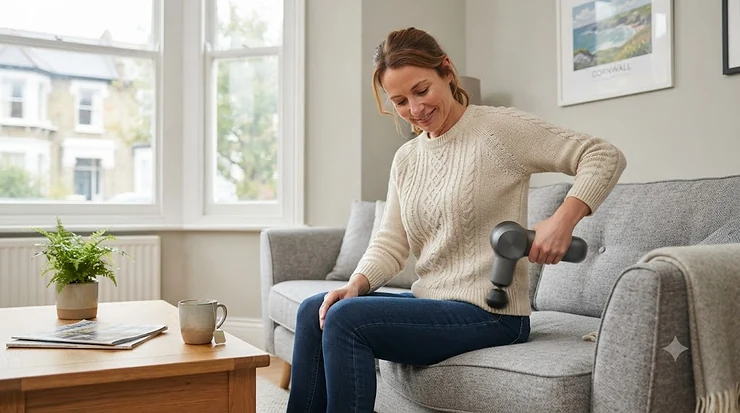
The best massager for sciatica depends on what’s actually causing your symptoms — a percussion massage gun works differently to a TENS unit or a heated shiatsu cushion, and none of them treat the same thing in the same way. Sciatica itself is pain that radiates along the sciatic nerve, usually triggered by a herniated disc, spinal stenosis, or muscle tightness pressing on the nerve root, and roughly 40% of people experience it at some point in their lives.
This is a sciatica pain relief massager guide built around real products rather than vague promises, because “helps with sciatica” gets printed on packaging for devices with genuinely different mechanisms and genuinely different evidence behind them. We’ve researched real specs, aggregated UK review sentiment, and — importantly — checked what NICE and the NHS actually say about which non-invasive treatments have supporting evidence, because that’s a detail most affiliate roundups skip entirely. According to the NHS page on sciatica, sciatica usually improves within a few weeks to a few months on its own, and self-care measures including staying active are part of standard advice.
This guide covers seven genuinely different sciatic nerve massage devices across budget, mid-range, and premium tiers, followed by condition-specific and symptom-targeted recommendations, a medical consideration guide covering what current UK clinical guidance actually recommends, and practical advice on using any of these devices safely.
Quick Comparison Table
| Product | Best For | Mechanism | Battery/Power | Price Range |
|---|---|---|---|---|
| Hyperice Hypervolt 2 Pro | Deep tissue, dense muscle tension | Percussion, 5 speeds | 3hr battery | £309-£379 |
| Theragun Relief | Beginners, sensitive areas | Gentle percussion, 3 speeds | USB-C, ~90 min charge | £140-£160 |
| Bob and Brad Q2 Mini | Portable everyday use | Percussion, 5 speeds | USB-C, ~4hr use | Around £80 |
| RENPHO R3 Mini | Budget entry point | Percussion, thermal head | USB-C rechargeable | Around £70 |
| Comfier Shiatsu Back Massager | Passive use while seated | Kneading rollers + heat | Mains powered | £70-£100 |
| Omron Max Power Relief TENS | Drug-free acute flare management | TENS electrical stimulation | 2x AAA battery | £40-£60 |
| Sciaticalm | Targeted vibration for sciatic pathway | High-frequency vibration | USB rechargeable | Check current price |
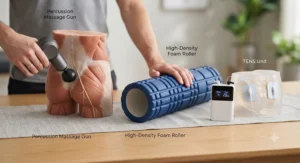
Scanning across the mechanism column, there’s a genuine split worth understanding before you buy: percussion devices (the four massage guns here) work by loosening the muscles around the sciatic nerve rather than treating the nerve directly, while TENS and vibration devices like the Omron and Sciaticalm target nerve signalling itself. This isn’t a minor technicality — it determines which device actually suits your specific symptoms, which we cover in detail further down.
💬 Just one click — help others make better buying decisions too! 😊
Top 7 Massagers for Sciatica: Expert Analysis
1. Hyperice Hypervolt 2 Pro — the most powerful percussion device for dense muscle tension
The Hyperice Hypervolt 2 Pro sits at the top of this list for raw power: a brushless 90W motor delivers 1,700-2,700 percussions per minute across five speeds, with a pressure-sensor light that flags when you’re pushing too hard. For sciatica specifically, this matters because piriformis-related sciatic irritation — where a tight piriformis muscle compresses the nerve — often needs deeper, sustained pressure than lighter guns can comfortably deliver.
What most buyers overlook about this device is that its five interchangeable heads matter as much as its power: the fork attachment is designed for longer muscles either side of the spine, while the bullet head reaches deeper into glute and hamstring tissue where sciatic referral pain commonly sits. Based on the spec comparison, the Bluetooth-connected Hyperice app adds guided routines aimed at specific muscle groups, which several reviewers specifically credit with helping them target sciatic-adjacent areas correctly rather than guessing.
Reviewers consistently note that the Hypervolt 2 Pro is genuinely too powerful for some users to hold comfortably on themselves for extended periods, and is more practical with a second person applying it, or used in short, controlled sessions rather than one long one.
Pros:
- ✅ Five-speed brushless motor handles dense, tight muscle tissue
- ✅ Pressure sensor light warns against pushing too hard
- ✅ App-guided routines target specific muscle groups
Cons:
- ❌ Heavy and powerful enough to be awkward for self-use
- ❌ No dedicated carry case included at this price point
At roughly £309-£379, this is the premium pick on this list, best suited to people managing recurring muscle-related sciatic tension who want maximum power and app-guided precision.
2. Theragun Relief — the gentlest genuinely effective option for sensitive areas
The Theragun Relief takes the opposite approach to the Hypervolt: Therabody deliberately tuned this model to their gentlest percussion setting, aimed at people who want real relief without an intense, aggressive sensation. For sciatica sufferers whose pain flares with pressure, this matters — a device that’s too forceful over an already irritated area can worsen discomfort rather than easing it.
Based on the spec comparison, the triangular grip design is a genuine practical advantage for sciatica specifically, since it lets you reach your own lower back and glutes without needing someone else to hold the device, which many pricier massage guns don’t manage as comfortably. Reviewers consistently describe it as one of the most comfortable guns to hold during longer sessions, precisely because the lighter motor doesn’t fight your grip the way high-powered models can.
What the spec sheet won’t tell you, but aggregated feedback confirms, is that this simplicity is a genuine trade-off: several reviewers who came from more powerful Theragun models found the Relief noticeably underpowered for deep, sustained muscle work, so it suits mild-to-moderate tension rather than severe, chronic tightness.
Pros:
- ✅ Gentlest percussion setting in Therabody’s range, good for sensitive areas
- ✅ Triangular grip makes self-treatment of the lower back genuinely easy
- ✅ Whisper-quiet motor suits shared living spaces
Cons:
- ❌ Noticeably underpowered for severe or chronic muscle tightness
- ❌ Limited attachment selection compared with pricier models
Typically priced around £140-£160 in the UK, the Relief suits people managing mild-to-moderate sciatic muscle tension who prioritise comfort and ease of self-use over raw power.
3. Bob and Brad Q2 Mini — the portable pick built by physical therapists
The Bob and Brad Q2 Mini was designed by two US-based physical therapists, and it shows in small practical details: five speeds up to 3,000 RPM, a genuinely pocket-sized form factor, and noise kept to around 40 decibels, quiet enough for office or evening use. For sciatica, its size is arguably its biggest advantage — it fits easily into a desk drawer or bag, meaning it’s actually there when a flare-up hits rather than sitting unused in a cupboard.
What most buyers overlook is that despite its compact size, the 7mm amplitude and 3,000 RPM top speed genuinely rival far larger, pricier guns on raw output — TechRadar specifically noted it “works remarkably well, even at the lowest power levels.” Based on the spec comparison, the 2,500mAh battery delivering roughly four hours of use is respectable for a device this small, and USB-C charging means you’re not tied to a proprietary cable.
Aggregated reviewer sentiment consistently praises the noise level and portability, though several owners note it comes with only five massage heads compared with the ten-plus offered by some rival brands, so attachment variety is more limited if you want highly specialised heads.
Pros:
- ✅ Genuinely pocket-sized without sacrificing real percussion power
- ✅ Whisper-quiet operation suits office and evening use
- ✅ Designed and endorsed by practising physical therapists
Cons:
- ❌ Fewer attachment heads than some full-sized rivals
- ❌ Smaller grip may feel cramped for larger hands during longer sessions
At around £80 in the UK, the Q2 Mini is a strong mid-budget pick for anyone who wants a genuinely portable device they’ll actually keep within reach during a flare-up.
4. RENPHO R3 Mini — the budget entry point with a genuine thermal head
The RENPHO R3 Mini is the most affordable dedicated massage gun on this list, and reviewers consistently describe it as solid value rather than a compromise — at around £70, it delivers real percussion output alongside a thermal head option that adds gentle heat during use, a feature usually reserved for pricier models. For sciatica sufferers on a tighter budget who want to try percussion therapy before committing to a premium device, this is the sensible starting point.
Based on the spec comparison, the R3 Mini won’t match the Hypervolt’s raw power or app ecosystem, but for lighter, more frequent use — a few minutes several times a day rather than one intense session — its more modest motor is arguably better suited, since gentler, more frequent treatment is often what’s actually recommended for ongoing muscle-related discomfort. What most buyers overlook is that the included carrying case with dedicated attachment compartments makes it genuinely practical for keeping at a desk, which several UK reviewers specifically highlighted as useful for treating sciatica during office hours.
Aggregated feedback notes that battery life and motor longevity, while solid for the price, don’t match the multi-year durability claims of premium brands, which is a reasonable trade-off most reviewers consider fair given the price gap.
Pros:
- ✅ Genuine thermal head function, rare at this price
- ✅ Compact carry case with organised attachment storage
- ✅ Strong value for occasional or first-time users
Cons:
- ❌ Less powerful motor than premium rivals for severe tightness
- ❌ Battery and motor longevity untested over many years
At around £70, the R3 Mini represents outstanding value for anyone wanting to trial percussion therapy for sciatic muscle tension without a large upfront commitment.
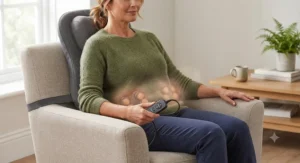
5. Comfier Shiatsu Back Massager with Heat — passive relief while seated at a desk
The Comfier Shiatsu Back Massager with Heat takes a fundamentally different approach to the massage guns above: it’s a seat cushion with built-in kneading rollers and heat pads that straps to almost any chair, letting you receive a hands-free massage while working, driving, or watching television. For sciatica sufferers whose symptoms worsen with prolonged sitting — a genuinely common pattern, since sitting compresses the lower spine and glutes — this passive, ongoing approach addresses the trigger itself rather than just treating symptoms afterward.
Based on the spec comparison, the adjustable massage zones (full back, upper back, lower back, or spot-specific) paired with two heat levels let you target the lumbar and glute area specifically, where sciatic referral pain commonly concentrates, rather than a generic full-back massage. Reviewers consistently note the heat function is a genuine differentiator from vibration-only alternatives, since warmth increases blood flow to the area in a way that pure kneading or vibration doesn’t replicate on its own.
What most buyers overlook is that this is a shiatsu kneading device with rolling balls, distinct from cheaper vibration-only cushions — several reviewers specifically warn that buyers expecting a gentler vibration massage should check the mechanism carefully before purchasing, since the kneading action is noticeably firmer.
Pros:
- ✅ Hands-free use while working, driving, or relaxing
- ✅ Adjustable heat genuinely increases blood flow to the area
- ✅ Targets full back, upper, lower, or specific spot zones
Cons:
- ❌ Kneading action is firmer than some buyers expect
- ❌ Requires mains power, less portable than handheld options
Typically priced £70-£100 in the UK, this suits desk workers whose sciatica specifically flares with prolonged sitting and who want ongoing, passive relief rather than an active handheld session.
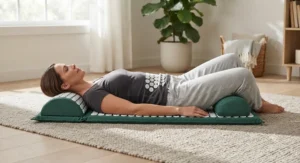
6. Omron Max Power Relief TENS Unit — drug-free electrical stimulation, with an important caveat
The Omron Max Power Relief TENS Unit (PM500) uses Transcutaneous Electrical Nerve Stimulation, delivering low-voltage pulses through adhesive pads that theoretically interrupt pain signals travelling to the brain. Omron specifically lists sciatic pain among the areas its devices are designed for, and it includes six preset body-pain programmes alongside 15 adjustable intensity levels.
Here’s what most product listings won’t tell you, but is genuinely important: current NICE guidance (NG59) on managing low back pain and sciatica in the UK specifically advises against offering TENS as a treatment, citing insufficient evidence of benefit, alongside similar advice against ultrasound and interferential therapy. This doesn’t mean TENS can’t provide short-term, subjective relief for some individuals — many aggregated user reviews describe genuine temporary comfort, including from people managing sciatic pain from prolonged desk sitting — but it does mean the clinical evidence base is weaker than the marketing suggests, and it shouldn’t be your only strategy.
Based on that honest context, reviewers consistently rate the Omron device highly for ease of use and build quality, but the more useful takeaway is that TENS works best as one part of a broader self-management approach — alongside the movement and manual therapy NICE does support — rather than a standalone fix.
Pros:
- ✅ Six preset pain programmes including a lower-back setting
- ✅ Trusted brand with over 30 years in TENS technology
- ✅ Reusable pads keep ongoing costs low
Cons:
- ❌ NICE guidance does not currently recommend TENS for sciatica specifically
- ❌ Provides temporary, subjective relief rather than addressing the underlying cause
Typically found in the £40-£60 range on Amazon.co.uk, this is worth considering as an occasional, drug-free complement to movement and manual therapy, with realistic expectations set by the guidance above.
7. Sciaticalm — a UK-developed device built specifically for sciatic pathway pain
Sciaticalm stands apart from every other product on this list because it was designed by a practising UK orthopaedic surgeon specifically to target sciatic nerve pain, rather than being a general-purpose massager marketed toward sciatica as one use case among many. It delivers high-frequency vibration through a compact, rechargeable unit with ten pre-programmed treatment modes, designed to be worn discreetly under clothing during the day or overnight.
What most buyers overlook is that this condition-specific design focus is genuinely rare in this category — most products on this list, however well-built, are general muscle-recovery tools repurposed for sciatica, while Sciaticalm was engineered around the sciatic pathway specifically from the outset. Based on the spec comparison, its discreet, wearable form factor is a meaningful practical advantage for people who need relief during a working day without an obvious handheld device in use.
Reviewer sentiment aggregated by the manufacturer reports significant pain reduction among a large customer base, though as with any single-brand testimonial data, this should be weighed alongside independent, condition-specific evidence rather than taken as clinical proof on its own — the same caution worth applying to any product in this category.
Pros:
- ✅ Purpose-built specifically for sciatic nerve pain, not repurposed
- ✅ Discreet, wearable design usable during a working day
- ✅ Ten pre-programmed treatment modes for varied use
Cons:
- ❌ Sold direct from the manufacturer, not via mainstream UK retailers
- ❌ Independent, peer-reviewed evidence is more limited than manufacturer-reported data
Sciaticalm is sold direct-to-consumer rather than through Amazon, so check current price on the manufacturer’s site rather than expecting a fixed retail figure here — treat it as a specialist purchase for people wanting a condition-specific device over a general massage tool.
Full Spec Comparison: Mechanism and Practical Fit
| Product | Session Length | Portability | Noise Level | Best Symptom Match |
|---|---|---|---|---|
| Hyperice Hypervolt 2 Pro | Short, targeted sessions | Moderate (no case) | Low-moderate | Deep muscle tightness |
| Theragun Relief | Longer, gentle sessions | High | Whisper-quiet | Sensitive, flare-prone areas |
| Bob and Brad Q2 Mini | Multiple short sessions | Very high | ~40dB | Everyday portable use |
| RENPHO R3 Mini | Frequent, light sessions | Very high | Low-moderate | Occasional, budget-conscious use |
| Comfier Shiatsu Cushion | Extended passive sessions | Low (mains powered) | Moderate | Sitting-triggered sciatica |
| Omron TENS PM500 | 15 minutes, up to 3x daily | Very high | Silent | Acute flare, drug-free relief |
| Sciaticalm | Worn throughout the day | Very high | Silent | Ongoing sciatic pathway irritation |
Reading across the “Best Symptom Match” column, a clear pattern emerges: this isn’t really seven versions of the same product, it’s three distinct categories — percussion devices for muscle-related tension, a passive heated cushion for sitting-triggered symptoms, and electrical or vibration devices aimed more directly at the nerve pathway. Matching your specific trigger to the right category matters more than chasing the most powerful or most expensive option on the list.
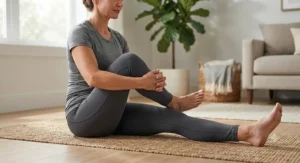
Setting Up Your Sciatica Massager Safely: A Practical Usage Guide
Whichever device you choose, a few practical habits make a genuine difference to results. For percussion massage guns, always start on the lowest speed setting and gradually increase, focusing on the muscles surrounding the sciatic nerve pathway — lower back, glutes, and hamstrings — rather than directly on the spine or bony areas. Move the device slowly and continuously rather than holding it in one spot, and keep individual sessions to a few minutes per area to avoid over-treating already irritated tissue.
For TENS devices like the Omron, place pads at least 2.5cm apart around the painful area, never directly over the spine, and begin at the lowest intensity before working upward. A common mistake in the first week is treating for too long in one session — 15-minute sessions, repeated up to three times daily if needed, are the standard guidance rather than one prolonged treatment. For heated shiatsu cushions, avoid sitting on the heat setting for more than the device’s built-in auto-shutoff window, typically 30 minutes, to prevent skin irritation from prolonged warmth.
A recurring theme across aggregated reviews for every category here is that consistency matters more than intensity — several short, gentle sessions spread through the day tend to outperform one aggressive session, both for comfort and for actual results. Register any device’s warranty promptly and read the specific contraindications listed for your model before first use, particularly for TENS devices, which carry specific warnings around pacemakers and pregnancy.
Which Sciatica Massager Buyer Are You? Real-World Scenarios
The desk worker whose pain flares with sitting. If your sciatic symptoms consistently worsen through a working day at a desk, the Comfier Shiatsu Back Massager addresses the trigger directly by providing ongoing relief while you work, rather than requiring you to stop and use a handheld device.
The person managing an acute flare-up. If you’re dealing with a sudden, sharp flare and want fast, drug-free relief you can apply immediately, the Omron Max Power Relief TENS Unit offers portable, on-the-spot use — used realistically as part of a broader approach rather than a sole treatment, per the guidance above.
The budget-conscious first-timer. If you’re curious whether percussion therapy helps your specific symptoms but don’t want to commit significant money before finding out, the RENPHO R3 Mini or Bob and Brad Q2 Mini offer genuine percussion therapy at a fraction of premium pricing.
The person with dense, chronic muscle tightness. If your sciatica traces back to piriformis or deep glute tension that lighter devices haven’t touched, the Hyperice Hypervolt 2 Pro‘s power and targeted attachment heads are built for exactly that kind of stubborn, deep-seated tightness.
Choosing a Massager for Nerve Pain: A Step-by-Step Guide
Working out which device actually suits you comes down to five practical questions:
- What triggers your symptoms? Prolonged sitting points toward a passive cushion like the Comfier; activity-related muscle tightness points toward a percussion gun.
- How intense is your pain currently? Acute, sharp flares often respond better to gentler approaches like TENS or light vibration than aggressive percussion, which can aggravate irritated tissue.
- Do you need portability or passive use? Handheld guns require active use and attention; cushions and wearables like Sciaticalm work passively in the background.
- What’s your budget, realistically? Budget devices like the RENPHO R3 Mini let you trial a mechanism before committing to premium pricing.
- Have you had your symptoms assessed? Self-treatment tools work best alongside, not instead of, proper assessment — particularly if pain has lasted more than a few weeks or is worsening.
According to NICE guideline NG59 on low back pain and sciatica, non-invasive self-management including staying active and continuing normal activities where possible forms the foundation of recommended care, with manual therapy such as massage considered appropriate only as part of a wider treatment package rather than a standalone solution.
Condition-Specific Recommendations: Matching the Device to the Cause
Sciatica isn’t one single condition, and the underlying cause genuinely changes which device makes sense. For piriformis syndrome, where a tight piriformis muscle in the glute compresses the sciatic nerve, deep percussion devices like the Hyperice Hypervolt 2 Pro or Theragun Relief target the muscle directly and are the most logical mechanical fit, since loosening that specific muscle is the goal.
For sciatica linked to a herniated or bulging disc, the picture changes considerably: percussion therapy applied near the spine itself isn’t appropriate, and gentler approaches — TENS for symptomatic relief, or condition-specific devices like Sciaticalm designed around the nerve pathway rather than muscle tissue — are a more sensible starting point, alongside the professional assessment this cause specifically warrants. For pregnancy-related sciatica, caused by the growing uterus placing pressure on the nerve, percussion devices and TENS units both carry specific caution around pregnancy in most manufacturer guidance, making this a case where speaking to a midwife or GP before using any device is genuinely the right first step rather than an optional add-on.
For sitting-triggered sciatica, common among desk workers and drivers, the Comfier Shiatsu Back Massager‘s ongoing, passive approach addresses the root behavioural trigger more directly than any handheld device used intermittently.
Symptom-Targeted Selection: Numbness, Sharp Pain, or Muscle Spasm?
The specific sensation you’re experiencing is a genuinely useful guide to device selection. Sharp, shooting pain that worsens with movement often responds best to gentler, passive approaches first — TENS or light vibration from Sciaticalm — since aggressive percussion directly over an acutely irritated nerve pathway can worsen symptoms rather than help. Dull, aching muscle tightness without sharp nerve-type pain is generally the best match for percussion massage guns, since this pattern more often reflects genuine muscle tension that responds well to mechanical loosening.
Numbness or tingling radiating down the leg is a symptom worth treating with particular caution regardless of device choice — based on NHS guidance, this pattern alongside other specific red-flag symptoms (loss of bladder or bowel control, or numbness around the genitals or bottom) requires urgent medical assessment rather than self-treatment with any massager, since these can indicate a serious underlying issue needing immediate attention. Muscle spasm, where the surrounding musculature tightens involuntarily in response to nerve irritation, often responds well to combined heat and gentle percussion, making the Comfier‘s heated kneading or the RENPHO R3 Mini‘s thermal head reasonable choices.
Medical Consideration Guide: What NICE and the NHS Actually Say
It’s worth being direct about this, since most product marketing isn’t: current NICE guidance specifically recommends against TENS, ultrasound, and interferential therapy for managing low back pain and sciatica, citing insufficient evidence of clinical benefit, even though these devices remain widely sold and widely used. This doesn’t necessarily mean they provide zero benefit to every individual — pain response varies considerably between people — but it does mean the evidence base doesn’t currently support them as a primary treatment strategy, and expectations should be set accordingly.
What NICE guidance does support is more encouraging for the massage-based devices on this list: manual therapy, including soft tissue techniques such as massage, is recommended as part of a treatment package that also includes exercise, rather than as a standalone fix. This lines up reasonably well with how percussion massage guns and heated cushions are best used — as one component of a broader approach that includes staying active, rather than a substitute for movement and, where needed, professional assessment.
Per the NHS page on back pain, most back pain and sciatica improves within a few weeks with self-care and continued activity, but certain symptoms warrant seeing a doctor promptly, including pain that develops gradually and worsens over time, fever, or neurological symptoms in the legs. No massager, however well-designed, is a substitute for that assessment when red-flag symptoms are present.
Common Mistakes When Buying a Sciatic Nerve Massage Device
The most common mistake, based on aggregated retailer and reviewer commentary, is buying the most powerful device available on the assumption that stronger automatically means more effective — for acute, sharp sciatic pain, a gentler device like the Theragun Relief or a TENS unit is often the more appropriate starting point, with escalation to deeper percussion only once symptoms have settled to dull muscle tightness. A second recurring pitfall is expecting any single device to resolve chronic, recurring sciatica entirely, when the realistic role of these tools is symptomatic relief alongside — not instead of — the movement and professional care that addresses the underlying cause.
Equally common is overlooking manufacturer safety warnings specific to nerve-related conditions — several devices in this category carry explicit cautions around pregnancy, pacemakers, or diagnosed nerve damage that are easy to skim past in the excitement of a new purchase. Finally, buyers regularly underestimate how much technique matters: even the best-specified massage gun delivers limited benefit if used directly on bony areas or held in one spot for too long, rather than moved slowly across the surrounding muscle tissue.
Long-Term Cost & Maintenance of Sciatica Massage Devices
Beyond the upfront price, ongoing costs vary meaningfully across this list. TENS devices like the Omron require replacement adhesive pads periodically — each pair typically lasts around 150 uses before losing adhesion — a modest but recurring cost worth factoring in. Percussion massage gun batteries generally hold up well for two to three years of regular use before charge capacity noticeably declines, at which point most models aren’t user-serviceable, so the battery’s lifespan effectively caps the device’s useful life.
Basic maintenance extends any device here: wipe massage gun heads after use to prevent skin oil and product buildup affecting grip, store TENS pads in their provided case away from dust to preserve adhesion, and avoid leaving heated cushions running unattended beyond their auto-shutoff window. Warranty length varies considerably, from one year on the Omron TENS unit up to multi-year coverage on some premium massage guns, and it’s worth checking what’s specifically covered — motor and battery faults are typically included, while normal wear on attachment heads and pads usually isn’t.
Safety, Contraindications and When to Stop Using a Massager
Certain groups should speak to a doctor before using any of these devices, including anyone who is pregnant, has a pacemaker or other implanted electrical device, has a diagnosed blood clotting disorder, or has any undiagnosed cause for their pain. Percussion massage guns should never be used directly over the spine, on broken skin, over varicose veins, or on areas of numbness where you can’t accurately judge pressure or discomfort. TENS units carry specific manufacturer warnings against use near the heart, throat, or head, and should never be used while driving or operating machinery.
Stop using any massage device and seek medical advice if pain worsens rather than improves with use, if you develop new numbness or weakness, or if you experience any of the red-flag symptoms outlined by the NHS above. These devices are designed for symptomatic relief of manageable, non-specific sciatic pain — persistent, worsening, or unusual symptoms deserve proper clinical assessment rather than continued self-treatment with a massager, however well-reviewed it is.
Frequently Asked Questions
❓ What type of massager is actually best for sciatica?
❓ Can a massage gun make sciatica worse?
❓ Does the NHS recommend TENS machines for sciatica?
❓ How often can I use a sciatica massager safely?
❓ When should I see a doctor instead of using a massager?
Conclusion
There’s no single massager that’s best for every case of sciatica, because sciatica itself isn’t a single condition — it’s a symptom with several different underlying causes, each suited to a different approach. If your pain traces back to dense muscle tightness, the Hyperice Hypervolt 2 Pro or Theragun Relief offer genuine mechanical relief. If sitting is your specific trigger, the Comfier Shiatsu Back Massager addresses that pattern directly. And if you want a drug-free option for acute flares, the Omron Max Power Relief TENS Unit remains a reasonable complement, with realistic expectations set by current NICE guidance.
Whichever you choose, treat it as one part of a broader approach that includes staying active and, where symptoms persist or worsen, proper professional assessment — not a replacement for either.
✨ Don’t Miss These Exclusive Deals!
🔍 Take your sciatica relief routine to the next level with these carefully selected devices. Click on any highlighted product to check current pricing and availability. The right tool, used sensibly, can make a genuine difference to how your day feels!
Recommended for You
- Handheld vs Cushion Back Massager: 7 Honest Picks for 2026
- Heated Massager vs Non-Heated Worth It? 2026 Guide
- Shiatsu vs Percussion Massager Which Is Better? 2026 Guide
Disclaimer: This article contains affiliate links. As an Amazon Associate, I earn from qualifying purchases. If you purchase products through these links, we may earn a small commission at no additional cost to you. This article is for general information only and is not medical advice — consult a GP or physiotherapist about persistent or worsening sciatica symptoms.
✨ Found this helpful? Share it with your friends! 💬🤗
