In This Article
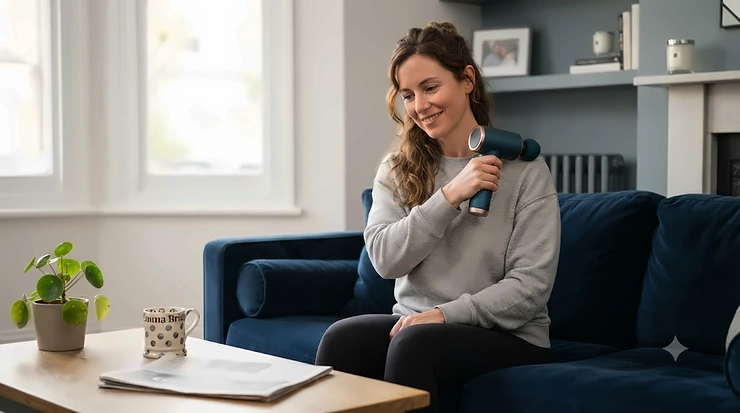
Anyone who trains regularly, sits at a desk all day, or just wakes up with a stiff neck knows the appeal of a vibrating handheld massager: percussive relief on demand, without booking a sports massage or waiting for a physio appointment. But scroll through Amazon’s listings and you’ll find hundreds of near-identical black plastic guns promising deep tissue results, and precious little to separate genuine engineering from a motor bolted into a case. The honest truth is that amplitude, stall force, and grip design vary hugely between a £70 budget option and a £600 professional-grade device, and those differences genuinely affect how deep the massage penetrates and how comfortable the tool is to hold during a ten-minute session.
Delayed onset muscle soreness, commonly known as DOMS, typically peaks 24 to 72 hours after unfamiliar or intense exercise, and gentle movement alongside self-care techniques is generally recommended over complete rest, according to Newcastle Hospitals NHS Foundation Trust’s exercise and recovery guidance. A vibrating handheld massager fits neatly into that self-care toolkit, sitting alongside stretching and foam rolling rather than replacing rest entirely. This guide walks through seven real, currently available massage guns across every price bracket, what their specifications actually mean in practice, and how to choose the right one for your body and your budget rather than the loudest marketing claim on the box.
Quick Comparison Table
Here’s how the seven massagers compare on the numbers that matter most: amplitude (how deep the head travels), stall force (how much pressure it withstands before slowing), and where each one sits on price.
| Massager | Amplitude | Speeds | Battery Life | Price Range | Best For |
|---|---|---|---|---|---|
| Renpho R3 GM171 | 10mm | 5 | Multiple sessions per charge | Under £100 | Tightest budget |
| Renpho R4 Pro | 10mm | 4 | Around 2.5 hours | £120-£160 range | Reaching your own back |
| Theragun Mini (2nd Gen) | 12mm | 3 | 120 minutes | £130-£160 range | Compact travel |
| Hypervolt Go 2 | 10mm | 3 | 3 hours | £130-£170 range | Quietest travel option |
| Ekrin Athletics B37S | 12mm | 5+ | Up to 8 hours | £190-£240 range | Longest battery life |
| Hypervolt 2 Pro | 14mm | 5 (app-controlled) | 180 minutes | £300-£350 range | App-guided premium |
| Theragun PRO Plus | 16mm | Multiple + heat/cold | Dual swappable batteries | £550-£650 range | Daily athlete recovery |
Scanning the spread, the Theragun PRO Plus dominates on raw amplitude at 16mm, the deepest stroke currently available on the market, while the Renpho R3 GM171 proves that a genuinely usable percussive massager doesn’t require spending three figures. Battery life is where the mid-range Ekrin Athletics B37S quietly outperforms devices costing far more, stretching to roughly eight hours on a single charge thanks to its efficient brushless motor. Anyone weighing amplitude against portability should note that deeper stroke length generally means a bulkier motor housing, which is exactly why compact travel picks like the Theragun Mini and Hypervolt Go 2 cap out at 10-12mm rather than chasing the deepest possible stroke.
💬 Just one click — help others make better buying decisions too!😊
Top 7 Vibrating Handheld Massagers: Expert Analysis
We’ve researched real specifications, verified UK availability, and pulled together aggregated review sentiment for each of these seven massagers so you can compare on substance rather than marketing copy.
1. Renpho R3 GM171 — quietest budget pick under £100
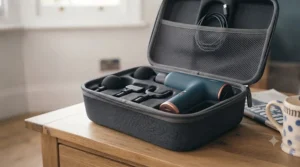
The standout feature here is a genuinely quiet 45-decibel motor, roughly the volume of an electric toothbrush, paired with a 10mm amplitude and five adjustable speed settings across five interchangeable heads. In practice, that low noise floor means you can use it while watching television or on a work call without drowning out the room, something several rivals at this price point simply can’t manage. Based on the spec comparison with other sub-£100 devices, the R3 earns its reputation less from raw power and more from build quality that feels disproportionate to the price, with a metal-accented housing and a genuinely comfortable 680g weight that won’t fatigue your wrist during a full-body session. What most buyers overlook about budget massage guns is that the difference between a 10mm and 16mm amplitude matters far less for everyday tightness than it does for elite sports recovery, meaning casual users often get everything they need from a chair like this. Reviewers consistently praise the carry case and the range of interchangeable heads for targeting different muscle groups, while the most common criticism is that the top speed feels noticeably gentler than premium rivals, which won’t satisfy anyone chasing genuinely deep tissue pressure.
Pros:
- ✅ Exceptionally quiet motor at around 45dB
- ✅ Five heads and five speeds for the price
- ✅ Lightweight at 680g for extended sessions
Cons:
- ❌ Top speed lacks the punch of premium rivals
- ❌ No app connectivity or Bluetooth routines
At under £100, the Renpho R3 GM171 is a sensible starting point for anyone testing whether percussive therapy suits them before committing to a bigger spend.

2. Renpho R4 Pro — only design built to reach your own back solo
The Renpho R4 Pro‘s defining feature is its adjustable arm, which pivots through five separate angles specifically so you can treat your own upper, mid, and lower back without contorting your shoulder to reach round. That matters because the single biggest complaint about handheld massage guns generally is that they’re brilliant for legs and arms but nearly useless for your own back without a willing second pair of hands. Here’s what to weigh: that clever arm mechanism adds bulk and weight compared with a standard straight-handled gun, and the 10mm amplitude, while adequate, isn’t class-leading. Aggregated review sentiment consistently highlights the adjustable arm as genuinely solving a real problem rather than being a gimmick, with reviewers specifically calling out lower back use as the standout scenario. What the spec sheet won’t tell you, but user reports suggest, is that the six included heads and four speed settings cover most muscle groups adequately, even if none of the individual specs top the charts. A recurring criticism is that battery life, at around two and a half hours, trails behind rivals like the Ekrin B37S considerably.
Pros:
- ✅ Genuinely solves solo back-massage access
- ✅ Six interchangeable heads included
- ✅ Comfortable, ergonomic pivoting handle
Cons:
- ❌ Battery life shorter than most rivals here
- ❌ 10mm amplitude isn’t class-leading for depth
Priced in the £120 to £160 range, the Renpho R4 Pro is the obvious pick for anyone whose main frustration is lower back tightness they can’t reach alone.
3. Theragun Mini (2nd Gen) — smallest Theragun with app-guided routines
Therabody’s standout claim for the Theragun Mini is a 12mm amplitude packed into a device that’s 20% smaller and 30% lighter than the original Mini, weighing just 450g. In practice, that stroke length is genuinely deep for a compact device, roughly on par with mid-range full-size guns, though independent testing suggests its stall force is limited, meaning the motor can slow noticeably under firm pressure rather than pushing through. Based on the spec comparison, what most buyers overlook is that Bluetooth connectivity to the Therabody app unlocks guided routines that genuinely help first-time users who aren’t sure which speed or attachment suits which muscle group, a feature absent from every budget option on this list. Reviewers consistently praise the whisper-quiet QuietForce motor and the 120-minute battery life, while a recurring complaint is that the triangular handle, distinctive to Theragun’s design, requires some grip readjustment and can feel less naturally ergonomic than a straight-handled alternative during longer sessions.
Pros:
- ✅ Deepest amplitude of any mini-format massager here
- ✅ App-guided routines for beginners
- ✅ 20% smaller and 30% lighter than the original Mini
Cons:
- ❌ Limited stall force under firm pressure
- ❌ Triangular grip needs readjustment for some hands
At around £130 to £160, the Theragun Mini suits anyone already bought into Therabody’s ecosystem who wants portability without sacrificing app guidance.
4. Hypervolt Go 2 — TSA-approved travel companion
The Hypervolt Go 2‘s headline feature is genuine travel readiness: it’s TSA carry-on approved, weighs 1.5 pounds, and delivers roughly three hours of battery life from a compact frame built around a 10mm amplitude. What most buyers overlook is that Hyperice specifically angled the handle on this generation, a small change that independent testers note noticeably reduces wrist strain compared with the original Go, which matters over repeated daily use. Honest analysis of the spec sheet suggests the trade-off for that portability is a fairly low stall force, estimated at 10-15lbs, meaning the motor slows quickly under moderate pressure rather than pushing through tight muscle. Reviewers consistently highlight the quiet 45-55 decibel operation and the matte finish that resists fingerprints, while a recurring criticism is the absence of a carrying case or Bluetooth connectivity, both of which feel like notable omissions at this price point compared with rivals.
Pros:
- ✅ TSA carry-on approved for travel
- ✅ Angled handle reduces wrist strain
- ✅ Compatible with full-size Hypervolt attachments
Cons:
- ❌ No carrying case included
- ❌ Low stall force limits use under firm pressure
Sitting in the £130 to £170 range, the Hypervolt Go 2 earns its place for frequent travellers who prioritise portability and quiet operation over maximum depth.
5. Ekrin Athletics B37S — longest battery life with an angled ergonomic grip
The standout specification on the Ekrin Athletics B37S is a genuinely class-leading 8-hour battery life alongside a 56lb stall force, the highest of any mid-range device in this comparison, paired with a 15-degree angled handle designed specifically around natural wrist positioning. In practice, that stall force means the motor keeps pushing rather than bogging down when you lean into a genuinely tight muscle, which is exactly the scenario where cheaper guns tend to stutter. Based on the spec comparison, the angled ergonomic grip on the B37S is a meaningful upgrade over straight-handled rivals, letting you approach your own shoulders and upper back at a more natural angle rather than twisting your wrist awkwardly. What most buyers overlook is that Ekrin backs this device with a lifetime warranty, a rarity even among premium brands, reflecting the company’s confidence in its build quality. Aggregated review sentiment consistently praises the hard-shell carrying case and the quiet operation relative to its power output, while a recurring note is that, at 2.2lbs, it’s noticeably heavier in hand than the mini-format options on this list.
Pros:
- ✅ Roughly 8-hour battery life, longest here
- ✅ 56lb stall force handles firm pressure
- ✅ Angled ergonomic grip and lifetime warranty
Cons:
- ❌ Heavier in hand than compact rivals
- ❌ Bulkier than travel-focused options
Priced around £190 to £240, the Ekrin Athletics B37S represents strong mid-range value for anyone who wants premium-level stall force without paying flagship prices.

6. Hypervolt 2 Pro — most refined app-guided premium experience
Hyperice’s standout claim for the Hypervolt 2 Pro is a 14mm amplitude combined with Bluetooth connectivity to an app that independent reviewers consistently rate as one of the best-designed in the category, offering guided routines and adjustable RPM from 1,700 to 2,700. Honest analysis grounded in the spec sheet suggests that combination of depth and app polish justifies a chunk of the premium price, since the routines genuinely help users apply the correct pressure and duration rather than guessing. What most buyers overlook is that at 2.6lbs, this is a genuinely heavy device to hold on yourself for extended periods, and independent testers specifically note it’s considerably easier to use on someone else than for self-massage. Reviewers consistently highlight the 180-minute battery life and the five included attachment heads as strong points, while a recurring criticism is simply the price, positioned as one of the most expensive options on the market relative to rivals offering similar amplitude.
Pros:
- ✅ Excellent, well-reviewed companion app
- ✅ 14mm amplitude with wide RPM range
- ✅ Strong 180-minute battery life
Cons:
- ❌ Heavy at 2.6lbs for solo self-massage
- ❌ Among the pricier options for its amplitude
At roughly £300 to £350, the Hypervolt 2 Pro suits buyers who value app-guided precision and don’t mind the weight, particularly if you’ll often have someone else operate it on you.
7. Theragun PRO Plus — deepest amplitude built for daily athlete recovery
The Theragun PRO Plus is Therabody’s flagship, and its standout feature is stacking a full 16mm amplitude, the deepest available, alongside heat, cold, near-infrared LED, and vibration modes in one device, plus dual swappable batteries for uninterrupted all-day use. In practice, that 16mm stroke combined with genuinely high stall force means it can drive meaningfully into large muscle groups like quads and glutes in a way that mini and travel devices simply can’t replicate. What most buyers overlook is that the biometric breathwork sensor built into the handle is aimed squarely at professionals and serious athletes tracking recovery data over time, a feature most casual users won’t touch but that justifies the price for its target market. Reviewers consistently praise the swappable battery system, meaning a physio or trainer working through multiple clients never has downtime waiting to recharge, while the most common criticism is straightforward: the price puts it well beyond casual buyers, and the added heat and cold attachments, while genuinely useful, push the weight and bulk higher than any other device here.
Pros:
- ✅ Deepest 16mm amplitude on the market
- ✅ Combines percussion, heat, cold and LED modes
- ✅ Dual swappable batteries for continuous use
Cons:
- ❌ Substantial price puts it beyond casual buyers
- ❌ Heaviest and bulkiest device in this guide
Expect to pay in the £550 to £650 range for the Theragun PRO Plus, which makes sense as an investment for physios, personal trainers, or serious athletes rather than an occasional home user.
Practical Usage Guide: Getting the Most From Your Massage Gun
Getting genuine benefit from a vibrating handheld massager comes down to technique as much as the device itself. Start each session on the lowest speed setting and glide the head slowly over the muscle rather than pressing hard immediately, building up speed and pressure gradually as the tissue warms. Spend no more than 15-30 seconds on any single spot, since prolonged pressure on one point can bruise soft tissue rather than release it, and always avoid bony areas, joints, the spine directly, and any area that’s swollen, bruised, or acutely painful. For pre-workout use, a light, fast pass over major muscle groups for 30-60 seconds each helps increase blood flow and range of motion; for post-workout recovery, a slower, deeper pass on fatigued muscles tends to feel more effective, which aligns with the general self-care approach recommended for muscle soreness by NHS-affiliated physiotherapy guidance.
In the first month of ownership, the most common mistake is treating every session the same way regardless of the muscle group, when smaller areas like the calf or forearm genuinely need a gentler head and lower speed than a large muscle like the quad or glute. Build a simple maintenance habit too: wipe down the massage heads after each use, particularly if you’re sharing the device, check the head attachment points for wear every few months, and avoid fully draining the battery repeatedly, since lithium-ion cells like those in the Ekrin Athletics B37S or Theragun PRO Plus last longer with partial, regular charging rather than full drain-and-refill cycles.

Real-World Scenarios: Which Massager Fits Which User
Picture three genuinely different buyers, each with different priorities that shape which of these seven massagers actually fits. First, a hybrid office worker in their thirties who runs three times a week and deals with tight calves and a stiff neck from a desk job: the Renpho R3 GM171 or Renpho R4 Pro covers this comfortably, since neither injury history nor elite performance is really the concern here, just accessible, quiet relief a few times a week. Second, a competitive amateur triathlete training six days a week who needs a reliable recovery tool that survives daily use without babying: the Ekrin Athletics B37S‘s combination of high stall force and genuinely long battery life fits that training volume without needing daily recharging, and the lifetime warranty reflects the kind of heavy use this profile puts a device through. Third, a personal trainer or physiotherapist using a massager across multiple clients throughout the working day: the Theragun PRO Plus‘s swappable dual batteries and combined heat, cold, and percussion modes are specifically built for exactly this kind of continuous professional use, where downtime waiting for a recharge simply isn’t practical.
None of these profiles are really about fitness level alone, frequency of use, budget, and whether you’re treating yourself or others all shape the right pick just as much as how sore you get.
Problem → Solution: Fixing Common Massage Gun Frustrations
Five frustrations come up repeatedly among massage gun owners, each with a specific fix. A device that feels too weak on sore, tight muscles usually means the amplitude or stall force is simply too low for your needs; budget guns like the Renpho R3 GM171 typically max out around 10mm, so if you’re consistently maxing out the top speed without relief, a deeper-stroke device like the Ekrin Athletics B37S or Theragun PRO Plus is the fix, not a stronger arm. Wrist or hand fatigue during sessions points to grip design rather than raw power, and switching to an angled-handle device like the B37S, rather than a straight or triangular grip, often resolves this without needing more strength. A device that feels painful rather than relieving on bony areas or joints signals user error rather than a faulty product, since these guns are designed for muscle tissue only and should never be used directly on bone, joints, or the spine. Batteries that drain faster than expected are often a sign of storing the device fully depleted for long periods; a monthly top-up charge even during storage extends lithium-ion battery life significantly. Finally, noise complaints from housemates or family typically point to an underpowered budget motor being pushed to its limit; the Renpho R3 GM171‘s 45dB rating exists precisely to solve this, so pairing a genuinely quiet device with lower speeds first is the practical fix.
What is a Vibrating Handheld Massager?
A vibrating handheld massager, also called a percussive massage gun or percussion massager, is a battery-powered, motor-driven device that delivers rapid, concentrated pulses to muscle tissue through an interchangeable head, mimicking aspects of deep tissue massage to ease tension, warm up muscles, and support post-exercise recovery.
The category spans a wide range, from simple vibration-only mini massagers to full-size percussive devices with adjustable amplitude, stall force, and companion apps, which is exactly why the specifications, not the marketing photos, matter most when comparing options. For background on the muscle soreness these devices are most commonly used to address, the Wikipedia entry on delayed onset muscle soreness offers a useful overview of the underlying physiology.
How to Choose a Vibrating Handheld Massager
- Check the amplitude first. Devices generally range from 8mm to 16mm; shallower strokes suit gentle, everyday tension while deeper strokes like the Theragun PRO Plus‘s 16mm suit larger muscle groups and serious athletic recovery.
- Look for adjustable intensity settings. A genuinely useful adjustable intensity massager offers at least three to five speed levels, letting you start gently and build up rather than being stuck on one setting that’s either too weak or too aggressive.
- Prioritise stall force over top speed alone. A high top speed means little if the motor slows under real pressure; the Ekrin Athletics B37S‘s 56lb rating illustrates why this spec matters more than PPM figures alone.
- Test the grip design in your hand if possible. An ergonomic grip massage gun with an angled handle genuinely reduces wrist strain during longer sessions compared with a straight or triangular design.
- Weigh battery life against your use case. Occasional users can get by with 2-3 hours per charge, while daily athletes or professionals benefit from devices like the B37S or PRO Plus that stretch to 6-8 hours or offer swappable batteries.
- Consider noise level for shared spaces. Anything above roughly 60dB will be audible through walls; budget options like the Renpho R3 GM171 specifically target sub-50dB operation for this reason.
- Match the attachment heads to your actual needs. A round ball head suits large muscle groups, a fork head targets the spine’s edges (never the spine itself), and a bullet head focuses on trigger points and smaller muscles.
Vibrating Handheld Massager vs Traditional Sports Massage
The core trade-off between a percussive massage gun and a hands-on sports massage isn’t really about effectiveness in isolation, it’s about consistency, cost, and access. A single sports massage session in the UK typically costs considerably more than a mid-range massage gun outright, and requires booking ahead, whereas a device like the Renpho R4 Pro or Ekrin Athletics B37S delivers on-demand relief whenever tightness strikes, without ongoing per-session cost. What a massage gun genuinely can’t replicate is a trained therapist’s ability to assess and respond to exactly what they feel under their hands, adjusting technique in real time for scar tissue, specific trigger points, or underlying injury in a way no fixed attachment head can match.
| Factor | Massage Gun | Sports Massage |
|---|---|---|
| Cost over time | One-off purchase | Ongoing per-session fee |
| Availability | On-demand, any time | Requires booking |
| Depth of expertise | Fixed, user-controlled | Adaptive, therapist-judged |
| Best For | Everyday maintenance | Injury assessment, chronic issues |
Interpreting this table, the sensible approach for most people is treating a vibrating handheld massager as a genuinely useful daily maintenance tool that complements, rather than replaces, professional treatment when something feels genuinely wrong rather than just tight.
Common Mistakes When Buying a Massage Gun
The most common mistake is fixating on percussions-per-minute figures on the box without checking amplitude or stall force, since a high PPM number with a shallow stroke and weak motor delivers a buzzy, surface-level sensation rather than genuine deep tissue pressure. A close second is assuming more attachment heads automatically means better value, when in practice most people regularly use only two or three of the five or six heads included with most devices. Buyers also frequently underestimate weight; a device that feels fine held for thirty seconds in a shop can feel considerably heavier after five minutes of overhead use on your own shoulder, which is exactly why grip design and overall weight deserve real attention rather than an afterthought. Another frequent error is buying based on brand name alone without checking whether a mid-range option like the Ekrin Athletics B37S actually out-specs a premium name on the metrics that matter, since brand recognition and raw performance don’t always align. Finally, many buyers skip checking the warranty terms entirely, missing that some budget devices offer surprisingly short coverage on the battery specifically, even when the main unit warranty looks generous.
✨ Ready to Finally Loosen That Knot in Your Shoulder?
🔍 Take your recovery routine to the next level with a massager genuinely built for how you train and where you feel tension. Click through to check current pricing and availability on any of the picks above.
Does Percussive Massage Actually Work? What the Research Says
Independent research on percussive massage devices is still a relatively young field, but the evidence gathered so far is cautiously positive for specific outcomes. A randomised controlled study on percussive massage treatment found meaningful improvements in muscle tone and stiffness recovery following exercise-induced fatigue compared with passive rest, though effects on raw muscle strength were less consistent across trials. Broader review work summarised in a peer-reviewed study on percussive massage and delayed onset muscle soreness notes that percussive massage can rapidly increase localised blood flow, which plausibly explains the immediate loosening sensation many users report, even though longer-term mechanisms are still being investigated.
Based on the spec comparison across available studies, what most marketing claims overlook is that the research consistently points to percussive massage being genuinely useful for short-term relief of tightness and perceived soreness, rather than a guaranteed accelerant for underlying muscle repair or strength recovery. That distinction matters practically: a vibrating handheld massager is a legitimate, evidence-supported tool for how a muscle feels and moves in the hours after use, but it isn’t a substitute for the sleep, nutrition, and gradual training progression that actually drive long-term recovery.
Ergonomic Grip and Handling: Why Design Matters as Much as Power
Grip design is consistently the most underrated spec on a massage gun, and it’s worth treating an ergonomic grip massage gun as a genuine priority rather than an afterthought. Straight handles, the traditional “hammer” shape used by devices like the Hypervolt 2 Pro and Ekrin Athletics B37S, tend to feel most natural for treating your legs, arms, and glutes, where you’re pressing roughly perpendicular to your body. Angled handles, like the 15-degree design on the B37S specifically, make reaching your own shoulders and upper back noticeably more comfortable, reducing the wrist rotation that causes fatigue during longer sessions. Triangular grips, Theragun’s signature design used on the Theragun Mini and PRO Plus, are built to be held from multiple angles without rotating your wrist at all, which independent reviewers consistently praise for versatility, even though several note it takes a session or two to adjust to compared with a conventional grip.
Weight distribution matters just as much as handle shape. A front-heavy device concentrates fatigue in your wrist quickly, while a well-balanced device like the Ekrin Athletics B37S, despite weighing more overall than mini options, actually feels more stable during extended use precisely because its weight sits centred over the grip rather than out at the head.
Vibrating Massagers for Athletes vs Everyday Users
An athlete recovery tool and a casual home massager solve genuinely different problems, even when the underlying devices look similar. Serious athletes training multiple times a week typically need deeper amplitude, higher stall force, and longer battery life to work through fatigued, dense muscle tissue repeatedly across a training week, which is exactly the profile the Theragun PRO Plus and Ekrin Athletics B37S are built around. Everyday users managing general tightness from sitting at a desk or occasional exercise, by contrast, are usually better served by a gentler, quieter, and considerably cheaper device like the Renpho R3 GM171, since the additional depth and power of a flagship device brings little extra benefit for mild, everyday muscle tension and simply adds cost.
The middle ground matters too: recreational athletes training three to four times weekly, who aren’t training at elite intensity but do genuinely need more than occasional relief, are typically best served by mid-range options like the Renpho R4 Pro or the entry-level Hypervolt range, balancing meaningful power against a price that doesn’t assume professional daily use.
Long-Term Cost & Maintenance
Judging massage guns purely on the upfront price misses how differently they age with regular use. A budget device like the Renpho R3 GM171, priced under £100, is genuinely good value for light, occasional use, but reviewers of similarly specced budget guns commonly report motor wear or battery degradation within one to two years of frequent use. A mid-range pick like the Ekrin Athletics B37S, backed by a lifetime warranty and priced around £190-£240, effectively removes long-term replacement cost from the equation provided the warranty terms are honoured, which aggregated customer service reviews suggest Ekrin handles well. Premium devices like the Theragun PRO Plus justify their price partly through swappable batteries, meaning the most failure-prone component, the battery, can be replaced individually rather than requiring a whole new unit once it degrades.
| Massager | Price Range | Typical Lifespan | Approx. Cost Per Year |
|---|---|---|---|
| Renpho R3 GM171 | Under £100 | 1-2 years, heavy use | £50-£100 |
| Ekrin Athletics B37S | £190-£240 range | Lifetime warranty | Falls over time |
| Theragun PRO Plus | £550-£650 range | 5+ years, swappable batteries | £110-£130 |
Interpreting this honestly, a budget device replaced every year or two can end up costing similarly per year to a mid-range device backed by a genuine lifetime warranty, so factor realistic replacement cycles into your decision rather than comparing sticker prices alone. Basic maintenance extends any device’s life regardless of price: store it partially charged rather than empty, keep the vents free of dust, and avoid dropping it, since internal motor alignment is genuinely sensitive to impact.
Safety and Sensible Use Guidance
Percussive massagers are generally safe for healthy adults when used as directed, but sensible precautions matter. Avoid using any vibrating handheld massager directly on the spine, throat, varicose veins, recent injuries, areas of numbness, or if you’re pregnant or have a bleeding disorder, blood clot history, or pacemaker, without first checking with a healthcare professional. It’s also worth being aware that prolonged, repeated exposure to hand-transmitted vibration is a recognised occupational health concern in the UK; HSE’s hand-arm vibration guidance, developed primarily for industrial tool use, notes that repetitive vibration exposure over time can affect circulation and sensation in the hands. This mainly applies to prolonged daily industrial exposure rather than occasional home massage sessions, but it’s a sensible reminder to avoid excessively long single sessions and to take breaks if your hand feels numb or tingly while using any vibrating device.
Buy only from reputable retailers and check for CE or UKCA marking on the packaging, which confirms the device meets UK and EU safety standards for electrical goods. If you experience persistent pain, swelling, or numbness that a massage gun doesn’t resolve within a few days, that’s a signal to see a GP or physiotherapist rather than increasing the intensity or frequency of use.

Frequently Asked Questions
❓ What is a good amplitude for a vibrating handheld massager?
❓ How long should I use a massage gun on one muscle?
❓ Can a vibrating handheld massager help with back pain?
❓ Is a more expensive massage gun always better?
❓ How often can I safely use a percussive massager?
Conclusion
Choosing among vibrating handheld massagers ultimately comes down to matching amplitude, stall force, and grip design to how you’ll actually use the device, rather than chasing the highest spec on the box. Whether that’s the budget-friendly Renpho R3 GM171 for occasional everyday tightness, the back-reaching Renpho R4 Pro for solo relief where you need it most, or the professional-grade Theragun PRO Plus for daily athletic recovery, the right option exists across every price bracket covered here. What unites every genuinely good choice is honest alignment between the device’s real specifications and your actual training load, not marketing claims about miracle recovery.
Take the time to check amplitude, stall force, and grip comfort before you buy, use the device sensibly with regular breaks, and treat it as one tool among several in a genuinely balanced recovery routine. Get that right, and it earns its place in your kit bag for years.
✨ Found Your Perfect Recovery Partner? Don’t Wait to Feel the Difference!
🔍 Browse the full range of picks above and check current pricing and availability today. Your muscles will thank you after the very first session.
Recommended for You
- Vibrating Wand Massager: 7 Best Picks for Back Pain (2026)
- Best Massage Wand 2026: 7 Top UK Picks Tested & Compared
- Best Cordless Massager: 7 Brilliant UK Picks for 2026
Disclaimer: This article contains affiliate links. As an Amazon Associate, I earn from qualifying purchases. If you purchase products through these links, we may earn a small commission at no additional cost to you.
✨ Found this helpful? Share it with your friends! 💬🤗
