In This Article
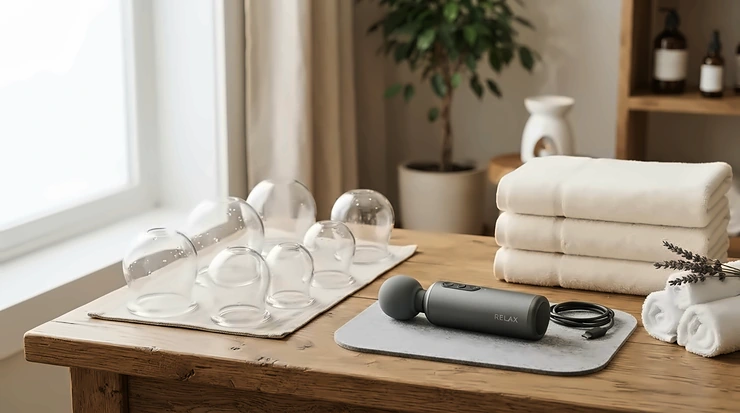
Cupping therapy vs percussion massage for recovery comes down to two self-administered ways of easing post-exercise tightness. Cupping uses suction cups that lift the skin and superficial fascia. Percussion massage uses a motorised handheld gun that delivers rapid, shallow pulses into the muscle belly. Both promise less soreness and stiffness. Neither is a miracle.
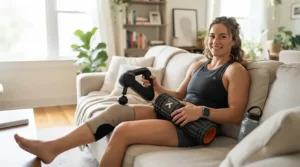
Remember the 2016 Olympics? Swimmers strolled onto the pool deck wearing perfect purple circles, and a recovery trend was born overnight. Now every gym bag, physio bench and football touchline seems to hold a massage gun. These are two gadgets with two opposite theories of what a tired muscle wants: a gentle pull away from the body, or a firm, rapid tap into it. Cupping therapy creates a vacuum under a small vessel placed on the skin, and even clinical references admit its mechanism is only partly understood.
So here’s the plain-speaking bit up front. Evidence that either tool speeds up genuine tissue repair is modest at best. What they can do is make tight muscles feel better, make a warm-up more comfortable, and nudge you into doing recovery work at all. That is half the battle.
This guide compares seven real products, three cupping kits and four massage guns. It also covers the evidence, the safety angles and a practical decision framework. Prices are given as ranges only, so check amazon.co.uk for the current price. Review sentiment is summarised from published editorial coverage, and where I couldn’t verify aggregated customer ratings, I say so.
Quick Comparison: Cupping Therapy vs Percussion Massage for Recovery at a Glance
| Factor | Cupping set | Percussion massage gun |
|---|---|---|
| How it works | Suction lifts skin and superficial fascia | Rapid pulses (often 1,800–3,200 taps a minute) into muscle |
| Typical feel | Slow, tugging pull; may leave marks | Rhythmic, loud, “knocking” pressure |
| Evidence for recovery | Small effects versus sham in pain studies; limited quality | Some short-term soreness and range-of-motion benefit |
| Typical UK spend | Under £30 to around £150 | Around £100 to £300 |
| Learning curve | Moderate (suction control matters) | Low (switch on, glide) |
| Best For | Curious beginners: AIKOTOO 12-Cup Cupping Kit; heat lovers: Therabody TheraCup | Daily users: Therabody Theragun Prime; quiet use: Hyperice Hypervolt 2 |
Read across and a pattern emerges. Cupping is cheaper to enter and gentler, while percussion is faster to use and easier to feel working. If budget is your priority, the AIKOTOO 12-Cup Cupping Kit is the low-risk experiment. If you want something you’ll reach for daily, the Therabody Theragun Prime is the easier all-rounder. Both camps share one limitation: the research behind them is thinner than the marketing.
💬 Just one click — help others make better buying decisions too!😊
Top 7 Cupping Kits and Massage Guns for Recovery: Expert Analysis
Seven real products, spanning budget, mid-range and premium, across both camps. Each verdict rests on published specs and editorial review themes rather than invented testing.
1. AIKOTOO 12-Cup Cupping Kit — budget starter with crack-resistant cups
The standout here is durability at a beginner price. Published roundups single out the anti-crack, drop-resistant cup construction as what separates this kit from flimsy bargain sets.
Twelve cups is a sensible first-kit size. A set this big typically offers a spread of diameters, so small cups can handle forearms and calves while larger ones cover quads and the upper back. The hand pump matters more than it sounds, because suction strength decides whether you get a gentle pink flush or a dark, tender bruise. Roundups also note the kit pairs with scraping tools for combined sessions.
Here’s the analytical take: this is the cheapest way to discover whether you like cupping at all. If you hate the sensation, you’ve lost a takeaway’s worth of cash rather than a premium gun’s. If you like it, you’ll quickly learn which areas respond best.
I couldn’t verify a reliable aggregate of amazon.co.uk customer reviews at the time of research, so I won’t pretend to quote one. The recurring theme in editorial coverage is cup durability, and the recurring complaint about budget cupping sets generally is cracked cups and leaky suction.
Pros:
- ✅ Crack-resistant cups address the classic budget-set weakness
- ✅ Twelve cups cover most body areas
- ✅ Lowest financial risk for a first experiment
Cons:
- ❌ Manual pumping takes practice to calibrate suction
- ❌ No heat, vibration or electronic control
Typically under £30 at the time of research (check current price), which is excellent value as a low-risk trial.
2. KS Premium 19-Cup Cupping Set — static and sliding cupping versatility
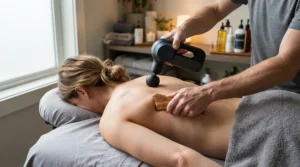
Versatility is the hook: roundups praise this set for supporting both static cupping (cups parked in place) and sliding cupping (cups glided over oiled skin).
Nineteen cups is a lot, and the sensible reading is that it suits full-body sessions rather than a quick calf fix. Parking several cups along the upper back while you read is the classic use. The extra sizes also let you tailor cup diameter to muscle size, which helps avoid the common mistake of a huge cup over a small muscle.
Based on the spec comparison, this is the set for someone who already knows they like cupping, or who plans to share the kit with a partner. Beginners may find nineteen cups more than they need. A smaller set does the same job with less to clean and store.
Editorial roundups label it a strong choice for full-body therapy sessions. Again, I couldn’t verify aggregated amazon.co.uk review ratings, so treat that as editorial opinion rather than crowd consensus.
Pros:
- ✅ Supports both static and sliding techniques
- ✅ Wide size range for different muscle groups
- ✅ Suits shared household use
Cons:
- ❌ Nineteen cups means more cleaning and storage
- ❌ More than a first-timer realistically needs
Expect roughly £25–£50 at the time of research (check current price). Good value if you’ll use the full range.
3. Therabody TheraCup — heat and vibration in one cup
This is the premium cupping option, and its point of difference is heat plus vibration built into a single cup. One UK comparison site names it the top home cupping device for athletes and fitness enthusiasts.
Here’s what the spec sheet won’t tell you. Heat and vibration are comfort features, and comfort matters because you’re more likely to use a tool that feels good. But no head-to-head evidence shows heat-and-vibration cupping speeds recovery more than a plain pump set. You’re paying for convenience and polish, not proven extra benefit.
It’s best for people who like warmth on stiff, achy areas (upper back, lower back, glutes) and want a tidy, rechargeable gadget rather than a pump and a box of cups. The single-cup design makes it easy to move around but limits multi-site static work.
I’d treat comparison-site claims with caution, since their testing methods vary. The consistent theme is a premium feel at a premium price, and I couldn’t verify a trustworthy aggregate of amazon.co.uk customer ratings.
Pros:
- ✅ Heat and vibration add comfort on stiff areas
- ✅ Single compact device, easy to reposition
- ✅ Premium brand with polished hardware
Cons:
- ❌ Costs several times a basic cupping kit
- ❌ Single cup limits multi-site sessions
Around £130–£150 at the time of research (check current price). Worth it only if heat is the draw.
4. Renpho R3 Mini — pound-for-pound percussion value
The headline is raw value: a UK fitness publication calls it a best mid-range pick, noting it costs just over three figures yet delivers percussion rates well above some leading rivals.
Percussion rate (taps per minute) sounds impressive, but it isn’t the same as depth. Amplitude and stall force, meaning how hard you can lean before the motor bogs down, decide whether a gun feels like a firm knead or a surface buzz. So the “800ppm faster” figure is a nice headline rather than a guarantee of better recovery.
The Renpho R3 Mini is best for runners, cyclists and gym-goers who want a proper gun without a premium bill. The mini format means reach is limited. Calves, quads and forearms are easy; the middle of your own back is not.
The reviewer’s main criticism is the lack of a companion app for guided massage. If you’d rather follow on-screen routines, this isn’t the one. If you just want to press a button and glide, that omission barely matters.
Pros:
- ✅ High percussion rate for the money
- ✅ Compact enough for a kit bag
- ✅ Strong mid-range reputation among UK reviewers
Cons:
- ❌ No app for guided routines
- ❌ Mini body limits reach to your back
Around £100–£120 at the time of research (check current price). Superb value for most buyers.
5. Therabody Theragun Mini — pocketable premium percussion
Portability is the point. This is the brand’s small, triangular-handled gun, with a premium build aimed at travellers and desk-drawer users.
Specs, translated: it tops out at around 2,400 percussions a minute, the same ceiling as the brand’s pricier full-size guns, and ships with a single attachment. That means less versatility than rivals offering two heads, but fewer bits to lose. The triangular handle helps you reach awkward spots with less wrist strain.
Reviewers consistently describe it as surprisingly powerful for its size, and equally consistently note the catch: reach. Mini guns are not great for big posterior-chain work such as glutes and hamstrings. One UK feature called it a good budget alternative to the full-size version, though “budget” is relative at this price.
It’s best for frequent travellers, commuters and anyone who wants a quality gun that disappears into a bag. If your recovery mostly involves quads, calves and shoulders, it’s an excellent choice.
Pros:
- ✅ Genuinely pocket-friendly for travel
- ✅ Triangular handle eases self-use
- ✅ Strong premium build and brand support
Cons:
- ❌ Costs more than many mini rivals
- ❌ One attachment and no app features
Around £150–£200 at the time of research (check current price). You’re paying for brand and ergonomics.
6. Hyperice Hypervolt 2 — quieter premium percussion
Quietness is the selling point. A 2026 roundup names it the best quiet premium pick, offering premium ergonomics without paying the full price of its main rival.
Noise matters more than spec sheets admit. A loud gun is one you won’t use while someone is watching TV or while a partner sleeps. Hypervolt-line guns have a reputation for a gentler, more massage-like feel than the harder, deep-tissue thump of the rival brand. That suits people who find aggressive percussion uncomfortable.
The reviewer commentary suggests it’s ideal for regular home users who value comfort over brute force. If you have dense, heavily muscled legs and want a “good hurt”, you may find it milder than the harder-hitting options. If you prefer a kinder, quieter experience, that’s a feature.
I couldn’t verify aggregated customer ratings, so the quiet-operation theme comes from editorial reviewers and brand-comparison articles.
Pros:
- ✅ Noticeably quieter than most rivals
- ✅ Comfortable, massage-like feel
- ✅ Premium ergonomics for regular use
Cons:
- ❌ Less aggressive for dense muscle
- ❌ Premium price versus budget minis
Roughly £150–£250 at the time of research, depending on retailer (check current price). Worth it if noise bothers you.
7. Therabody Theragun Prime — easiest-to-self-use all-rounder
Ergonomics is the headline. Multiple 2026 roundups name it the best overall massage gun because the triangular handle makes self-use easier than most straight-handle designs.
What does that mean in practice? Reaching your own upper back, glutes and hamstrings is the hardest part of owning a gun, and the multi-grip handle genuinely helps. That’s an underrated spec because a gun you can’t comfortably aim is a gun that gathers dust.
It’s best for regular users who want one gun for the whole body. The trade-offs are size and noise: it’s bulkier and less travel-friendly than mini options, and louder than the mini guns.
Editorial reviewers consistently rate it as the safe all-round recommendation. I couldn’t verify aggregated amazon.co.uk ratings, so that is expert opinion rather than customer consensus.
Pros:
- ✅ Triangular handle reaches awkward spots
- ✅ Top pick in multiple 2026 roundups
- ✅ Full-body versatility for daily use
Cons:
- ❌ Bulkier and less travel-friendly than minis
- ❌ Louder than mini guns
Roughly £200–£300 at the time of research (check current price). A fair premium if you’ll use it often.
Top 7 Side by Side
| Product | Type | Standout | Price range | Best For |
|---|---|---|---|---|
| AIKOTOO 12-Cup Cupping Kit | Manual cupping | Crack-resistant cups | Under £30 | Beginners on a budget |
| KS Premium 19-Cup Cupping Set | Manual cupping | Static and sliding use | £25–£50 | Full-body sessions |
| Therabody TheraCup | Heat and vibration cupping | Comfort features | £130–£150 | Heat lovers |
| Renpho R3 Mini | Mini percussion gun | Value for money | £100–£120 | Budget-conscious athletes |
| Therabody Theragun Mini | Mini percussion gun | Portability | £150–£200 | Travellers |
| Hyperice Hypervolt 2 | Percussion gun | Quiet operation | £150–£250 | Noise-sensitive users |
| Therabody Theragun Prime | Percussion gun | Handle ergonomics | £200–£300 | Daily all-round use |
Notice how the cupping kits sit at one end of the price scale and the guns at the other, with the Therabody TheraCup straddling the gap. The Renpho R3 Mini is the clear value play among guns, while the Therabody Theragun Prime justifies its premium through ergonomics rather than power. Prices are ranges only, so check current price before buying.
How to Choose Between Cupping Therapy vs Percussion Massage for Recovery
- Name your problem. Tight, sore muscle bellies after training usually suit a gun. Broad, stiff areas like the upper back may suit cupping.
- Decide what sensation you enjoy. Percussion is rhythmic and loud. Cupping is a slow, tugging pull that can leave marks.
- Set a budget. Cupping kits start under £30, while decent guns start around £100.
- Check noise and portability. If you share a flat or travel often, a quiet or mini gun such as the Therabody Theragun Mini makes sense.
- Screen for health issues. Blood thinners, heart conditions or skin problems mean speaking to your GP first.
- Be honest about habits. The best tool is the one you’ll actually use twice a week, not the one that looks impressive on a shelf.
- Check build and safety marks. Look for UKCA or CE marking and a UK-suitable charger on electrical items.

Cupping vs Massage Gun Benefits: What the Evidence Actually Says
Let’s weigh cupping vs massage gun benefits without the Instagram filter. For cupping, pooled trial data in chronic pain show small effects versus sham treatment: roughly a quarter of a standard deviation for pain and disability. Reviewers conclude the evidence is limited by trial variety and risk of bias. Those studies mostly involve people in pain, not athletes recovering from hard sessions, so the read-across is imperfect.
For massage guns, a 2023 systematic review of 11 studies found some improvement in range of motion and flexibility, but no meaningful gains in strength, acceleration or agility. It also suggested a short-term (around 24-hour) benefit for recovery markers. A 2024 study of five-minute calf sessions found mostly unclear effects, and one lifeguard study found no advantage over simple rest.
Put those together and the verdict is consistent: both can feel good, and neither convincingly speeds tissue repair. Remember too that delayed onset muscle soreness is normal. According to NHS inform, it usually settles within two to five days, and you should contact your GP if pain lasts longer than five days or worsens.
Gun users get a more immediate, noticeable range-of-motion effect, which is why the Therabody Theragun Prime pairs so naturally with warm-ups. Cupping users should expect subtler, comfort-led benefits.
Blood Flow and Circulation: Do Either of These Tools Really Move the Needle?
Blood flow and circulation is the claim both camps lean on hardest, so it deserves scrutiny. For cupping, one proposed explanation is nitric-oxide-mediated widening of blood vessels. Clinical references describe it as a hypothesis, not an established mechanism. The famous circular marks look dramatic, but they aren’t evidence that suction improved your recovery.
For guns, marketing leans on “improved blood flow” too, yet the best-supported outcomes in research are range of motion and short-term soreness, not demonstrated circulation-driven repair. Heated attachments and heated cups, like the Therabody TheraCup, feel soothing, but warmth is a comfort feature rather than proven recovery science.
Here’s the practical reframe. Gentle movement, a warm-up, a ten-minute walk, all of these shift blood around perfectly well for free. So don’t buy either tool primarily for blood flow and circulation. Buy it because the sensation relaxes you, or because it gets you to spend five minutes on your calves rather than collapsing onto the sofa.
That said, comfort has value. If a few minutes with the Renpho R3 Mini makes you more likely to do a proper cool-down, the tool earns its keep indirectly.
Deep Tissue vs Superficial Treatment: Where Each Tool Actually Works
Deep tissue vs superficial treatment is the clearest practical difference between the two. A gun delivers small-amplitude, high-frequency pulses, typically 20 to 50 times a second, into muscle bellies. A typical home session lasts only a few minutes, and the effect is acute rather than structural. Percussion isn’t reshaping muscle or fascia in a single session.
Cupping works from the opposite direction. It lifts the skin and superficial fascia rather than compressing it, which is genuinely different from massage. Sliding cupping with oil along a muscle is the closest equivalent to a long, slow stroke.
So match tool to tissue. Large, dense muscle bellies such as quads, calves and glutes suit guns, especially full-size designs like the Therabody Theragun Prime. Broad, flat areas such as the upper back and lower back suit cupping, where a gun’s hammering can feel jarring. Mini guns, including the Therabody Theragun Mini, struggle with big posterior-chain work because of limited reach.
Neither is truly “deep” in the way a skilled therapist’s elbow is. If you need genuine deep-tissue work, hands-on treatment still wins.
Recovery Modality Comparison: How Both Stack Up Against Traditional Alternatives
A fair recovery modality comparison needs to include the boring options too.
| Option | Evidence snapshot | Cost | Effort | Best For |
|---|---|---|---|---|
| Cupping set | Small effects versus sham in pain studies | Under £30–£150 | Moderate | Upper-back stiffness: KS Premium 19-Cup Cupping Set |
| Massage gun | Some short-term soreness and range-of-motion benefit | £100–£300 | Low | Daily leg care: Therabody Theragun Prime |
| Hands-on sports massage | Reviews suggest it can ease soreness after hard exercise | Pay per session | Low (but needs booking) | Occasional deep work |
| Gentle active recovery | A review of DOMS treatment strategies found exercise the most effective way to ease soreness pain, though temporary | Free | Moderate | Everyone |
The table delivers an awkward truth: the cheapest option is competitive on evidence. Light movement eases soreness, though only temporarily, according to that review. Cupping and guns are best seen as pleasant add-ons, with the Renpho R3 Mini a sensible low-cost way to add one. Hands-on massage is worth booking when something feels genuinely stubborn.
Massage Cupping Kit for Recovery: A Practical Usage Guide
Getting the most from a massage cupping kit for recovery is mostly about restraint.
Setup: Clean skin, apply a little massage oil if you plan to slide, and choose a cup size that matches the muscle. Pump just enough for the cup to hold. Gentle suction beats aggressive suction every time.
Technique: For static cupping, leave cups in place for a few minutes, then release slowly. For sliding, glide along the muscle with light suction and steady movement. Avoid bony areas, broken skin and the front of the neck.
Frequency: Once or twice a week is the usual guidance. Wait until marks fade before cupping the same spot again.
Common mistakes in the first 30 days:
- Too much suction, which causes bruising rather than benefit
- Leaving cups on too long
- Cupping over fresh injuries or irritated skin
- Daily use before your skin has recovered
Gun basics: Keep the head moving, start on the lowest speed, and spend only one to two minutes per area. Never press hard, and skip the neck, spine and bony prominences. Wipe the head clean and charge the battery fully before storage.

Real-World Scenarios: Which Tool Fits Which Life
The weekend 10K runner on a £100 budget. Calves and quads take the punishment, and money is tight. The Renpho R3 Mini is the sensible pick: compact, strong for the price, and perfect for a few minutes after each run. If you’d rather experiment cheaply, the AIKOTOO 12-Cup Cupping Kit costs a fraction as much.
The desk worker with a tight upper back. Hunched shoulders respond poorly to hammering and better to a slow, tugging stroke. A cupping set such as the KS Premium 19-Cup Cupping Set, used with oil in sliding mode a couple of times a week, suits broad, flat areas. Add a few minutes’ walking and shoulder mobility work, which does more than any gadget.
The gym lifter training five days a week. Heavy legs, big glutes and limited time. A full-size gun like the Therabody Theragun Prime reaches everything and works fast. If the household complains about noise, the Hyperice Hypervolt 2 is the quieter alternative, and a sensible choice for evening use.
Notice the pattern: matching tool to body area, noise tolerance and routine beats chasing the “best” product.
Which Recovery Tool Is Better? A Simple Decision Framework
So, which recovery tool is better? On the current evidence, neither wins outright. The honest answer is the one you’ll use consistently, within safety limits. Use this framework:
- If your budget is under £50, choose a cupping kit such as the AIKOTOO 12-Cup Cupping Kit, because it’s the cheapest way to test the experience.
- If you want fast, low-effort daily use, choose a gun, because percussion needs almost no technique.
- If you travel often, choose the Therabody Theragun Mini, because it packs small.
- If you hate noise, choose the Hyperice Hypervolt 2, because quiet equals consistent use.
- If you love warmth, choose the Therabody TheraCup, because heat is its genuine point of difference.
- If you can afford both, use cupping for broad stiff areas and a gun for big muscle bellies.
Prioritise like this: safety first, then comfort, then price, then brand. And remember the fundamentals (sleep, food, progressive training) outrank any gadget.
Safety, Regulations and Who Should Skip Each Tool
Both tools are low-risk when used sensibly, but not risk-free. For guns, rare case reports describe serious problems, including a vertebral artery dissection after repeated use on the neck. Keep guns away from the neck, spine and bony areas, and never use them on a fresh injury. Percussion on an acute injury can make things worse.
For cupping, expect temporary marks or bruising. Burns are a risk with fire cupping, which should never be done at home. If you take blood thinners or have heart disease, speak to your GP before cupping. Cupping is also described as a relatively unregulated field, so check any practitioner’s credentials. Be aware too that critics describe cupping as pseudoscience, arguing it performs no better than placebo.
On the regulatory front, electrical items sold in the UK should carry UKCA or CE marking, and chargers should suit UK sockets. Buy from reputable sellers, and keep receipts for warranty claims.
If pain is sudden, severe, or lasts beyond five days, skip the gadgets and see your GP or a physiotherapist.
Long-Term Cost and Maintenance
Cost per use reframes the price tags. A £25 cupping kit used twice a week for a year works out at roughly 25p per session. A £200 gun used four times a week for two years comes to around 50p per session. Both are cheap compared with regular hands-on massage, which is charged per visit.
Maintenance differs. Cupping kits need washing after use, a quick check of pump seals, and replacement of any cracked cups. Silicone and quality plastic cups last well, but cheap ones can crack, which is why the AIKOTOO 12-Cup Cupping Kit‘s durability focus matters.
Guns need battery care: avoid leaving them fully drained, and charge them periodically. Wipe attachments clean, and check warranty terms. Premium guns are guaranteed for just one to two years depending on the product, so the Therabody Theragun Prime and Hyperice Hypervolt 2 both reward careful handling. Budget guns such as the Renpho R3 Mini cost less to replace if the battery fades.
FAQ
❓ Is a cupping set or a massage gun cheaper to start with?
❓ Can I use a cupping set and a massage gun in the same session?
❓ How long should I use a massage gun on one muscle?
❓ How often can I use a cupping set at home?
❓ Can I take a massage gun or cupping set when travelling?
Conclusion
Cupping therapy vs percussion massage for recovery isn’t a battle with a clear winner. It’s a choice between a slow, gentle pull and a fast, rhythmic tap, and both are pleasant add-ons rather than proven shortcuts to faster healing. The evidence supports modest, short-term comfort and range-of-motion benefits, while the fundamentals of sleep, nutrition and sensible training still do the heavy lifting.
If you’re curious and budget-conscious, start with the AIKOTOO 12-Cup Cupping Kit or the KS Premium 19-Cup Cupping Set. If you want warmth and polish, the Therabody TheraCup is the indulgence. For percussion, the Renpho R3 Mini is the value play, the Therabody Theragun Mini is the traveller’s friend, the Hyperice Hypervolt 2 is the quiet option, and the Therabody Theragun Prime is the easiest all-rounder.
Pick the one you’ll genuinely use, respect the safety limits, and treat any new or lasting pain as a reason to see a professional rather than buy another gadget.
✨ Ready to build your recovery routine?
🔍 Click on any highlighted product above to check current pricing and availability on amazon.co.uk, then choose the tool that fits your body, budget and lifestyle! 💪
Recommended for You
- Silicone Cupping Set Vs Vacuum Cupping: 7 Best Picks (2026)
- Cupping Set For Muscle Recovery: 7 Best Picks In The UK (2026)
- Percussion Massage Gun: 7 Proven Best Picks For UK (2026)
Disclaimer: This article contains affiliate links. As an Amazon Associate, I earn from qualifying purchases. If you purchase products through these links, we may earn a small commission at no additional cost to you.
✨ Found this helpful? Share it with your friends! 💬🤗
