In This Article
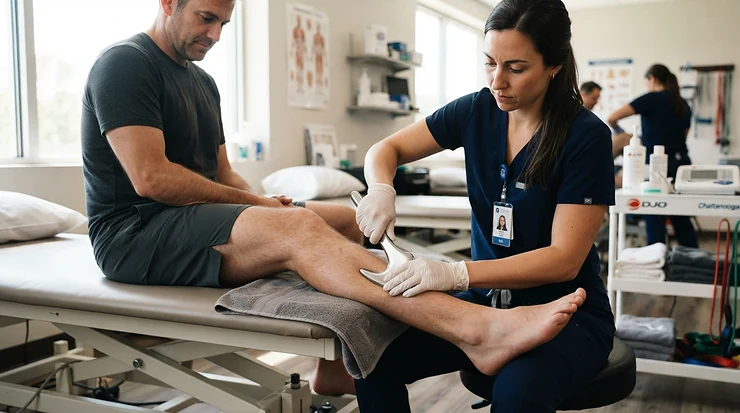
A stainless steel muscle scraper is a hand-held, bevel-edged metal tool used for instrument-assisted soft tissue mobilisation (IASTM). Practitioners glide it over lubricated skin to find and treat tight fascia, scar tissue and muscular restrictions. Steel’s rigidity lets you feel tissue texture through the handle, and its non-porous surface wipes clean.
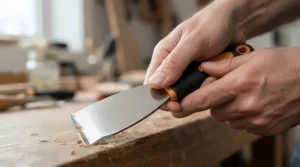
IASTM has a longer history than the Instagram feeds suggest. A systematic review and effect-size analysis on PubMed Central notes that it grew out of Cyriax cross-friction massage, and that the first controlled study appeared in 1997. Today the market runs from £15 mirror-polished bars to premium instrument sets costing as much as a second-hand car.
That spread is exactly why this guide exists. If you want a metal muscle scraper for professionals, the gap between “fine for a gym bag” and “right for a busy treatment room” is bigger than the product photos imply. A spec sheet won’t tell you which edge works on a hamstring, which grip stops your thumb aching by Thursday, or which finish survives forty disinfectant wipes a week.
So I’ve compared seven real tools using their published specs, aggregated review themes and honest analysis. I haven’t tested any of them myself, and I won’t pretend otherwise. Along the way you’ll get a clear view of tool sterilisation, the Graston Technique question and what each tool costs to own. Prices are indicative ranges only, so check the live listing.
Quick Comparison Table: Stainless Steel Muscle Scraper Options at a Glance
| Product | Standout trait | Style | Indicative price range | Best For |
|---|---|---|---|---|
| Ellipse Pro | Oval shape, balm included | Single multi-edge tool | £70-£110 | All-round clinic and travel use |
| Sidekick Echo | Anti-fatigue grip, full kit | Single tool with grip | £80-£120 | Long treatment days |
| Micro Tool | 6.5 cm ball-tip precision | Pocket tool | £25-£50 | Hands, feet, trigger points |
| Original Myofascial Releaser | Five treatment edges | Single multi-edge tool | £85-£110 | Therapists wanting one primary tool |
| Stickon Muscle Scraping Tool Set | Eight implements | Multi-tool set | £50-£100 | Building a graded kit on a budget |
| GYX COELE S1 | Mirror-polished, low outlay | Single bar-style tool | £15-£30 | Beginners and self-care |
| HawkGrips | Forged, heavy, premium | Graded instruments | £270+ per tool | High-volume specialist clinics |
Notice how the price column barely tracks the “edges” column. A £100 tool with five usable edges can out-work a £300 instrument you’ll only use for two techniques. The GYX COELE S1 is the lowest-risk entry point, while the HawkGrips only makes sense if you’ll use specialist shapes daily. Most working therapists will land between those poles, with either the Ellipse Pro or the Original Myofascial Releaser.
💬 Just one click — help others make better buying decisions too!😊
Top 7 Stainless Steel Muscle Scraper Options: Expert Analysis
1. Ellipse Pro — ergonomic oval with balm included
The oval profile is the headline: it sits in the palm like a smooth river pebble and gives you convex and concave edges without swapping tools. It’s built from 304 stainless steel, which resists corrosion and matters when you’re wiping it down between clients. Smaller protrusions reach around the Achilles and shoulder blade, while the broad curves sweep quads and calves. A pot of emollient balm ships in the box, so you’re not hunting for glide on day one.
Based on the spec comparison, this is a sensible first purchase for a professional who wants one tool covering most everyday work. It’s less specialised than a graded set, so someone treating lots of small joints may eventually want a finer second tool.
Reviewers on mirrored retail listings consistently praise its versatility and value, and one physiotherapist reviewer says it travels well. I couldn’t verify review counts or star ratings, so check the live listing.
Pros:
- ✅ Convex and concave edges in one tool
- ✅ Corrosion-resistant 304 stainless steel
- ✅ Balm included for immediate glide
Cons:
- ❌ Less specialised than a graded set
- ❌ Smaller edges are less refined than premium instruments
Price: around £70-£110 at the time of research; check current price. Verdict: strong value for a multi-edge steel tool.
2. Sidekick Echo — anti-fatigue grip for long days
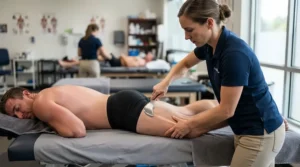
Grip is the whole story. The Sidekick Echo adds a patented anti-fatigue grip to a steel body, aimed at the hand cramp that comes from repeated strokes. It ships as a full kit, in carbon black, and is aimed at neck, shoulder and back work.
In practice, grip design matters more than most buyers expect. If you’re running six or seven soft tissue appointments a day, a slightly wider handle that spares your thumb pays for itself within weeks. The trade-off is that a bulkier body can feel less nimble around bony landmarks.
One reviewer who covered the wider Sidekick range described the line as affordable and convenient, preferring it to foam rolling, and noted a lifetime warranty on the steel tools. That reviewer owned a stone model rather than this one, so Sidekick Echo-specific feedback remains unverified here.
Pros:
- ✅ Anti-fatigue grip reduces hand strain
- ✅ Full kit included
- ✅ Steel construction suits repeated cleaning
Cons:
- ❌ Chunkier feel around bony areas
- ❌ Limited independent reviews found for this exact model
Price: around £80-£120 at the time of research; check current price. Verdict: worth it if hand fatigue is your main complaint.
3. Micro Tool — 6.5 cm precision for trigger points
At just 6.5 cm, the Micro Tool is the pocket knife of this group. It keeps the double-bevelled treatment edges of larger tools and adds a ball tip for pinpoint trigger-point pressure. It’s small enough for a keyring.
That size is both its strength and its limit. It’s superb for the plantar fascia, the web of the hand and the tight spots around the scapula, but you’d tire quickly trying to treat a thigh with it. Think of it as a second tool rather than a first.
I couldn’t find verified independent reviews, so the evidence here is the maker’s own description. That’s a reason to hold off buying it as your only tool.
Pros:
- ✅ Ball tip suits focused trigger-point work
- ✅ Fits a pocket or keyring
- ✅ Same bevelled-edge principle as full-size tools
Cons:
- ❌ Too small for large muscle groups
- ❌ Independent review evidence is thin
Price: around £25-£50 at the time of research; check current price. Verdict: a smart add-on, not a standalone kit.
4. Original Myofascial Releaser — five edges, one tool
The pitch is consolidation: five distinct treatment edges across convex and concave curves, designed by a chiropractor to replace a drawer of instruments. It’s cut from 304 stainless steel, which the maker contrasts with jade or stone that can absorb oils over time.
That consolidation is useful, and it’s also marketing. A single tool with five edges is genuinely handy for mobile practitioners, but each edge is a compromise compared with a purpose-shaped instrument. For most generalist therapists that compromise is perfectly acceptable.
Review data I could verify is limited to the maker’s own pages and mirrored listings for related models, so treat the sentiment as preliminary.
Pros:
- ✅ Five usable edges in one body
- ✅ Non-porous steel is easy to wipe down
- ✅ Suits mobile and multi-room practices
Cons:
- ❌ Edges are compromises versus specialist shapes
- ❌ Limited verified independent reviews
Price: around £85-£110 at the time of research; check current price. Verdict: good value for generalists, fair for specialists.
5. Stickon Muscle Scraping Tool Set — eight implements on a budget
Variety is the draw: eight stainless implements, so you can try different curves before deciding which you actually favour. One reviewer positioned it as a decent alternative to official Graston instruments at a fraction of the price.
A set is a smart way to learn what you like. The downside is that budget sets sometimes have inconsistent edge finishing, so run a fingertip over every bevel before it touches a client. Any burr or rough spot is a reason to send it back.
Verified review coverage is limited to that single comparison write-up, so consider the evidence modest.
Pros:
- ✅ Eight shapes for experimenting
- ✅ Far cheaper than premium graded sets
- ✅ Stainless steel throughout
Cons:
- ❌ Edge finish may vary between pieces
- ❌ Limited verified review base
Price: around £50-£100 at the time of research (I couldn’t confirm a stable UK figure); check current price. Verdict: a low-risk learning kit.

6. GYX COELE S1 — mirror-polished entry point
The GYX COELE S1 is the budget option of the group: a mirror-polished stainless bar with multiple treatment edges, sold in several shapes including a longer bar. The polish is meant to cut friction on sensitive skin.
Pitched at self-care and newcomers, it’s a fine way to learn stroke technique cheaply. It isn’t what I’d buy as a primary tool for a full diary, because budget bars rarely match the grip ergonomics or edge refinement of dearer tools.
I couldn’t verify independent review counts or ratings, so the information here comes from the listing’s own description.
Pros:
- ✅ Very low cost of entry
- ✅ Polished finish reduces friction
- ✅ Several shapes available
Cons:
- ❌ Basic grip ergonomics
- ❌ Little independent review evidence
Price: around £15-£30 at the time of research; check current price. Verdict: great for learning, modest for heavy clinical use.
7. HawkGrips — forged, heavy, premium
HawkGrips are forged from stainless steel, and reviewers keep returning to the weight. The Gold set includes seven instruments, with named shapes such as the Medium Handlebar and Small Multi-Curve.
Weight does real work here: a heavier tool lets gravity do part of the job, and many practitioners say a dense steel body transmits tissue texture better. The cost, though, is steep, and forum posters describe it as prohibitive. Another poster noted the shapes closely resemble Graston’s.
One enthusiast review calls it the premier option on the market, while a budget-minded forum thread treats it as aspirational. Single instruments convert to roughly £270-£340 and sets to over £2,000 from US figures I found, so treat those as indicative.
Pros:
- ✅ Forged steel feels dense and precise
- ✅ Specialist shapes for specific regions
- ✅ Highly regarded among enthusiasts
Cons:
- ❌ Expensive per tool and per set
- ❌ Heavy for long, high-volume days
Price: around £270+ per instrument at the time of research; check current price. Verdict: justified only with sustained specialist demand.
How to Use a Stainless Steel Muscle Scraper: Setup, Technique and First-30-Day Mistakes
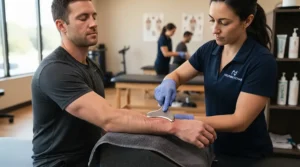
Start with prep, because steel on dry skin is unpleasant for everyone. Apply a light emollient or balm, hold the tool at roughly 30-60 degrees to the skin, and use short overlapping strokes along or across the fibre direction. Begin with light pressure, because you can always add more but you can’t un-bruise a client.
Here’s a simple first-30-day rhythm:
- Week one: practise on yourself or a willing volunteer, learning how each edge feels.
- Week two: introduce the tool for short, focused passes in selected clients, with their consent.
- Weeks three and four: build in assessment-then-treatment flow, and re-test movement afterwards.
The common first-month errors are predictable. Too much pressure, too long on one patch, and poor lubrication head the list. Heavy bruising or pinpoint redness that lingers is a sign to ease off. And remember that these tools are a means to an end: movement, strength and load progression are what actually change function, with the tool as one component.
If you’re using a professional soft tissue scraper in clinic, record what you did and how the patient responded. That habit turns a trendy tool into clinical reasoning, and it also protects you if a client reacts unexpectedly.
Real-World Scenarios: Matching the Right Tool to Your Practice
Scenario one: the mobile massage therapist. You drive between clients with a kit bag and limited treatment-room space. The Ellipse Pro or the Original Myofascial Releaser makes sense because one tool covers most work, and the Micro Tool adds precision for hands and feet without taking bag space.
Scenario two: the multi-therapist clinic. If several practitioners share the same room, a kit of three or four tools gets pricey quickly. A budget set like the Stickon Muscle Scraping Tool Set lets each therapist explore shapes, with the clinic later standardising on whichever proves popular.
Scenario three: the specialist sports practice. With a full diary of rehab clients and an established protocol, the HawkGrips cost is easier to amortise. Add a Sidekick Echo as a lighter backup for lower-complexity sessions if hand fatigue builds up.
For professional massage therapists comparing these paths, the same logic applies: match the tool to frequency of use, client mix and your hands. A tool that looks premium but sits in a drawer is the most expensive tool of all.
✨ Ready to build your kit?
🔍 Take your treatment room to the next level with these carefully selected tools. Click on any highlighted product to check current pricing and availability on Amazon UK. Choose the right steel and you’ll build smoother, more confident sessions that your clients will notice!
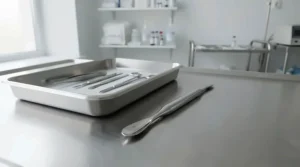
Tool Sterilisation and Care: Keeping Your Steel Clinic-Ready
Here’s the bit people skip, and it’s the bit that matters most. UK NHS decontamination guidance consistently treats thorough cleaning as the essential first step before any disinfection or sterilisation, and the Welsh Government’s decontamination development plan explains why: residue left behind can hinder later decontamination.
For routine use on intact skin, a practical workflow looks like this:
- Remove balm and debris with warm water and detergent.
- Disinfect using a product compatible with stainless steel and approved for your setting.
- Rinse and dry fully, because moisture encourages staining and pitting.
- Inspect edges for nicks, scratches and burrs that could harbour residue.
- Store dry and separated, ideally in a clean pouch or tray.
Full sterilisation, such as autoclaving, is normally associated with instruments that contact broken skin or sterile tissue, and IASTM is generally avoided over open wounds. Always follow the maker’s instructions for tool sterilisation, your insurer’s requirements and your own infection-prevention policy. Some manufacturers warn that prolonged bleach soaks can mark stainless steel, so check before assuming something is safe.
If a tool cannot be cleaned properly, it shouldn’t be in your treatment room.
How to Choose a Stainless Steel Muscle Scraper
Follow these steps and you’ll narrow the field fast:
- Define your use. Self-care and light clinic work tolerate cheaper tools, while a full diary justifies better ergonomics.
- Check the steel. Look for 304 or comparable stainless, which resists corrosion and takes repeated disinfecting.
- Count the usable edges. More isn’t better unless you’ll actually use them.
- Weigh the weight. Heavier tools transmit texture well but tire hands, so match weight to your daily volume.
- Test the grip. Slippery, narrow or sharp-cornered handles cause hand pain over a long day.
- Inspect the finish. Edges should be smooth, polished and burr-free.
- Plan for cleaning. Avoid crevices and textured surfaces that trap residue.
A metal muscle scraper for professionals should pass every one of those tests, whereas a self-care bar only needs to pass the first three. If you’re torn between two models, choose the one that’s easier to clean. Hygiene failures are much costlier than any ergonomic quirk.
Stainless Steel vs Jade, Stone and Polycarbonate
| Material | Hygiene | Feedback to the therapist | Durability | Best For |
|---|---|---|---|---|
| Stainless steel | Non-porous, wipes clean | Excellent texture feedback | Very durable | Ellipse Pro, HawkGrips, Original Myofascial Releaser |
| Jade | Porous, can absorb oils | Moderate | Can chip | Gentle facial or gua sha use |
| Stone or bian | Variable | Moderate | Brittle at edges | Traditional practice |
| Polycarbonate | Easy to wipe | Softer feel | Can scratch | Lighter-touch work |
Steel wins for professionals largely on hygiene and feedback. A reviewer of tools across materials argued that steel transmits tissue irregularities better than softer materials, though he also admitted it isn’t perfect. For a busy therapist, the non-porous surface is the clincher because it simplifies tool sterilisation between clients.
Softer materials still have a place, particularly if you work with sensitive clients and want a gentler touch. Just don’t expect them to deliver the same density of feedback.
Graston Technique and the Stainless Steel Graston Tool Question
Graston Technique is a branded method with its own instruments, training and licensing. The tools you’ll see marketed as a “stainless steel Graston tool” are usually generic or inspired designs, not official Graston instruments. That distinction matters for training, insurance and claims.
Cost is where the brand gap shows up. One review put the official six-instrument set at slightly over $2,000, and a student-produced flyer lists training and licensing costs on top. By contrast, generic steel options like the Ellipse Pro sit at a fraction of that outlay.
What about evidence? A PEDro-indexed systematic review appraised seven randomised controlled trials and reported some evidence supporting short-term range-of-motion gains. A separate newsletter summary points out that the underlying studies often had methodological weaknesses. In plain English, the research is promising but unsettled.
So treat Graston Technique protocols as one structured approach, and treat generic tools as legitimate IASTM instruments that don’t confer the branded training. Don’t imply you hold Graston Technique certification unless you do.
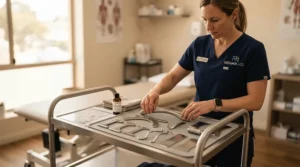
Features That Actually Matter (And Those That Don’t)
What matters:
- Edge finish. A smooth bevel glides, while a rough one drags and irritates.
- Weight and balance. They determine how long you can work before your hand complains.
- Grip shape. Look for rounded contours and some texture that doesn’t trap residue.
- Cleanability. Fewer crevices mean faster, safer turnaround between clients.
What doesn’t:
- “Medical-grade” as a slogan. It’s an informal marketing label, so ask for the actual steel grade.
- Mirror polish for its own sake. It looks lovely, but it won’t change outcomes.
- Number of edges beyond what you’ll use. Extra bevels are decoration unless they match your technique.
- Included extras. A pot of balm is handy, but it shouldn’t tip a decision on its own.
A professional soft tissue scraper earns its keep through ergonomics and hygiene, not marketing adjectives. If a listing leans hard on jargon but skimps on the steel grade and dimensions, treat that as a yellow flag.
Common Mistakes When Buying a Professional Soft Tissue Scraper
The most frequent error is buying on price alone. A £15 bar might do a fine job for learning, but a busy diary exposes weak grips and poor finishes quickly.
The second is buying a big set before you know your style. Start with one versatile tool, work out which edges you reach for, and then expand. The Stickon Muscle Scraping Tool Set is a compromise if you want variety, but the Ellipse Pro may serve you better if you’re still learning.
Third, many buyers ignore hand size. A tool that suits one therapist can cramp another. If you can, handle several before committing, or buy from a seller with an easy returns policy.
Finally, people forget the paperwork. Check your insurer’s position on instrument use, your professional body’s guidance and any training requirements before using a new tool on clients. A great purchase becomes a poor one if it isn’t covered.
Long-Term Cost and Maintenance: What You’ll Really Spend
| Tool | Upfront range | Typical maintenance | Value verdict | Best For |
|---|---|---|---|---|
| GYX COELE S1 | £15-£30 | Wipe-down, inspect edges | Low cost, short horizon | Learners |
| Ellipse Pro | £70-£110 | Wipe-down, rebalance supplies | Excellent cost-per-use | Generalists |
| Sidekick Echo | £80-£120 | Wipe-down, grip check | Good for heavy diaries | High-volume days |
| HawkGrips | £270+ per tool | Wipe-down, careful storage | Strong only at high volume | Specialist clinics |
Run a quick cost-per-use calculation. A £100 tool used on 1,000 sessions costs 10p per session, which is trivial. A £300 instrument used on 300 sessions costs £1, which is still modest, but it only makes sense if the tool genuinely improves your work.
The hidden cost is replacement. Steel tools rarely wear out, but poor edges, lost pieces and damaged finishes mean you may upgrade sooner than you expect. Budget for balm or emollient, disinfectant wipes and a clean storage pouch, and the real total cost stays well within reach of most practices.
Safety, Regulations and Evidence
IASTM is not suitable for every client or every area. Exclusions typically include open wounds, compromised skin, certain vascular conditions and acute inflammatory states, so screen thoroughly and obtain informed consent. If in doubt, refer on.
Regulation is the grey area. Whether a given tool counts as a medical device depends on the maker’s stated intended purpose. UK rules such as the Medical Devices Regulations 2002 apply to devices placed on the market with a medical purpose, and UKCA or CE marking appears where a manufacturer claims compliance. Don’t assume any tool carries it, and check the declaration yourself.
On evidence, be honest with clients. The research suggests short-term improvements in movement for some conditions, but the studies vary in quality and protocols. Present IASTM as a useful adjunct alongside exercise, education and load management, not as a stand-alone cure.
Frequently Asked Questions
❓ How long should professional massage therapists use a stainless steel muscle scraper on one area?
❓ Can I buy a stainless steel Graston tool without Graston Technique certification?
❓ What's the best way to clean a metal muscle scraper for professionals between clients?
❓ Is a stainless steel muscle scraper worth buying for home use?
❓ How much does a professional soft tissue scraper cost in the UK?
Conclusion
Here’s the short version. If you want one tool that does most things well, the Ellipse Pro or the Original Myofascial Releaser are the sensible centre of the market. If hand fatigue is your enemy, the Sidekick Echo is worth a look, and if you want to experiment cheaply, the Stickon Muscle Scraping Tool Set or the GYX COELE S1 let you learn without a big outlay. The Micro Tool is a lovely add-on for precision work, and the HawkGrips only earns its price in a high-volume, specialist setting.
Whatever you pick, put hygiene first. A tool you can clean properly, handle comfortably and use within your training is worth far more than a flashy one that sits in a drawer. Keep your tool sterilisation routine tight, be honest with clients about the evidence and treat the scraper as one piece of a wider plan.
Recommended for You
- IASTM Tool Set For Physiotherapy: 7 Best Picks For UK Clinics (2026)
- Soft Foam Roller For Beginners: 7 Best Gentle Picks (2026)
- Travel Foam Roller: 7 Brilliant Picks For Hand Luggage (2026)
Disclaimer: This article contains affiliate links. As an Amazon Associate, I earn from qualifying purchases. If you purchase products through these links, we may earn a small commission at no additional cost to you.
✨ Found this helpful? Share it with your friends! 💬🤗
