In This Article
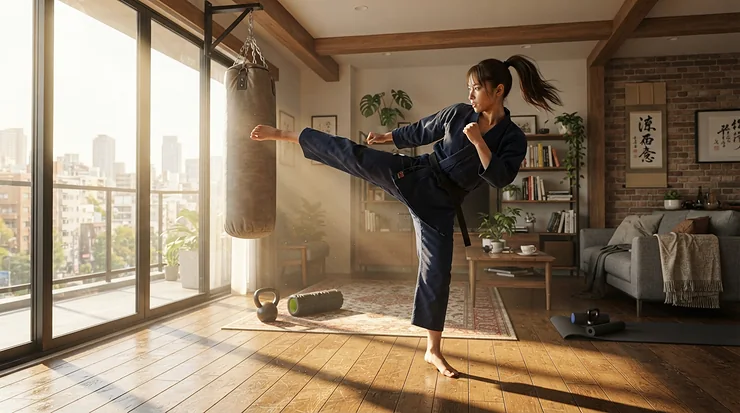
You know the moment. You chamber a head-height roundhouse, your hip pinches, your standing leg wobbles, and the kick politely gives up somewhere around the ribs. Power isn’t the problem. Range is. That’s where a flexibility trainer for martial arts kicks earns its floor space: it holds your leg in a controlled, repeatable stretch so your body can adapt, instead of you bouncing and hoping.
The catch is that “flexibility trainer” covers wildly different kit. A budget three-bar floor stretcher, a door strap and a seated machine that costs several hundred pounds do different jobs. Some are brilliant at opening side splits but barely touch the hamstring range a front kick needs. Others are the reverse. Buy the wrong one and you’ve bought a very expensive coat rack.
So this guide does the sorting. I’ve compared seven real options across budget, mid-range and premium, using published specifications and the aggregated sentiment of genuine buyer reviews. There’s no invented testing and no fairy tales. You’ll also get what a product listing never tells you: how a kick stretching trainer for taekwondo fits around proper warm-ups, why hip mobility sets your ceiling, and a six-week leg split training plan.
One rule before you buy anything: stretch warm, never cold. The British Heart Foundation’s stretching advice says to stretch after a warm-up or after exercise, not as a replacement for one. Keep that in your back pocket. We’ll come back to it.
Quick Comparison: The Best Flexibility Trainer for Martial Arts Kicks at a Glance
Short on time? Here’s the lay of the land. Prices are ranges only and were checked at the time of research, so check the current price before buying.
| Product | Type | Best For | Price Range | Standout |
|---|---|---|---|---|
| Yes4All Leg Stretcher Split Machine | Three-bar floor stretcher | Beginners and tight budgets | Mid-£30s to low-£40s | Six stretch lengths, very portable |
| MuscleForge 3-Bar Leg Stretcher | Three-bar floor stretcher | Growing students, adjustable reach | Around £45 | 50-102 cm arm adjustment |
| EverStretch Leg Stretcher PRO | Door strap | Front and high-kick hamstring range | Under £40 | 300 lb door anchor, about 280 g |
| Valor Fitness CA-27 | Seated, wheel-driven | Regular home use with warranty cover | Est. £250-£350 | 3-year frame warranty (US listing) |
| TMAS Pro Leg Stretcher | Seated, wheel-driven | A lighter seated machine | Est. £200-£300 | Arrives almost fully assembled |
| ProForce Stretchmaster II | Seated, wheel-driven | Cautious, fine-grained progress | Est. £230-£340 | Very small adjustment increments |
| Century Versaflex 2.0 | Seated, ratchet | Tracking progress over months | Around £330 at UK retailers | Built-in degree indicator |
Reading across the table, the Yes4All and the EverStretch PRO give you the most flexibility per pound, but they solve different problems. One opens the side split. The other works the lift-and-hold range your front and roundhouse kicks demand. The seated trio (Valor CA-27, TMAS Pro and ProForce Stretchmaster II) adds back support and finer control. The Century Versaflex 2.0 is the only one here that turns your stretch into a number you can track. Seated-machine prices are estimates, because UK listings swing by seller and delivery.
💬 Just one click — help others make better buying decisions too!😊
What Is a Flexibility Trainer for Martial Arts Kicks?
A flexibility trainer for martial arts kicks is a stretching aid that holds or guides your legs through a controlled range of motion, so you can lengthen the hamstrings, adductors and hips gradually and safely. The main formats are door-anchored straps, three-bar floor stretchers and seated leg-stretching machines.
That definition hides an important wrinkle. The seated machines and floor bars mainly train the side split (straddle). A door strap trains leg lift in front of you. Kicks use both. Front kicks and roundhouses rely on hamstring and hip-flexion range. Side kicks, and the leg you stand on during a high roundhouse, lean on the inner thighs and hips. Ask which kick is stalling before you ask which machine looks best.
Do you need one? No. Floor stretches, wall straddles and partner work can get you to full splits. A trainer simply makes it easier to stretch alone, control the intensity and repeat the same position week after week. Consistency is where flexibility gets won.
Top 7 Flexibility Trainer for Martial Arts Kicks Picks: Expert Analysis
1. Yes4All Leg Stretcher Split Machine — cheapest on-ramp to side splits
The big draw is how little there is to it: padded ankle loops, a pull bar and a frame light enough to carry under one arm. The listing describes 0-180° adjustment across six stretch lengths and a 330 lb rating, plus narrow and wide rubber-grip handles. Those six lengths work like rungs on a ladder. Step up only when the current setting feels like mild tension, not a protest. At roughly 2.3 kg it fits in a kit bag, which almost no split machine can claim.
Now the honest analysis. This is a side-split tool. It trains the inner thighs and hips your supporting leg leans on during a high roundhouse, but it won’t open your hamstrings for front kicks on its own. Reviewers I could verify skew positive, with one recent buyer crediting it with more visible progress than anything else they’d tried. The sample is small, so treat that as a good sign rather than proof. Unlike a seated machine, nothing supports your back, so sitting tall is your job.
Pros:
- ✅ Light, portable and easy to store
- ✅ Six adjustable stretch lengths for gradual progress
- ✅ Rubber-grip handles for a secure pull
Cons:
- ❌ No back support, so posture is up to you
- ❌ Targets side splits more than front-kick range
Recent UK deal listings put it in the mid-£30s to low-£40s range, so check the current price. For first-timers, the value is hard to beat.
2. MuscleForge 3-Bar Leg Stretcher — widest reach adjustment in the budget tier
The headline here is adjustment range: arms that extend from 50 to 102 cm, padded non-slip handles and a claimed spread beyond 180°. That 52 cm window is the whole point. It suggests one device can fit a teenage student now and a taller adult later, rather than being outgrown within a year. The listing mixes aluminium and stainless-steel wording for the frame, so confirm the exact build on the page you’re buying from. Lighter aluminium is easier to carry, while steel tends to feel more reassuring under hard pulling.
How does it differ from the Yes4All? It’s the same three-bar concept with the same limitation, because it’s a straddle stretcher first. It adds generous sizing but lacks a deep pool of buyer feedback. The verified review count I found was tiny, so I can’t honestly report a durability verdict either way. If you choose it, start conservatively and inspect the joints and pads after the first fortnight.
Pros:
- ✅ Wide 50-102 cm arm adjustment
- ✅ Padded non-slip handles for comfortable pulling
- ✅ Simple bar design suits small rooms
Cons:
- ❌ Very small verifiable review sample
- ❌ Frame material wording varies between listings
Expect to pay around £45 at the retailer I checked, a touch above the Yes4All. It’s worth it only if the extra reach genuinely matters to you.
3. EverStretch Leg Stretcher PRO — the only pick that works the kicking plane
Forget bolting a machine to your floor. This is a cotton strap, a leg loop and a door anchor weighing about 280 g. The anchor is rated to 300 lb, and the kit includes a stretching guide with 13 exercises plus online video access, with a lifetime warranty claimed by the maker. In practice you lie on your back, raise your leg against the door and use the strap to draw it a little higher each rep. That is the same plane as a front kick or the lift phase of a roundhouse. It’s why I’d call this the most credible high kick flexibility stretcher in the line-up for hamstring and hip-flexion range.
The trade-offs are physical, not technological. Reviewers note that how high you can go depends on your door frame, that the foot can slip from the loop (less so in trainers), and that side stretches feel awkward. The listing mirror I checked showed 4.4 stars from roughly 760 ratings. One older martial artist described it as a way to maintain range rather than a miracle, which is a refreshingly realistic framing.
Pros:
- ✅ Weighs about 280 g and packs flat
- ✅ Works the front-kick and hamstring plane
- ✅ Door-anchor setup needs no drilling
Cons:
- ❌ Door height caps your maximum stretch
- ❌ Foot loop can slip without shoes
Marketplace listings I saw sat under £40, so check the current price. As a complement to a floor bar or machine, the value is excellent.
4. Valor Fitness CA-27 — seated comfort with the strongest warranty
Valor’s clever move is making a seated machine less of a furniture commitment. The leg supports come off and the back support folds flat, so the roughly 49 lb steel frame stores more easily than most rivals. The recommended capacity is 250 lb, though some listings state 300 lb, so check yours. A steering-wheel mechanism opens the legs past 180° in small steps. A wheel is easier to feather than a ratchet, so you can add a sliver of stretch instead of jumping a notch. The two-position adjustable leg supports also fit a wider range of leg lengths than fixed pads.
Independent reviewers rate it about 4 out of 5, praising seat comfort, range and footprint. The recurring complaints are the lack of a front handle to pull yourself forward and the absence of a degree indicator. Warranty is the standout: US listings state three years on the frame and two on the padding, so confirm UK terms with the seller.
Pros:
- ✅ Frame and pad warranty cover (per US listings)
- ✅ Adjustable leg supports fit more leg lengths
- ✅ Removable supports and fold-flat back ease storage
Cons:
- ❌ No front handle to pull yourself forward
- ❌ No degree indicator to track progress
With US list pricing around the mid-$200s, expect roughly £250-£350 in the UK depending on seller and delivery (an estimate). That is strong value if you’ll stretch several times a week, and overkill if you won’t.
5. TMAS Pro Leg Stretcher — smooth wheel control in a lighter frame
The TMAS Pro arrives mostly assembled. You only attach the steering wheel, which is a genuine relief after wrestling with some flat-pack kit. It has a steel frame, a 235 lb capacity and a 17.5 kg weight that is noticeably lighter than the Valor CA-27 and the Century Versaflex 2.0. That makes moving it between rooms realistic. The padded seat and adjustable back support let you swap between upright and reclined positions, and the recline changes the stretch intensity, so beginners can start gentler. A stop latch holds your position.
One UK-specific catch: the maker advises against using it on rugs or carpet because the roller wheels need a smooth surface. Plenty of British bedrooms are carpeted, so measure your floor before your enthusiasm. Aggregated Amazon feedback, as summarised by an independent reviewer, praises sturdiness, padding and ease of use, and the supports suit taller users. Common gripes are the lack of a listed warranty, no usage instructions, and some buyers finding the backrest unstable above roughly 200 lb (about 14 stone).
Pros:
- ✅ Arrives almost fully assembled
- ✅ Lighter 17.5 kg frame moves between rooms
- ✅ Reclining seat eases getting on and off
Cons:
- ❌ No warranty listed
- ❌ Not for carpet; backrest wobble reported at heavier weights
UK pricing is patchy, but seated machines in this class commonly land in the £200-£300 range (an estimate), so check the current price. It’s good value for lighter users on hard floors.
6. ProForce Stretchmaster II — finest increments for cautious progress
The ProForce Stretchmaster II follows the same wheel-driven formula as the TMAS Pro, with padded seat and leg supports. Reviewers single out the small adjustment steps that prevent jerky movements. It has a 250 lb capacity, weighs about 50 lb and opens beyond 180°. Why does that matter? If you’re a cautious adult beginner, or you’re easing back after a tweak, fine increments let you nudge by degrees instead of lunging by notches. For stretching, patience is a feature.
Independent coverage describes dozens of positive Amazon reviews. The same reviewer asks whether the machine justifies costing 10-20% more than the TMAS Pro for what is essentially the same layout. It’s a fair question, and the answer depends on whether you value the smoother control. One practical warning: the bare metal base frame can scratch wooden floors, so put it on a gym mat.
Pros:
- ✅ Small increments for controlled, gradual progress
- ✅ Stretch angle extends beyond 180°
- ✅ 250 lb capacity suits larger users
Cons:
- ❌ Bare metal base can scratch wood floors
- ❌ Costs more than the near-identical TMAS Pro
Estimated pricing is roughly £230-£340 depending on seller, so check the current price. Choose it only if the finer control is worth the premium to you.
7. Century Versaflex 2.0 — the only one that tracks your angle
The headline feature is the degree indicator. The Century Versaflex 2.0 also stretches to 190°, adds a quick-release lever, handles on each thigh deck, multi-position thigh pads and a larger redesigned back. The indicator matters more than it sounds. Flexibility progress is slow and easy to doubt, and a logged number turns “I think it’s better” into evidence you can see. The machine has a 250 lb capacity, weighs roughly 52-55 lb and needs some assembly. Century lists it with karate, kickboxing and taekwondo among its sports.
Independent reviews consistently name progress tracking as its main selling point, with assembly fiddlier than the TMAS Pro. The warranty is a one-year limited cover, shorter than the Valor CA-27‘s frame cover. If you train students or share the machine around a family, the quick-release lever and handles make leaning forward and bailing out of a stretch far more comfortable.
Pros:
- ✅ Built-in degree indicator to log progress
- ✅ Quick-release lever for an instant exit
- ✅ Handles on each thigh deck for leaning forward
Cons:
- ❌ Needs some assembly and is the heaviest here
- ❌ Most expensive pick with a one-year warranty
At UK martial-arts retailers it sat around £330, and availability on amazon.co.uk varies by seller, so check the listing. It’s worth the money only if you’ll stretch consistently and want hard numbers.
How do the seven stack up on the hard specs?
| Product | Capacity / Weight | Max Angle | Warranty Note | Rating Note | Best For |
|---|---|---|---|---|---|
| Yes4All | 330 lb rating; about 2.3 kg | 0-180° | Check listing | Positive, small verified sample | Beginners, kit bags |
| MuscleForge | Check listing | Over 180° claimed | Check listing | Very few verified reviews | Adjustable reach |
| EverStretch PRO | 300 lb anchor; about 280 g | Limited by door height | Lifetime claimed by maker | 4.4 stars (about 760 ratings) | Front and high kicks |
| Valor CA-27 | 250 lb (some listings 300); about 49 lb | Over 180° | 3-year frame, 2-year pads (US) | About 4/5 (independent review) | Warranty-minded buyers |
| TMAS Pro | 235 lb; 17.5 kg | Beyond 180° | None listed | About 4/5 (independent review) | Lighter users, hard floors |
| ProForce Stretchmaster II | 250 lb; about 50 lb | Beyond 180° | Check listing | About 4/5 (independent review) | Fine-grained control |
| Century Versaflex 2.0 | 250 lb; about 52-55 lb | 190° | 1-year limited | Widely popular | Progress tracking |
Looking at the numbers, the seated machines cluster tightly on capacity and angle. What really separates them is warranty, weight and control style. The Valor CA-27 wins on cover, the TMAS Pro on portability, the ProForce Stretchmaster II on increments and the Century Versaflex 2.0 on tracking. For anyone whose main frustration is front-kick height, the EverStretch PRO does something none of the seated machines can.
✨ Don’t Miss These Exclusive Deals!
🔍 Take your kicking range to the next level with these carefully selected trainers. Click any highlighted product to check current pricing and availability on Amazon. Pick the one that fits your kicks, your floor and your budget, then start building range you can actually use! 🥋
How to Choose a Flexibility Trainer for Martial Arts Kicks
Six questions will narrow seven products down to one or two.
- Name the kick that’s stalling. Front kicks and roundhouses lean on hamstring and hip-flexion range, which suits a door strap like the EverStretch PRO. Side kicks and wide stances lean on the side split, which suits floor bars and seated machines.
- Pick the format. Door strap for portability and kick-plane work, three-bar for budget straddle stretching, seated machine for back support and repeatable setups.
- Check the control. Look for small adjustment steps and a way to release instantly. A wheel (Valor CA-27, TMAS Pro, ProForce Stretchmaster II) allows finer nudges than a ratchet.
- Check the support. Back support keeps your spine out of the stretch, and leg pads must suit your leg length. Adjustable supports help in shared households.
- Check build and cover. Look at capacity, welds, strap stitching and any warranty, and confirm UK terms with the seller.
- Check your space. Seated machines need a permanent spot, and the TMAS Pro needs a smooth floor. Bare-metal feet, like the ProForce Stretchmaster II‘s base, want a mat.
Budget matters too, but as a tiebreaker. A £40 device you use four times a week beats a £330 one you stretch on twice a month.
High Kick Flexibility Stretcher: Door Trainer vs Seated Machine vs Floor Bar
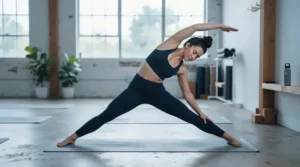
Is a high kick flexibility stretcher the same thing as a split machine? Not quite, and that confusion costs people money. A split machine is built around the straddle position. A true high kick flexibility stretcher works the leg-lift pattern in front of your body, so the door strap earns that label more honestly. The best home setup often pairs the two: a seated or floor stretcher for side-split range, and the door strap for hamstring and hip-flexion range.
| Option | Main Strength | Main Weakness | Best For |
|---|---|---|---|
| Door strap (EverStretch PRO) | Works the kicking plane; very portable | Door height caps range | Front and roundhouse range |
| Floor three-bar (Yes4All, MuscleForge) | Cheap, storable, straddle focus | No back support | Beginners, kit bags |
| Seated machine (Valor CA-27, TMAS Pro, ProForce Stretchmaster II, Century Versaflex 2.0) | Back support, fine control | Cost, weight, floor space | Regular home stretching |
| Partner or wall stretching | Free, flexible | Relies on a reliable partner | Class sessions |
The table shows that no single option covers every direction. A door strap beats a machine for kick-specific lift, while a machine beats a strap for comfortable, hands-free straddle work. If you can only afford one, pick by your stalled kick. If you can afford two, the Yes4All plus the EverStretch PRO covers both planes for well under £100.
Kick Stretching Trainer for Taekwondo: What Students and Parents Should Know
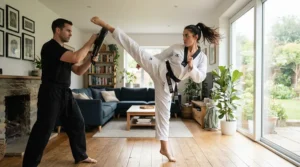
Taekwondo rewards kicks at head height, and the sport’s dollyo chagi (turning kick) and yop chagi (side kick) are exactly the techniques where range shows up. A kick stretching trainer for taekwondo fits this world well, but the details matter.
First, match the device to the kick. Turning kicks and front kicks reward the door-strap approach. Side kicks and low stances reward straddle work. Second, remember that you don’t need to be flexible at the start. Most schools build range through class stretching and kicking practice, so a trainer is a supplement. Third, children should only use a leg stretcher with an adult controlling the intensity. Hips and knees need a gentle, patient approach. A trainer is a tool for gradual progress, never a shortcut.
Parents choosing a kick stretching trainer for taekwondo might prefer the MuscleForge, whose wide adjustment range can stretch with a growing child. Others will like the EverStretch PRO‘s hands-on control. One reviewer reported buying it for a six-year-old, but I’d still advise adult supervision for anyone that young. Students who train several evenings a week may eventually outgrow a floor bar and want a seated machine like the Valor CA-27.
Hip Mobility: The Hidden Limiter Behind Every High Kick
Ask a stalled kicker where they feel stuck and most say “hamstrings”. Often the real culprit is the hip. Hip mobility covers how freely the thigh bone moves in its socket, through flexion (lifting), abduction (opening) and rotation. A kick uses all three in sequence. Tight hip structures, weak control at end range, or simple lack of practice can cap your kick well before your hamstrings run out.
This is why a stretching machine alone sometimes disappoints. Seated trainers like the TMAS Pro and Century Versaflex 2.0 lengthen the inner thighs and hamstrings along one plane. They don’t train your hip to control the new range. Pair them with active hip mobility work such as leg lifts, controlled leg swings and deep lunges, and you convert passive stretch into usable kick height.
A quick self-check: lie on your back and raise one straight leg with the other flat on the floor. If the pelvis tilts early, you’re running out of hamstring. If you feel a pinch at the front of the hip rather than a muscular stretch, back off. Persistent pinching, sharp pain or numbness is a reason to see a physiotherapist, not to push harder. Good hip mobility work is quiet and gradual, and it’s often the missing ingredient in a stalled routine.
Dynamic Stretching: How to Warm Up Before You Kick
Dynamic stretching means moving a joint through its range in a controlled way, with leg swings and slow kicks as classic examples. It prepares you to kick. Static stretching, the kind you do on a trainer, is better suited to building range after training or in a separate session.
The research is more nuanced than gym folklore. A University of Limerick study, published in BMC Musculoskeletal Disorders, tested people with and without previous hamstring injuries. A warm-up increased hamstring flexibility and static stretching raised it further, while dynamic stretching did not add to the immediate range in that test. That doesn’t make dynamic stretching useless. The study measured short-term hamstring range, not how well anyone kicked. What it supports is a sensible sequence: warm up first, use dynamic stretching to prepare, then save your trainer session for after class.
A practical order looks like this:
- Five minutes of easy cardio such as skipping or light cycling
- Two sets of ten leg swings per side, front-to-back and side-to-side
- A few slow, controlled kicks, rising gradually in height
- Your normal class or drills
- Static work on your trainer, such as the Yes4All or EverStretch PRO
Treat dynamic stretching as the opening act and the trainer as the main event.
Leg Split Training: A Practical Six-Week Plan
Leg split training works best when it’s boringly consistent. This plan assumes you’re healthy, warmed up, and using a trainer such as the Yes4All, Valor CA-27 or Century Versaflex 2.0. Aim for two to four sessions a week of about 10-15 minutes, always after a warm-up.
- Week 1: Find your baseline. Set the trainer to a position that gives mild tension. Hold for around 30 seconds, breathing slowly, then close gently. Repeat three times. If you use the Century Versaflex 2.0, note the angle.
- Week 2: Add time, not force. Keep the same setting and extend each hold to 45 seconds.
- Week 3: Step up one notch. Open by one increment only when the previous position feels easy. Finer-increment machines such as the ProForce Stretchmaster II shine here.
- Week 4: Add the forward lean. Hinge from the hips with a straight back to bring the hamstrings in.
- Week 5: Add the kick plane. On non-trainer days, use the EverStretch PRO for lying leg raises, five slow reps per side.
- Week 6: Retest and reset. Compare against week 1, then decide whether to progress or repeat a week.
Expect weeks to months for noticeable change, and don’t assume a full split is guaranteed because hip structure varies between people. Progress that arrives slowly tends to stay.
Real-World Scenarios: Three Kickers, Three Setups
These are illustrative profiles, not testimonials, built to show how the reasoning works.
The teenage taekwondo student. Budget under £50, shared bedroom, trains three nights a week. The MuscleForge gives growth room, and the EverStretch PRO adds kick-plane work. A parent should supervise the intensity, and both pack away in seconds.
The adult kickboxing beginner in a flat. Thirty-something, carpeted floors, limited space, evening sessions after work. The TMAS Pro is off the list because carpet is a problem. The Yes4All and the EverStretch PRO together cost little and store in a drawer. Stretch for about ten minutes after a proper warm-up, four times a week.
The instructor with a home dojang. Several students use the kit, and tracking matters. The Century Versaflex 2.0 logs angles, the quick-release lever helps new users, and the multi-position pads suit different leg lengths. The Valor CA-27 is the alternative if warranty cover matters more than the indicator.
The pattern is simple: let your floor, your space and your training frequency decide, and let the product follow.
Common Mistakes When Buying and Using a Flexibility Trainer
Most disappointment comes from a handful of avoidable errors:
- Buying for the wrong kick. Straddle machines won’t magically raise your front kick.
- Ignoring your floor. The TMAS Pro dislikes carpet, and the ProForce Stretchmaster II‘s bare metal base wants a mat.
- Stretching cold. Warm up first, as the earlier guidance says.
- Chasing pain. Mild tension is the target. Sharp pain means stop.
- Bouncing. Hold steady and breathe. Bouncing invites strains.
- Doing too much. A Keele University evidence summary on stretching found only limited evidence that daily hamstring stretching speeds recovery from injury. More is not automatically better.
- Trusting a thin review pool. Where verified reviews are scarce, as with the MuscleForge, inspect the product early and keep your receipt.
The common thread is patience. Flexibility behaves like a savings account: small, regular deposits beat dramatic withdrawals.
Safety, Standards and When to Stop
I couldn’t find a dedicated UK standard for home stretching machines, so safety rests on sensible product choice and sensible use. UK general product safety rules expect consumer products to be safe, but that doesn’t certify a particular machine for you. Check weight ratings, inspect welds, straps and pads, and buy from a reputable seller.
For a door trainer like the EverStretch PRO, test the door and frame carefully. Reviewers note that hollow or non-solid doors can raise concerns, and a door that isn’t on a flat wall can limit your setup. Keep other people out of the doorway while you stretch.
Stretch to mild tension only, release slowly, and stand up gradually afterwards. Stop at once if you feel sharp pain, pinching in the hip or knee, or numbness. If you have a hip, knee, groin or back injury, speak to your GP or a physiotherapist first. The NHS Strength and Flex warm-up video is a handy, trustworthy way to prepare before any stretching session.
FAQs About Flexibility Trainers for Martial Arts Kicks
❓ Will a leg stretcher help my taekwondo roundhouse kick?
❓ How long does leg split training take with a machine?
❓ Can I use the EverStretch PRO door trainer on any door?
❓ Are leg stretching machines safe for children?
❓ How often should I use a flexibility trainer for martial arts kicks?
Conclusion: Choose the Trainer That Fits Your Kicks
The best flexibility trainer for martial arts kicks is the one you’ll actually use, matched to the kick that’s holding you back. If front kicks and roundhouses stall at the hamstring and hip, the EverStretch PRO is the most direct fix. If side splits and wide stances are the limit, the Yes4All is the cheapest honest start, with the MuscleForge as the adjustable alternative. Prefer a supported seat? The Valor CA-27 brings warranty cover, the TMAS Pro brings portability, the ProForce Stretchmaster II brings fine control, and the Century Versaflex 2.0 brings the only built-in angle tracker here.
Whatever you pick, the system matters more than the gadget. Warm up, use dynamic stretching to prepare, save the trainer for after class, give your hip mobility some attention, and build leg split training slowly across weeks. Prices and availability change, so check current listings before you commit.
✨ Ready to kick higher?
Choose the trainer that fits your kicks, your floor and your budget, then click through to check current pricing and availability. Your future head-height roundhouse will thank you! 🚀
Recommended for You
- Foam Wedge Stretcher For Tight Calves: 7 Proven Picks (2026)
- Hamstring Stretching Device For Runners: 7 Proven Picks (2026)
- Leg Stretcher For Splits At Home: 7 Best Picks For UK (2026)
Disclaimer: This article contains affiliate links. As an Amazon Associate, I earn from qualifying purchases. If you purchase products through these links, we may earn a small commission at no additional cost to you.
✨ Found this helpful? Share it with your friends! 💬🤗
