In This Article
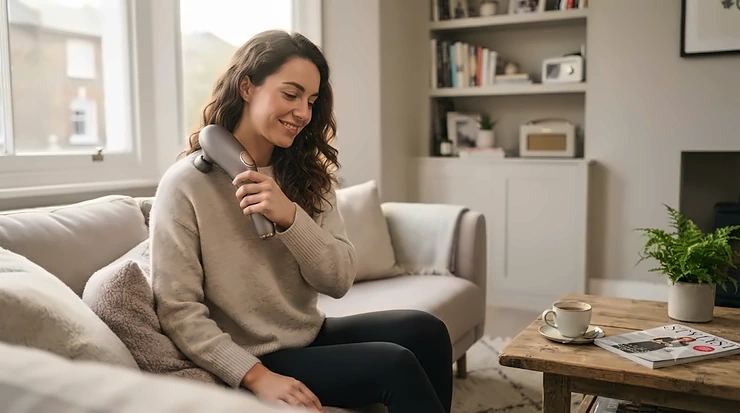
Your shoulders have been quietly filing a complaint for about three weeks now, and honestly? They’ve got a point. A rechargeable handheld massager is a cordless, battery-powered device — usually a percussion “gun” or a compression wand — that delivers targeted muscle relief without the trailing cable that turns your living room into a trip hazard. Unlike the corded wands your gran probably owns, these things charge up like a phone, live in a drawer or a gym bag, and are ready whenever your trapezius starts staging a protest.

Here’s the thing nobody tells you before you start shopping: the market for a rechargeable handheld massager has exploded so fast that scrolling through Amazon feels less like shopping and more like being shouted at by forty identical black plastic guns, each claiming to be “professional grade.” Some of that noise is justified. Some of it is marketing copy written by someone who has never once had a knot the size of a golf ball wedged under their shoulder blade. This guide cuts through it with real product research — specs that actually matter, aggregated review sentiment where it exists, and honest analysis of who each device genuinely suits, cross-checked against official NHS guidance on post-exercise muscle pain rather than brand promises alone.
We looked at everything from pocket-sized travel guns to compression hand massagers built for arthritis relief, spanning budget, mid-range and premium territory. Whether you’re chasing the best rechargeable massager for daily desk-job tension, want a USB-C charging massager that plays nicely with the same cable as your phone, or you’re specifically hunting for a portable massager for travel that survives hand luggage, there’s a genuine option below rather than a guess dressed up as a recommendation. Let’s get into it.
Quick Comparison Table
Before the deep dive, here’s the short version for anyone who just wants to know where to start.
| Product | Type | Battery Life | Best For | Price Range |
|---|---|---|---|---|
| Theragun Mini (3rd Gen) | Percussion gun | Up to 150 min | Ultra-portable travel relief | £170-£190 range |
| Hyperice Hypervolt Go 2 | Percussion gun | Up to 180 min | Longest runtime in a mini | £140-£170 range |
| RENPHO Active+ Thermacool | Percussion gun (heat/cold) | Up to 150 min | Chronic tension needing warmth | £90-£120 range |
| TOLOCO Massage Gun | Percussion gun | Up to 6 hrs | Best budget all-rounder | Under £60 |
| cotsoco Mini Massage Gun | Percussion gun | Up to 6 hrs | Cheapest true USB-C pick | Under £40 |
| PADO PureWave CM7 | Dual-motor wand | 120-180 min | Versatile body and face use | £110-£140 range |
| BOB AND BRAD H60 | Compression hand massager | 2-4 hrs | Arthritis and carpal tunnel | £65-£85 range |
A quick read of that table tells its own story: battery life and price don’t move in lockstep the way you’d expect. The budget-friendly TOLOCO Massage Gun and cotsoco Mini Massage Gun both claim battery figures that outlast the premium Theragun Mini (3rd Gen) several times over, which sounds suspicious until you dig into amplitude and stall force — the real engine-room specs that separate a gentle buzz from genuine deep-tissue work, a pattern Which?’s own independent massage gun testing has flagged too. Meanwhile, if hand pain rather than back pain is your problem, none of the percussion guns are the right tool at all; that’s where the BOB AND BRAD H60 earns its place on this list.
💬 Just one click — help others make better buying decisions too!😊
Top 7 Rechargeable Handheld Massagers: Expert Analysis
We’ve picked seven real, currently available products spanning entry-level to premium, each chosen for a distinct use case rather than just another shade of the same gun. Below, every model gets genuine spec interpretation, honest analytical commentary, and — where verifiable — aggregated real review sentiment, never invented quotes.
1. Theragun Mini (3rd Gen) — smallest premium gun that still hits hard
Therabody’s third-generation Mini shrinks the brand’s signature triangular ergonomics into something that genuinely disappears into a coat pocket, and that size-to-power ratio is the whole pitch. At 0.40kg with a 12mm amplitude and three speed settings running 1,750 to 2,400 percussions per minute, it delivers real depth for a device this small — not the shallow surface buzz you’d expect from something roughly the size of a soft drink can. What most buyers overlook about this model is that its 20-lb stall force means firm pressure on calves or forearms is fine, but leaning into a dense glute muscle will bog the motor down; this is a finesse tool, not an excavator.
The USB-C charging port is a genuine upgrade over older Theragun models that used proprietary cables, and Therabody states up to 150-180 minutes of battery life depending on speed and attachment. Reviewers consistently note real-world runtime lands closer to the lower end of that range, particularly on the highest setting, which tracks with how lithium batteries behave under sustained load — the advertised figure is usually a best-case number, not a guarantee. This is squarely a travel and desk-drawer tool: frequent flyers, office workers stealing three minutes between video calls, and anyone who wants Theragun’s build quality without Theragun’s full-size price tag will get the most from it.
Aggregated customer sentiment on major retail sites is broadly positive on portability and grip comfort, with a recurring theme of disappointment when the battery underperforms its stated figure — a pattern common enough across percussion massage guns that it’s worth flagging rather than ignoring.
Pros:
- ✅ Genuinely pocket-sized without feeling like a toy
- ✅ USB-C charging matches most people’s existing cables
- ✅ Ergonomic triangle grip reduces wrist strain on self-massage
Cons:
- ❌ Real-world battery often falls short of the 150-180 min claim
- ❌ 20-lb stall force struggles on dense muscle under pressure
At around the £170-£190 range, this sits at the premium end of the “mini” category, but the value verdict holds up if portability and brand reliability matter more to you than raw power.

2. Hyperice Hypervolt Go 2 — best battery life in a compact frame
Hyperice built the Hypervolt Go 2 to compete directly with the Theragun Mini, and on one metric it simply wins outright: battery. At roughly 1.5lbs with three speeds running 2,200 to 3,200 pulses per minute, its 18V lithium-ion cell delivers a genuine three-hour runtime per charge, which independent testers have confirmed holds up even after repeated sessions without needing a top-up mid-week. That’s the kind of headroom that means you stop thinking about charging altogether — a meaningfully different experience from devices that need daily top-ups.
Here’s what the spec sheet won’t tell you, but user reports suggest: the lack of an LED battery display is a genuine annoyance once you’re used to devices that show a percentage, because the light ring’s green-to-red fade is a rough guide at best. The trade-off for that long battery life is a charging cable setup that’s fussier than most USB-C rivals — it needs a specific USB-A to USB-C cable and brick, not a universal C-to-C setup, so replacing a lost cable isn’t as simple as grabbing whatever’s nearest.
Reviewers consistently flag the QuietGlide motor as a genuine standout, describing sessions quiet enough to run during a phone call, and the TSA carry-on approval makes it a legitimate contender for anyone building a portable massager for travel kit rather than a desk-only device.
Pros:
- ✅ Roughly 3-hour battery life beats most rivals its size
- ✅ QuietGlide motor is noticeably quieter in daily use
- ✅ TSA-approved for carry-on, genuinely travel-ready
Cons:
- ❌ No LED percentage display, just a vague colour-coded ring
- ❌ Requires a specific charging cable, not universal USB-C
Sitting in the £140-£170 range, this is the pick for anyone who values not thinking about charging over having the absolute deepest amplitude on the market.
3. RENPHO Active+ Thermacool — the heat-and-cold specialist
RENPHO’s Active+ Thermacool line takes a different approach entirely: instead of chasing maximum RPM, it bolts active thermal therapy onto a mid-power percussion gun. The interchangeable head can heat to around 117°F or cool to roughly 50°F using Peltier technology, layering temperature therapy directly onto percussive massage rather than making you switch tools. With a 10-12mm amplitude and up to 50 lbs of stall force across five speeds (1,800-3,200 RPM), it compensates for a shallower stroke with genuinely firm resistance to applied pressure — useful if you like leaning into a knot rather than skimming over it.
Based on the spec comparison with rival mid-range guns, the standout here is the 15W PD fast charging over USB-C, which brings a full charge down to around 1.5-2 hours versus the 4+ hours typical of similarly priced competitors — a meaningfully faster turnaround if you’ve forgotten to charge it the night before. The brushless motor runs as quiet as 40dB, which is genuinely unobtrusive for evening use in front of the television.
Aggregated reviewer sentiment is largely favourable on the thermal function specifically, with users reporting real benefit for chronic lower-back tension and cold-weather stiffness, though several reviewers note that running the heat or cold setting drains the battery meaningfully faster than percussion alone — a trade-off worth knowing before you rely on it for a long session.
Pros:
- ✅ Active heat and cold therapy, not just a passive metal head
- ✅ 50 lbs stall force handles firm applied pressure well
- ✅ 15W PD fast charging cuts recharge time significantly
Cons:
- ❌ Heat/cold function noticeably shortens battery runtime
- ❌ 10-12mm amplitude is shallower than pure deep-tissue rivals
Priced in the £90-£120 range, it’s the strongest pick here for anyone managing chronic stiffness rather than simple post-workout soreness.
4. TOLOCO Massage Gun — the budget bestseller that earns its reputation
The TOLOCO Massage Gun has become something of an Amazon phenomenon, and the reason isn’t mysterious once you look at the spec sheet against its price. A 12mm amplitude, speeds up to 3,200 RPM across seven levels, and ten interchangeable heads is a genuinely generous spread for a device that regularly sells under £60. Reviewers consistently note the build feels sturdier than the price suggests, with a smooth LED touchscreen display that’s rare at this end of the market.
What most buyers overlook is that some independent reviewers have found the advertised amplitude and percussion range run slightly optimistic compared to lab measurement against pricier rivals — not a dealbreaker, but worth tempering expectations against premium-brand marketing claims. The auto-shutoff after 10 minutes is a genuinely sensible safety feature rather than a limitation, since sustained sessions on one muscle group aren’t recommended regardless of device.
On battery, TOLOCO claims up to six hours of use per charge via USB cable, and aggregated review sentiment broadly supports strong real-world endurance, though a recurring theme across multiple review threads is that ten attachment heads is arguably three or four more than most people will ever actually reach for.
Pros:
- ✅ Exceptional spec-to-price ratio for a budget gun
- ✅ Ten heads cover genuinely different muscle group needs
- ✅ LED touchscreen display is unusual at this price point
Cons:
- ❌ Real-world amplitude runs slightly softer than advertised
- ❌ Some units reported occasional internal rattling in reviews
At under £60, this is the honest starting point for anyone trying percussion massage for the first time without committing serious money.
5. cotsoco Mini Massage Gun — smallest footprint, smallest price
If the Theragun Mini is the premium pocket option, the cotsoco Mini Massage Gun is its budget mirror image. Weighing just 0.4kg with a 1800mAh battery and genuine Type-C charging, it delivers six speed levels between 1,800 and 3,200 RPM through four interchangeable heads. The 24V brushless motor keeps noise down to a claimed 35-50dB, which lines up with what reviewers describe as genuinely unobtrusive operation suitable for shared spaces.
Here’s what the spec sheet won’t tell you: at this size and price, amplitude is inevitably modest, so treat this as a superficial-to-mid tension tool rather than something built for genuinely stubborn deep-tissue knots. The 15-minute auto-shutoff is sensible rather than restrictive, and the claimed 3-6 hours of runtime after a 3-hour charge holds up reasonably well against aggregated user feedback, even if premium-brand devices still edge it on raw power delivery.
Reviewers consistently frame this as a genuinely solid gift-tier purchase — the kind of thing you buy for a parent or a desk-bound colleague rather than a serious athlete chasing deep recovery, and that’s a fair assessment given the spec ceiling.
Pros:
- ✅ Genuine Type-C charging at a sub-£40 price point
- ✅ Extremely lightweight at just 0.4kg
- ✅ Quiet 35-50dB operation suits shared or office spaces
Cons:
- ❌ Shallow amplitude limits it to lighter, surface-level tension
- ❌ Only four heads versus ten-plus on some rivals
Under £40, it’s the cheapest genuinely usable USB-C charging massager on this list, and honestly, for casual use, that’s exactly the point.

6. PADO PureWave CM7 — the versatile dual-mode wand
The PADO PureWave CM7 breaks from the percussion-gun template entirely with a curved, cordless wand design that switches between a percussive mode at one end and a gentle vibration-therapy mode at the other — the latter aimed specifically at facial and delicate-area use, which genuinely sets it apart from the pack. Weighing around 1.5lbs, its wide-arch swivel head is engineered to glide over bony areas like the shoulder blades and spine without the uncomfortable bounce that pure ball-attachment guns can produce there.
Based on the spec comparison against straight percussion guns, the CM7’s real strength isn’t raw power — reviewers rate its intensity as noticeably gentler than dedicated deep-tissue guns — but rather its reach and versatility across body types and areas most massage guns simply can’t handle comfortably. Battery life sits around 120-180 minutes per charge, and aggregated user feedback suggests real-world endurance can vary more than that figure implies, with some reports of shorter sessions on the highest setting.
What sets this apart in honest analysis is the unique facial disc attachment, something genuinely absent from every percussion gun on this list, making it the natural pick for anyone who wants one rechargeable handheld massager that covers both muscular tension and lighter skincare-adjacent use.
Pros:
- ✅ Unique dual percussion-and-vibration design, two tools in one
- ✅ Facial disc attachment genuinely unmatched among percussion guns
- ✅ Wide-arch head glides comfortably over bony areas
Cons:
- ❌ Noticeably less powerful than dedicated deep-tissue guns
- ❌ Battery runtime reports vary more than the stated figure
Sitting in the £110-£140 range, the value verdict depends entirely on whether that facial-massage crossover genuinely matters to you.
7. BOB AND BRAD H60 — built for hands, not backs
Every product above targets backs, shoulders and legs, which leaves a real gap for anyone whose actual pain lives in their hands — desk workers with early carpal tunnel symptoms, crafters, or older users managing arthritis. The BOB AND BRAD H60 fills that gap with a mitt-style compression device using an eight-airbag system across three zones (fingers, palm, wrist), paired with 360° NTC-controlled heating that reaches a steady 108°F within five to eight seconds.
What most buyers overlook about compression hand massagers generally is that hard-roller designs can genuinely aggravate sensitive joints; the H60‘s air-pressure approach is specifically built to avoid that, which reviewers with arthritis and carpal tunnel symptoms consistently single out as the standout feature over roller-based alternatives. A 2500mAh battery delivers roughly seven to eight 15-minute sessions per charge via USB-C, with a genuine fail-safe that deflates the airbags automatically if the battery dies mid-session — a small but meaningful safety detail for anyone slightly wary of a device gripping their hand.
Aggregated review sentiment is strongly positive on comfort and the heat function specifically, with a recurring note that the highest of three intensity settings can feel genuinely too firm around the wrist for some users, and that larger hands may find the internal chamber slightly cramped.
Pros:
- ✅ Air-bladder compression avoids harsh roller pressure on joints
- ✅ Fail-safe deflation if battery dies mid-session
- ✅ 360° heat activates in five to eight seconds
Cons:
- ❌ Highest intensity setting can feel too firm at the wrist
- ❌ Larger hands may find the internal fit cramped
In the £65-£85 range, this is the only genuinely honest pick on this list for hand-specific pain, and it earns its spot precisely because nothing else here does the same job.
Practical Usage Guide: Your First 30 Days
Buying the right rechargeable handheld massager is only half the job — using it properly in the first month determines whether it becomes a genuine daily habit or an expensive drawer occupant. Start every new device with a full initial charge before first use, even if the battery indicator shows partial charge out of the box; lithium cells calibrate more accurately after that first complete cycle, and most manufacturer guides say as much in the fine print.
For the first week, resist the urge to blast straight to the highest speed setting. Begin on the lowest intensity for 60-90 seconds per muscle group, gradually building up as your body adapts — this isn’t overcaution, it’s simply how percussive and compression therapy is meant to be introduced. A common first-30-days mistake is holding a rechargeable handheld massager in one spot rather than gliding it slowly across the muscle; static pressure on a single point, especially near bone or joints, is where most reported discomfort comes from, not the device itself.
Charging habits matter more long-term than people expect. Avoid letting the battery run to complete zero repeatedly, and equally avoid leaving any device permanently on charge — both habits shorten lithium battery lifespan over time. If you’re using a USB-C charging massager, a genuine USB-C cable rated for the device’s wattage will charge faster and more safely than whatever spare cable happens to be lying around; mismatched cables are a common, avoidable source of slow or inconsistent charging that generates one-star reviews that really shouldn’t exist. Clean attachment heads after each use with a damp cloth rather than submerging them, and store the whole unit somewhere dry rather than a steamy bathroom cabinet, which shortens both motor and battery life over time.
Real-World Scenarios: Who Should Buy What
Rather than a generic “it depends,” here’s how three genuinely different buyer profiles map onto the products above, based on use frequency, budget and environment.
The frequent business traveller commuting between airports weekly needs something TSA-friendly, quiet enough for a hotel room next to a sleeping partner, and light enough to not matter in a carry-on that’s already stuffed with a laptop and charger bricks. Both the Theragun Mini (3rd Gen) and Hyperice Hypervolt Go 2 fit that brief precisely, and the choice between them largely comes down to whether you’d rather have Theragun’s slightly firmer amplitude or Hypervolt’s longer battery runtime — there’s no wrong answer here, just a different priority.
The budget-conscious desk worker who sits eight hours a day and just wants end-of-day shoulder relief doesn’t need premium power or app connectivity. The TOLOCO Massage Gun or cotsoco Mini Massage Gun genuinely covers this use case at a fraction of the premium price, and honestly, most casual users would struggle to tell the difference in a blind test against a £180 device for light daily tension work.
The retiree managing arthritis in their hands, rather than muscular back pain, is the profile most massage-gun marketing completely ignores. For this person, none of the percussion guns above are the right purchase at all — the BOB AND BRAD H60‘s gentle air-compression approach, built specifically to avoid the joint-aggravating pressure of hard rollers, is the genuinely appropriate tool, and spending more on a powerful percussion gun would actively work against their needs rather than for them.
How to Choose a Rechargeable Handheld Massager
Cutting through spec-sheet marketing, here’s what actually determines whether a device suits you:
- Match amplitude to your goal. A 6-8mm stroke suits light tension and facial or scalp use; 10-12mm handles general muscle groups; 14mm-plus is genuine deep-tissue territory for larger muscles like glutes and hamstrings.
- Check stall force, not just RPM. High percussions-per-minute figures sound impressive, but stall force — how much resistance the motor tolerates before bogging down — determines whether firm pressure actually works or just stutters.
- Weigh battery life against your actual use pattern. A three-hour battery is wasted on someone doing five-minute sessions twice a week; a 90-minute battery is genuinely limiting for someone running longer, more frequent sessions.
- Confirm the charging port before buying. A USB-C charging massager shares cables with most modern phones and laptops, which matters more than it sounds like once you’ve lost a proprietary charger once.
- Consider noise level for your environment. Anything above roughly 60dB becomes genuinely intrusive in shared living spaces or open-plan offices; most quality devices now sit in the 35-50dB range.
- Think about attachment variety realistically. Ten heads sound generous, but most users settle into using two or three regularly — don’t pay extra purely for a count that looks good in marketing copy.
- Match the device type to the actual pain. Percussion guns suit muscular tension; compression devices like the BOB AND BRAD H60 suit joint and circulation-related hand pain — these are not interchangeable tools.
Rechargeable Massage Gun vs Traditional Corded Massager
The corded electric massager your grandparents owned isn’t extinct, but it’s increasingly a niche choice, and understanding why matters before you assume “rechargeable” automatically means “better.” A corded device never runs out of power mid-session, which genuinely matters for anyone running long, frequent sessions at a single fixed location like a home gym. What it sacrifices is everywhere else: you’re tethered to a socket, can’t use it in the car or garden, and the flex itself becomes an actual hazard when you’re trying to reach your own lower back.
A rechargeable massage gun trades that unlimited runtime for genuine freedom of movement and portability — the entire category exists because people wanted to use these devices in more places than a fixed spot near a plug socket. The trade-off is real, though: battery degradation over 18-24 months of regular use is a known characteristic of lithium-ion cells generally, and eventually every cordless device’s runtime will shrink from its day-one figure. For anyone doing genuinely long daily sessions in one spot — a home physio setup, for instance — a corded device still has a legitimate case. For everyone else, especially anyone chasing a portable massager for travel, cordless wins comfortably on real-world usability.
USB-C Charging Massager: Why the Port Matters More Than It Sounds
It’s easy to dismiss the charging port as a footnote, but a USB-C charging massager solves a genuinely practical problem that older proprietary-cable devices created for years: cable compatibility chaos. Reversible, fast, and now standard across most phones, laptops and power banks in the UK, USB-C means you can top up your Theragun Mini (3rd Gen) or cotsoco Mini Massage Gun from the same cable charging your phone on a bedside table, rather than hunting for a specific proprietary brick you inevitably misplace within six months.
Fast charging matters practically, too. The RENPHO Active+ Thermacool‘s 15W PD support over USB-C brings charge time down to roughly 1.5-2 hours versus 4+ hours on non-PD devices — genuinely useful if you forgot to charge overnight and need it working before a morning gym session. Not every USB-C port delivers the same charging speed, though; some devices use the connector shape without supporting fast-charging protocols, so it’s worth checking stated charge time rather than assuming USB-C automatically means quick.
Cordless Battery Life Massage Device: What the Numbers Really Mean
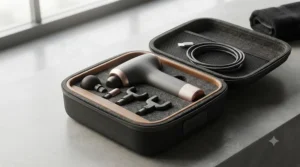
Manufacturer battery claims for a cordless battery life massage device are measured under specific, often generous, lab conditions — typically lower speed settings with minimal applied pressure. Real-world use, especially at higher intensity with firm pressure applied, drains a battery meaningfully faster than the box states, which is exactly why aggregated reviewer sentiment across nearly every product in this guide includes some version of “battery didn’t quite match the claim.”
That doesn’t make the stated figures dishonest so much as optimistic. What matters more practically is runtime relative to your actual habits: someone doing three five-minute sessions a week barely dents even a modest 90-minute battery, while someone running 20-minute daily sessions on a high heat setting, like with the RENPHO Active+ Thermacool, will notice real degradation within a single week of heavy use. Charge cycles also matter for long-term battery health — lithium cells generally handle partial top-ups better than repeated full drains, so little-and-often charging genuinely extends usable lifespan over the device’s first couple of years, a point echoed in official UK fire service guidance on lithium-ion battery care, which recommends buying only from reputable retailers and never charging unattended overnight.
Portable Massager for Travel: Rules That Actually Matter
If a portable massager for travel is the specific goal, weight and TSA rules matter more than raw power. UK and US carry-on regulations generally require lithium batteries to travel in hand luggage rather than checked bags, which every device on this list — being under the common watt-hour threshold for consumer electronics — comfortably satisfies, though it’s always worth double-checking your specific airline’s current policy before flying.
Beyond regulations, the practical test is simpler: does it fit in the bag you’re actually taking? The Theragun Mini (3rd Gen) and cotsoco Mini Massage Gun both slip into a jacket pocket without a second thought, while bulkier devices like the PADO PureWave CM7 need dedicated case space. Charging cable universality matters here too — carrying one USB-C charging massager alongside a phone that uses the same cable genuinely simplifies packing versus juggling multiple proprietary chargers, which is exactly the kind of small friction that determines whether a device actually comes on the trip or gets left behind at the last minute.
Common Mistakes When Buying a Rechargeable Handheld Massager
The single most common mistake is buying based on RPM alone. A gun boasting 3,200 percussions per minute sounds more powerful than one at 2,400, but without matching amplitude and stall force, high RPM can just mean a faster, shallower buzz rather than genuine deep-tissue relief — speed and depth are different specs entirely, and marketing copy loves to blur that line.
A second recurring mistake is ignoring noise level until after purchase. Reviewers across nearly every product category here mention noise as a post-purchase surprise, particularly for anyone planning to use a device in a shared bedroom or open-plan office. Third, buyers frequently overspend on attachment count, paying a premium for ten heads when aggregated user behaviour suggests most people settle into two or three favourites within the first month. Finally, and perhaps most understandably, people buy percussion guns for joint or hand-specific pain when a compression device like the BOB AND BRAD H60 would genuinely serve them better — matching device type to pain type matters more than matching brand reputation to budget.
Long-Term Cost & Maintenance: The Real Total Cost of Ownership
The sticker price is only the starting figure. Replacement attachment heads, when they wear out or go missing, typically add a modest but real ongoing cost, and premium brands like Therabody and Hyperice charge noticeably more for genuine replacement parts than budget alternatives. Battery longevity is the bigger long-term factor: most lithium-ion cells in these devices are rated for several hundred charge cycles before capacity noticeably degrades, which in practical terms means two to three years of regular use before you’ll likely notice a shorter runtime than day one.
Warranty length is a genuinely useful proxy for expected longevity — Therabody’s UK warranty on the Theragun Mini (3rd Gen) runs two years, while several budget brands offer just one, which tells you something honest about each manufacturer’s own confidence in their build quality. Cost-per-use, when you actually run the numbers, tends to favour even premium devices over regular professional massage therapy within the first year of ownership for anyone using their massager three or more times weekly — the value calculation genuinely shifts once you look past the upfront price tag toward realistic years-long use.
Safety, Regulations & Battery Compliance Guide
Every device in this guide runs on a rechargeable lithium-ion battery, and UK guidance is consistent on handling them responsibly: buy only from reputable retailers, since counterfeit batteries and chargers are a genuine, documented fire risk, and never charge a device unattended overnight if you can reasonably avoid it. Check attachment heads and casings periodically for cracks or swelling — a swollen battery is a genuine warning sign, not a cosmetic quirk to ignore.
On the medical side, percussion massage guns aren’t recommended over broken skin, blood clots, varicose veins, or directly on bones and joints, and anyone pregnant, managing a neurological condition, or recovering from recent surgery should consult a healthcare professional before regular use. None of the devices here are medical equipment in a clinical sense; they’re wellness tools, and treating persistent or worsening pain with a massage gun instead of seeking proper diagnosis is a genuinely common mistake worth avoiding. When it’s time to retire a device, never bin it with general household waste — lithium batteries require dedicated recycling, and official West Yorkshire Fire and Rescue Service battery safety advice recommends using designated collection points rather than general rubbish or recycling bins to avoid the fire risks that crushed batteries can cause in waste processing.
Frequently Asked Questions
❓ What is the best rechargeable handheld massager for beginners?
❓ How long does a rechargeable handheld massager battery last?
❓ Can I take a rechargeable handheld massager on a plane?
❓ Is a rechargeable massage gun better than a corded massager?
❓ How do I charge a USB-C charging massager safely?
Conclusion
There’s no single best rechargeable massager, and honestly, anyone claiming otherwise is skipping the part where your actual pain, budget and lifestyle matter more than a spec sheet. If portability is everything, the Theragun Mini (3rd Gen) and Hyperice Hypervolt Go 2 both earn their premium price tags through genuine build quality and travel-ready design. If your budget is tighter and your needs are casual, the TOLOCO Massage Gun and cotsoco Mini Massage Gun deliver real, honest value without pretending to be something they’re not.
For chronic stiffness that responds to warmth, the RENPHO Active+ Thermacool brings something genuinely different to the table, while the PADO PureWave CM7 covers ground no straight percussion gun can, from bony areas to facial use. And if the actual pain lives in your hands rather than your back, don’t force a percussion gun to do a job it was never built for — the BOB AND BRAD H60 exists precisely because that gap needed filling. Whichever you choose, start gently, charge sensibly, and give your body the same patience you’d expect from an actual therapist rather than treating day one like a personal record attempt.
✨ Don’t Miss These Exclusive Deals!
🔍 Take your muscle recovery routine to the next level with the picks above. Click on any highlighted product to check current pricing and availability, and find the rechargeable handheld massager that actually fits your life, not just your Instagram feed!
Recommended for You
- Best Back Massager for Elderly 2026: 7 Senior-Friendly Picks
- What Massager Is Best For Sciatica? 7 Top UK Picks 2026
- Back Massager Buying Guide: 7 Best Picks & Tips 2026
Disclaimer: This article contains affiliate links. As an Amazon Associate, I earn from qualifying purchases. If you purchase products through these links, we may earn a small commission at no additional cost to you.
✨ Found this helpful? Share it with your friends! 💬🤗
