
In This Article
Nobody warns you that adulthood mostly involves negotiating with your own spine. One minute you’re fine, the next you’ve bent to pick up a sock and your lower back has filed a formal complaint. If that sounds familiar, you’ve probably already typed “foam roller for back pain” into a search bar at 11pm, phone propped against a pillow because sitting up properly currently feels like a personal attack.
Here’s the short version: a foam roller for back pain is a firm cylindrical foam tool used to apply self-massage (myofascial release) to the muscles surrounding the spine — not the spine itself — helping to ease tightness in the upper back, glutes and hip flexors that often drives everyday back discomfort. It won’t fix a slipped disc, and it isn’t a substitute for a GP or physiotherapist, but for the garden-variety stiffness caused by desk work, poor posture or a heavy weekend of DIY, it’s one of the cheapest, most evidence-informed tools you can own. According to the NHS overview of back pain causes and self-care, most back pain improves within a few weeks with self-care and staying active — foam rolling fits neatly into that “keep moving” advice, particularly for the thoracic (upper-mid) spine and the muscles that pull on your lower back indirectly.
This guide covers seven genuinely available rollers — from a soft foam roller for sore back beginners to firmer, physiotherapist-recommended tools for people managing sciatica-adjacent tightness — with honest, spec-backed analysis rather than recycled marketing copy. We’ll also dig into posture correction, why “foam rolling for lower back pain” needs a caveat most product pages skip entirely, and how to actually use one without making things worse. Let’s get into it.
Quick Comparison Table
If you’re the type who scrolls straight to the table (no judgement — we all do it), here’s the fast version. This is a snapshot; the full breakdown with reasoning comes below.
| Product | Density | Best For | Price Range |
|---|---|---|---|
| Amazon Basics High-Density Foam Roller | Firm | Budget buyers wanting a no-frills starter roller | Under £20 |
| TheraBand Foam Roller | Soft-medium | Soft foam roller for sore, sensitive backs | £20-£30 range |
| TriggerPoint GRID 2.0 | Multi-density | Overall pick; posture and desk-worker tightness | £25-£35 range |
| OPTP PRO-ROLLER Soft Density | Soft | Physiotherapist-recommended, gentle rehab use | £30-£40 range |
| Chirp Wheel+ | Firm outer, contoured | Posture correction and thoracic extension | £40-£60 range |
| Rollga Foam Roller | Medium-firm, contoured | Sciatica-adjacent glute and hip tightness | £45-£65 range |
| ProsourceFit High Density Foam Roller | Firm | Lower back-adjacent muscle work on a budget | £15-£25 range |
Looking at the spread, there’s a clear pattern: the cheaper end (Amazon Basics, ProsourceFit) trades comfort for price, the middle tier (TheraBand, TriggerPoint GRID 2.0) balances the two, and the premium contoured designs (Chirp Wheel+, Rollga Foam Roller) charge more because they’re engineered specifically to avoid direct spinal contact. If you’re brand new to rolling, resist the urge to buy the firmest one “because it’ll work harder” — that’s not how sore muscles respond, and we’ll explain exactly why further down.
💬 Just one click — help others make better buying decisions too!😊
Top 7 Foam Rollers for Back Pain: Expert Analysis
Right, the main event. Seven real, currently available rollers, spanning budget to premium, gentle to firm. Each one gets the same honest treatment: what the spec sheet says, what that actually means when you’re lying on your living room floor, and where the real trade-offs sit.
1. Amazon Basics High-Density Foam Roller — cheapest way to test the waters
If foam rolling for back pain is a new idea to you, the Amazon Basics High-Density Foam Roller is the low-risk entry point that lets you find out if the habit sticks before you spend real money on it. It’s a solid-core, high-density polypropylene cylinder, typically sold in 12 to 18-inch lengths, with a smooth (non-textured) surface. That smoothness matters more than it sounds: no grid pattern means no unpredictable pressure spikes digging into a tender spot when you’re not expecting it, which makes it more forgiving for someone whose back is already cranky.
Here’s the honest trade-off. High-density polypropylene doesn’t compress much under body weight, so on bony areas or very tight muscles it can feel more intense than the density label suggests — this is a firm roller wearing a beginner-friendly price tag. Based on the spec comparison with softer EVA options below, it suits people with average muscle tightness rather than anyone in acute pain right now. Reviewers consistently report that it holds its shape well over months of use and doesn’t develop the dents that cheaper closed-cell foams sometimes do, though a recurring complaint is that the smooth surface can feel slippery on hard flooring without a mat underneath.
Pros:
- ✅ Genuinely low price point for first-time buyers
- ✅ Smooth surface avoids unpredictable pressure spikes
- ✅ Holds shape well without denting over time
Cons:
- ❌ Firmer underfoot than the density name implies
- ❌ No textured zones for targeted trigger-point work
At under £20, this is pocket-money territory for a tool that could save you a physio co-payment down the line — solid value if you’re just starting out and haven’t committed to a routine yet.
2. TheraBand Foam Roller — the soft foam roller for sore back beginners
When people specifically search for a soft foam roller for sore back use, this is usually the roller that comes up in clinical settings, and for good reason. The TheraBand Foam Roller uses a lower-density foam than most gym-branded competitors, and it’s noticeably more forgiving on first contact — you sink into it slightly rather than meeting a wall of resistance. Available in short (13-inch) half-round and full-round formats, it’s built around graded exposure: the idea that sore, guarded muscles respond better to gentle, tolerable pressure than to “no pain, no gain” intensity.
What most buyers overlook about this model is that “soft” doesn’t mean “ineffective” — it means the pressure is easier to control, which for someone with genuinely sore back muscles is the entire point. Based on the spec comparison with firmer EVA rollers, the TheraBand suits older adults, rehab patients and anyone whose first attempt at foam rolling left them wincing rather than relieved. Aggregated user feedback frequently mentions it as the roller physiotherapists hand to patients who found firmer models too aggressive, though some experienced users eventually outgrow the softness and want more bite for deep tissue work.
Pros:
- ✅ Genuinely gentle first contact for sensitive backs
- ✅ Widely used in clinical and rehab settings
- ✅ Available in a shorter, easier-to-control length
Cons:
- ❌ May feel too soft once muscles adapt
- ❌ Limited textured variants compared with rivals
Sitting in the £20-£30 range, it’s a fair price for a roller designed around comfort rather than intensity — arguably the safest first purchase on this entire list.
3. TriggerPoint GRID 2.0 — the reliable all-rounder for desk-worker stiffness
The TriggerPoint GRID 2.0 is the roller most likely to already be sitting in your gym’s stretching corner, and its multi-density construction is why it’s stuck around. A hollow ABS core wrapped in a distrodensity foam pattern means the surface flexes slightly under pressure while the core keeps it from collapsing — practically, this translates to a roll that feels firm on light pressure but doesn’t bottom out painfully when you lean your full body weight onto a stubborn knot near your shoulder blade.
The textured grid isn’t just cosmetic. Different zones (wide ridges, narrow ribs, a flat strip) let you switch between broad muscle coverage and more precise trigger-point pressure without swapping tools, which is genuinely useful for the upper-back and lat tightness that often accompanies desk-related lower back pain. Reviewers consistently note its durability over years of regular use, with a common complaint being that the hollow core, while lightweight for travel, can feel less substantial underfoot than a solid-core roller for taller or heavier users.
Pros:
- ✅ Multi-density surface handles broad and pinpoint work
- ✅ Proven durability over years of regular use
- ✅ Lightweight hollow core, easy to travel with
Cons:
- ❌ Hollow core feels less substantial for heavier users
- ❌ Textured surface is firmer than true beginner rollers
At around £25-£35, it sits at the sweet spot between the ultra-budget options and the specialist contoured designs, which is exactly why it keeps turning up on “best overall” lists across the fitness press.
4. OPTP PRO-ROLLER Soft Density — the physiotherapist-recommended tools pick
If you want the roller that clinics actually reach for, the OPTP PRO-ROLLER Soft Density is a strong candidate. OPTP has supplied physical therapy clinics for decades rather than starting life as a gym-floor gadget, and the Soft Density variant specifically targets patients who need control and comfort over raw intensity. The molded EVA foam construction gives it a smoother compression curve than budget polypropylene — it gives progressively rather than suddenly, which matters when you’re working around genuinely sensitive tissue.
Here’s what the spec sheet won’t tell you, but clinical use suggests: soft-density clinic rollers are frequently chosen specifically because they’re spine-friendly when used correctly, spreading pressure across the paraspinal muscles either side of the spine rather than concentrating it on bone. Based on the comparison with grid-textured gym rollers, this one suits people managing genuine back pain (rather than athletes chasing recovery gains) and anyone who’s been specifically told by a professional to “start gentle.” Aggregated feedback describes it as the roller people keep long after trying flashier alternatives, precisely because the plain, soft-medium surface never feels punishing.
Pros:
- ✅ Genuinely spine-friendly compression curve
- ✅ Trusted in clinical physiotherapy settings for years
- ✅ Comfortable enough for daily, gentle use
Cons:
- ❌ Premium clinic-grade pricing versus gym-brand rivals
- ❌ Lacks textured zones some users eventually want
Priced around £30-£40, it’s a fair premium for a roller built on rehabilitation logic rather than gym marketing — arguably the closest thing on this list to “doctor’s orders.”
5. Chirp Wheel+ — best for posture correction and thoracic extension
The Chirp Wheel+ looks nothing like a traditional roller, and that’s the entire design brief. It’s a wide, contoured wheel rather than a solid cylinder, meaning your spine sits in the hollow centre while the firm edges support the muscles either side — you get spinal extension for posture correction without loading your vertebrae directly. That’s a meaningfully different mechanism from a flat roller, and it’s why it dominates “posture correction” recommendations specifically rather than general back-pain lists.
Available in multiple diameters (typically a 3-wheel set covering roughly 6, 10 and 12 inches), the range lets you start shallow and progress to deeper extension as your thoracic spine loosens up — something a fixed-diameter roller simply can’t offer. Based on the spec comparison, this is the strongest option here for anyone whose “back pain” is really upper-back rounding from hours hunched over a laptop; the HSE’s own guidance on display screen equipment posture makes clear how much desk setup contributes to exactly this pattern. Reviewers consistently praise the “opens my chest up” sensation, though a fair few note the multi-wheel sets carry a noticeably higher price tag than a standard cylinder roller.
Pros:
- ✅ Spine-safe hollow centre avoids direct vertebral pressure
- ✅ Multiple diameters progress extension depth over time
- ✅ Genuinely effective for upper-back posture correction
Cons:
- ❌ Noticeably pricier than a standard cylinder roller
- ❌ Less useful for lower-body or leg muscle work
Expect to pay in the £40-£60 range for a set, which sounds steep next to a £15 cylinder — but if posture is your specific complaint, you’re paying for a fundamentally different (and arguably safer) mechanism, not just a fancier logo.
6. Rollga Foam Roller — best for sciatica-adjacent glute and hip tightness
Sciatica itself is a nerve issue, not a muscle one, and no foam roller treats a compressed nerve directly — that needs to be said plainly before anything else. What the Rollga Foam Roller does well is target the piriformis, glutes and hip flexors, muscles that, when tight, are frequently implicated in sciatica-adjacent leg and buttock discomfort. Its patented contoured shape has raised “wing” sections either side of a lower central channel, specifically designed to cradle the spine and shoulder blades while directing pressure onto the muscles beside it rather than the bony midline.
That contour is the whole story here. Based on the spec comparison against flat-cylinder competitors, the shape does the safety thinking for you — it’s genuinely difficult to accidentally roll directly over your spine with this design, which matters if a professional has warned you off lumbar-direct pressure. Reviewers frequently mention using it specifically for glute and outer-hip tightness that radiates discomfort down the leg, a pattern very much worth cross-checking against the NHS guide to sciatica symptoms before assuming muscle tightness is your only issue. A common complaint is that the higher price feels steep for what’s still, fundamentally, a piece of shaped foam.
Pros:
- ✅ Contoured wings cradle the spine, avoiding direct pressure
- ✅ Well-suited to glute and hip-flexor tightness
- ✅ Distinctive shape genuinely aids self-correction of technique
Cons:
- ❌ Premium price for a foam-only product
- ❌ Not a treatment for nerve-related sciatica itself
Sitting around £45-£65, it’s the most specialised (and priciest) roller here — worth it specifically if hip and glute tightness, rather than general back stiffness, is your main complaint.
7. ProsourceFit High Density Foam Roller — lower back-adjacent muscle work on a budget
Rounding out the list, the ProsourceFit High Density Foam Roller is a straightforward, no-nonsense EPP (expanded polypropylene) cylinder that punches above its price point for durability. Available in multiple lengths (commonly 12, 18 and 36 inches), the longer versions are genuinely useful for full-spine support work — lying along its length for gentle thoracic extension — rather than just rolling a single tight spot.
Where this one earns its place is versatility per pound spent. Based on the spec comparison, EPP foam tends to resist permanent denting better than basic polypropylene over years of use, while still costing less than the branded grid rollers. For foam rolling for lower back pain specifically, the longer 36-inch version lets you support your whole spine safely while working the surrounding hip and glute muscles from the same position — a genuinely practical setup most single-length rollers can’t match. Aggregated reviews describe it as reliably durable for the price, with an occasional complaint that the firmness can feel intense for total beginners without any padding.
Pros:
- ✅ Longer lengths support full-spine positioning
- ✅ EPP foam resists denting better than basic budget rollers
- ✅ Strong value across multiple size options
Cons:
- ❌ Firm surface may surprise total beginners
- ❌ No textured or contoured variants available
At roughly £15-£25 depending on length, it’s arguably the best pound-for-pound value on this list if you already know you tolerate firmer pressure.
Practical Usage Guide: Foam Rolling Your Back Safely
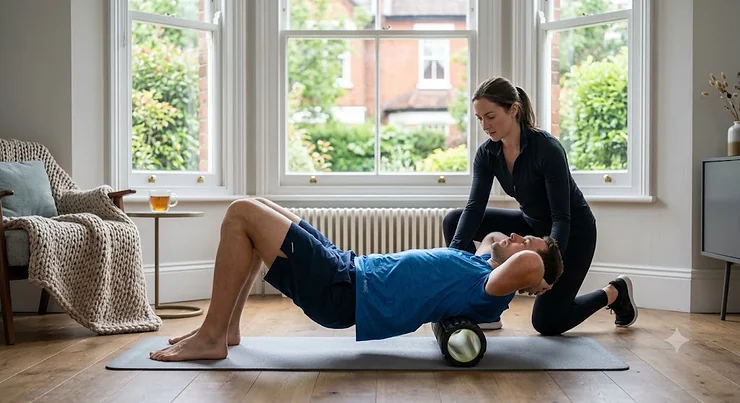
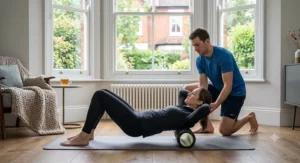
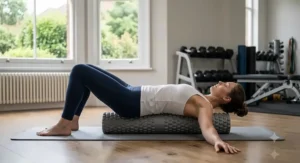
Buying the right roller is half the job; using it properly is the other half, and this is the bit most product pages skip entirely. Start with your upper back, not your lower back — lie with the roller under your shoulder blades, knees bent, feet flat, and support your head with your hands to avoid straining your neck. Gently arch back over the roller, roll a short distance up and down, and pause on tender spots for twenty to thirty seconds rather than grinding back and forth.
For your first fortnight, less is more: two to three short sessions a week, five minutes each, is plenty. A common first-30-days mistake is rolling every day at maximum pressure because “it’s supposed to hurt a bit” — genuine muscle release happens gradually, and hammering an already-irritated area daily tends to backfire into more soreness, not less. If you’re using a gentle foam roller for beginners like the TheraBand Foam Roller or Amazon Basics High-Density Foam Roller, ease into firmer pressure only once the mild discomfort feels manageable rather than sharp.
One maintenance note worth keeping: wipe your roller down after sweaty sessions and store it away from direct heat, since prolonged sun exposure can degrade foam density faster than normal use ever will. A roller that’s lost its shape stops delivering consistent pressure, which quietly undermines the whole exercise.
Real-World Scenarios: Matching the Roller to Your Life
Picture Priya, 34, who sits at a laptop nine hours a day and has started noticing her shoulders creeping toward her ears by 3pm. Her issue is postural, not injury-related, so a contoured option like the Chirp Wheel+ — designed specifically for thoracic extension — will likely do more for her than a standard cylinder, alongside actually following the HSE’s desk-posture guidance rather than fighting it with foam alone.
Then there’s Dave, 58, newly discharged from physiotherapy after six weeks of lower back tightness, told explicitly to “keep active but go gently.” For Dave, a soft foam roller for sore back use — the TheraBand Foam Roller or OPTP PRO-ROLLER Soft Density — makes far more sense than anything textured or firm, at least for the first month back into a routine.
Finally, consider Amara, 27, a weekend runner whose glutes and outer hips tighten up after long runs, occasionally sending a dull ache down one leg. That pattern points toward the Rollga Foam Roller‘s contoured hip-and-glute focus rather than a flat cylinder, though anything beyond mild tightness deserves a proper look from a physiotherapist rather than DIY troubleshooting alone.
Problem → Solution: Fixing the Most Common Rolling Mistakes
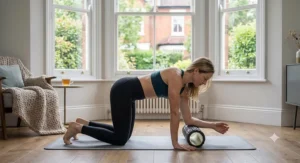
Rolling directly on the lower back is the single most repeated mistake, and it’s worth addressing head-on: the lumbar spine has a natural inward curve, and pressing a rigid cylinder directly into it can aggravate rather than relieve discomfort, particularly if a disc issue is involved rather than pure muscle tightness. The fix is simple — roll the glutes, hip flexors and thoracic spine instead, letting those muscles loosen so they stop pulling on your lower back indirectly.
Another frequent issue is holding your breath through the uncomfortable bits, which keeps muscles tense exactly when you’re trying to release them. Slow, steady breathing while you pause on a tender spot genuinely changes how quickly that spot lets go. A third common problem is buying a roller that’s simply too firm too soon — if every session feels like bracing for impact rather than gentle relief, size down in firmness before assuming foam rolling “just doesn’t work for you.” Finally, skipping warm-up entirely and rolling stone-cold muscles first thing in the morning tends to feel harsher than the same session done after a short walk or warm shower has loosened things up.
How to Choose a Foam Roller for Back Pain
With seven options on the table, here’s the reasoning to cut through decision fatigue:
- Start with your pain level, not your fitness level. Genuinely sore or newly-recovering backs should default toward soft-medium density regardless of how “advanced” you otherwise are at exercise.
- Match the shape to the problem. Posture and upper-back rounding respond well to contoured wheels like the Chirp Wheel+; general stiffness suits a standard cylinder like the TriggerPoint GRID 2.0.
- Check the length against your height. Shorter 12-13 inch rollers are easier to control for spot-work; 36-inch versions like the longer ProsourceFit High Density Foam Roller better support full-spine positioning.
- Consider surface texture honestly. Textured grids target trigger points more precisely but feel more intense — not the right first purchase for a genuinely sensitive back.
- Factor in portability if you travel. Hollow-core designs like the TriggerPoint GRID 2.0 pack lighter than solid EPP cylinders.
- Don’t skip the safety-shape question if sciatica-type symptoms are present. A contoured design like the Rollga Foam Roller reduces the chance of pressing directly on sensitive areas.
- Budget for replacement, not just purchase. Cheaper polypropylene rollers can dent with heavy daily use over a year or two; EPP and multi-density designs tend to outlast them.
Foam Roller vs Other Back Pain Relief Tools
A foam roller isn’t the only tool competing for space in your living room, so here’s how it stacks up against the usual alternatives people consider for the same complaints.
| Tool | Best Mechanism | Limitation | Best For |
|---|---|---|---|
| Foam roller (e.g. TriggerPoint GRID 2.0) | Broad self-myofascial release | Needs correct technique to avoid the spine | General stiffness, posture, warm-up/cool-down |
| Heat pack | Increases blood flow, relaxes muscle | Passive; no mechanical release | Acute flare-ups, evening wind-down |
| Massage gun | Percussive, targeted, fast | Can be too intense on very sore tissue | Athletes, deep localised knots |
| Manual therapist / physio | Trained assessment and hands-on treatment | Cost and appointment availability | Diagnosed conditions, persistent pain |
The comparison isn’t really “which wins” — it’s about sequencing. A TriggerPoint GRID 2.0 or contoured roller like the Chirp Wheel+ is excellent for daily self-maintenance and prevention, a heat pack suits the evenings when everything just feels stiff and tired, and a massage gun works faster on a single stubborn spot but can be too aggressive for anyone in the “genuinely sore” category this guide keeps returning to. None of them replace an actual physiotherapy assessment if pain persists beyond a few weeks, which is exactly the point where self-help tools reach their limit.
Foam Rolling for Posture Correction: What Actually Works
Posture correction is one of the most searched reasons people buy a foam roller, and it’s also one of the most misunderstood. Slouched, rounded shoulders don’t improve because you “sit up straighter” through willpower for five minutes — they improve when the muscles holding you in that rounded position actually loosen and lengthen, which is where thoracic extension work earns its keep.
This is specifically where a contoured tool like the Chirp Wheel+ outperforms a flat cylinder: by supporting the ribcage either side of the spine while letting the upper back arch backwards over the gap, it directly counteracts the forward-hunch position most desk workers spend eight hours a day reinforcing. A standard cylinder like the TriggerPoint GRID 2.0 can achieve something similar lying crossways under the shoulder blades, though with less depth of extension. Either way, foam rolling alone won’t out-perform genuinely fixing your workstation setup, because a roller that undoes twenty minutes of hunching every evening is fighting eight hours of the same hunching every single day.
Foam Rolling and Sciatica: What the Evidence Says
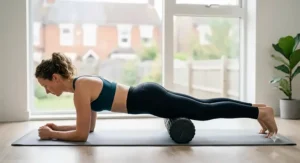
Let’s be precise here, because this is an area where marketing copy tends to overpromise. Sciatica is nerve irritation or compression, most often from a disc issue in the lower back, and it usually resolves over four to six weeks with movement and, where needed, physiotherapy — not with a specific product. No foam roller decompresses a nerve, and none of the seven products above claim to.
What foam rolling can reasonably help with is the secondary muscle tightness that often accompanies or mimics sciatica-type symptoms — particularly in the piriformis and glute muscles, which sit close to the sciatic nerve’s pathway and can contribute to referred discomfort when chronically tight. This is exactly the niche the Rollga Foam Roller‘s contoured design targets, and it’s also why the NHS’s own advice leans toward continuing gentle movement rather than complete rest. If you have genuine sciatica symptoms — pain running down the leg, numbness, or pins and needles — foam rolling the surrounding muscles is a reasonable complementary step, but it should sit alongside professional advice, not instead of it, particularly if symptoms haven’t eased within a few weeks.
What Physiotherapists Actually Recommend
It’s worth separating gym marketing from clinical reality, and the pattern among physiotherapist-recommended tools is consistent: softer, more predictable rollers tend to win out over aggressive, heavily textured ones for anyone dealing with actual pain rather than post-workout tightness. The OPTP PRO-ROLLER Soft Density exists specifically because clinics wanted a rehab-appropriate option, and Surrey Physio’s own published top five foam roller exercises for back pain recommends starting with a narrower, gentler roller before progressing to anything wider or firmer — advice that maps directly onto starting with the TheraBand Foam Roller or OPTP PRO-ROLLER Soft Density rather than diving straight into a textured grid.
The consistent clinical theme across these sources is technique over toughness: slow movement, pauses on tender spots rather than fast back-and-forth strokes, and a clear focus on the muscles beside the spine rather than the spine itself. That’s a genuinely different philosophy from the “no pain, no gain” framing that surrounds a lot of gym-floor foam rolling content, and it’s worth adopting regardless of which roller you end up buying.
Common Mistakes When Buying a Foam Roller for Back Pain
The most expensive mistake is buying based on what a gym uses rather than what your own back currently needs — a heavily textured grid roller might be perfect for an athlete’s quads and completely wrong for someone’s first attempt at easing lower back stiffness. A close second is ignoring length entirely; a roller too short to support your full torso width can wobble and roll unpredictably, undermining confidence before you’ve even started.
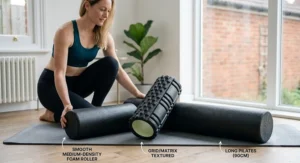
Buyers also frequently overlook density labelling inconsistency between brands — “medium” from one manufacturer can feel firmer than “firm” from another, so cross-referencing real material (EVA, EPP, polypropylene) tells you more than the marketing adjective does. Finally, many people buy the cheapest available option without checking whether it holds shape over time; a roller that dents permanently within a few months of regular use stops delivering the consistent pressure the whole exercise depends on, effectively making the “bargain” a false economy.
Long-Term Cost & Durability: Is a Premium Roller Worth It?
Cost-per-use is the honest way to think about this rather than sticker price alone. A £15-£20 Amazon Basics High-Density Foam Roller used twice a week for a year works out to roughly 15-20 pence per session — genuinely difficult to beat, provided it holds its shape that long. Premium options like the Chirp Wheel+ or Rollga Foam Roller, at £45-£65, need to survive two to three years of regular use before matching that same cost-per-use, but their more durable materials and safer contoured shapes often do exactly that, while also reducing the risk of technique-related irritation that could otherwise mean paying for a physio session anyway.
The honest verdict: budget rollers are excellent value if your back pain is mild and occasional, while premium contoured designs earn their price for people managing persistent posture issues or sciatica-adjacent tightness, where the shape itself is doing safety work that a flat cylinder simply can’t replicate. Total cost of ownership, in other words, isn’t just about the roller lasting — it’s about which one actually gets used consistently, since an unused roller has an infinite cost-per-use no matter how cheap it was.
Frequently Asked Questions
❓ Can a foam roller help with lower back pain specifically?
❓ What's the best foam roller for beginners with back pain?
❓ How often should I foam roll for back pain relief?
❓ Is it safe to foam roll if I have sciatica?
❓ Do foam rollers actually improve posture?
Conclusion
If there’s one thing worth taking away from all this, it’s that the “best” foam roller for back pain isn’t the firmest, priciest or most Instagrammed one — it’s the one matched honestly to what your back is actually dealing with right now. A soft foam roller for sore back use, like the TheraBand Foam Roller or OPTP PRO-ROLLER Soft Density, beats a textured grid every time if you’re managing genuine discomfort rather than post-gym tightness. A contoured design like the Chirp Wheel+ earns its higher price tag specifically for posture correction, while the Rollga Foam Roller‘s shape genuinely suits sciatica-adjacent hip and glute tightness better than a flat cylinder ever could.
Budget shouldn’t be a barrier either — the Amazon Basics High-Density Foam Roller and ProsourceFit High Density Foam Roller both do a perfectly respectable job for a fraction of the premium price, provided your back pain is mild rather than acute. And the TriggerPoint GRID 2.0 remains the sensible all-rounder if you’d rather not overthink it. Whichever you choose, pair it with the technique advice above, be patient with the process, and check in with a professional if things aren’t improving within a few weeks — foam rolling is a genuinely useful tool, not a magic fix.
Recommended for You
- Foam Roller vs Massage Gun: 7 Best Recovery Picks (2026)
- Vibrating Foam Roller: 7 Best UK Picks (2026)
- High Density Foam Roller: 7 Best Picks for Athletes (2026)
Disclaimer: This article contains affiliate links. As an Amazon Associate, I earn from qualifying purchases. If you purchase products through these links, we may earn a small commission at no additional cost to you.
✨ Found this helpful? Share it with your friends! 💬🤗
