In This Article
Somewhere between leg day and the walk to your car, your quads stage a quiet rebellion. This is the moment the foam roller vs massage gun question stops being a scroll-past headline and becomes a genuine 9pm dilemma, usually while you’re wincing on the living room floor wondering whether you’ve pulled something or just discovered a new muscle. Both tools promise the same thing — looser tissue, less soreness, a body that cooperates tomorrow — but they get there in completely different ways, and picking the wrong one for your situation means a device gathering dust in a cupboard by March.
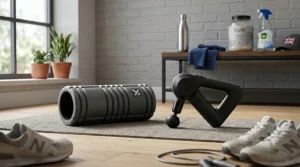
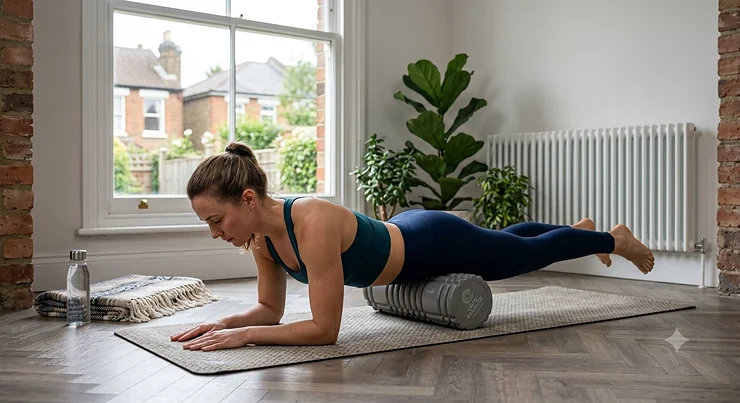
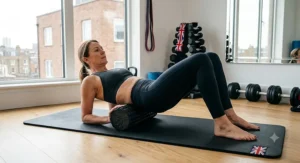
A foam roller is a cylindrical, typically EVA-foam tube that you use your own body weight against, rolling slowly over tight muscle groups to apply sustained pressure — the original, low-tech form of self-myofascial release. A massage gun, by contrast, is a battery-powered device that fires a rubber or foam head into the muscle dozens of times a second, delivering percussive therapy without you needing to lie on the floor at all. Same broad goal, wildly different mechanics, and — as you’ll see — different price tags to match.
This guide leans on real specifications, genuine aggregated review sentiment, and the current UK research consensus rather than manufacturer hype, because independent testing bodies have physically put dozens of these devices through their paces and the honest picture is more nuanced than either camp’s marketing suggests. We’ll walk through seven real products spanning budget rollers to premium guns, then get into trigger point foam roller benefits, whether a massage gun alternative genuinely beats the classic roller, and what actually shifts DOMS versus what’s just expensive placebo. For a proper grounding in the science behind either approach, Wikipedia’s overview of myofascial release is a useful starting point before you spend a penny.
Quick Comparison Table
Before the deep dive, here’s the shape of the decision in one glance.
| Factor | Foam Roller | Massage Gun |
|---|---|---|
| Typical UK price | Around £15-£40 | Around £75-£350 |
| Setup effort | Requires floor space and bodyweight | Point and press, works anywhere |
| Best for | Large muscle groups (quads, back, glutes) | Precise, hard-to-reach knots |
| Noise | Silent | 40-70 decibels depending on model |
| Battery/charging | None needed | Needs charging every few sessions |
| Learning curve | Low, but technique matters | Very low |
Neither column is objectively “better” — they’re solving overlapping but distinct problems. A foam roller wins on cost, simplicity and full-body coverage in a single pass, while a massage gun wins on convenience, precision and the ability to hit a stubborn glute knot without contorting yourself into a yoga pose first. If your budget is under £50 and you’re rolling a big flat muscle like the quads or lats, the roller usually does the job just as well. If you need targeted relief on a single tight spot — a calf, a rhomboid, the outside of the hip — in under two minutes, the gun typically gets there faster.
Just one click — help others make better buying decisions too!😊
Top 7 Recovery Tools: Expert Analysis
We’ve picked seven genuinely available products spanning budget, mid-range and premium, mixing foam rollers with massage guns so you can compare like-for-like rather than reading two separate buying guides bolted together.
1. TriggerPoint GRID 1.0 Foam Roller — the trigger-point classic most PTs still recommend
The 33cm hollow-core roller that basically defined the modern grid pattern, and thirteen years on it’s still the one physios reach for first. Its rigid hollow core resists the “pancaking” that cheap solid-foam rollers suffer after six months, while the multi-density surface pattern — firmer ridges alternating with softer channels — mimics the varied pressure of a therapist’s fingers rather than one flat slab of foam. That distinction matters in practice: a uniform roller just squashes everything evenly, while the GRID actually digs into dense tissue while easing off over bonier areas like the shin or forearm.
Physiotherapists and strength coaches lean on this one specifically because the firmness sits in a sweet spot — dense enough to matter for an athlete’s IT band, forgiving enough that a beginner won’t bruise on their first session. Reviewers consistently report that it holds its shape far longer than supermarket own-brand alternatives, with multiple owners noting years of daily use before any real degradation.
Pros:
- ✅ Multi-density grid targets deep tissue without one flat surface
- ✅ Hollow core resists flattening for years of regular use
- ✅ Free online video library included for technique guidance
Cons:
- ❌ Firmer than some smooth rollers, a shock for first-timers
- ❌ 33cm length means two passes for full-back rolling
Prices typically sit in the £25-£35 range, and given the multi-year lifespan reviewers report, the cost-per-use works out lower than most gym class-passes within the first three months.
2. RumbleRoller Compact Blue — deepest tissue bite for advanced rollers
Where the GRID uses grooves, the RumbleRoller Compact Blue uses actual knobs — flexible rubber bumps that push into tissue with genuinely aggressive point pressure, which is exactly why it’s the roller people graduate to rather than start with. The bumps flex slightly under pressure rather than staying rigid, so the sensation is closer to a knuckle than a hard peg, but make no mistake, this is built for people with months of rolling experience already under their belt.
Its shorter, denser build makes it ideal for targeting a single stubborn area — a knotted glute, a locked-up piriformis — rather than sweeping full-length passes, and the trade-off for that intensity is a genuine learning curve. Aggregated owner feedback repeatedly flags it as “not for beginners,” with several reviewers admitting they needed a few sessions on a softer roller first before this one felt tolerable rather than punishing.
Pros:
- ✅ Flexible knobs reach deeper into dense, knotted tissue
- ✅ Compact size travels easily and stores in a gym bag
- ✅ Genuinely differentiates from smooth or grid-pattern rollers
Cons:
- ❌ Too intense for rolling beginners or sensitive areas
- ❌ Smaller surface means more passes for large muscles
Expect to pay somewhere in the £45-£55 range, which is a fair jump over the GRID — but if a standard roller has stopped giving you any real relief, this is the honest upgrade rather than buying a second flat roller.
3. Hyperice Vyper 3 — vibration hybrid that blurs the roller-versus-gun line
This is where the foam roller vs massage gun debate actually gets interesting, because the Hyperice Vyper 3 is neither, or rather it’s both: a rigid foam roller with a built-in vibrating motor, adding high-frequency pulses to the same rolling motion you’d use with a plain roller. The standout here is that vibration reduces the perceived intensity of pressure without reducing the actual mechanical pressure, meaning you can push harder into a tight area while it feels more tolerable, not less.
Its multiple vibration speeds let you dial intensity up for dense muscle groups like glutes and hamstrings, or down for something like the IT band where a flat roller alone often just hurts without much payoff. Based on the spec comparison against standard rollers, the appeal isn’t that it’s more “effective” in a clinical sense — the evidence for vibration adding real physiological benefit over standard rolling is genuinely mixed — but that people who avoid rolling because of the discomfort actually stick with it once vibration is added.
Pros:
- ✅ Vibration lets you push deeper without the added discomfort
- ✅ Multiple intensity settings adapt to different muscle groups
- ✅ Rechargeable battery lasts several sessions per charge
Cons:
- ❌ Considerably heavier than a standard foam roller
- ❌ Premium price for what is still fundamentally a roller
Pricing tends to land in the £130-£170 range, which puts it closer to a mid-range massage gun than a roller — worth it only if plain rolling has genuinely put you off the habit entirely.
4. Bob and Brad C2 Massage Gun — physio-designed power without the premium price
Designed by two working American physiotherapists rather than a Silicon Valley wellness brand, the Bob and Brad C2 Massage Gun has become one of the best-reviewed budget-adjacent guns on the UK market, and the standout feature is genuinely how quiet it runs for the power on offer. Five speed settings and roughly 10mm of amplitude put it well within striking distance of guns costing three times as much, and independent testing has repeatedly noted its stall force — the resistance it can push through before the motor bogs down — comfortably outperforms similarly priced rivals.
What most buyers overlook about this model is that the physio pedigree isn’t just marketing: the head attachments and default speed curve are noticeably better matched to actual muscle groups than a lot of generic Amazon-only brands, which tend to ship one-size-fits-all heads. This is the gun for someone who wants genuine percussive relief without paying the Therabody premium for the badge alone.
Pros:
- ✅ Genuinely quiet operation even at higher speeds
- ✅ Strong stall force for the price bracket
- ✅ Physio-designed head attachments suit real muscle groups
Cons:
- ❌ Fewer smart features than app-connected premium guns
- ❌ Battery life trails behind pricier flagship models
Typically found in the £75-£100 range, which makes it arguably the best value-for-money massage gun alternative to the big-name brands currently sold on amazon.co.uk.
5. RENPHO R3 Massage Gun — deepest stroke you’ll find under £100
RENPHO has built a loyal UK following through its blood pressure monitors and body scales, and the RENPHO R3 Massage Gun carries that same “reliable, unglamorous, gets the job done” reputation into recovery gear. Its standout spec is stroke depth — RENPHO’s deeper-throw motors push further into tissue per stroke than many rivals at this price, which in practice means you need fewer minutes per muscle group to feel the same release.
Reviewers consistently flag the accessible price-to-power ratio as the main draw, and the brand’s already-large UK customer base means there’s a genuinely substantial pool of real reviews to draw on rather than a handful of enthusiastic early adopters. This is the sensible pick for someone who wants a gun rather than a roller but doesn’t want to gamble £300 on their first purchase.
Pros:
- ✅ Deeper stroke than most rivals in the same price band
- ✅ Large, established UK review base to check before buying
- ✅ Multiple head attachments included as standard
Cons:
- ❌ Build quality feels plasticky next to premium brands
- ❌ App integration is more basic than Therabody’s ecosystem
Prices generally sit in the £70-£90 range, making this arguably the smartest entry point if you’re testing whether percussive therapy suits you before committing to a flagship model.
6. Hyperice Hypervolt Go 2 — lightest gun built for gym bags and carry-on
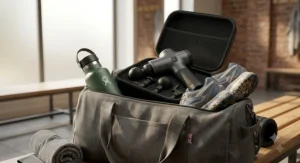
At around 1.5 pounds, the Hyperice Hypervolt Go 2 is genuinely light enough to forget you’re carrying it, and its standout feature is TSA approval for carry-on luggage — a small detail that matters enormously if you actually travel with your recovery routine rather than leaving it at home. Its top speed of roughly 3,200 percussions per minute rivals guns nearly double its size, which is a genuinely impressive bit of motor engineering for something this compact.
The trade-off for that portability is a smaller amplitude and less raw stall force than full-size guns, so it’s not the tool for someone chasing maximum-intensity deep tissue work. Aggregated reviews are consistent on this point: owners love it as a travel companion or desk-drawer gun for quick top-ups, but several note they still keep a bigger gun at home for genuinely stubborn knots.
Pros:
- ✅ Genuinely pocket/gym-bag-sized without feeling like a toy
- ✅ Impressive top speed for its compact motor
- ✅ TSA carry-on approved for travelling athletes
Cons:
- ❌ Lower amplitude than full-size guns limits deep tissue work
- ❌ No carry case included, unlike some rivals at this price
Expect a price range around £120-£140, positioning it as a genuine massage gun alternative for anyone whose main complaint about full-size guns is that they never actually leave the house.
7. Theragun Prime — the app-guided all-rounder for daily use
As the brand that arguably invented the mainstream massage gun category, Therabody’s Theragun Prime remains the reference point everyone else gets compared against, and its standout feature is the ergonomic triangle-shaped handle that lets you reach your own upper back without the wrist gymnastics lesser designs demand. A 16mm amplitude — genuinely deep by industry standards — paired with five speeds and Bluetooth app connectivity for guided routines puts real distance between this and the budget entries on this list.
Here’s what the spec sheet won’t tell you outright: the extra depth and quieter QX65 motor aren’t just numbers, they translate into sessions that feel closer to an actual sports massage than the buzzier sensation you get from entry-level guns. Reviewers and certified trainers alike consistently cite the ergonomics and app-guided routines as the reason this justifies its price over cheaper alternatives, particularly for anyone using it daily rather than occasionally.
Pros:
- ✅ Genuinely deep 16mm amplitude rivals professional-grade guns
- ✅ Ergonomic grip reaches your own back without strain
- ✅ App-guided routines suit total recovery beginners
Cons:
- ❌ Premium price relative to the C2 or RENPHO R3
- ❌ App features add limited value if you already know your routine
Pricing generally lands in the £280-£320 range, and the honest value verdict is this: it’s the gun to buy once you already know you’ll use one daily, not the one to buy while you’re still deciding if percussive therapy is for you.
Top 7 Products at a Glance
| Product | Type | Price Range | Best For |
|---|---|---|---|
| TriggerPoint GRID 1.0 Foam Roller | Roller | £25-£35 | Everyday all-round rolling |
| RumbleRoller Compact Blue | Roller | £45-£55 | Advanced, deep knot work |
| Hyperice Vyper 3 | Vibrating roller | £130-£170 | Rolling-averse users |
| Bob and Brad C2 Massage Gun | Gun | £75-£100 | Best value power |
| RENPHO R3 Massage Gun | Gun | £70-£90 | First-time gun buyers |
| Hyperice Hypervolt Go 2 | Gun | £120-£140 | Travel and gym bags |
| Theragun Prime | Gun | £280-£320 | Daily premium use |
Read left to right and a pattern emerges: price climbs roughly in step with convenience, not necessarily effectiveness. The TriggerPoint GRID 1.0 Foam Roller and Bob and Brad C2 Massage Gun sit at almost opposite price points yet deliver broadly comparable results for most users, which tells you the premium tier is largely paying for portability, quietness and app polish rather than a fundamentally different outcome on sore muscles.
Practical Usage Guide: Getting the Most From Either Tool
Buying the tool is the easy part; using it well is where most people quietly go wrong in the first month. For foam rolling, start with 30-60 seconds per muscle group at a pace slow enough that you could count “one-Mississippi” between inches of movement — rushing across the whole roller in five seconds achieves almost nothing beyond a light skin massage. Pause on genuinely tender spots for 20-30 seconds rather than rolling straight over them, and breathe out slowly as you settle into the pressure; holding your breath just tightens the muscle you’re trying to release.
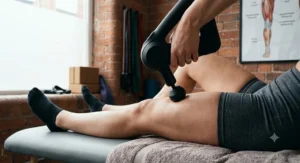
With a massage gun, the most common first-month mistake is cranking straight to the highest speed because it’s there. Reviewers and physiotherapists alike are unanimous that starting on the lowest setting for 15-30 seconds per area is plenty for most muscles, building up only if you’re not feeling any release. Avoid bony areas, joints, the spine, and the front of the neck entirely — this isn’t a device for probing everywhere pressure exists, it’s for muscle bellies specifically. A sensible maintenance habit for either tool is a quick wipe-down after sweaty sessions and, for gun users, a monthly check that the battery still holds charge properly, since degraded batteries are the single most common complaint in long-term owner reviews.
Real-World Scenarios: Which Tool Fits Your Life?
The desk-bound commuter: if you sit for eight hours then squeeze in a 6am run three times a week, a compact gun like the Hyperice Hypervolt Go 2 solves the actual problem — you have five minutes at your desk, not floor space and a spare twenty minutes. Precision over your tight hip flexors beats a full-body roll you’ll never get around to.
The budget-conscious weekend athlete: someone playing five-a-side once a week with £30 to spend genuinely doesn’t need percussive therapy at all. The TriggerPoint GRID 1.0 Foam Roller covers quads, calves and glutes in one relatively cheap purchase, and the physical act of rolling doubles as a passive stretch you’d otherwise skip.
The serious home-gym lifter: training four to five times weekly with genuine DOMS after leg day justifies investing further up the ladder. Either the Bob and Brad C2 Massage Gun for targeted post-session relief or the RumbleRoller Compact Blue for pre-session activation earns its keep here, and plenty of lifters in this bracket eventually own both.
How to Choose Between a Foam Roller and a Massage Gun
Cutting through the marketing, here’s the actual decision-making process, condensed into steps you can run through in under a minute.
- Work out your main pain point. Large flat muscle groups like quads and lats favour a roller; small, deep, awkward-to-reach spots like the rhomboids or piriformis favour a gun.
- Be honest about your budget. Under £50 realistically means a roller; a genuinely good gun starts closer to £75-£100.
- Consider your living situation. No floor space, a bad back that makes getting up and down difficult, or a habit of using recovery tools at a desk all point toward a gun.
- Factor in noise. Shared houses, thin walls or a partner asleep in the next room make a silent roller the more considerate 10pm choice.
- Think about consistency, not capability. The best recovery tool is the one you’ll actually use three times a week, not the one with the most impressive spec sheet gathering dust in a drawer.
- Check your pain tolerance and experience level. Beginners should start with a medium-density roller or a gun’s lowest setting; jumping straight to a RumbleRoller Compact Blue or a gun’s top speed is how people quit in week one.
- Consider owning both eventually. Many serious trainers use a roller for warm-up and general maintenance, then a gun for genuinely stubborn spots — they’re complementary tools, not rivals fighting for the same job.
Foam Roller vs Massage Gun: The Detailed Comparison
Which?’s hands-on massage gun testing is a good reality check here, since independent lab-style scoring tends to separate genuine performers from devices that just look impressive in a five-star review. The physiological overlap between these tools is real but not total. Both fall under the umbrella of self-myofascial release, working through broadly similar mechanisms — increased local blood flow, a temporary reduction in muscle tension, and a nervous-system “settling” effect that reduces the perceived tightness of a muscle even where actual tissue length hasn’t dramatically changed. Where they diverge is speed and precision: a massage gun’s rapid percussive strokes can deliver, in roughly two minutes, pressure that would take considerably longer to replicate by rolling the same spot repeatedly, according to research Therabody has pointed to on percussive versus manual therapy efficiency. A roller, meanwhile, covers a broader surface with sustained rather than rapid pressure, which some users find more genuinely relaxing and less startling on very tender areas.
| Benefit | Foam Roller | Massage Gun |
|---|---|---|
| Cost to get started | Low | Moderate to high |
| Full muscle-group coverage | Excellent | Requires more passes |
| Precision on small knots | Limited | Excellent |
| Passive stretch element | Yes, built into technique | No |
| Portability day-to-day | Bulky for some models | High |
Read against a traditional sports massage or physio session, both tools sit well below the cost of ongoing professional treatment while offering a meaningful chunk of the same short-term relief — though neither replaces hands-on clinical assessment for a genuine injury rather than routine tightness.
Common Mistakes People Make With Recovery Tools
The single biggest mistake with either tool is rolling or gunning directly over pain rather than around it — genuine injuries, sharp localised pain, or anything that doesn’t ease within a normal DOMS window needs a GP or physio, not more pressure. NHS guidance on treating sprains and strains is clear that firm massage in the first 48 hours of an acute injury can actually worsen swelling rather than help it, a distinction that gets lost when people reach for a foam roller assuming all soreness is the same soreness.
The second common error is intensity creep — starting sensibly, then gradually cranking pressure or gun speed every session because “more must be better.” It isn’t; tissue needs time to adapt between sessions just like muscle needs recovery time between training sessions. Third, people frequently roll or gun for far too long in one sitting, well past the point of diminishing returns, when 60-90 seconds per muscle group is genuinely sufficient for most purposes. Finally, plenty of buyers pick the wrong intensity tier entirely — grabbing a RumbleRoller Compact Blue as a first-ever roller, or a top-tier gun on its highest setting from day one — and conclude the whole category “doesn’t work for them” when really they just started at the deep end.
Trigger Point Foam Roller Benefits Explained
A trigger point, in the loosest practical sense, is a small area of muscle that feels unusually tight, tender or “knotted” compared with the surrounding tissue — runners tend to find them along the IT band, desk workers along the upper traps and rhomboids. A trigger point foam roller, distinguished by its raised grid or ridge pattern rather than a smooth surface, is designed specifically to concentrate pressure onto these spots rather than spreading it evenly, which is the entire reason the TriggerPoint GRID 1.0 Foam Roller and similar textured models outsell smooth rollers so heavily.
The genuine, evidence-supported benefit here is a short-term reduction in perceived muscle tightness and a modest, temporary increase in range of motion — useful before a workout as part of a warm-up, and useful afterward as part of a cool-down. What it isn’t, honestly, is a permanent fix for chronically tight muscles caused by posture or training imbalances; those need addressing at the source through mobility work or strength training, with the roller as a helpful adjunct rather than a cure. Reviewers of textured rollers consistently describe the sensation as “uncomfortable but productive” on genuinely tight spots, which lines up with how these tools are actually meant to feel.
Self-Myofascial Release Tools Compared: Beyond the Big Two
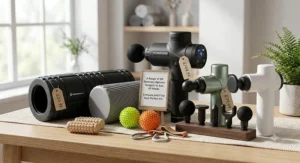
Foam rollers and massage guns dominate the conversation, but they’re not the only self-myofascial release tools on the market, and knowing where they sit relative to the alternatives helps put both in perspective. Lacrosse balls and smaller “peanut” rollers reach tighter, more localised spots than either a full-size roller or most gun heads can manage — think the exact centre of a glute or the space between shoulder blade and spine — at a fraction of the price of anything on this list. Massage sticks, meanwhile, sit somewhere between a roller and manual massage, letting you apply pressure with your own arms rather than bodyweight, which is genuinely useful for calves and forearms where a full roller is awkward to position.
Vibrating rollers like the Hyperice Vyper 3 occupy the middle ground already discussed above, while professional-grade percussion devices used in clinics sit above even the Theragun Prime in both price and power, generally reserved for physio settings rather than home use. The honest takeaway: no single tool covers every scenario perfectly, and most people who take recovery seriously end up owning two or three of these rather than hunting for one device to rule them all.
DOMS Relief: What Actually Helps
Delayed onset muscle soreness, or DOMS, is the dull, stiff ache that typically peaks 24-72 hours after unusually intense or unfamiliar exercise, caused by microscopic damage to muscle fibres rather than anything more serious. It’s a normal adaptive response, not a sign something’s gone wrong, and it generally resolves on its own within a week without intervention.
Where do foam rollers and massage guns actually fit into DOMS relief? Both can meaningfully reduce the perceived intensity of soreness and modestly improve range of motion in the affected muscles, largely through increased local blood flow and a nervous-system relaxation effect, though neither appears to dramatically speed up the underlying tissue repair process itself. Gentle movement, adequate protein intake and sleep still do more heavy lifting for actual recovery than any device you can buy. What these tools genuinely offer is comfort and functional relief in the meantime — making the walk downstairs less miserable — which, while not glamorous, is a perfectly reasonable reason to own one. If soreness is severe, one-sided, accompanied by swelling, or simply doesn’t ease within the expected window, that’s the point to stop self-treating and get it properly assessed rather than reaching for a stronger setting on the gun.
Long-Term Cost & Maintenance
| Consideration | Foam Roller | Massage Gun |
|---|---|---|
| Upfront cost | Low | Moderate to high |
| Expected lifespan | 2-5+ years, minimal wear | 2-4 years, battery-dependent |
| Ongoing cost | None | Occasional replacement heads/battery |
| Total cost of ownership (3 years) | Lowest overall | Higher, but justified by daily use |
Looking at the numbers above, a foam roller purchased once genuinely can last several years with essentially no ongoing cost, which is difficult for any battery-powered device to match. A massage gun’s total cost of ownership climbs once you factor in eventual battery degradation — most lithium batteries in these devices noticeably lose capacity after roughly 300-500 charge cycles — though for someone using it daily, the cost-per-use over its lifespan still typically beats the price of even a handful of professional massage sessions.
Safety Guide: Using These Tools Without Hurting Yourself
Both tools are broadly safe for healthy adults when used sensibly, but a few hard rules matter regardless of which one you own. Never use either directly on bones, joints, the spine, the front of the neck, or varicose veins, and pregnant users should check with a healthcare professional before using percussive devices near the abdomen or lower back. Avoid use on any area with acute injury, unexplained swelling, a recent fracture, or a blood clotting condition, and if you’re on blood thinners, get medical advice first given the bruising risk from firm pressure.
Coach’s interviews with a UK physiotherapist and massage specialist echo this same caution around technique over raw intensity. For massage guns specifically, stick to the lowest effective speed and never hold the device on one spot for more than 10-15 seconds continuously. For foam rollers, avoid rolling directly over the lower back’s lumbar spine — target the muscles either side instead — and if a spot causes sharp, shooting or radiating pain rather than a dull “hurts so good” ache, stop immediately; that’s a signal worth taking seriously rather than pushing through.
FAQ
❓ Is a massage gun better than a foam roller for muscle recovery?
❓ Can foam rolling and massage guns actually reduce DOMS?
❓ How often should I use a foam roller or massage gun?
❓ What is a good massage gun alternative if I don't want to spend £300?
❓ Are trigger point foam rollers worth it over a smooth roller?
Conclusion
If you’ve read this far hoping for a single definitive winner in the foam roller vs massage gun debate, here’s the honest answer: there isn’t one, and anyone claiming otherwise is probably selling you something. A foam roller remains the cheaper, quieter, more space-covering choice, brilliant for large muscle groups and genuinely hard to beat on value — the TriggerPoint GRID 1.0 Foam Roller earns its reputation fairly. A massage gun trades that low cost for speed, precision and convenience, with something like the Bob and Brad C2 Massage Gun offering serious power without the premium badge, and the Theragun Prime sitting at the top for anyone who’ll genuinely use it daily.
The realistic path most committed home-recovery setups land on isn’t choosing one over the other — it’s a roller for warm-ups and broad maintenance, plus a compact gun like the Hyperice Hypervolt Go 2 for the stubborn spots a roller can’t quite reach. Start with whichever matches your actual budget and lifestyle today, use it consistently for a month, and let real experience — not spec sheets — tell you whether the other category is worth adding later.
Recommended for You
- Vibrating Foam Roller: 7 Best UK Picks (2026)
- High Density Foam Roller: 7 Best Picks for Athletes (2026)
- Compact Foot Massager: 7 Brilliant Picks for UK Homes (2026)
Disclaimer: This article contains affiliate links. As an Amazon Associate, I earn from qualifying purchases. If you purchase products through these links, we may earn a small commission at no additional cost to you.
✨ Found this helpful? Share it with your friends! 💬🤗
