In This Article
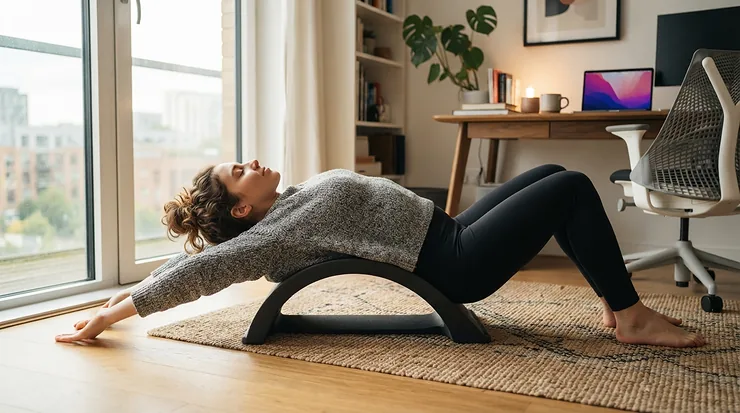
A lumbar stretcher for lower back pain relief is a home device, usually a firm arched board or a tilting frame, that holds your lower spine in gentle extension so tight muscles and stiff joints can ease off. Some versions add acupressure studs. Others turn you upside down. None replaces a diagnosis, and all of them work best alongside regular movement.
Here’s the awkward truth most affiliate roundups skip. The NHS says most back pain improves by itself within a few weeks, and it points people towards staying active and doing specific exercises and stretches. NICE’s guideline on low back pain goes further and advises clinicians not to offer traction at all. That doesn’t make every product here pointless. It does mean you should buy with realistic expectations, and this guide is built around that honesty.
What follows is a research-based comparison, not a diary of hands-on testing. The specs come from manufacturer and retailer listings. The review sentiment is aggregated from public reviews and roundups, and I’ll flag where the evidence is thin. You’ll find seven real options, from a budget arch to a powered mat to an inversion table. There are also dedicated sections on the lumbar traction device for home question, disc compression, the lower back stretcher for tight hips angle, and lumbar curve support, which is the quiet hero of this topic.
Quick Comparison: Lumbar Stretcher for Lower Back Pain Relief at a Glance
| Product | Type | Price range (check current price) | Best for |
|---|---|---|---|
| Everlasting Comfort Back Stretcher | Multi-level arch with chair strap | Around £20-£35 | Daily desk-worker use |
| MINOLL Back Stretcher | Studded multi-level arch | Around £20-£30 | Budget buyers who like firm pressure |
| ChiFit Multi-Level Back Stretcher | Studded 3-level arch | Around £20-£35 | Beginners who want to progress gradually |
| Teeter P2 Back Stretcher | Seated/lying traction-style stretcher | Around £60-£70 | Travel and gentler seated stretching |
| Teeter FitSpine LX9 | Inversion table | Several hundred pounds | Committed users with GP approval |
| Homedics STRETCH | Powered stretching mat | Around £250 | Tight hips, shoulders and back together |
| Original McKenzie Lumbar Roll | Seated lumbar support | Usually under £30 | Sitting posture and lumbar curve support |
The table reveals a clear split. The three arches cost roughly the price of a takeaway for two, while the Teeter FitSpine LX9 and Homedics STRETCH sit in a different financial universe. If you’re simply testing whether passive extension helps you, the Everlasting Comfort Back Stretcher or ChiFit Multi-Level Back Stretcher are the sensible entry points. Meanwhile, the Original McKenzie Lumbar Roll solves a different problem entirely: what your spine does for the eight hours you spend sitting.
💬 Just one click — help others make better buying decisions too!😊
Top 7 Lumbar Stretcher for Lower Back Pain Relief Options: Expert Analysis
Every product below is judged on what its specs mean in practice, what reviewers consistently report, and who it genuinely suits. Prices are ranges only. Always check current price and availability on amazon.co.uk, because stock and listings change.
1. Everlasting Comfort Back Stretcher — best all-round daily pick
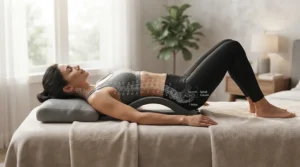
The standout here is the combination of an adjustable arch and a chair strap, which turns one device into both a lying stretcher and a seated posture aid.
The multi-level arch means you can start shallow and raise the lift as your back adapts, which matters because jumping straight to a steep arch is the most common beginner mistake. A breathable mesh cover sits over the surface, a small detail that makes bare-skin use far more tolerable than bare plastic. It’s light enough to carry between rooms.
Based on the spec comparison, this suits desk workers who want something they’ll actually use daily. One summary of expert and user reviews positions it for people weighing roughly 77-100 kg, which hints that very light or very heavy users may find the arch less well matched.
Reviewers consistently report a strong stretch on the higher settings and note that short daily sessions of a minute or two are enough to feel something. A common caveat in review summaries is that results vary with body type and the underlying cause of pain. Comments gathered by one UK retailer page were broadly positive about posture, though that’s a small sample.
Pros:
- ✅ Adjustable arch grows with your flexibility
- ✅ Breathable cover improves comfort on bare skin
- ✅ Included chair strap adds seated posture use
Cons:
- ❌ Results vary noticeably between body types
- ❌ Higher settings can feel intense initially
Price: around £20-£35, which is strong value as a low-risk trial.
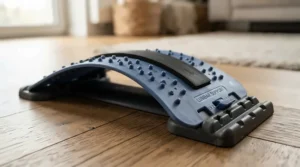
2. MINOLL Back Stretcher — most acupressure points for the money
This one is the “firm pressure” option, with a heavily studded surface layered over an adjustable arch.
The listing cites 114 acupressure points. In practice that means a surface that works on muscle tension as well as extension, but it also means you’ll feel every stud. One roundup describes three arch settings of roughly 15, 28 and 42 degrees. That’s useful because it gives you a genuine progression path rather than a single fixed angle.
Here’s what to weigh: this is a traditional multi-level plastic arch, and reviewers describe the sensation as firm pressure rather than gentle stretch. If you carry a lot of upper and mid-back tightness from desk work, that may be exactly what you want. If you’re sensitive, it won’t be.
Reviewers consistently describe a satisfying stretch, with several mentioning relief from stiffness after long sitting. Many call it a “back cracker”. It’s worth knowing that audible pops aren’t proof of progress, and a gentler setting with more relaxation often serves you better than chasing a click.
Pros:
- ✅ Three arch angles allow gradual progression
- ✅ Dense acupressure studding targets tight muscle
- ✅ Simple, portable and low cost
Cons:
- ❌ Studs can feel harsh on bare skin
- ❌ Firm pressure isn’t suited to sensitive backs
Price: around £20-£30. Excellent value if you tolerate firm contact.
3. ChiFit Multi-Level Back Stretcher — best for gradual, beginner-friendly progression
The hook is a three-level arch paired with 92 acupressure points, designed so you can ease in over weeks.
The three levels aren’t marketing fluff. Reviewers repeatedly describe starting on level one, struggling to tolerate even a few seconds at first, then building up to longer sessions on higher levels over time. That’s exactly how a sensible stretching routine should work, so the design fits the behaviour.
The model reference is Best Lumbar-01-Multi-level. One roundup notes the listing carries thousands of reviews averaging around four stars on the US store. UK listing counts will differ, so check the current figures on amazon.co.uk. Its instructions reportedly suggest twice-daily use, but “twice daily” is a ceiling, not a target.
Aggregated reviewer themes include initial intensity, gradual tolerance, and a repeated tip to roll onto your side and wait a minute before standing. One roundup positions it for sciatica, though that claim goes further than the evidence supports, so treat it as a comfort tool rather than a treatment.
Pros:
- ✅ Three levels support slow, safe progression
- ✅ Large review base to read before buying
- ✅ Low entry price for a trial
Cons:
- ❌ Level one can feel intense at first
- ❌ Mid-range average rating, not a runaway favourite
Price: around £20-£35. A very reasonable beginner buy.
4. Teeter P2 Back Stretcher — best compact option for gentler seated stretching
What sets it apart is the choice of stretch levels: lighter seated, moderate lying down.
It weighs just under 4 lb (around 1.8 kg), and the lap pad bar detaches so it slides into a bag. That portability is its real advantage over the plastic arches. The seated option is a meaningful design difference for anyone who can’t comfortably lie on a hard arch, such as older users or people with limited mobility.
The retailer listing states it is FDA-registered as a 510(k) medical device. That’s a US classification, not a UK or CE assessment, and it doesn’t prove effectiveness. Treat it as a quality signal about the manufacturer’s regulatory behaviour, nothing more.
Honest review picture: the UK retailer page I found showed no customer reviews yet, so I can’t verify aggregated UK sentiment. If review depth matters to you, check the current amazon.co.uk listing and read the one-star and three-star comments first.
Pros:
- ✅ Seated option suits limited mobility
- ✅ Light and travel-friendly
- ✅ Established brand behind the design
Cons:
- ❌ Costs more than basic arches
- ❌ Thin verifiable UK review base
Price: around £60-£70. Fair value for a gentler, more portable design.
5. Teeter FitSpine LX9 — premium inversion table with a lumbar bridge
The headline feature is a lumbar bridge that focuses traction on the lower back, plus preset angles for gradual inversion.
This is the most serious piece of kit here. An 8-point floating suspension lets the bed flex as you move. Traction handles allow stretching at shallower angles, and an EZ-Angle Tether lets you preset 20, 40 or 60 degrees so you never invert further than intended. The manufacturer cites a user height range of roughly 4 ft 8 in to 6 ft 6 in.
That tether matters more than it sounds. Most inversion accidents come from over-ambition, and a physical limit protects you from yourself. Teeter markets a five-year warranty across the FitSpine range, but confirm that for the LX9 itself on the listing.
On a US retailer, it shows a 4.7 rating across roughly 3,100 ratings, with reviewers calling it sturdy and stable. A third-party consumer-complaint site shows a far lower score, though from only six reviews. Inversion raises pressure in the head and eyes, so people with high blood pressure, eye conditions or heart problems should speak to a GP first.
Pros:
- ✅ Preset angle tether limits over-inversion
- ✅ Sturdy build and long warranty claim
- ✅ Lumbar bridge targets lower spine
Cons:
- ❌ Expensive and bulky to store
- ❌ Unsuitable for several common health conditions
Price: several hundred pounds. Only sensible after medical advice and a trial of cheaper options.
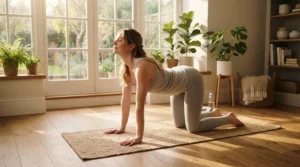
6. Homedics STRETCH — best powered mat for tight hips and back together
The standout is a yoga-inspired powered mat that guides you through four programmes: Twist, Flow, Energise and Stretch.
Where an arch only extends your lower back, this mat moves several areas in sequence. A handheld controller lets you customise intensity, and a reviewer at Yours started on the lowest settings until they found their level. That structure makes it the closest thing here to a lower back stretcher for tight hips, since the programmes work through hips and shoulders as well as the lumbar region.
On a UK magazine review, the reviewer reported that regular use took the edge off back pain and made the back area less stiff, and gave it five stars. That’s one favourable review, not a body of evidence, so I can’t give you aggregated sentiment. It’s sold through Homedics, Amazon, Very and Argos, so compare current listings.
It’s the priciest stretching device here by a distance. Spending that kind of money on a stretching aid only makes sense if you’d otherwise skip stretching entirely.
Pros:
- ✅ Multiple programmes cover hips and back
- ✅ Adjustable intensity via handheld control
- ✅ Sold through several major UK retailers
Cons:
- ❌ Highest price among the stretchers
- ❌ Bulky to store and thin on review evidence
Price: around £250. Worth it only for people who will use it daily.
7. Original McKenzie Lumbar Roll — best lumbar curve support for sitting
The hook is its provenance: it was designed by New Zealand physiotherapist Robin McKenzie, and it comes in shapes for different bodies.
There are several variants. The Super Roll uses firm, high-density injection-moulded foam. The Slimline has a flatter, medium-density profile for modern seats with some built-in support. The D-Shape suits a large hollow in the lower back or soft furnishings such as sofas. Round and heavy-duty rolls come in 4-inch and 5-inch diameters.
Matching the variant to your seat is the whole game. A thick roll in a car seat that already has lumbar support pushes you forward, while a slim roll on a deep sofa does almost nothing. As lumbar curve support goes, it’s cheap, simple and has no moving parts.
I could not verify a meaningful sample of aggregated reviews for the current UK listings, so I won’t claim review sentiment. Check recent buyers’ comments on sizing and firmness before ordering.
Pros:
- ✅ Multiple shapes for different seats
- ✅ Simple, durable foam construction
- ✅ Helps maintain posture while sitting
Cons:
- ❌ Wrong size can worsen discomfort
- ❌ Doesn’t stretch anything, only supports
Price: usually in the £15-£30 range, so check current price. Strong value for daily sitters.
| Product | Adjustability | Review picture (aggregated) | Main caveat |
|---|---|---|---|
| Everlasting Comfort Back Stretcher | Multi-level arch | Strong stretch, short sessions suffice | Results vary by body type |
| MINOLL Back Stretcher | Three arch angles | Satisfying stretch, firm feel | Studs feel harsh to some |
| ChiFit Multi-Level Back Stretcher | Three levels | Gradual tolerance reported | Intense at first |
| Teeter P2 Back Stretcher | Seated or lying | No verified UK reviews yet | Thin evidence base |
| Teeter FitSpine LX9 | Preset 20/40/60° | Very high US ratings, small complaint sample | Cost and medical suitability |
| Homedics STRETCH | Four programmes | One favourable UK review | Highest price |
| Original McKenzie Lumbar Roll | Several shapes | Not verified | Sizing matters |
Reading across this table, the cheap arches share the same strengths and the same weakness: they feel good for some people and unpleasant for others. The Teeter FitSpine LX9 carries the strongest build credentials but the heaviest caveats, while the Original McKenzie Lumbar Roll carries the fewest risks. Treat the review column as a prompt to go and read current reviews yourself rather than as a verdict.
How to Use a Lumbar Stretcher Safely: Your First 30 Days
Most bad experiences with a lumbar stretcher come from overdoing the first fortnight. This plan is built around caution, and it is general guidance, not medical advice.
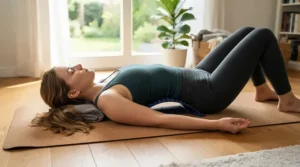
Week one: introduce, don’t impose. Start on the lowest arch setting, on a firm surface such as a carpeted floor or mat, with your knees bent. Place the apex under the stiff area, not under your tailbone. Begin with 30 to 60 seconds, once a day. If you feel sharp pain, tingling or numbness, stop.
Week two: consolidate. Add a second short session if the first felt fine. Reviewers repeatedly warn about standing too fast, so roll onto your side and rest for a minute before getting up.
Weeks three and four: raise gently. Only move up a level if the current one feels comfortable. Many users never need the highest setting, and the highest level isn’t a prize.
Pair it with movement. The NHS emphasises staying active, and walking, swimming, yoga and pilates may all help. A stretcher is a supplement to that, not a substitute.
Common mistakes in the first 30 days:
- Lying with the arch under the pelvis
- Staying on too long because it feels good
- Using it on a soft bed, which collapses the support
- Ignoring symptoms that spread down the leg
If your pain hasn’t improved after a few weeks, self-refer to an NHS physiotherapist through your local MSK service rather than escalating the gadget.
Real-World Scenarios: Which Stretcher Fits Which Life?
Specs matter less than your routine. Here are three profiles built from the product analysis above.
The desk worker with a long commute. You sit eight hours, then drive for 40 minutes. Your problem is mostly sustained flexion. The sensible pairing is the Original McKenzie Lumbar Roll for the seat plus a ChiFit Multi-Level Back Stretcher for five minutes at home. Budget: around £40-£65 combined.
The hybrid worker with tight hips and a stiff back. You sit a lot and feel tightness through both hips and lower back. The Homedics STRETCH suits this profile because its programmes move more than one region, though at around £250 you should be sure you’ll use it. A cheaper route is a MINOLL Back Stretcher plus a few daily hip stretches.
The over-60 with limited mobility. Lying on a hard arch may be uncomfortable or hard to get down to. The Teeter P2 Back Stretcher has a seated option that lowers the barrier, and the Original McKenzie Lumbar Roll variants improve sitting comfort. Anyone in this group should ask a GP or physiotherapist first, particularly with osteoporosis or a history of fractures.
In each case, the question isn’t “which is best?” It’s “which will I actually use on a wet Tuesday night?”
✨ Ready to Choose the Right Support?
🔍 Take your back care to the next level with these carefully selected products. Click on any highlighted item to check current pricing and availability on amazon.co.uk. A modest, consistent routine beats an expensive gadget gathering dust!
How to Choose a Lumbar Stretcher for Lower Back Pain Relief
Here’s a six-step framework for choosing a lumbar stretcher for lower back pain relief without wasting money.
- Rule out red flags first. Numbness in both legs, leg weakness or bladder and bowel changes need urgent medical attention, not a gadget.
- Decide what problem you’re solving. Stiffness after sitting suits an arch. Poor seated posture suits a roll. Whole-body tightness suits a mat.
- Prioritise adjustability. Multi-level designs such as the ChiFit Multi-Level Back Stretcher let you start gently, and that matters more than any acupressure count.
- Check the surface. Studs help some people and hurt others. If you’re sensitive, favour a padded cover like the one on the Everlasting Comfort Back Stretcher.
- Match your size and weight. Some review summaries mention ideal weight ranges, so check them against your own.
- Set a budget ceiling. Trial a cheap arch before considering a Teeter FitSpine LX9 or Homedics STRETCH.
Notice what isn’t on the list: marketing claims about “realigning” the spine. Muscles and joints respond to movement and load, and a plastic arch can’t promise structural change.
Lumbar Traction Device for Home: What the Evidence Actually Says
Searching for a lumbar traction device for home usually leads to inversion tables and stretching frames. It’s worth being straight about where the evidence sits.
NICE guideline NG59 tells clinicians not to offer traction for low back pain with or without sciatica. It lists belts and corsets in the same “do not offer” bracket. A US payer policy that reviewed the evidence reached a similar conclusion, citing low-to-moderate quality studies suggesting traction may make little or no difference to pain, and noting that one US spine society guideline did not recommend it for subacute or chronic low back pain.
Is that a reason to bin your Teeter FitSpine LX9? Not necessarily. Guidelines address population-level results, and individuals vary. An arched stretcher is also a passive extension aid, not mechanical traction in the clinical sense. I couldn’t find high-quality trials of these specific boards, so the honest position is “unproven, probably low-risk if used gently”.
What this means for buying: treat any lumbar traction device for home use as an optional comfort tool. Don’t expect it to fix a disc, and don’t let it delay a physio appointment.
Disc Compression: What It Is and What a Stretcher Can and Can’t Do
Marketing loves the phrase disc compression, usually next to promises of “decompressing” your spine. Let’s slow down.
Your spinal discs act as cushions between vertebrae, and they bear load every time you sit, stand or lift. Everyday loading isn’t damage. Back pain, including pain people attribute to a “slipped disc”, is often caused by muscle strain, as the NHS notes, and many cases improve without intervention.
Some listings claim their stretchers reduce disc compression through controlled arc stretching. Those are manufacturer claims, and I couldn’t find independent evidence confirming that an arched board meaningfully changes disc loading at home.
What a stretcher can plausibly do is give your lumbar muscles a change of position and a brief sense of release. That can feel excellent after long sitting, even if the structural story is overstated.
If you’ve been told you have a disc problem, ask your physiotherapist whether extension-based stretching suits your particular presentation. Some people with disc-related pain feel better in extension, and others feel worse, and a quick assessment beats a guess.
Lower Back Stretcher for Tight Hips: Fixing the Real Culprit
If you’re searching for a lower back stretcher for tight hips, you may be treating a symptom rather than the source. Hours of sitting shorten the muscles at the front of the hips, and many physiotherapists link that tightness to extra tension through the lower back.
An arch like the MINOLL Back Stretcher works on the lumbar region directly. It won’t open your hips. The Homedics STRETCH is the nearest thing here to a lower back stretcher for tight hips, because its programmes move through hips, shoulders and spine in sequence.
For most people, the cheapest route is combining a basic arch with a few hip-focused stretches each day. The NHS points to specific back exercises and stretches, and activities like yoga and pilates as helpful. A powered mat is a convenience upgrade, not a requirement.
A sensible hybrid routine: two minutes on a ChiFit Multi-Level Back Stretcher, then a couple of minutes of kneeling hip-flexor stretches. Keep movements slow, stop at mild tension and never push into sharp pain.
Lumbar Curve Support: Why Your Chair Matters as Much as Your Stretcher
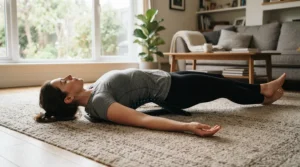
Lumbar curve support deserves more attention than it gets. Lordosis is the inward curve of the lower spine, and a modest curve is normal. Sit slumped for hours and that curve flattens, which loads the lower back differently.
That’s where the Original McKenzie Lumbar Roll earns its place. Its job is to rest in the hollow of your back so your pelvis stays upright, and the different shapes exist because hollows differ. A large hollow suits the D-Shape, while a seat with built-in support calls for the Slimline.
A word of caution. NICE advises against offering belts and corsets for low back pain, a reminder that rigid support isn’t a cure. A roll is different from a brace because it’s passive and optional, but the same principle applies: variety of posture beats any single fixed position.
Practical placement: set the roll at belt height, sit back so your pelvis touches the seat back, and stand up every 30 minutes or so. Even perfect lumbar curve support can’t cancel out eight motionless hours.
Lumbar Stretcher vs Alternatives: Where Does Each Option Fit?
| Option | Typical cost | Evidence and NHS stance | Best for |
|---|---|---|---|
| Everlasting Comfort Back Stretcher | Around £20-£35 | Unproven for pain, low risk if gentle | Trying passive extension cheaply |
| Physio-led exercise | Free on NHS via self-referral, or private fee | Strongest guideline support | Persistent or recurring pain |
| Walking, swimming, yoga, pilates | Low | NHS suggests these may help | Everyone |
| Original McKenzie Lumbar Roll | Usually under £30 | Practical posture aid, not a treatment | Long sitting |
| Teeter FitSpine LX9 | Several hundred pounds | Traction not recommended by NICE | Medically cleared, committed users |
The table makes the hierarchy plain: movement and exercise sit at the top, and gadgets sit below. A Everlasting Comfort Back Stretcher costs a fraction of a physio course and carries few risks, which makes it a sensible supplement. The Teeter FitSpine LX9 costs the most while sitting furthest from guideline support, so approach it last.
Features That Actually Matter (And Those That Don’t)
Features worth paying for: Multiple arch levels, because progression is the safety mechanism. A comfortable cover, because you won’t use what hurts. Stability and a non-slip base, because an arch that shifts mid-stretch is a hazard.
Features that sound better than they are: Acupressure counts. The jump from 92 points on the ChiFit Multi-Level Back Stretcher to 114 on the MINOLL Back Stretcher is unlikely to change your experience much, because stud density mainly changes how sharp the surface feels. Magnetic inserts, which appear on some arches, lack any convincing evidence of benefit that I could find.
Features that depend on you: Chair straps, like the one on the Everlasting Comfort Back Stretcher, only matter if you actually sit with them. Powered programmes on the Homedics STRETCH only matter if the novelty doesn’t wear off in a month.
A rule of thumb: Spend on adjustability and comfort, not on claims. If a listing promises to realign your spine or cure herniated discs, treat it with scepticism, since neither NICE nor the NHS guidance supports those promises.
Long-Term Cost and Maintenance
Cheap devices cost very little to run, but think about total cost of ownership.
A plastic arch such as the MINOLL Back Stretcher needs a wipe-down and a dry cupboard. Cost per use is negligible: at around £25 and three sessions a week for a year, that’s roughly 16p a session. Even if you stop after three months, the cost is trivial.
The Teeter P2 Back Stretcher costs more upfront but is built to last, and its portability may keep it in use longer. The Teeter FitSpine LX9 carries the highest sticker price, though a long warranty claim and sturdy build spread the cost across years of use. That only holds if you keep using it, and many exercise gadgets end up in the loft.
The Original McKenzie Lumbar Roll is foam with a washable cover, so its lifespan depends on how often you sit on it. Compressed foam eventually loses firmness, so replace it when it stops holding your curve.
The best value metric is the cost of each session you actually do. A £250 mat used daily beats a £25 arch used twice.
Safety, Regulations and When to See a Doctor
Safety comes before shopping. Seek immediate medical attention for numbness or pins and needles in both legs, your bottom or genitals that doesn’t go away, weakness in your legs, or loss of bladder or bowel control. University health guidance also lists a fever, pain waking you at night, pain after an accident and unintentional weight loss as reasons to book an appointment.
Be cautious with stretchers if you have osteoporosis, a recent spinal injury or surgery, or unexplained persistent pain. Always ask your GP or physiotherapist first, and stop immediately if symptoms spread or worsen.
On regulation, products sold in the UK should carry appropriate UKCA or CE marking where required for their category. FDA registration, which appears on the Teeter P2 Back Stretcher and Teeter FitSpine LX9 listings, is a US status and doesn’t replace UK conformity. Check the seller’s information on the listing.
The NHS also notes you can often self-refer to community MSK physiotherapy, which is often free and often faster than people expect.
Frequently Asked Questions
❓ Is a lumbar stretcher for lower back pain relief worth buying in the UK?
❓ How long should I lie on a back stretcher each day?
❓ Which lower back stretcher for tight hips is best for beginners?
❓ Is an inversion table a safer lumbar traction device for home than an arch?
❓ Can I use lumbar curve support while driving?
Conclusion
The honest summary: the best lumbar stretcher for lower back pain relief is the one you’ll use gently and consistently, alongside movement, and the evidence that any device transforms back pain is thin. NICE advises against traction, and the NHS champions staying active.
With that in mind, here are the sensible picks. For most people the Everlasting Comfort Back Stretcher is the safest all-round trial. Budget buyers who like firm pressure will get on with the MINOLL Back Stretcher, while beginners wanting a staged progression should look at the ChiFit Multi-Level Back Stretcher. The Teeter P2 Back Stretcher suits people who want a gentler seated option. The Homedics STRETCH is a premium route for tight hips and back, and the Teeter FitSpine LX9 is the high-commitment choice, only after medical advice. Whatever you buy, add the Original McKenzie Lumbar Roll if you spend your days seated, because lumbar curve support quietly does a lot of work.
Start low, go slow, and seek help for any warning signs. A few well-chosen minutes a day will beat a heroic session once a week.
Recommended for You
- Back Stretcher For Desk Workers With Stiff Spines: 7 Best Buys (2026)
- Portable Stretching Machine For Small Flats: 7 Best Buys (2026)
- Percussion Therapy Device For Athletes: 7 Essential Picks (2026)
Disclaimer: This article contains affiliate links. As an Amazon Associate, I earn from qualifying purchases. If you purchase products through these links, we may earn a small commission at no additional cost to you.
✨ Found this helpful? Share it with your friends! 💬🤗
