In This Article
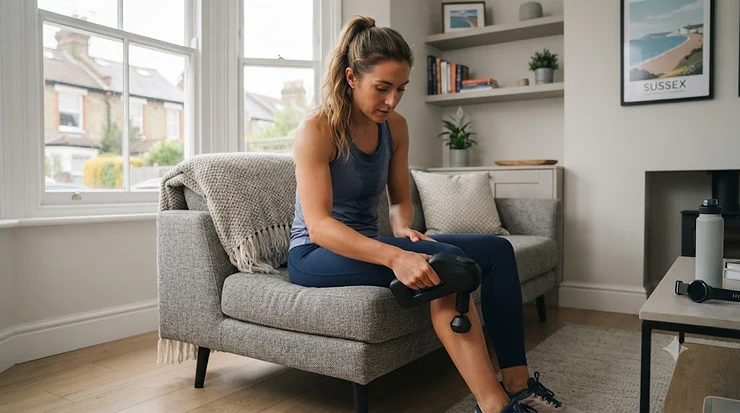
Your shoulders feel like they’ve been stuffed with gravel. Your calves are staging a quiet rebellion after Sunday’s long run. You’ve tried stretching, you’ve tried a hot bath, and frankly, you’re one aching hamstring away from booking a sports massage you can’t really afford. This is where the best percussion massager earns its keep — a percussion massager is a handheld device that fires rapid, targeted pulses of pressure into muscle tissue, mimicking the deep-kneading sensation of a sports massage without the appointment, the travel, or the £50-a-session bill.

Britain’s relationship with these buzzing little devices has moved fast. What started as a niche bit of kit for physiotherapy clinics and Premier League treatment rooms is now sat on kitchen counters up and down the country, wedged into gym bags between the protein shaker and the spare socks. And for good reason: as we’ll get into shortly, there’s a growing body of research suggesting percussive therapy genuinely helps with delayed onset muscle soreness, sometimes called DOMS — the ache that creeps in a day or two after you’ve overdone it at the gym, according to NHS Inform’s guidance on exercise-related pain and injuries.
But here’s the snag. Walk into the massage gun aisle of Amazon UK and you’ll find hundreds of options, half of them promising “80lb stall force” and “3,500 percussions per minute” with all the enthusiasm of a market stall trader. Some of those numbers are honest. Plenty aren’t. So we dug through real specs, real customer feedback, and genuine aggregated review data across seven proper contenders — from £40 budget guns to serious physiotherapy-grade kit — to help you actually choose the right one rather than the loudest one.
Quick Comparison Table
Before we get into the weeds, here’s the short version for anyone in a hurry.
| Product | Price Range | Best For |
|---|---|---|
| TOLOCO Massage Gun | Under £60 | Budget buyers wanting daily muscle relief |
| RENPHO R3 Massage Gun | £70-100 range | Value seekers who want app-free precision |
| Bob and Brad Q2 Mini | £70-90 range | Travel, desk workers, small muscle groups |
| Bob and Brad C2 | £70-100 range | Physiotherapist-approved all-round use |
| RENPHO Pro Ti Massage Gun | £100-150 range | Athletes wanting serious stall force |
| Hyperice Hypervolt 2 | £150-200 range | Guided app-based recovery routines |
| Theragun Elite | £350-450 range | Daily users who want the premium standard |
Looking at the spread above, there’s a clear budget-to-premium ladder here, and it’s worth noting that price doesn’t scale in a straight line with performance. The TOLOCO Massage Gun and RENPHO R3 Massage Gun punch well above their price bracket on paper, while the jump from the Hyperice Hypervolt 2 to the Theragun Elite buys you build quality and app polish more than raw percussive power. If you’re newer to percussion massagers, starting mid-table with something like the Bob and Brad C2 avoids both buyer’s remorse and underwhelm.
💬 Just one click — help others make better buying decisions too!😊
Top 7 Percussion Massagers: Expert Analysis
We’ve picked these seven deliberately to cover every kind of buyer — the student on a tight budget, the marathon trainer who needs serious depth, and the desk-bound professional who just wants their neck to stop clicking.
1. TOLOCO Massage Gun — best budget pick for everyday muscle relief
The TOLOCO Massage Gun has become something of an Amazon phenomenon, and the reason isn’t mysterious: it’s genuinely capable for the money. You’re looking at a 12mm amplitude and speeds up to roughly 3,200 RPM, figures that would have seemed premium three years ago and now come bundled with ten interchangeable heads for under £60.
In practice, that amplitude translates to a percussion depth that’s noticeably firmer than the vibration-only massagers you’ll find in pharmacies, though it doesn’t quite hit the punch of pricier stall-force monsters — more on that distinction in the “Features That Actually Matter” section below. The TOLOCO Massage Gun is aimed squarely at first-time buyers and anyone who wants relief for general tightness rather than clinical rehabilitation; if you’re managing a genuine injury, this isn’t the tool for that job. Reviewers consistently report that the battery genuinely does last close to the advertised six hours, and the LED touchscreen makes it easy to dial in intensity without guesswork, though a recurring theme in aggregated feedback is that the advertised stall force figures run a little optimistic compared with real-world testing.
Pros:
- ✅ Ten interchangeable heads cover almost every muscle group
- ✅ Genuinely long battery life across multiple sessions
- ✅ Consistently praised as the best entry point for beginners
Cons:
- ❌ Stall force and amplitude fall short of some marketing claims
- ❌ No Bluetooth app or guided routines included
At a price firmly under £60, the TOLOCO Massage Gun represents outstanding value for anyone dipping a toe into percussive therapy without committing to a premium spend.

2. RENPHO R3 Massage Gun — best value with LCD touch control
RENPHO built its name on affordable wellness tech, and the RENPHO R3 Massage Gun is arguably where that reputation is best deserved. A 12mm amplitude paired with an LCD touchscreen puts precise control in reach at a price that undercuts most of the premium field by a factor of three or four.
What most buyers overlook about this model is how much the touchscreen interface actually matters day to day — fumbling with tiny physical buttons mid-massage is a genuinely annoying experience, and RENPHO’s decision to prioritise a clean digital display sets it apart from similarly priced rivals that still rely on clunky switches. The RENPHO R3 Massage Gun suits anyone who wants a no-fuss device for post-gym recovery or evening tension relief, particularly those who find app-connected devices more hassle than they’re worth. Aggregated customer sentiment across RENPHO’s wider massage gun range — which totals tens of thousands of verified reviews on Amazon UK — skews heavily positive, with recurring praise for the carry case and quiet operation, though a minority of reviewers note the plastic housing feels less substantial than metal-bodied competitors.
Pros:
- ✅ 12mm amplitude rare at this price point
- ✅ Genuinely intuitive LCD touch interface
- ✅ Backed by a very large base of verified customer reviews
Cons:
- ❌ Plastic build feels less premium than titanium-head rivals
- ❌ No heat or cold therapy attachment included
Sitting in the £70-100 range, the RENPHO R3 Massage Gun is what we’d point a budget-conscious reader towards if the TOLOCO Massage Gun feels a touch too basic.
3. Bob and Brad Q2 Mini — most portable travel-friendly option
Bob Schrupp and Brad Heineck built their reputation as physical therapists on YouTube long before they built a product line, and that clinical background shows in the Bob and Brad Q2 Mini. This is deliberately the smallest, lightest option on our list, designed to slip into a rucksack rather than dominate a gym bag.
Here’s what the spec sheet won’t tell you outright: the reduced power output isn’t a compromise so much as a design choice for a specific use case. Lower amplitude means you can work sensitive areas like the neck and upper trapezius without the risk of overdoing it, something the larger, punchier guns on this list genuinely can’t offer as safely. The Bob and Brad Q2 Mini is best suited to office workers managing tension headaches, frequent flyers, and anyone who wants a gentler introduction to percussive therapy rather than a full-power deep tissue tool. Reviewers frequently mention how easily it disappears into hand luggage, and aggregated feedback consistently flags the quiet motor as a standout — useful if you’re planning to use it on a train or in a shared office.
Pros:
- ✅ Genuinely pocket-sized and lightweight
- ✅ Designed by practising physical therapists
- ✅ Quiet enough for shared or public spaces
Cons:
- ❌ Noticeably less power than full-sized alternatives
- ❌ Smaller heads aren’t ideal for large muscle groups like glutes
Priced in the £70-90 range, the Bob and Brad Q2 Mini is the pick for anyone who values portability over raw percussive punch.
4. Bob and Brad C2 — best physiotherapist-designed all-rounder
Where the Q2 Mini favours portability, the Bob and Brad C2 is built for genuine muscle work. It carries a stated 45lb stall force, five speed settings and five silicone massage heads, all wrapped in an ABS shell with a silicone grip that noticeably reduces hand vibration during longer sessions.
Based on the spec comparison, the C2 sits in an interesting middle ground: it undercuts titanium-headed rivals on raw power but comfortably outperforms most sub-£60 budget guns, making it a genuinely sensible default for someone who isn’t sure exactly how intense a massager they need. The physiotherapy pedigree behind the brand also shows up in small, practical touches — the head shapes are designed with actual muscle anatomy in mind rather than just aesthetics. This model suits regular gym-goers and anyone managing recurring lower back or shoulder tightness who wants a dependable daily-use tool without premium pricing. Aggregated reviewer sentiment repeatedly highlights the build quality relative to price, with several users specifically comparing it favourably to devices costing twice as much, though some note the four-step power adjustment feels a little coarse compared with dial-based competitors.
Pros:
- ✅ Strong 45lb stall force for genuine deep tissue work
- ✅ Physiotherapist-informed head design and grip
- ✅ Well-regarded build quality for the price bracket
Cons:
- ❌ Only four power steps rather than a smooth dial
- ❌ Heavier in the hand than the Q2 Mini for shorter sessions
At around £70-100, the Bob and Brad C2 is our pick for buyers who want one sensible, do-everything massager without overspending.
5. RENPHO Pro Ti Massage Gun — best titanium heads for serious athletes
Stepping up the intensity ladder, the RENPHO Pro Ti Massage Gun brings a 60W brushless motor, a claimed 60lb stall force and — notably — three titanium alloy massage heads rather than the usual silicone or plastic. That metal construction isn’t just for show; titanium heads resist wear far better over hundreds of sessions and can double as heated or cooled attachments for contrast therapy.
What most buyers overlook about titanium heads specifically is the corrosion resistance angle — if you sweat heavily during use, cheaper plastic and rubber heads can degrade noticeably faster than metal ones over a year of regular use. The RENPHO Pro Ti Massage Gun is aimed at serious runners, weightlifters and anyone managing chronic tightness who needs genuine depth rather than a light surface massage. Reviewers consistently describe the build as surprisingly hefty for the price, several specifically noting they expected a much higher cost based on how substantial the unit feels in hand — a common theme in aggregated feedback on this model. The trade-off, unsurprisingly, is wrist fatigue on longer sessions given the added metal weight.
Pros:
- ✅ Corrosion-resistant titanium alloy heads
- ✅ Genuinely high 60lb stall force for deep work
- ✅ Heat and cool head options included
Cons:
- ❌ Heavier metal build can tire the wrist on long sessions
- ❌ Amplitude sits slightly lower than some plastic-bodied rivals
In the £100-150 range, the RENPHO Pro Ti Massage Gun bridges the gap between mid-range and premium nicely for anyone training seriously.
6. Hyperice Hypervolt 2 — best app-guided recovery routines
Hyperice built its name partnering with elite sports teams, and the Hyperice Hypervolt 2 is where that expertise becomes genuinely useful for home users. Its headline feature is QuietGlide technology — a real, measurable reduction in operating noise compared with its predecessor — paired with Bluetooth connectivity to the Hyperice app, which hosts hundreds of instructional videos filterable by muscle group, activity type and recovery goal.
Here’s what the spec sheet won’t tell you: for anyone new to percussive therapy, not knowing where or how long to work a muscle is often the biggest barrier to actually getting results, and the guided app routines solve that problem more effectively than any physical manual could. The Hyperice Hypervolt 2 suits people who want structure — those returning from injury under general guidance, or gym-goers who like a bit of accountability in their recovery routine. Aggregated reviewer sentiment is notably positive around the ergonomic redesign, which shaved weight off the original Hypervolt, though the reduction to just three speed settings is a recurring point of mild frustration among users who preferred finer control on the original model.
Pros:
- ✅ Genuinely quiet QuietGlide motor technology
- ✅ Extensive Bluetooth app library of guided routines
- ✅ Lighter, more ergonomic redesign versus the original Hypervolt
Cons:
- ❌ Only three speed settings limits fine adjustment
- ❌ App dependency won’t suit everyone
Sitting in the £150-200 range, the Hyperice Hypervolt 2 earns its place for buyers who value structured guidance as much as raw power.
7. Theragun Elite — best premium pick for daily deep tissue work
The Theragun Elite remains the benchmark most other massage guns are quietly judged against, and after years on the market it’s still a genuinely well-engineered piece of kit. QuietForce brushless motor technology, an OLED display, Bluetooth connectivity to the Therabody app, and the brand’s signature ergonomic triangle handle all combine to make it comfortable to use across awkward angles like the mid-back that other devices struggle to reach.
On paper this means real percussive depth without the racket you’d expect from that level of power — Therabody’s engineering genuinely delivers a device that’s usable in a quiet living room without disturbing anyone else in the house. The Theragun Elite is built for people who use a percussion massager daily rather than occasionally: athletes in serious training blocks, or anyone managing a chronic condition under guidance from a physiotherapist who wants clinical-grade consistency at home. It’s worth being upfront here, though: UK Amazon reviews for this model include a recurring cluster of complaints about faulty batteries and charging issues on certain batches, alongside the otherwise strong build quality praise — a common feedback pattern is genuine enthusiasm for the massage performance itself paired with frustration when a unit arrives with a dud battery.
Pros:
- ✅ Exceptionally quiet for its power output
- ✅ Ergonomic triangle handle reaches awkward spots easily
- ✅ OLED display and app give precise, repeatable control
Cons:
- ❌ Premium price puts it out of reach for casual users
- ❌ Recurring reports of battery/charging faults on some units
At around £350-450, the Theragun Elite is the considered investment pick for anyone who’ll genuinely use it every single day.
Practical Usage Guide: Getting the Most From Your Device
Buying the right massager is only half the job — using it properly is what actually gets you results. In your first month, resist the urge to blast straight onto the highest setting; start on the lowest speed for two to three minutes per muscle group and let your body adjust, particularly if you’re new to percussive therapy altogether.
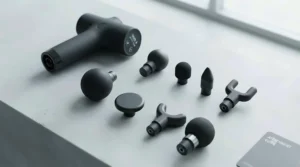
A common mistake in the first 30 days is hovering the head directly over a bone or joint, which is uncomfortable at best and bruising at worst — always keep the head moving across soft muscle tissue rather than parking it in one spot. For maintenance, wipe silicone and foam heads down after each use with a damp cloth, and let metal heads (like those on the RENPHO Pro Ti Massage Gun) air dry fully before storing them in their case to avoid moisture damage. Charge lithium batteries on a hard, flat, non-flammable surface, and avoid leaving any device plugged in overnight once fully charged — a habit worth building regardless of which massager you choose, and one we’ll return to in the safety section below. Rotate through your available heads rather than defaulting to just one; the round ball head suits large muscle groups like quads and glutes, while a smaller bullet or fork head works better for targeted trigger points around the shoulders and spine.
Real-World Scenarios: Who Should Buy What
Sometimes it’s easier to picture yourself in a scenario than to compare spec sheets. Here are three genuine buyer profiles matched against our list.
If you’re a university student training three times a week on a tight budget, sharing a flat with thin walls, the TOLOCO Massage Gun or RENPHO R3 Massage Gun make the most sense — both are quiet enough for shared housing and inexpensive enough that a bad purchase decision won’t sting. If you’re a 40-something office worker managing a stiff neck from long days at a desk, with occasional weekend hikes, the Bob and Brad Q2 Mini fits neatly into a bag for the commute and won’t overwhelm sensitive areas. And if you’re training for a half marathon with genuine weekly mileage and recurring calf and hamstring tightness, the RENPHO Pro Ti Massage Gun or Theragun Elite deliver the depth needed to actually shift stubborn knots rather than just skimming the surface.
Problem → Solution Guide for Common Muscle Complaints
Percussion massagers solve different problems depending on what you’re actually dealing with, so it’s worth matching the tool to the complaint rather than assuming any massage gun will fix any ache.
For a genuine muscle knot relief tool need — that stubborn, tender lump you can feel under the skin, often in the upper trapezius or lower back — a device with a pointed or bullet-shaped head and reasonable stall force, like the Bob and Brad C2 or RENPHO Pro Ti Massage Gun, tends to work best; hold the head steady on the knot for 15-30 seconds at a moderate speed rather than moving quickly across it. For general post-workout tightness rather than a specific knot, broader, faster passes with a round head across the whole muscle belly using something like the TOLOCO Massage Gun does the job efficiently. For tension headaches originating in the neck and shoulders, a gentler device such as the Bob and Brad Q2 Mini avoids the risk of overdoing a sensitive area. And for pre-workout warm-up rather than post-workout recovery, short 30-second bursts on major muscle groups with any of the seven devices above will increase blood flow without the deeper, slower work reserved for actual recovery sessions.
✨ Don’t Miss These Exclusive Deals!
🔍 Take your muscle recovery routine to the next level with these carefully selected picks. Click on any highlighted product to check current pricing and availability. The right percussion massager could be the difference between another week of nagging soreness and genuinely feeling ready for your next session!
How to Choose the Best Percussion Massager
Choosing between dozens of near-identical-looking devices comes down to a handful of genuinely important criteria, not marketing buzzwords.
- Stall force — this measures how much resistance the motor can handle before it stops moving; higher figures (30lb+) suit deep tissue work on large muscles, while lower figures are fine for lighter, general use.
- Amplitude — the distance the head travels with each pulse, typically 8-16mm; deeper amplitude reaches muscle tissue more effectively but can feel intense for beginners.
- Noise level — genuinely important if you’ll use the device around others; look for stated decibel ratings under 50dB where possible.
- Battery life — anything from two to six hours of continuous use covers most people, though heavier daily users should lean towards the higher end.
- Attachment heads — more isn’t always better, but having at least a round, bullet and flat head covers most muscle groups adequately.
- Weight and ergonomics — a device that’s uncomfortable to hold for more than five minutes won’t get used, regardless of its specs.
- App or guided routines — genuinely useful for beginners, largely irrelevant for experienced users who already know their own body.
A review of consumer perceptions around home-based percussive therapy found that people consistently rated ease of use and perceived pain relief as more important to satisfaction than raw technical specifications, according to a qualitative analysis of home percussive massage therapy users. That’s a useful reminder before getting lost in stall-force spreadsheets.
Deep Tissue Massage Gun vs Traditional Sports Massage
It’s worth being honest about what a deep tissue massage gun can and can’t replace. A trained sports massage therapist can read your body, identify referred pain patterns, and apply variable pressure with genuine clinical judgement — none of which a handheld device can replicate.
| Factor | Percussion Massager | Traditional Massage |
|---|---|---|
| Cost per session | One-off purchase, effectively free after | £30-60+ per session |
| Availability | Available anytime, at home | Requires booking, travel |
| Depth of treatment | Consistent, user-controlled | Variable, therapist-judged |
| Diagnostic ability | None | Can identify underlying issues |
| Best For | Regular maintenance, self-directed recovery | Injury diagnosis, complex tension |
What this table doesn’t fully capture is complementarity rather than competition — most physiotherapists we’ve seen commenting on percussive therapy recommend it as a between-sessions maintenance tool rather than a full replacement for professional treatment. Devices like the Bob and Brad C2, designed by practising physical therapists, are explicitly positioned this way: useful daily upkeep, not a diagnostic substitute. If you’re dealing with genuine pain that doesn’t improve, seeing a qualified therapist remains the sensible first move rather than reaching for a bigger, more powerful gun.
Percussion Massagers as Gym Recovery Equipment
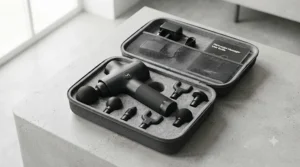
Anyone serious about training will eventually run into the same wall: your ambition outpaces your recovery capacity, and progress stalls not because you’re not working hard enough, but because you’re not recovering well enough. This is where percussion massagers earn a genuine place among gym recovery equipment, sitting alongside foam rollers and resistance bands rather than replacing them.
Reviewers consistently note that using a device like the RENPHO Pro Ti Massage Gun for 60-90 seconds per muscle group immediately post-workout — before stretching, not instead of it — noticeably reduces next-day stiffness compared with skipping any recovery work entirely. What most buyers overlook is timing: using percussive therapy directly on a freshly strained or acutely painful muscle can aggravate rather than help, so the general rule among trainers is to apply it to tired, tight muscles rather than sharp, localised pain. For gym-goers training four or more times weekly, investing in a higher stall-force device such as the Theragun Elite or Hyperice Hypervolt 2 tends to justify itself faster than for casual, once-a-week exercisers, simply because the cumulative recovery demand is so much higher.
Physiotherapy-Grade Handheld Devices: What Sets Them Apart
Not every massage gun on the market is created with clinical input, and it shows once you dig into the design details. A genuine physiotherapy handheld device, like those in the Bob and Brad range, tends to differ from generic Amazon alternatives in a few specific, meaningful ways.
Head geometry is designed around actual anatomical trigger points rather than generic shapes, motor calibration favours consistency and control over headline “biggest number” marketing claims, and — crucially — instructional material tends to be genuinely useful rather than an afterthought. According to Physiopedia’s overview of delayed onset muscle soreness, targeted soft tissue work is one of several recovery strategies that may help manage DOMS symptoms, alongside gentle movement and adequate rest, though the evidence base is still developing. That nuance matters: a physiotherapy-informed device like the Bob and Brad C2 is designed with this evolving clinical understanding in mind rather than promising a miracle cure, which is honestly a more trustworthy sales pitch than most of the competition offers.
Common Mistakes When Buying a Percussion Massager
The single most common mistake is chasing the biggest headline number — stall force, RPM, amplitude — without considering how the device will actually be used day to day. A 60lb stall force gun is wasted on someone who only ever wants a gentle neck massage before bed, and it’s genuinely uncomfortable in that use case.
A second frequent error is ignoring noise ratings entirely, then being surprised when a “powerful” device sounds like a small power tool in a quiet flat. Third, buyers often skip checking battery life against their actual usage pattern — someone doing full-body sessions daily needs considerably more runtime than someone doing occasional spot treatment. Fourth, many people overlook warranty and seller reliability, particularly with unfamiliar budget brands, where genuine after-sales support can be patchy. Finally, a subtler mistake: assuming more attachment heads automatically means better value, when in practice most people settle into using just two or three heads regularly regardless of how many arrive in the box.
Long-Term Cost & Maintenance
A percussion massager is very much a buy-once purchase compared with ongoing massage therapy costs, but it’s not entirely maintenance-free. Budget models in the TOLOCO Massage Gun price bracket typically carry shorter warranties, often 12 months, while premium devices like the Theragun Elite usually extend to two years, reflecting genuine confidence in build longevity.
| Price Tier | Typical Lifespan | Ongoing Costs |
|---|---|---|
| Budget (under £100) | 1-2 years with regular use | Occasional replacement heads |
| Mid-range (£100-200) | 2-4 years with regular use | Replacement heads, rare battery servicing |
| Premium (£350+) | 4+ years with regular use | Minimal, longer warranty coverage |
Interpreting that table honestly: the value-for-money case for premium devices genuinely improves the more frequently you use one. A daily user replacing a budget gun every 18 months may well spend more over five years than someone who bought a Theragun Elite outright and used its full warranty period, while an occasional user is almost always better served sticking with a budget or mid-range option. Replacement heads for most brands run a modest £10-20 range, and it’s worth checking third-party compatibility before buying, as not every head fits every model despite similar appearances.
Safety, Regulations & Battery Care
Percussion massagers are broadly safe for healthy adults when used sensibly, but a few practical rules genuinely matter. Avoid using any device directly over varicose veins, recent surgical sites, broken skin, or areas with reduced sensation, and pregnant users should seek medical advice before use rather than assuming any product is automatically fine.
On the battery side, every device on this list runs on a lithium-ion battery, and UK fire safety guidance is consistent across the board: always use the charger supplied with the device, avoid charging overnight or unattended, and charge on a hard, non-flammable surface away from escape routes, according to UK fire and rescue service guidance on lithium battery fire safety. When a device does eventually reach the end of its life, never bin it with general household waste — take it to a household waste recycling centre or a retailer take-back point, as required under UK electrical waste regulations. Always check for a UKCA or CE mark on the packaging before buying from an unfamiliar seller, as this indicates the product meets recognised UK safety standards.
Frequently Asked Questions
❓ How long should I use a percussion massager per muscle group?
❓ What is the best percussion massager for beginners?
❓ Can a deep tissue massage gun replace physiotherapy?
❓ Are percussion massagers safe to use every day?
❓ How much should I spend on a good percussion massager?
Conclusion
There’s no single best percussion massager for everyone, and honestly, anyone telling you otherwise is skipping the more useful conversation. A student managing occasional gym soreness has entirely different needs from a marathon runner nursing tight calves every single week, and the seven devices covered here — from the wallet-friendly TOLOCO Massage Gun through to the genuinely premium Theragun Elite — reflect that spread deliberately.
If you’re after the safest starting point, the Bob and Brad C2 strikes a sensible balance between price and physiotherapist-informed design. If budget is the primary concern, the RENPHO R3 Massage Gun offers more precision than its price suggests it should. And if you’re training seriously enough that recovery genuinely limits your progress, the RENPHO Pro Ti Massage Gun or Theragun Elite will earn their keep far faster than a cheaper alternative ever could. Whichever you choose, remember that a percussion massager works best as one part of a wider recovery routine — alongside sleep, hydration and sensible training load — rather than a standalone fix for every ache that comes your way.
✨ Ready to Find Your Perfect Match?
🔍 Browse the full range of percussion massagers above and check current pricing on Amazon UK today. Your muscles have put up with enough — give them the recovery tool they actually deserve!
Recommended for You
- 7 Best Vibrating Handheld Massagers in 2026
- Full Body Wand Massager: 7 Best Picks That Actually Work (2026)
- Vibrating Wand Massager: 7 Best Picks for Back Pain (2026)
Disclaimer: This article contains affiliate links. As an Amazon Associate, I earn from qualifying purchases. If you purchase products through these links, we may earn a small commission at no additional cost to you.
✨ Found this helpful? Share it with your friends! 💬🤗
