
In This Article
Every runner knows the feeling. You finish a steady ten kilometres, bend down to untie your trainers, and the back of your thighs sends a firm, wiry complaint up the leg. That tightness is rarely random. The hamstrings are three muscles (semimembranosus, semitendinosus and biceps femoris) that cross both the hip and the knee. Every stride asks them to brake your swinging leg, then help drive you forward again. Few muscle groups work that hard at both ends of the same step.
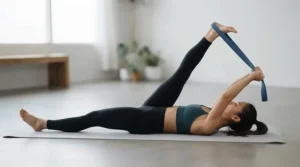
That’s why the right hamstring stretching device for runners can feel like a small act of kindness at the end of a long week. But the market is a jumble of looped straps, steel-framed stretchers, calf rockers, slant boards and foam rollers. Some are brilliant. Some are a tangle of webbing that ends up under the sofa.
This guide cuts through the noise. We compare seven real products across budget, mid-range and premium bands and translate each spec into plain English. We also summarise what genuine reviewers report, good and bad. You’ll find a four-week routine, scenario-based advice and a sober safety section too. Whether you want a hamstring stretcher for tight legs after running or a simple leg stretching strap for hamstring tightness, there’s a sensible option below.
A note on method: we haven’t road-tested these products. Everything here comes from published specifications and aggregated review sentiment, labelled as such. This article contains affiliate links, explained in the disclaimer at the end.
Quick Comparison: Hamstring Stretching Device for Runners at a Glance
| Product | Type | Standout feature | Price range | Best For |
|---|---|---|---|---|
| IdealStretch Original | Steel-frame stretcher | Lockable push-button positions | Roughly £45–£70 | Runners wanting deep, hands-free holds |
| OPTP Stretch Out Strap | 10-loop strap | Booklet with 30+ stretches | Roughly £12–£25 | Beginners who want guidance |
| Trideer Stretching Strap | 10-loop strap | Light, non-elastic, cheap | Under £15 | Budget-conscious buyers |
| CTRL Sports Stretching Strap | 10-loop strap | Numbered loops, neoprene handles | Roughly £10–£20 | Progress trackers and taller runners |
| ProStretch Original | Calf rocker | Body-weight leverage | Roughly £25–£35 | Calf-driven tightness |
| StrongTek Slant Board | Incline board | Five angles, 15°–35° | Roughly £40–£60 | Home calf and Achilles work |
| TriggerPoint GRID | Foam roller | Multi-density grid surface | Roughly £30–£45 | Post-run self-massage |
Prices are approximate ranges at the time of research, so check current price on amazon.co.uk before buying. The table reveals a clear split. The three strap options cost less than a takeaway for two, while the IdealStretch Original sits in a different financial league. If hamstring flexibility is your only goal, a strap such as the OPTP Stretch Out Strap gets you most of the way for a fraction of the cost. The ProStretch Original, StrongTek Slant Board and TriggerPoint GRID are supporting acts rather than direct replacements.
💬 Just one click — help others make better buying decisions too!😊
Top 7 Hamstring Stretching Device for Runners: Expert Analysis
Each product below gets the same treatment: what the specs mean in practice, who it suits, what reviewers say and where it falls short.
1. IdealStretch Original — premium steel frame for deep, controlled pulls
The IdealStretch Original is the odd one out in a field of straps. It’s a rigid steel frame with a push-button mechanism that lets you lock your position and lean into a stretch instead of hauling on webbing. It’s designed to work the hamstrings, hips, calves, knees and lower back, and listings put the maximum user weight at 220 lb (roughly 100 kg). Heavier users should check that carefully.
What does that mean in practice? A frame gives you a fixed anchor, so the stretch isn’t limited by your grip after a long run. That makes it a credible hamstring stretcher for tight legs after running, when your hands tire before your hamstrings do. The trade-off is geometry. You’re stretching in one fixed set-up, so it suits set-and-hold work better than flowing, varied mobility.
Reviewers on retail listings consistently report that it reaches deep into the hamstring before the lower back starts complaining. One reviewer called it the best hamstring device they’d tried. The recurring complaint is that it feels expensive for basic materials, and several note you need some arm strength at first. Listings claim healthcare-professional endorsement. Treat that as marketing, and ask your physio if you have an injury history.
Pros:
- ✅ Locks your position so you can relax into the stretch
- ✅ Steel frame feels sturdier than any strap
- ✅ Covers hamstrings, calves and lower back in one device
Cons:
- ❌ Priciest option here for fairly basic materials
- ❌ Needs some arm strength and is bulkier to store
Expect roughly £45–£70, so check current price and delivery. It earns its keep if you’ll use it most days. It’s hard to justify if you’d stretch twice a month.
2. OPTP Stretch Out Strap — the original loop strap, with a proper stretching booklet
The OPTP Stretch Out Strap has been in production since 1993, and that pedigree shows in the details. It has ten stitched loops, woven nylon construction and a length of about 6 ft 4 in (roughly 193 cm). An XL version exists for people 6 ft and taller. It also ships with a booklet of 30+ stretches, including contract-relax techniques, plus a video guide.
The loops work like gears on a bike. Hold a higher loop as your hamstring flexibility improves, and you’ve built a measuring stick into the strap. Contract-relax is the quiet bonus: you gently press your foot into the strap, relax, then ease deeper. That’s the sort of guidance the spec sheet alone won’t give you, and it makes this the most beginner-friendly leg stretching strap for hamstring tightness here.
Reviewers consistently praise the booklet and the solid stitching, and some physio patients mention using it alongside their prescribed routines. A minority report thread coming loose after a few days, which sacrifices the very loops you’re paying for.
Pros:
- ✅ Ten loops make progress easy to measure
- ✅ Booklet covers 30+ stretches, including contract-relax
- ✅ Decades-long track record with physios and athletes
Cons:
- ❌ A minority of reviews report stitching problems
- ❌ Standard length can run short for very tall runners
Roughly £12–£25. Check current price; for the guidance alone, it’s the best-value pick if you’re new to this.
3. Trideer Stretching Strap — the budget loop strap that undercuts everything
The Trideer Stretching Strap is 75 inches (about 190 cm) of non-elastic polyester with ten reinforced loops. It’s one inch wide and weighs roughly 86 g, lighter than a standard bar of chocolate. Non-elastic matters here. A springy band tempts you to overshoot, but this webbing holds exactly where you set it, which suits a hamstring that punishes sudden lengthening.
On paper, the narrow one-inch width concentrates pressure, so you may feel it across the foot arch on firm pulls. That’s a reasonable cost at this price, and a folded sock under the arch solves it.
Reviewers include physiotherapy patients and a massage therapist who say it works well for hamstrings and daily flexibility. Round-ups from stretching-strap testers note the loops aren’t numbered and the length is tight for very tall users.
Pros:
- ✅ Lightest and cheapest in this round-up
- ✅ Non-elastic webbing gives steady, no-bounce holds
- ✅ Ten loops suit most leg lengths
Cons:
- ❌ Loops aren’t numbered for tracking progress
- ❌ Narrow webbing can feel harsh on the foot
Under £15, check current price. As an entry point into leg stretching strap territory, it’s very hard to beat.
4. CTRL Sports Stretching Strap — numbered loops for tracking progress
The CTRL Sports Stretching Strap is a 78-inch (about 198 cm) non-elastic nylon band with ten numbered loops and neoprene handles. Numbering turns flexibility into a log: “loop 4 in week one, loop 5 by week three” means something concrete. Neoprene handles help when your palms are damp after a run, and the extra three inches over the Trideer Stretching Strap matter for taller runners.
Reviewers say the incremental loops help ongoing flexibility gains and rate the build quality highly. We couldn’t verify a large pool of UK-specific reviews, so treat sentiment as indicative rather than definitive.
Pros:
- ✅ Numbered loops make progress trackable
- ✅ Neoprene handles improve grip
- ✅ Extra length helps taller runners
Cons:
- ❌ Lesser-known brand with fewer detailed reviews
- ❌ Instruction material isn’t confirmed in listings
Roughly £10–£20, check current price. This is a smart alternative if you like data and want a longer strap than the budget standard.
5. ProStretch Original — a rocker that levers body weight into calves and hamstrings
The ProStretch Original is a moulded foot rocker with slip-resistant pads. The maker’s specifications give a recommended weight limit of 250 lb (about 113 kg) and a fit for adult shoes up to size 12 (US sizing, roughly UK 11). You wear supportive, rubber-soled shoes on it, and a stretching guide is included.
Here’s the honest bit. This is a standing device that leans on your own body weight, so the calf is the main event. The maker also lists hamstrings among the targets, but that effect is indirect and depends on posture. Think of it as the bottom of the posterior chain. If your calves are the tight link, this tackles it quickly and cheaply.
Retail listings show strong average ratings, with users praising its simplicity and portability. The main caveat is size: larger feet overhang, and the maker points bigger sizes to a different model.
Pros:
- ✅ Uses body weight for a deep calf stretch
- ✅ Slip-resistant pads keep it planted
- ✅ Compact and light enough for a kit bag
Cons:
- ❌ Hamstring effect is indirect
- ❌ Larger feet overhang; bigger sizes need another model
Roughly £25–£35, check current price. It’s good value if calf tightness is your real troublemaker.
6. StrongTek Slant Board — adjustable incline for the calf end of the chain
The StrongTek Slant Board is a plywood incline with five angles from 15° to 35°, anti-slip surfaces and a side handle. Listings give a capacity of up to 500 lb (about 227 kg) and a footprint of roughly 16 in long by 12.5 in wide. The angle steps are the clever part. Start low and move up as the calf and Achilles loosen, rather than lurching into a deep stretch.
It’s a calf tool, though, not a direct hamstring stretcher. Its value to hamstring flexibility is as a supporting act, taking pressure off the lower end of the chain so you can work higher up. Many runners pair a board like this with a strap.
Owners describe the build as sturdy, well finished and grippy, and several say a physio recommended it. A common tip is to start slowly. The recurring objection is price compared with straps.
Pros:
- ✅ Five angles allow gradual progression
- ✅ Very high weight rating and sturdy build
- ✅ Handle and anti-slip surfaces ease use
Cons:
- ❌ Calf-focused, not a direct hamstring stretcher
- ❌ Bulkier than any strap
Roughly £40–£60, check current price. It’s pricey next to a strap but built to last for years.
7. TriggerPoint GRID — firm foam roller for post-run posterior chain recovery
The TriggerPoint GRID isn’t a stretching device in the strict sense. It’s a 13-inch roller, about 5–5.5 inches across, with a hollow core wrapped in multi-density EVA foam. The patterned surface is meant to feel like different hand pressures, and the rigid core means it shouldn’t flatten the way cheap foam does.
Where does it fit? Use it for self-massage on hamstrings, calves and glutes, then follow with strap work. At 13 inches it slips into a gym bag, which suits runners who recover on the move.
Reviewers describe it as firmer and more targeted than smooth rollers and say it holds its shape. Beginners and fans of softer rollers find it intense at first.
Pros:
- ✅ Holds its shape better than basic foam
- ✅ Compact 13-inch size travels well
- ✅ Covers calves, hamstrings, glutes and back
Cons:
- ❌ Can feel intense for foam-rolling beginners
- ❌ Rolling doesn’t replace sustained stretching
Roughly £30–£45, check current price. It’s good value as a companion, not a substitute.
| Product | Key spec | Weight or size limit | Review theme | Best For |
|---|---|---|---|---|
| IdealStretch Original | Steel frame, push-button lock | About 220 lb (100 kg) | Effective but pricey | Stubborn, tight hamstrings |
| OPTP Stretch Out Strap | About 6 ft 4 in, 10 loops | N/A | Booklet praised; occasional stitching issue | Guided progression |
| Trideer Stretching Strap | 75 in, polyester, about 86 g | N/A | Good value | Tight budgets |
| CTRL Sports Stretching Strap | 78 in, nylon, numbered loops | N/A | Good build; smaller review pool | Taller runners |
| ProStretch Original | Rocker, rubber-soled shoes | About 250 lb; shoes to about size 12 | Simple and effective for calves | Calf-led tightness |
| StrongTek Slant Board | 15°–35°, plywood | About 500 lb (227 kg) | Sturdy; start slowly | Calf and Achilles |
| TriggerPoint GRID | 13 in, EVA foam | N/A | Firm; intense for novices | Self-massage |
Looking at the comparison above, the OPTP Stretch Out Strap and the Trideer Stretching Strap deliver the best hamstring value per pound, with the OPTP adding guidance and the Trideer adding thrift. If your hands tire first, the IdealStretch Original justifies its premium. Runners whose calves are the real problem should look at the ProStretch Original or StrongTek Slant Board before spending more on anything else.
✨ Ready to Stretch Smarter?
🔍 Take your running recovery to the next level with these carefully selected tools. Click any highlighted product to check current pricing and availability. Your hamstrings (and your next long run) will thank you!
What Is a Hamstring Stretching Device for Runners?
A hamstring stretching device for runners is any tool that helps you lengthen the muscles at the back of the thigh with more control than a bare-handed stretch allows. That includes looped straps, steel-framed stretchers, calf rockers and slant boards. Most work by holding a position so the muscle, not your grip, sets the limit.
Hamstring Stretcher for Tight Legs After Running: When a Frame Wins
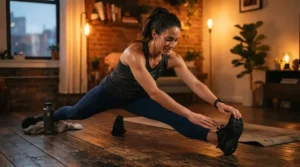
A hamstring stretcher for tight legs after running is a rigid device that supports the leg while you relax into the stretch. The appeal is simple: after a hard session, grip strength and patience are both thin. Stretching after exercise, when the muscles are warm, is the commonly recommended timing. A frame like the IdealStretch Original removes the hauling and lets gravity and a locked position do the work.
Leg Stretching Strap for Hamstring Tightness: Why Loops Beat Towels
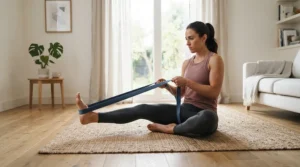
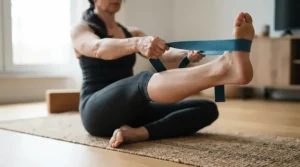
A leg stretching strap for hamstring tightness does the same job with webbing and loops. The loops give your hands fixed, repeatable positions, which a towel or dressing-gown cord can’t. A Trideer Stretching Strap or CTRL Sports Stretching Strap is also tiny, so it travels where a frame can’t.
How to Choose a Hamstring Stretching Device for Runners
Choosing is easier with a checklist than a hunch. Work through these steps in order.
- Identify your weak link. If tightness starts at the back of the thigh, favour a strap or frame. If calves are the issue, a ProStretch Original or StrongTek Slant Board belongs in the basket.
- Prefer non-elastic webbing. It holds exactly where you set it, so you can’t spring past a comfortable range by accident.
- Check length and limits. The OPTP Stretch Out Strap offers an XL version for people 6 ft and taller, and the IdealStretch Original lists a user-weight limit. Read these before ordering.
- Decide how much guidance you want. A booklet, as with the OPTP Stretch Out Strap, or numbered loops, as with the CTRL Sports Stretching Strap, suit people who like structure.
- Think about storage and travel. A strap fits in a glove compartment, but a slant board does not.
- Set a realistic budget. A strap in the budget bracket will tell you whether stretching daily suits you, before you invest in a frame.
Hamstring Stretching Device vs Traditional Stretching
Standing against a wall works. It’s also hard to repeat with precision, and your balance often fails before your hamstring does.
| Approach | Control | Cost | Best For |
|---|---|---|---|
| Wall or kerb stretch | Low to moderate | Free | A quick post-run reset |
| Towel or dressing-gown cord | Moderate | Almost free | Occasional use |
| Loop strap such as the Trideer Stretching Strap | High | Low | Everyday routines |
| Frame such as the IdealStretch Original | Very high | Higher | Stubborn tightness |
| Partner-assisted stretch | High but variable | Free | Occasional deeper work |
The pattern is clear: more control costs more money. For most runners the sweet spot is a strap, because it adds repeatability and a gradual loop progression without much outlay. Frames make sense when joints, grip or time are the limiting factor.
Features That Actually Matter (And Those That Don’t)
What matters: non-elastic construction, secure stitching, a length that fits your leg and loops spaced for your grip. Capacity limits on frames and boards matter too. Padded handles and numbered loops, as on the CTRL Sports Stretching Strap, are comfort upgrades with real value.
What doesn’t: glossy packaging, a rainbow of colours, and endorsement claims in marketplace listings. “Physician recommended” can mean almost anything, and you can’t verify it from a product page. A twelfth loop adds little if you only ever use four. An app is nice, as with the OPTP Stretch Out Strap, but a good routine beats a good interface.
The test is simple. If a feature changes how well you can hold a controlled stretch, it matters. If it changes only how the product looks in a photo, ignore it.
Posterior Chain and Running Recovery: What the Evidence Says
Your posterior chain is the back-of-body team of calves, hamstrings and glutes that powers every stride. The hamstring complex crosses two joints, as the StatPearls anatomy entry explains, which is why it’s so sensitive to both hip and knee position.
The research on stretching is more nuanced than most gym folklore. A six-week static stretching programme reliably increases flexibility, so hamstring flexibility can improve. Stretching immediately before running is another matter. One summarised review reported an average performance drop of about 3.7 per cent after static stretching right before exercise, and a scoping review advised against long static holds before events for healthy athletes with normal flexibility. Evidence that stretching prevents running injuries remains inconclusive.
The practical lesson for running recovery: stretch after your run, not before. Keep a dynamic warm-up for pre-run. Treat devices as tools for flexibility maintenance and post-run comfort, not as injury insurance.
Practical Usage Guide: A Four-Week Routine
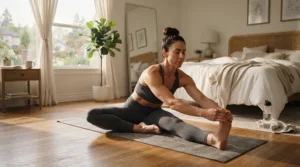
Here’s a simple progression that works with any loop strap. Stretch after your run, when muscles are warm.
Week 1: Lie on your back, loop the strap over one foot and keep your knee slightly soft. Hold for 30 seconds, then repeat twice per leg. Use a loop that feels easy.
Week 2: Hold for 30 to 40 seconds and move up one loop if it feels comfortable. Add a gentle contract-relax: press the foot softly into the strap, relax, then deepen.
Week 3: Add a third hold per leg, and spend a few minutes with a roller like the TriggerPoint GRID beforehand.
Week 4: Reassess. Can you hold a higher loop than in week one? Note the number, as numbered loops on the CTRL Sports Stretching Strap make this easy.
Common first-month mistakes: bouncing, holding your breath, twisting the pelvis and pushing through sharp pain. Stretching should feel like firm tension, not pinching. Regular stretching, strengthening and warming up before exercise may help reduce the risk of hamstring injury, but only if you do them consistently and sensibly.

Real-World Scenarios: Matching Devices to Runners
The lunchtime commuter runner. Budget under £20, a small office and four runs a week. A Trideer Stretching Strap lives in the bag and gets used on the stairwell landing after each run. Nothing fancy, and nothing to forget.
The marathon trainee. High weekly mileage, a garden shed and a routine of daily recovery. This runner benefits from the OPTP Stretch Out Strap for guided hamstring work and a StrongTek Slant Board for tight calves. A TriggerPoint GRID completes the setup.
The returning-from-injury runner. Past hamstring trouble, cautious about progress and stretching most evenings. A IdealStretch Original can offer controlled holds, but only after a physio signs off. The priority here is control, not speed.
The tall runner. Over 6 ft, frustrated by short straps. The OPTP Stretch Out Strap XL or the 78-inch CTRL Sports Stretching Strap gives the reach that shorter straps lack.
Problem → Solution Guide
Problem: the strap digs into my foot. Fold a sock under the arch or choose a wider band. Narrow webbing, as on the Trideer Stretching Strap, concentrates pressure.
Problem: my lower back takes the stretch first. This is a common complaint with bare-handed stretching. Bend the knee slightly, keep the pelvis flat and consider a frame such as the IdealStretch Original, which reviewers say moves the load towards the muscle.
Problem: I can’t tell whether I’m improving. Use numbered loops, as on the CTRL Sports Stretching Strap, or note the loop you use each week.
Problem: my calves stop me before my hamstrings do. Add a ProStretch Original or StrongTek Slant Board for the lower end of the chain.
Problem: stretching feels pointless. Remember that flexibility changes over weeks, not days. Track it and stay patient.
Long-Term Cost & Maintenance
Cost per use is where straps shine. A strap in the under-£15 bracket used four times a week for a year works out at a few pence per session. A frame or board costs more upfront but should last years if the build holds.
| Product | Price band | Value verdict | Best For |
|---|---|---|---|
| Trideer Stretching Strap | Under £15 | Excellent starter value | First-time stretchers |
| OPTP Stretch Out Strap | Roughly £12–£25 | Strong value with guidance | Beginners wanting a plan |
| CTRL Sports Stretching Strap | Roughly £10–£20 | Good value for trackers | Taller runners |
| ProStretch Original | Roughly £25–£35 | Good if calves are the issue | Calf-led tightness |
| TriggerPoint GRID | Roughly £30–£45 | Fair for dedicated rollers | Post-run self-massage |
| StrongTek Slant Board | Roughly £40–£60 | Premium but durable | Home recovery corners |
| IdealStretch Original | Roughly £45–£70 | Worth it only with daily use | Stubborn tightness |
The table shows how little you must spend to get started. If budget matters, a strap plus consistency beats an expensive device used rarely. Spend more only when a specific problem justifies it.
Maintenance is minimal. Check strap stitching every few weeks, wipe frames and rockers, and make sure non-slip pads stay clean. Follow any washing instructions on the packaging.
Safety Guide: When Not to Stretch
Stretching is not for every hamstring on every day. Guidance from Northern Care Alliance NHS physiotherapy says no stretching should be done at all in the acute stage after a strain, only rest. Stretching usually begins when everyday walking is pain-free, starting with gentle static work before dynamic movement.
Seek medical advice for a sudden sharp pain, a popping sensation, swelling or bruising. NHS leaflets note that returning to strenuous exercise too soon can worsen the injury. Use every device in this guide below the point of sharp pain, and stop if something feels wrong. None of these products replaces a diagnosis, and none of the claims in this article is medical advice.
FAQ
❓ Is a hamstring stretching device for runners better than a towel?
❓ How long should I hold a hamstring stretch after a run?
❓ Can I use a leg stretching strap for hamstring tightness every day?
❓ Which size strap suits tall runners?
❓ Should I buy a strap or a foam roller first?
Conclusion
The best hamstring stretching device for runners is the one you’ll actually use. For most people that’s a loop strap, and the OPTP Stretch Out Strap is the strongest all-rounder thanks to its guidance and long track record. The Trideer Stretching Strap is the budget route, and the CTRL Sports Stretching Strap suits taller runners and data fans. If your hands tire first or tightness is stubborn, the IdealStretch Original offers deeper, locked holds at a premium. Calf-led problems point towards the ProStretch Original or StrongTek Slant Board, and the TriggerPoint GRID rounds out a post-run kit.
Whatever you buy, remember the fundamentals. Stretch after your run, keep it pain-free and be patient: flexibility changes over weeks. Respect injury advice from the NHS and your physio, and treat devices as tools, not cures. Check current price and availability on amazon.co.uk before you buy.
✨ Don’t Miss These Recovery Essentials!
🏃 Give your hamstrings the post-run care they deserve. Click any highlighted product above to check current pricing and availability, and start building a recovery routine you’ll actually stick to!
Recommended for You
- Leg Stretcher For Splits At Home: 7 Best Picks For UK (2026)
- Lumbar Stretcher For Lower Back Pain Relief: 7 Honest Picks (2026)
- Back Stretcher For Desk Workers With Stiff Spines: 7 Best Buys (2026)
Disclaimer: This article contains affiliate links. As an Amazon Associate, I earn from qualifying purchases. If you purchase products through these links, we may earn a small commission at no additional cost to you.
✨ Found this helpful? Share it with your friends! 💬🤗
