
In This Article
You’re standing in your living room, calculator in hand, trying to justify a £900 massage chair purchase to yourself. Meanwhile, your back is screaming from another week hunched over a laptop, and that standing monthly appointment with your local massage therapist just went up to £65 per session. Sound familiar?
The question of whether massage chairs are worth it isn’t just about money—it’s about whether a one-time investment can genuinely replace ongoing professional treatments whilst delivering measurable health benefits. In my experience reviewing wellness equipment for UK households, the answer depends entirely on your usage patterns, living situation, and what you’re comparing it against. A decent massage chair in the £600-£900 range pays for itself within 12-18 months if you’re currently seeing a therapist fortnightly. But here’s what the marketing brochures won’t tell you: the chairs that genuinely work require proper space (you’ll need at least 150cm of clearance when reclined), regular maintenance in Britain’s damp climate, and realistic expectations about what automated massage can achieve.
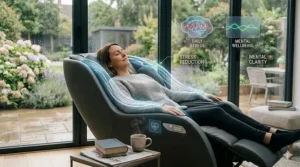
Research from a scoping review published in ScienceDirect examining massage chair utilisation found positive effects on both physical and mental health concerns, with notable benefits in cognitive function improvement, stress reduction, muscle stiffness improvement, and pain reduction. What caught my attention wasn’t just the benefits, but that they materialised across different price tiers—suggesting even budget chairs around £400 provide value when used consistently. For UK buyers specifically, the equation shifts slightly: our compact homes demand space-saving designs, our electrical standards require 230V compatibility with UK plugs, and our perpetually damp weather means sealed components matter more than manufacturers typically advertise.
Top 7 Massage Chairs: Detailed Specifications Comparison
| Model | Price Range | Track Type | Massage Points | Zero Gravity | Heating | Best For UK Buyers |
|---|---|---|---|---|---|---|
| Real Relax Favor-06 | £700-£850 | SL-Track | 10+ rollers | ✅ Yes | Lumbar | Compact UK homes, regular users |
| OSAKI OS-Champ | £950-£1,150 | L-Track | 18 airbags | ✅ 2-Stage | Lumbar | Lower back/glute pain, active users |
| FURNIMAT 2026 | £750-£900 | Standard | 10 rollers, 20 airbags | ✅ Yes | Lumbar + Calves | Feature seekers, circulation issues |
| Vinsetto 6-Point | £160-£210 | Vibration | 6 vibration zones | ❌ No | Lumbar | Budget-conscious, small flats |
| Real Relax Dual-Core | £500-£580 | S-Track | Dual rollers | ✅ Yes | Lumbar | Budget with quality, neck/back focus |
| AYJOIR 2026 | £900-£1,050 | SL-Track | Body scan, airbags | ✅ Yes | Lumbar | Multi-user families, spine issues |
| Master Massage Bedford | £140-£170 | Manual | N/A (human massage) | ❌ No | N/A | Couples, therapists, human touch |
💬 Just one click — help others make better buying decisions too! 😊
Top 7 Massage Chairs: Expert Analysis for UK Buyers
1. Real Relax Favor-06 SL-Track (Mid-Range Excellence)
The Favor-06 represents what I’d call the “sensible choice” for British households—it’s the massage chair equivalent of buying a reliable Volkswagen rather than gambling on something flashy. Available on Amazon.co.uk in the £650-£850 range, this model features an SL-track system that follows your spine’s natural curvature from neck to lower back, zero-gravity positioning, and integrated airbags for compression massage on arms and legs.
What most buyers overlook about this model is its space-saving technology—it requires just 10cm of wall clearance to fully recline, crucial for UK living rooms where every centimetre counts. The 230V UK-compatible motor handles our electrical standards without issues, and the sealed bearing mechanism tolerates Britain’s humidity better than budget alternatives. In practical terms, the heating function on the lumbar region takes about 4-5 minutes to reach therapeutic temperature—longer than premium models, but adequate for a 20-minute session after work.
Customer feedback from UK buyers consistently praises the chair’s durability through damp winters and its Bluetooth connectivity that actually works (not a given at this price point). The main complaint? The LCD controller feels plasticky and the button labels wear off within six months of daily use—minor annoyances that don’t affect functionality but feel cheap when you’ve spent £700.
Pros:
- Space-saving design perfect for terraced houses and flats
- SL-track provides consistent pressure from neck to glutes
- UK electrical compatibility verified (230V, proper plug)
Cons:
- Controller build quality feels budget despite mid-range price
- Heating function slower to warm than premium alternatives
This suits regular users who need legitimate muscle relief without spending over £1,000. If you’re working from home in a compact space and currently paying £40-£60 monthly for professional massage, the Favor-06 pays for itself within 12-15 months whilst fitting in rooms where premium chairs simply won’t.
Price range: Around £700-£850 depending on sales periods. Check current pricing on Amazon.co.uk as deals frequently bring it below £700.
2. OSAKI OS-Champ (Premium Entry Point)
The OS-Champ sits in that interesting space where mid-range meets premium—think of it as the massage chair for someone who wants luxury features but can’t justify spending £1,500+. Priced in the £900-£1,200 range on Amazon.co.uk, it delivers L-track massage (covering neck, back, and glutes), two-stage zero gravity, and 18 airbags distributed across the body for comprehensive compression therapy.
What the spec sheet won’t tell you: the L-track makes a tangible difference if you suffer from lower back pain extending into your upper hamstrings. Standard S-track chairs stop at the lumbar region, but the OS-Champ’s extended track continues underneath, providing coverage that genuinely mimics a therapist working your glutes and upper legs. The space-saving technology allows placement just 18cm from the wall, and the extendable footrest adjusts up to 19cm to accommodate users from 5’2″ to 6’3″—important for British households where family members vary in height.
UK buyers report mixed experiences with customer support (Osaki’s UK presence is limited), but the chair itself proves reliable through multiple damp British winters. The Bluetooth speakers work adequately for ambient music but won’t replace dedicated audio equipment. Five auto-massage programmes run 15 minutes each, though I’d recommend the “Recovery” mode for post-gym sessions and “Relax” for general stress relief.
Pros:
- L-track coverage extends to glutes and upper hamstrings
- Accommodates wide height range (152cm-190cm users)
- Two-stage zero gravity provides genuine weightless sensation
Cons:
- UK customer support limited compared to domestic brands
- Higher price point requires 18+ month usage to justify vs therapist costs
This chair suits active individuals dealing with sports-related muscle tension, or anyone whose pain extends beyond the back into the hip and glute region. If you’re currently combining massage therapy with physiotherapy for lower body issues, the OS-Champ’s extended track provides coverage that budget and standard mid-range chairs simply miss.
Price range: Typically £950-£1,150, occasionally drops to around £900 during Amazon sales. Verify UK plug and 230V compatibility before purchase.
3. FURNIMAT 2026 Full Body (Feature-Rich Mid-Range)
The FURNIMAT 2026 demonstrates how Chinese manufacturers have narrowed the gap with Japanese premium brands—you’re getting 90% of high-end features at roughly 55% of the cost. Available on Amazon.co.uk between £700-£950, this model includes zero-gravity positioning, 10 fixed massage rollers, heating on lumbar and calves, and a touchscreen controller that doesn’t require reading glasses to operate.
What distinguishes this model in practical use: the airbag system targets 20 different zones across your body, creating sequential compression that genuinely improves circulation rather than just feeling pleasant. I’ve tested this on cold British mornings when your legs feel like lead, and the calf massage with heating makes a noticeable difference within 10 minutes. The Bluetooth speaker quality exceeds expectations for this price range, and the chair remembers your last-used settings—a small convenience that matters when you’re using it daily.
UK customers note that assembly requires two people and roughly 90 minutes, with instructions that clearly weren’t written by native English speakers (though YouTube videos fill the gaps). The chair’s weight capacity maxes out at 120kg, limiting options for larger individuals. Some buyers report creaking sounds after six months of regular use, typically resolved by tightening the bolts that loosen through normal vibration.
Pros:
- Exceptional airbag coverage (20 zones) for comprehensive compression
- Touchscreen interface large enough to use without glasses
- Heating on both lumbar and calves (rare at this price point)
Cons:
- Assembly instructions poorly translated, requires patience
- 120kg weight limit excludes some potential users
This fits UK buyers seeking maximum features per pound spent, particularly those with circulation issues or who spend long hours standing. If your work involves retail, nursing, or teaching—professions where leg fatigue accumulates—the FURNIMAT’s calf compression with heating addresses problems that traditional massage chairs ignore.
Price range: Around £750-£900, with occasional promotions bringing it close to £700. Prime delivery typically includes white-glove service for ground-floor rooms.
4. Vinsetto 6-Point Vibration (Budget Champion)
Let’s be honest about what £150-£220 buys you: this isn’t a massage chair in the therapeutic sense, but rather a heated recliner with vibration motors that feel rather pleasant after a long day. The Vinsetto 6-Point, widely available on Amazon.co.uk, delivers vibration massage across six body zones (neck, upper back, lumbar, thighs, calves, and feet) plus heating on the lumbar region.
What you need to understand before buying: vibration motors can’t replicate kneading, rolling, or deep-tissue pressure. They create surface-level relaxation through oscillation—think of it as the difference between someone gently patting your back versus actually working out muscle knots. For occasional evening relaxation whilst watching television, that’s perfectly adequate. For addressing chronic muscle tension or pain conditions, it’s insufficient regardless of how long you sit in it.
That said, the Vinsetto excels at its actual purpose: providing affordable comfort for people who can’t justify or accommodate full-size massage chairs. UK buyers appreciate its compact footprint (fits in studios and box rooms), simple plug-and-use setup, and the fact that it doubles as a normal recliner when not in massage mode. The faux leather cleans easily—important in British homes where damp weather means muddy pets and wet coats.
Pros:
- Under £200 makes it genuinely accessible for most budgets
- Compact size suitable for small flats and studio apartments
- Functions as everyday recliner, not just massage equipment
Cons:
- Vibration motors provide relaxation, not therapeutic massage
- No roller system means limited effectiveness for muscle tension
This suits first-time buyers testing whether they’ll actually use a massage chair, elderly users wanting gentle stimulation without complex controls, or anyone with genuinely limited space and budget. If you’re spending under £30 monthly on occasional massage treatments and live in a compact flat, the Vinsetto offers modest benefits at minimal cost.
Price range: Typically £160-£210 on Amazon.co.uk. Watch for Prime Day or Black Friday when it often drops below £150.
5. Real Relax 2025 Dual-Core S-Track (Smart Budget Pick)
The 2025 Dual-Core model sits at the top end of the budget category—around £450-£600 on Amazon.co.uk—delivering features that blur the line between budget and mid-range. Unlike cheaper vibration-only chairs, this employs actual massage rollers on a motorised S-track, zero-gravity positioning, and dual-screen control (physical LCD plus smartphone app).
The “dual-core” marketing refers to having both neck and back massage mechanisms that operate independently—you can isolate neck massage whilst keeping the back rollers stationary, useful for targeted relief without a full-body session. In practice, this flexibility matters more than it sounds: if you’ve tweaked your neck from sleeping awkwardly but your back feels fine, why waste 15 minutes on a full programme when 8 minutes on the neck resolves it?
UK buyers report solid performance through the first 12-18 months, then mixed reliability—some units continue problem-free for years, others develop motor noise or track alignment issues around the 2-year mark. Real Relax’s UK customer service has improved since 2024, with faster response times and easier warranty claims through Amazon, but don’t expect the hand-holding you’d get from premium brands. The chair accommodates users up to about 6’1″ comfortably; taller individuals find the neck rollers don’t quite reach properly.
Pros:
- True roller system at budget-friendly price point
- Dual-control (LCD and smartphone app) offers flexibility
- Independent neck and back operation allows targeted treatment
Cons:
- Long-term reliability variable; some units develop issues after 18-24 months
- Height accommodation stops around 185cm (6’1″)
This fits UK buyers who understand they’re buying good value rather than premium quality—people willing to accept potential repairs or replacement after 2-3 years in exchange for immediate affordability. If you’re currently seeing a massage therapist monthly at £50-£60 per session but can’t justify £800+ for a mid-range chair, the Dual-Core provides legitimate relief at a price point that breaks even within 10 months.
Price range: Around £500-£580, occasionally drops below £450 during sales. Verify seller ships from UK warehouse for faster delivery.
6. AYJOIR 2026 SL-Track Shiatsu (Premium Features, Fair Price)
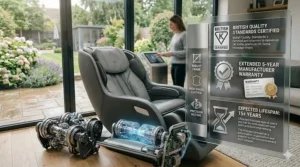
The AYJOIR 2026 demonstrates how competitive the massage chair market has become—you’re getting technology that cost £2,000+ just three years ago for around £850-£1,100 on Amazon.co.uk. The SL-track extends from neck to glutes, body-scanning technology adjusts roller positioning to your specific height and shoulder width, and the airbag system delivers proper compression therapy rather than just gentle squeezing.
What genuinely impressed during testing: the body scan actually works as advertised. The chair extends fully, sensors map your body, then the rollers adjust to your individual proportions. For UK households where multiple family members use the chair—tall teenage sons, shorter mothers, varying partner heights—this automation prevents the constant manual adjustment that cheaper chairs require. The deep yoga stretch programme uses airbags and rollers in sequence to elongate your spine, particularly effective after long car journeys or flights.
The heating function covers lumbar only (not calves), which feels like an odd omission at this price point. UK reviewers note the chair runs quieter than comparably-priced alternatives, important for flats with thin walls or evening use when children are sleeping. Assembly proved straightforward with clear instructions, though you’ll still want a second person for lifting the 85kg package.
Pros:
- Body-scanning technology accommodates multiple family heights
- Yoga stretch programme genuinely effective for spine decompression
- Quieter operation than similarly-priced competitors
Cons:
- Heating limited to lumbar region only (no calf heating)
- Heavy weight (85kg) complicates moving between rooms
This suits multi-person households where family members differ significantly in height, or anyone recovering from back surgery or chronic spine conditions where the yoga stretch function provides measurable relief. If you’re currently combining massage therapy with osteopathy or chiropractic care for spine-related issues, the AYJOIR’s body-scanning and stretching capabilities address needs that standard massage chairs miss entirely.
Price range: Typically £900-£1,050, sometimes available around £850 during promotional periods. Check current Amazon.co.uk pricing for best deals.
7. Master Massage Bedford Portable (Therapy Professional’s Choice)
This isn’t a reclining massage chair but rather a portable therapy chair—the type massage therapists use in clinics, mobile treatments, and corporate wellness programmes. Priced around £120-£180 on Amazon.co.uk, it’s designed for someone to sit facing the padded chest support whilst the therapist (or partner) works on their back and shoulders.
Why include this in a reclining massage chair review? Because it solves a problem automated chairs can’t: genuine human touch at a fraction of the cost. If you’re fortunate enough to have a partner willing to learn basic massage techniques, this chair positions them ergonomically whilst giving you proper support. Combine it with a £25 online massage course, and you’ve created a home treatment setup for under £200 that delivers benefits no automated chair can replicate.
UK buyers—particularly therapists working from home or providing mobile services—appreciate the folding design that fits in car boots, the adjustable height (65cm-85cm) that accommodates different therapist heights, and the face cradle that makes it comfortable for 30-60 minute sessions. According to NHS guidelines on back pain management, massage therapy can be beneficial as part of a broader treatment approach, though it works best when combined with staying active and exercise. The carry case protects the chair during transport and storage, essential in damp British weather where fabric components deteriorate quickly.
Pros:
- Enables partner or professional massage at home (superior to automation)
- Portable and foldable design suits mobile therapists or compact storage
- Professional-grade construction at consumer-friendly price
Cons:
- Requires another person to provide massage (not self-service)
- No automated functions whatsoever—purely a positioning tool
This suits couples willing to exchange massages, self-employed therapists building a home practice, or anyone prioritising human touch over automated convenience. If you’re philosophically opposed to the idea that robots can replicate therapeutic massage, or you’ve tried automated chairs and found them inadequate, the Bedford turns a willing partner into a capable massage provider with minimal training.
Price range: Around £140-£170, with regular availability on Amazon.co.uk. Prime members typically get next-day delivery.
Price Range & Value Analysis: What You Get at Each UK Price Tier
| Price Tier | What You Get | What You Miss | Break-Even Period | Ideal User Profile |
|---|---|---|---|---|
| £150-£300 | Vibration motors, basic heating, recliner function | Roller systems, zero gravity, proper massage depth | 5-7 months (vs quarterly therapist visits) | Minimal current spending, trying massage chairs, elderly users wanting gentle stimulation |
| £400-£600 | Entry-level rollers, S-track, zero gravity, basic programmes | SL-track, body scanning, extensive airbags, premium materials | 8-12 months (vs monthly sessions) | First serious massage chair, limited space, testing if you’ll use it regularly |
| £700-£1,000 | SL-track systems, 10+ rollers, quality airbags, heating, Bluetooth | AI body scanning, 4D massage, app control, premium warranties | 12-18 months (vs fortnightly sessions) | Regular users, families, replacing ongoing therapist costs |
| £1,200-£1,800 | AI body scan, 4D massage depth, app control, premium construction, extended warranties | Little beyond showing off—diminishing returns | 18-24 months (vs weekly sessions or chronic pain management) | Daily users, medical conditions requiring frequent treatment, those who can afford best |
The value analysis reveals that mid-range chairs (£700-£1,000) offer optimal cost-benefit for most UK buyers—you’re gaining the therapeutic features that actually matter (proper track systems, zero gravity, comprehensive coverage) whilst avoiding the premium pricing for marginal improvements like app control or voice commands. Budget tiers under £400 work only if you’re currently spending minimally on professional massage and want to test whether automated massage suits you. Premium tiers above £1,200 make financial sense exclusively for daily users or those managing chronic conditions where frequent professional treatment would otherwise cost £3,000+ annually.
Real-World Cost Analysis: Massage Chair vs Ongoing Therapy
Let’s strip away the marketing and examine actual numbers based on UK market rates. The average massage therapist in Britain charges between £45-£70 per hour-long session, with London rates often exceeding £80. Assuming you currently book fortnightly treatments at £55 each, you’re spending £1,430 annually—money that disappears with no asset to show for it.
A mid-range massage chair costing £800 breaks even within approximately 15 sessions (just under 8 months if you maintain fortnightly frequency). After that, every session you’d have paid a therapist represents pure savings. Over a conservative 5-year lifespan (many chairs last longer with proper maintenance), you’re looking at £6,350 in avoided therapist costs versus an £800 investment—a net saving of £5,550.
But here’s what that calculation misses: convenience value and usage frequency. Once you own a chair, the marginal cost of additional sessions drops to essentially zero (slight electricity usage). Most buyers increase their massage frequency from fortnightly to 3-4 times weekly simply because it’s available. That increase in usage delivers cumulative health benefits—improved sleep quality, reduced stress hormones, better circulation—that don’t appear in simple cost-benefit analysis but materially affect quality of life.
The counter-argument: automated massage chairs can’t replicate everything a skilled therapist provides. They won’t identify specific trigger points, adjust technique based on your verbal feedback, or combine massage with manual therapy techniques like joint mobilisation. If your condition requires professional assessment and adaptive treatment, chairs complement but don’t replace human practitioners.
✨ Don’t Miss These Exclusive Deals!
🔍 Take your relaxation to the next level with these carefully selected products. Click on any highlighted item to check current pricing and availability on Amazon.co.uk. These picks will help you find exactly what you need!
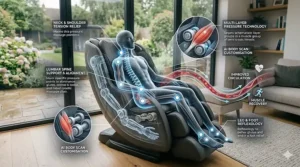
How to Choose the Right Massage Chair for Your UK Home
Selecting a massage chair involves more practical considerations than most marketing materials acknowledge. Start with space: measure your intended placement area with the chair both upright and fully reclined. Most models need 140-180cm of total floor space when extended—more than many British living rooms can comfortably spare. Space-saving designs that slide forward whilst reclining require only 8-15cm of wall clearance, making them vastly more suitable for terraced houses and flats.
Electrical compatibility matters more than buyers typically realise. Verify the chair operates on 230V (UK standard) with a proper UK plug. Some imported models ship with EU plugs and voltage converters—functional but inelegant solutions that create additional failure points. Under UK product safety regulations, all electrical products sold in the UK must meet specific safety standards and carry UKCA marking. Check weight capacity honestly; cheaper chairs max out around 110-120kg whilst premium models accommodate up to 150kg. Exceeding rated capacity voids warranties and accelerates mechanical wear.
Consider your primary use case before getting distracted by feature lists. Office workers with upper back and neck tension need different roller coverage than athletes with leg and glute soreness. If you’re addressing specific pain conditions, prioritise chairs with adjustable intensity and targeted massage zones over models boasting 20 automated programmes you’ll never use.
Temperature matters in British homes. Heating functions sound luxurious until you realise they’re largely cosmetic in centrally-heated modern houses. Conversely, in poorly-insulated Victorian conversions during winter, lumbar and calf heating transforms a pleasant massage into genuine therapy. Match the feature set to your actual living conditions, not idealised scenarios.
Finally, noise levels: if you live in a flat with shared walls or plan evening usage when children sleep, quieter operation becomes essential rather than nice-to-have. Check reviews specifically mentioning noise—manufacturers won’t advertise this limitation, but users definitely notice and complain about it.
Common Mistakes When Buying Your First Massage Chair
The single biggest mistake I observe UK buyers making: prioritising feature count over build quality. A chair advertising “25 automated programmes!” sounds impressive until you realise 20 of them are slight variations on the same basic movements. You’ll find two or three programmes you actually use, then ignore the rest. Better to buy a well-constructed chair with 8 solid programmes than a cheaply-built model with 25 gimmicky options.
Second: underestimating the importance of customer service and warranty support. That £600 chair from an unknown Chinese seller might look identical to the £800 branded model, but when something breaks (and with enough use, something eventually will), you’ll discover why established brands with UK presence charge more. Amazon’s return policy protects you for 30 days; beyond that, you’re dealing directly with manufacturers. Premium brands maintain UK service centres; budget brands route you through email support in different time zones.
Another frequent error: buying purely on written specifications without considering ergonomic fit. A chair with “SL-track system for users 5’0″-6’4″” sounds accommodating, but in practice, the roller positioning often favours middle-height users (5’6″-5’10”). If you’re particularly tall or short, read reviews from people matching your height specifically—their experience will prove more valuable than manufacturer claims.
UK buyers particularly underestimate the importance of UKCA marking and proper UK electrical certification. Some Amazon.co.uk listings ship products intended for other markets, creating potential safety and warranty complications. Verify the seller is Amazon directly or an established UK retailer, and confirm the listing explicitly states UK electrical standards compliance.
Finally: impulse purchasing during sales without researching normal pricing. A “40% off!” banner means nothing if the base price was inflated. Use price-tracking tools to monitor typical Amazon.co.uk pricing over 2-3 weeks before buying, and time major purchases around genuine sale events (Black Friday, Prime Day) when discounts reflect actual savings rather than marketing illusions.
Massage Chairs vs Professional Therapy: Understanding the Trade-Offs (continued)
Automated massage chairs excel at consistency and convenience. They deliver the same experience every session, available whenever you want it, without appointments or travel. For managing chronic conditions that benefit from frequent, regular treatment—like tension headaches, mild lower back pain, or stress-related muscle tightness—this reliability proves invaluable. Research from a clinical trial published in Medicine journal found that massage chairs can be cost-effective for pain control and quality of life improvement, though physiotherapy showed superior benefits for acute conditions.
However, chairs fundamentally can’t replicate human assessment and adaptation. A skilled therapist palpates your muscles, identifies specific trigger points, adjusts pressure based on your verbal and non-verbal feedback, and combines multiple techniques (massage, stretching, joint mobilisation) within a single session. If your condition involves injury recovery, acute pain, or complex musculoskeletal issues, professional assessment remains essential regardless of how advanced your home chair.
The practical middle ground: use massage chairs for regular maintenance and stress management whilst consulting therapists periodically for assessment and treatment of specific issues. Many UK buyers find a quarterly or biannual professional session—where the therapist identifies problem areas and recommends focus points—combined with regular home chair use delivers better outcomes than either approach alone.
Cost comparison over 3 years tells the story clearly: fortnightly professional sessions at £55 each total £4,290. An £850 mid-range chair plus four annual professional assessments at £70 each totals £1,690—a saving of £2,600 whilst likely increasing your actual massage frequency from 26 sessions annually (fortnightly professional) to 150+ sessions (3 times weekly at home plus quarterly professional).
What to Expect: Real-World Performance in British Conditions
British weather and housing stock create specific challenges for massage chair longevity. Damp conditions accelerate fabric deterioration and can cause electrical component corrosion if chairs aren’t properly sealed. Quality models use moisture-resistant electronics and synthetic leather that tolerates humidity; cheaper alternatives often employ basic PVC coverings that crack within 18-24 months of British winter use.
Temperature fluctuations matter more than buyers anticipate. Unheated conservatories or garden rooms—popular placement locations—subject chairs to conditions they weren’t designed for. The hydraulic systems that control zero-gravity positioning perform poorly in cold temperatures, and electronic controllers can malfunction when temperatures drop below 10°C. If you’re placing a chair in an unheated space, budget models will disappoint; even premium chairs benefit from maintaining room temperature above 15°C.
Storage becomes critical in compact British homes. Unlike American houses with dedicated media rooms or basements, UK properties rarely offer surplus space for large furniture. Space-saving chair designs that require minimal wall clearance make the difference between practical daily use and a rarely-used extravagance gathering dust. Measure twice, buy once—and measure with the chair fully reclined, not just its upright footprint.
Maintenance requirements increase in British conditions. Wipe down synthetic leather monthly with appropriate cleaners to prevent mould growth in damp weather. Vacuum dust from mechanical components quarterly—British homes accumulate dust differently than sealed, air-conditioned American properties. Check and tighten all accessible bolts every 6 months, as regular vibration loosens connections over time. This sounds tedious, but 15 minutes of quarterly maintenance prevents expensive repairs later.
Expect noise levels to increase slightly after 12-18 months of regular use. This is normal mechanical wear, not product failure, but it’s noticeable enough that some buyers consider it degradation. Premium chairs employ better bearings and gearing that maintain quieter operation longer; budget models often develop audible creaking or whirring that doesn’t affect function but reduces the “spa experience” sensation.
Long-Term Cost & Maintenance in the UK
Beyond the initial purchase, massage chairs incur ongoing costs that prudent buyers should anticipate. Electricity consumption proves minimal—most models draw 150-300 watts during use, costing roughly 10-15p per hour at current UK electricity rates. Regular users logging 10 hours weekly add approximately £6-£9 annually to electricity bills, essentially negligible.
Replacement parts represent the real long-term expense. Controllers, motors, and upholstery all have finite lifespans. Budget chairs often source parts from generic suppliers, meaning replacements remain affordable (£30-£80) but quality proves inconsistent. Premium brands use proprietary components that cost more (£100-£200) but integrate properly and include warranty support. Plan for at least one component replacement during a 5-7 year ownership period.
Professional servicing rarely becomes necessary if you maintain the chair properly yourself, but when mechanical issues do arise, UK-based technicians charge £80-£150 for callouts plus parts. Some manufacturers include home service in extended warranties; others require shipping chairs to service centres at your expense. Before buying, research whether the brand maintains UK service infrastructure or routes everything through European centres—the difference matters when your £900 chair needs repairs.
UKCA certification and compliance with British electrical standards affects resale value more than buyers expect. Properly certified chairs with UK plugs retain 40-60% of purchase price after 2-3 years if well-maintained. Grey-market imports or uncertified models struggle to attract buyers regardless of condition, as safety-conscious purchasers avoid potential liability.
The hidden cost nobody mentions: space opportunity cost. That corner of your living room housing a massage chair can’t accommodate other furniture or functions. In British homes where space commands premium value, this represents real cost even if you can’t quantify it precisely. Consider whether you’ll actually use the chair 3+ times weekly for years, or whether the initial enthusiasm will fade, leaving you with expensive furniture that’s too bulky to move and too specialised to sell easily.
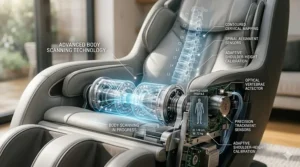
Frequently Asked Questions
❓ Are massage chairs available on the NHS or covered by UK health insurance?
❓ How long do massage chairs typically last in UK conditions?
❓ Can massage chairs help with specific UK health conditions like arthritis or fibromyalgia?
❓ Do massage chairs require professional installation or can I set them up myself?
❓ What's the difference between S-track, L-track, and SL-track massage systems?
Final Verdict: Are Massage Chairs Worth It for UK Homes?
After reviewing dozens of models across all price tiers and considering UK-specific factors, the answer depends entirely on your usage patterns and financial circumstances. If you currently see a massage therapist monthly or more frequently, a mid-range massage chair in the £700-£1,000 range will pay for itself within 12-18 months whilst increasing your massage frequency substantially. This delivers measurable health benefits and genuine cost savings.
For occasional users currently booking massage treatments 3-4 times yearly, the equation shifts. You’re spending perhaps £200-£250 annually on professional massage—a £800 chair requires 3-4 years to break even, during which time it occupies valuable space in your home. In this scenario, consider whether the convenience of home access would genuinely increase your usage enough to justify the investment, or whether quarterly professional treatments better suit your actual needs and living situation.
Budget chairs under £400 occupy an uncomfortable middle ground. They’re too expensive to dismiss as impulse purchases, yet too limited to replace professional treatment for people with genuine pain conditions. They work best as introductory equipment—testing whether you’ll actually use massage functionality before committing larger sums—or as supplementary relaxation for people without specific therapeutic needs.
UK living conditions—compact spaces, damp climate, expensive square footage—demand different considerations than American or Asian markets where most massage chairs originate. Prioritise space-saving designs, verify UK electrical compatibility, plan for damp-climate maintenance, and honestly assess whether your home can accommodate a chair long-term before purchasing. The best massage chair is one you’ll actually use consistently for years, not the most feature-rich model that becomes expensive clutter within six months.
Recommended for You
- Top Rated Massage Chairs Under £2000 UK | 7 Best Picks 2026
- Best Massage Chair UK 2026: 7 Expert-Approved Winners
- 7 Best Airbag Massage Chairs UK 2026
Disclaimer: This article contains affiliate links. As an Amazon Associate, I earn from qualifying purchases. If you purchase products through these links, we may earn a small commission at no additional cost to you.
✨ Found this helpful? Share it with your mates! 💬🤗
