In This Article
Walk into any Argos or John Lewis these days and you’ll notice something rather interesting: massage chairs are no longer relegated to the “luxury items nobody actually buys” corner. They’ve become genuinely attainable home wellness investments, particularly with zero gravity technology trickling down from £2,000+ premium models to the mid-£500s range.
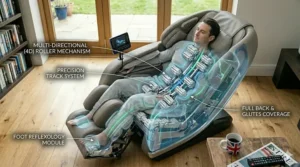
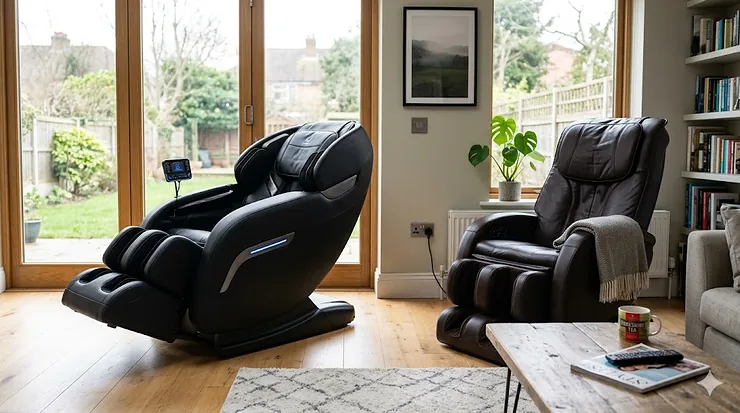
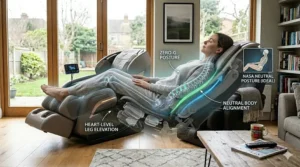
Here’s what most British buyers overlook: “zero gravity” isn’t marketing fluff dreamt up by some copywriter in Shoreditch. It’s a NASA-developed positioning system that elevates your legs above your heart level, distributing weight evenly to reduce spinal compression. The difference between experiencing this in a proper zero gravity massage chair versus a traditional upright recliner is rather like comparing a premium mattress to sleeping on your grandmother’s old sofa bed — technically both provide rest, but the quality gap is substantial.
This guide cuts through the marketing nonsense to focus on what actually matters for British buyers: which massage chair type works best in compact UK homes, survives our damp climate, fits realistic budgets in pounds sterling, and delivers genuine therapeutic value rather than just vibrating enthusiastically whilst making alarming mechanical noises. You’ll find honest assessments of seven chairs actually available on Amazon.co.uk, evaluated for British living conditions — from terraced houses in Manchester to flats in Edinburgh.
Quick Comparison: Zero Gravity vs Regular Massage Chairs
| Feature | Zero Gravity Massage Chair | Regular Massage Chair |
|---|---|---|
| Recline Angle | 128-165° (legs elevated above heart) | 100-135° (standard recline) |
| Spinal Pressure | Significantly reduced | Moderate reduction |
| Price Range (UK) | £400-£1,800 | £300-£1,200 |
| Space Required | 1.5-1.8m clearance behind | 0.8-1.2m clearance |
| Best For | Chronic back pain, circulation issues, serious relaxation | Occasional use, budget-conscious, limited space |
| UK Availability | Widely available on Amazon.co.uk | Extensive range available |
💬 Just one click — help others make better buying decisions too! 😊
Top 7 Massage Chairs Available on Amazon.co.uk: Expert Analysis
1. COSTWAY Zero Gravity Full Body SL-Track Massage Chair
The COSTWAY stands out with its 53-inch SL-track system that follows your spine’s natural curve from neck through to upper thighs — covering roughly 50% more area than standard S-track designs. The zero gravity function offers three distinct recline angles (144°, 150°, 155°), allowing you to find that sweet spot where your body genuinely feels weightless rather than just tilted backwards.
What the spec sheet won’t tell you: the 28 strategically placed airbags deliver remarkably even pressure distribution, unlike cheaper chairs that assault your calves whilst ignoring your shoulders entirely. The waist heating function reaches operating temperature within three minutes — rather important when you’re settling in after walking home through February drizzle in Leeds. UK buyers benefit from 230V compatibility and proper UK three-pin plug, eliminating the adapter faff that plagues some marketplace sellers.
This chair suits Manchester teachers managing classroom-induced tension, London commuters seeking evening decompression, or anyone spending 40+ hours weekly at a desk. The Bluetooth connectivity isn’t essential, but the automatic shoulder detection genuinely improves massage accuracy for varied body types — crucial given British physiques range considerably more than manufacturers’ “one size fits most” claims suggest.
✅ Extended SL-track reaches areas standard chairs miss
✅ Three zero gravity positions for personalised comfort
✅ Proper UK electrical compliance (230V, BS plug)
❌ Footrest extension may feel tight for users over 6’2″
❌ Requires minimum 1.6m rear clearance for full recline
Price range: Around £550-£700 on Amazon.co.uk depending on colour choice. Represents excellent value in the zero gravity category, particularly given UK warehouse stock ensures next-day Prime delivery rather than waiting three weeks for container shipping.
2. Panana Large Space Capsule Zero Gravity Massage Chair
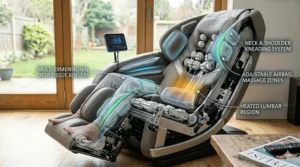
The Panana brings futuristic aesthetics to a category traditionally dominated by black leather rectangles that scream “pensioner’s recliner.” The space capsule design looks genuinely modern — something you wouldn’t feel embarrassed displaying in your Clapham flat when mates visit.
Beyond appearances, the LCD touch screen controller proves notably more intuitive than fiddly remote controls that inevitably disappear between cushions. The mechanical arm massage technology mimics professional masseuse hand movements with surprising accuracy, whilst the heating function provides genuine comfort during British winters. What sets this apart: the emergency stop switch positioned for immediate access — reassuring when trying unfamiliar massage programmes that might prove too intense.
This chair targets design-conscious buyers who refuse to sacrifice aesthetics for functionality, plus anyone intimidated by massage chairs’ typically complex control systems. The space-saving design fits more easily into compact British homes, where floor space comes at a premium compared to sprawling American basements.
✅ Contemporary design suits modern interiors
✅ User-friendly LCD touchscreen interface
✅ Emergency stop for safety-conscious users
❌ Limited customer reviews on Amazon.co.uk (newer model)
❌ Heating zones concentrated on back only
Price range: In the mid-£600s to low-£700s. The design premium adds roughly £50-£100 over functionally similar alternatives, but if you’re positioning this in your living room rather than hiding it in a spare bedroom, that investment maintains visual harmony.
3. NAGLIFOR 2026 Full Body Massage Chair with Fixed Rollers
NAGLIFOR’s 2026 model packs 14 massage rollers throughout — substantially more than the 6-8 rollers common in this price bracket. Those additional contact points translate to more thorough coverage without the “aggressive physiotherapist having a bad day” intensity some budget chairs inflict.
The back and leg heating functions operate independently, allowing you to warm just your lower back after gardening or focus heat on tired legs after a long shift. The mobile controller (rather than fixed armrest panel) means you can hand it to someone else for an impromptu shoulder massage whilst you’re occupied elsewhere — genuinely useful for couples or families sharing the chair.
Perfect for families seeking a shared wellness investment, office workers managing repetitive strain, or anyone wanting extensive massage coverage without venturing into premium pricing territory. The Bluetooth speaker integration works better than expected, though you’ll still prefer dedicated speakers for serious listening.
✅ 14 massage rollers for comprehensive coverage
✅ Independent heating zone control
✅ Mobile controller for flexible operation
❌ Not technically zero gravity (standard recline only)
❌ Build quality adequate but not premium
Price range: Around £350-£450, positioning this firmly in the budget-conscious category. You sacrifice zero gravity positioning but gain extensive roller coverage — a worthwhile trade-off if you’re prioritising massage intensity over advanced reclining features.
4. Real Relax 2026 Zero Gravity SL-Track Shiatsu Massage Chair
Real Relax has built a solid reputation in the UK market for reliability rather than gimmicks — the sort of brand your pragmatic aunt in Yorkshire would choose after actually reading Which? reviews. The SL-track massage system follows your spine’s natural curvature with precision engineering that feels more deliberate than generic chairs’ somewhat random roller movements.
The shiatsu functionality combines with foot massage rollers and Bluetooth connectivity for a comprehensive experience, whilst heat therapy targets precisely where British bodies need it most after months of damp weather. What justifies the premium: build quality feels precision-engineered rather than assembled from generic parts. Components operate quietly enough for evening use without disturbing household members — rather important in terraced housing where sound travels.
Research from the National Institutes of Health investigating massage chair benefits found positive effects on both physical and mental health, with particularly significant improvements in mental wellbeing. Real Relax’s sophisticated programmes aim to maximise these therapeutic benefits through varied techniques and customisable intensity.
Suits serious wellness investors, those managing chronic pain conditions, or buyers who view massage chairs as long-term health infrastructure rather than occasional luxuries. UK availability through Amazon.co.uk includes Prime eligibility for next-day delivery in many postcodes, with chairs shipping from UK warehouses.
✅ Precision-engineered SL-track system
✅ Quiet operation for shared living spaces
✅ UK warehouse stock for rapid delivery
❌ Premium pricing (around £900-£1,200)
❌ Large footprint requires dedicated space
Price range: In the £900-£1,200 bracket depending on finish. Represents the upper end of mass-market pricing before entering boutique territory. The investment pays dividends through superior build quality and longevity — expect 7-10 years of reliable service versus 3-5 for budget alternatives.
5. COSTWAY Full Body AI Voice Control Massage Chair
This second COSTWAY offering distinguishes itself through AI voice control — genuinely useful when you’re already reclined and can’t be bothered reaching for controls. Simply wake the system with “Massage on” or “Switch off” commands in plain English, no wrestling with complicated button combinations required.
The dual SL tracks conform ergonomically to body curves, whilst 32 airbags distributed across shoulders, arms, calves and feet deliver comprehensive pressure massage. The unique three-level zero gravity design (144°, 150°, 155°) effectively relieves spinal pressure — you genuinely feel the difference between positions, unlike some chairs where “levels” mean functionally identical reclines with different numbers attached.
Tech-enthusiastic buyers will appreciate the voice control and app integration, whilst the retractable calf frame accommodates heights from roughly 4’9″ to 6’1″ — covering the majority of British physiques. The rocking function helps induce sleep, particularly effective after stressful days when your brain won’t shut down naturally.
✅ Hands-free AI voice operation
✅ 32 airbags for thorough pressure massage
✅ Height-adjustable for varied body types
❌ Voice recognition occasionally struggles with regional accents
❌ App features somewhat basic
Price range: Around £600-£750. The AI functionality adds perhaps £80-£100 over non-voice COSTWAY models — worthwhile if you value convenience and hands-free operation, less so if you’re comfortable with traditional controls.
6. Srfzluxy Full Body Massage Chair with 16 Fixed Rollers
Srfzluxy compensates for its challenging-to-pronounce name with straightforward functionality: 16 fixed rollers providing targeted massage from neck to lumbar region. The heating function, touch screen controller, and Bluetooth speaker tick expected boxes without unnecessary complications.
What British buyers particularly appreciate: the chair arrives fully assembled, eliminating the frustration of deciphering poorly translated instruction manuals whilst surrounded by mysterious components and incompatible screws. The control panel uses clear icons rather than cryptic symbols, reducing the learning curve considerably.
This suits buyers seeking reliability over innovation, elderly users wanting simple operation without technical complexity, or anyone traumatised by previous flat-pack furniture experiences. The ivory grey colour option provides a welcome alternative to ubiquitous black.
✅ Arrives fully assembled (major convenience)
✅ Straightforward operation, minimal learning curve
✅ Alternative colour options available
❌ Standard recline only (not zero gravity)
❌ Roller coverage good but not exceptional
Price range: In the £400-£500 range. Solid mid-market positioning — you’re paying for convenience and reliability rather than cutting-edge features.
7. FURNIMAT 2026 Upgrade Full Body Zero Gravity Chair
FURNIMAT’s upgraded 2026 model features 10 fixed massage points, heating functions for back and legs, auto modes for varied massage programmes, and zero gravity positioning. The touch screen controller provides intuitive operation, whilst Bluetooth connectivity allows music streaming during sessions.
The wood grain leather finish option stands out aesthetically — warmer and more inviting than standard black vinyl. Build quality feels robust rather than flimsy, with components that inspire confidence they’ll survive years of regular use in British households where things need to withstand daily wear.
Families seeking a balance between features and affordability will find this compelling, as will buyers wanting zero gravity functionality without venturing into premium pricing. The auto modes cater to different needs (relaxation, sport recovery, sleep preparation), removing guesswork from programme selection.
✅ Premium aesthetic finish options
✅ Robust build quality for longevity
✅ Comprehensive auto modes for varied needs
❌ Footrest may feel restrictive for taller users
❌ Learning curve to optimise all features
Price range: Around £550-£700. Excellent value positioning — delivers zero gravity and comprehensive features at accessible pricing. The wood grain option adds approximately £30-£50 but significantly improves visual appeal for living room placement.
How Zero Gravity Position Transforms Your Massage Experience
Zero gravity positioning fundamentally changes how massage chairs interact with your body. When your legs elevate above heart level and your weight distributes evenly, gravity no longer compresses your spine the way it does when you’re upright or in standard recline positions. This creates what massage therapists call the “relaxation sweet spot” — that state where muscles genuinely let go rather than maintaining protective tension.
Here’s the practical difference: in a regular massage chair, your back muscles must still engage to some degree to support your torso’s weight. The massage rollers work against this underlying tension, limiting how deeply they can penetrate tissue. In zero gravity position, that baseline tension disappears. The same massage intensity feels perhaps 30-40% more effective because rollers access muscles that have genuinely relaxed rather than ones maintaining defensive contraction.
For British buyers managing chronic conditions, this matters considerably. Office workers spending 8+ hours daily hunched over keyboards accumulate tension that standard massage struggles to address. The zero gravity position allows 20-minute sessions to achieve what might require 45 minutes in a regular chair — efficiency that transforms casual weekend use into viable daily therapy.
The cardiovascular benefits deserve attention too. Elevating legs above heart level reduces the work your heart performs pumping blood back from lower extremities — blood that’s been pooling in your calves and feet all day whilst you’ve been standing in queues or sitting in traffic. Better circulation means improved oxygen delivery to tissues, faster recovery from exercise or physical work, and reduced swelling in ankles and feet.
Climate considerations for UK users: damp weather exacerbates circulation issues and joint stiffness. Zero gravity positioning combined with heating functions addresses both simultaneously — something particularly valuable during October through March when British weather conspires to make everyone’s joints ache persistently. Regular chairs provide heat therapy, certainly, but without the circulatory boost zero gravity delivers.
Real-World Application: Three British User Profiles
Profile 1: Sarah, 34, Secondary School Teacher in Birmingham
Sarah spends 25+ hours weekly on her feet in classrooms, followed by evenings marking papers whilst hunched over a laptop. Her lower back protests constantly, whilst her feet swell noticeably by Thursday afternoon. Budget: £600-£700.
Recommended chair: COSTWAY Zero Gravity Full Body SL-Track model. The extended track coverage addresses Sarah’s back issues, whilst foot massage and leg elevation tackle the swelling. Zero gravity positioning after work genuinely reduces next-day stiffness — she can actually stand comfortably during Friday lessons rather than counting down minutes until she can sit.
Profile 2: David, 67, Retired Engineer in Inverness
David maintains an active lifestyle with hill walking and gardening, but arthritis increasingly limits what he can comfortably manage. His terraced house has limited space, and technical complexity intimidates him. Budget: £400-£500.
Recommended chair: Srfzluxy 16 Fixed Rollers model. Arrives assembled, operates simply, and fits his space constraints. The heating function particularly helps his arthritic joints during Scottish winters. He uses it twice daily — 15 minutes before bed for sleep preparation, 20 minutes after gardening to prevent next-day soreness.
Profile 3: The Patels, Young Family in South London
Multiple household members need relaxation options: parents managing work stress, teenage daughter with sports-related muscle tension, elderly grandmother visiting regularly. Require robust build quality and flexible programming. Budget: £650-£800.
Recommended chair: FURNIMAT 2026 Upgrade model. Auto modes serve varied needs without requiring everyone to learn complex controls. Zero gravity positioning accommodates different body types and ages. Wood grain finish looks presentable in their living room rather than like medical equipment. The investment serves as family wellness infrastructure rather than single-user luxury.
Common Mistakes When Buying Massage Chairs in the UK
Mistake 1: Ignoring UK Electrical Compatibility
Not all massage chairs sold online include UK plugs or operate on 230V/50Hz British electrical standards. Some budget imports require adapters or voltage converters, introducing failure points and potential safety hazards. Additionally, products without UKCA marking may not meet British safety standards post-Brexit.
Solution: Verify the product listing explicitly states UK plug and 230V compatibility. Check for UKCA or CE marking indicating compliance with safety regulations. Amazon.co.uk listings should specify this, but marketplace sellers occasionally list international variants. Don’t assume compatibility — confirm before purchasing.
Mistake 2: Underestimating Space Requirements
Zero gravity massage chairs recline beyond 150 degrees, requiring substantial rear clearance. Many buyers position chairs against walls without accounting for this, discovering during first use that the chair cannot fully recline. This effectively wastes the zero gravity feature you’ve paid for.
Solution: Measure available space before purchasing. Most zero gravity chairs need 1.5-1.8m clearance behind them when fully reclined. If space is genuinely limited, consider space-saving designs that slide forward as they recline, or acknowledge that a regular massage chair better suits your constraints.
Mistake 3: Prioritising Features Over Fundamentals
Bluetooth speakers, LED mood lighting, and app connectivity impress initially but matter little if the massage mechanism itself feels cheap or the chair frame creaks ominously. Marketing emphasises sexy tech features whilst glossing over build quality — the actual determinant of whether your chair still functions well in five years.
Solution: Prioritise core massage quality, track system robustness, and material durability. Read UK customer reviews focusing on long-term reliability rather than initial impressions. A well-built chair with fewer gimmicks outlasts a feature-packed model with questionable construction.
Mistake 4: Buying Without Testing Body Compatibility
Massage chairs optimise for “average” body dimensions, but British physiques vary considerably. A chair perfect for someone 5’7″ may position rollers incorrectly for someone 6’2″, rendering the most sophisticated programmes ineffective or even uncomfortable.
Solution: Check the manufacturer’s recommended height and weight ranges. If you’re outside typical parameters, pay particular attention to adjustability features like extendable calf rests and body scanning technology that adapts to your proportions. Amazon.co.uk’s generous return policy provides safety net if sizing proves problematic.
Mistake 5: Overlooking Running Costs and Maintenance
Massage chairs consume electricity (roughly 150-300W during operation), require occasional maintenance (cleaning, mechanical checks), and may need replacement parts eventually. UK-based suppliers simplify servicing; international sellers often make obtaining parts frustratingly difficult.
Solution: Calculate approximate running costs based on expected usage. At current UK electricity rates (roughly 24p per kWh), a 200W chair used one hour daily costs about £18 annually in electricity — negligible, but worth factoring. More importantly, verify the seller provides UK-based customer support and parts availability rather than requiring shipping components from China when something fails.
Zero Gravity vs Regular: Feature-by-Feature Breakdown
Massage Track Systems
Zero Gravity Chairs: Predominantly feature SL-track or L-track systems extending from neck to glutes and often into upper thighs. The extended coverage matters because zero gravity positioning naturally lengthens your spine, creating more area to massage. An S-track system in zero gravity position would leave significant sections unmassaged.
Regular Chairs: Often use S-track or basic L-track systems focusing on neck, shoulders, and back. Coverage stops at the lumbar region, which suffices for upright positioning but feels limited compared to zero gravity alternatives.
UK Buyer Consideration: If you’re investing £500+, the minimal additional cost for extended track coverage provides disproportionate value. The £100-£150 premium over basic S-track models pays dividends in usable massage area.
Airbag Massage Systems
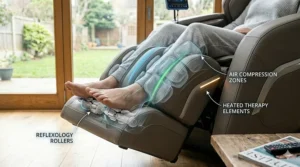
Zero Gravity Chairs: Typically incorporate 28-34 airbags distributed across shoulders, arms, hips, calves, and feet. The compression massage these provide works synergistically with zero gravity positioning — when your legs elevate, the airbag compression more effectively promotes venous return and reduces swelling.
Regular Chairs: Budget models may include just 8-12 airbags concentrated in calves and feet. Mid-range chairs expand to 16-20 airbags but often neglect shoulder and arm coverage. The compression massage provides some benefit but lacks the circulatory advantages zero gravity positioning enhances.
UK Buyer Consideration: British buyers particularly value arm and shoulder airbags given how much tension office work and driving accumulate in upper body. Check airbag distribution maps in product specifications — numbers matter less than strategic placement.
Heating Functions
Zero Gravity Chairs: Modern models incorporate multi-zone heating covering back, waist, calves, and sometimes arms. Temperature control allows customisation from gentle warmth (comfortable year-round) to therapeutic heat (targeted pain relief). Heating elements reach operating temperature within 3-5 minutes.
Regular Chairs: Entry-level models may include only basic lumbar heating or no heating at all. Mid-range chairs add leg heating but often with limited temperature control — you get whatever heat they provide, take it or leave it.
UK Buyer Consideration: Given British climate, heating functions earn their keep roughly eight months yearly. The £50-£80 premium for multi-zone heating with temperature control versus basic lumbar-only systems proves worthwhile for anyone using their chair October through May.
Understanding NASA Position Therapy and Its Origins
The term “zero gravity” in massage chairs refers to a neutral body posture developed through NASA research during the 1980s Skylab programme. NASA scientists analysed how astronauts’ bodies naturally positioned themselves in weightless environments, discovering a consistent posture: legs bent at roughly 120 degrees, elevated to heart level or slightly above, with the upper body reclined approximately 128 degrees.
This wasn’t arbitrary positioning — it represented the body’s instinctive understanding of optimal relaxation. In true weightlessness, muscles release all protective tension because there’s no gravitational force to resist. The body naturally assumes a posture that minimises strain on joints, reduces cardiac workload, and promotes unrestricted breathing.
Massage chair manufacturers adopted this research to create Earth-bound approximations. Whilst you won’t achieve actual weightlessness in your Coventry living room, the positioning replicates key benefits: weight distribution across the entire body surface rather than concentrating on spine and pelvis, reduced cardiac effort pumping blood from lower extremities, and elimination of gravitational compression on intervertebral discs.
The therapeutic implications extend beyond simple comfort. According to research published by UK government health authorities, proper spinal alignment and reduced compression can significantly impact long-term musculoskeletal health. Zero gravity positioning, even for 20-minute sessions, provides measurable spinal decompression — particularly valuable for office workers whose sedentary lifestyles chronically compress vertebrae.
British buyers should understand: “zero gravity” isn’t marketing exaggeration. It’s engineering derived from legitimate aerospace research, adapted for consumer wellness products. The positioning genuinely reduces spinal load, improves circulation, and enhances massage effectiveness through documented physiological mechanisms rather than placebo effect.
Is Zero Gravity Worth the Extra £100-£200?
Short answer: almost certainly yes, if you’re already spending £400+. Here’s the cost-benefit breakdown for British buyers:
Additional Investment: Zero gravity functionality typically adds £100-£200 to comparable regular massage chairs. At the entry level (£400-£500), this represents 20-40% premium. At mid-range (£600-£800), it’s 15-25% additional cost.
Therapeutic Value Gained: The zero gravity position delivers perhaps 30-40% more effective massage through enhanced muscle relaxation and improved roller access. You’re effectively getting significantly better therapy from the same massage programmes and motor specifications.
Longevity Considerations: Zero gravity chairs often include upgraded components throughout — better tracks, more airbags, superior upholstery. You’re not just paying for the reclining mechanism; you’re typically stepping up an entire quality tier. This translates to longer service life: 7-10 years versus 3-5 for budget regular chairs.
Health Cost Savings: Regular professional massage in the UK costs £40-£70 per hour. If zero gravity positioning allows your chair to effectively replace weekly professional sessions (feasible for many stress and tension issues), the £100-£200 premium pays for itself within 3-4 visits. Over five years, savings exceed £10,000 compared to weekly professional massage.
Space Trade-Off: The primary sacrifice is clearance requirement. Zero gravity chairs need roughly 0.7-1.0m additional rear clearance compared to regular chairs. For flats and terraced houses where every square metre counts, this genuinely matters. Calculate whether you can accommodate this before purchasing.
User Experience: The psychological impact shouldn’t be dismissed. Zero gravity positioning feels demonstrably different — approaching “floating” sensation versus simple reclining. This enhances relaxation benefits and makes regular use more appealing rather than viewing the chair as occasional novelty.
Recommendation for UK Buyers: Unless space genuinely prohibits it or you’re extremely budget-constrained (sub-£350), zero gravity functionality represents worthwhile investment. The therapeutic advantage and enhanced component quality justify the incremental cost for anyone planning regular use rather than occasional weekend experimentation.
Long-Term Ownership Costs in the UK
Massage chairs represent significant initial investment, but British buyers should evaluate total cost of ownership over expected lifespan:
Electricity Consumption: Massage chairs typically draw 150-300W during active use. At 24p per kWh (approximate UK average in 2026), one hour daily operation costs roughly £15-£25 annually. Negligible compared to purchase price, but worth noting for budget planning.
Maintenance Requirements: Quality chairs need minimal maintenance beyond periodic cleaning and occasional mechanical inspection. Budget £20-£40 annually for upholstery cleaner and protective treatments, particularly important in British climate where damp can damage leather and fabric. Every 2-3 years, professional mechanical inspection (around £50-£80) ensures motors and tracks function optimally.
Component Replacement: Well-built chairs rarely require major component replacement within 5-7 years. Budget models may need roller replacement or motor servicing sooner. Set aside roughly £100-£150 contingency for potential repairs over five years — modest insurance against unexpected failures.
UK-Specific Considerations: Damp British climate can affect upholstery and electrical components if chairs are positioned in unheated rooms or conservatories. Keep massage chairs in climate-controlled living spaces to maximise longevity. Additionally, hard water in certain UK regions may affect chairs with steam or mist features (rare in standard models, but worth noting).
Depreciation vs Value Retention: Massage chairs depreciate rapidly — expect 40-50% value loss within first year, levelling to 10-15% annually thereafter. However, don’t view them as financial investments. They’re wellness infrastructure, similar to gym memberships or physiotherapy sessions. Calculate value based on therapy received rather than resale potential.
Total Cost Example (5-Year Ownership):
- Initial purchase: £700
- Electricity (5 years): £100
- Maintenance/cleaning: £150
- Contingency repairs: £100
- Total: £1,050 over five years = £210 annually
Compare this to weekly professional massage (£50 × 52 weeks × 5 years = £13,000) and the value proposition becomes rather compelling. Even monthly professional sessions (£50 × 12 months × 5 years = £3,000) cost substantially more whilst providing less convenient access.
What UK Regulations and Safety Standards Apply?
Post-Brexit, British massage chair buyers should verify products meet UK safety requirements:
UKCA Marking: Replaced CE marking for products sold in Great Britain (England, Scotland, Wales). Indicates compliance with UK safety, health, and environmental protection standards. Northern Ireland follows different rules under the Protocol, potentially accepting CE marking for certain products.
Electrical Safety: Products must comply with BS EN 60335 standards covering electrical safety for household appliances. Verify listings mention these standards or display appropriate certification marks. Avoid products lacking clear safety documentation.
Consumer Rights: Consumer Rights Act 2015 protects UK buyers. Products must be of satisfactory quality, fit for purpose, and as described. Amazon.co.uk provides additional buyer protection beyond statutory requirements, including simplified returns and dispute resolution.
Medical Device Classification: Most massage chairs classify as wellness devices rather than medical equipment, avoiding stringent medical device regulations. However, if marketed with specific health claims (treating diagnosed conditions), stricter rules apply. Reputable sellers avoid crossing this line.
Distance Selling Regulations: When purchasing online, UK buyers benefit from 14-day cooling-off period allowing returns without justification. This applies to Amazon.co.uk purchases, providing safety net if the chair doesn’t suit your needs after home trial. Note: you’re typically responsible for return shipping costs for large items unless the product is faulty.
Warranty and After-Sales Support: UK consumer law requires products to be durable for a reasonable time period. For massage chairs costing £500+, “reasonable” likely means several years. Manufacturers’ warranties typically range 1-3 years, but your statutory rights extend beyond this. Keep purchase documentation and communicate issues promptly.
Import Considerations: Some Amazon.co.uk marketplace sellers ship from EU or Asia. Post-Brexit import duties may apply, and UKCA compliance can be ambiguous. Prioritise sellers listing UK stock and clear UKCA/CE marking to avoid complications. Prime-eligible products typically ship from UK warehouses, simplifying compliance.
FAQ: Zero Gravity vs Regular Massage Chairs
❓ Do zero gravity massage chairs actually help with back pain in UK users?
❓ Are massage chairs covered by UK home insurance policies?
❓ Can zero gravity massage chairs fit in typical British terraced houses?
❓ What's the recommended usage time for massage chairs to avoid muscle soreness?
❓ Do zero gravity massage chairs work for users over 6 feet tall?
Conclusion: Which Chair Type Suits British Buyers Best?
The zero gravity versus regular massage chair debate resolves quite simply for most British buyers: if you’re already investing £400+, the incremental cost for zero gravity functionality (typically £100-£200) delivers disproportionate therapeutic value. The enhanced spinal decompression, improved circulation, and superior massage effectiveness justify the premium for anyone planning regular use rather than occasional experimentation.
Regular massage chairs serve perfectly adequately for weekend relaxation, limited budgets, or space-constrained environments. They provide genuine massage benefits and represent solid value in the £300-£450 range. However, at £500+ price points, zero gravity models typically offer superior features, build quality, and long-term value.
Key recommendations for British buyers: prioritise UK electrical compatibility (230V, proper plugs, UKCA marking), measure available space carefully before purchasing, and read UK customer reviews focusing on long-term reliability rather than initial impressions. Consider total cost of ownership including electricity, maintenance, and potential repairs over realistic 5-7 year ownership periods.
The massage chair market in 2026 offers UK buyers unprecedented choice across all price points. Whether you’re a Manchester teacher managing classroom-induced back pain, a London commuter seeking evening relaxation, or a retired couple in the Cotswolds prioritising health maintenance, suitable options exist on Amazon.co.uk. Final recommendation? Start with honest needs assessment, set realistic budgets including maintenance costs, prioritise UK compatibility, and read British customer reviews thoroughly. The perfect massage chair awaits — it simply requires identifying which features genuinely matter to your circumstances rather than chasing impressive specifications unlikely to improve daily experience.
Recommended for You
- Are Massage Chairs Worth It? 7 Tested Options UK 2026
- Top Rated Massage Chairs Under £2000 UK | 7 Best Picks 2026
- Best Massage Chair UK 2026: 7 Expert-Approved Winners
Disclaimer: This article contains affiliate links. As an Amazon Associate, I earn from qualifying purchases. If you purchase products through these links, we may earn a small commission at no additional cost to you.
✨ Found this helpful? Share it with your mates! 💬🤗
